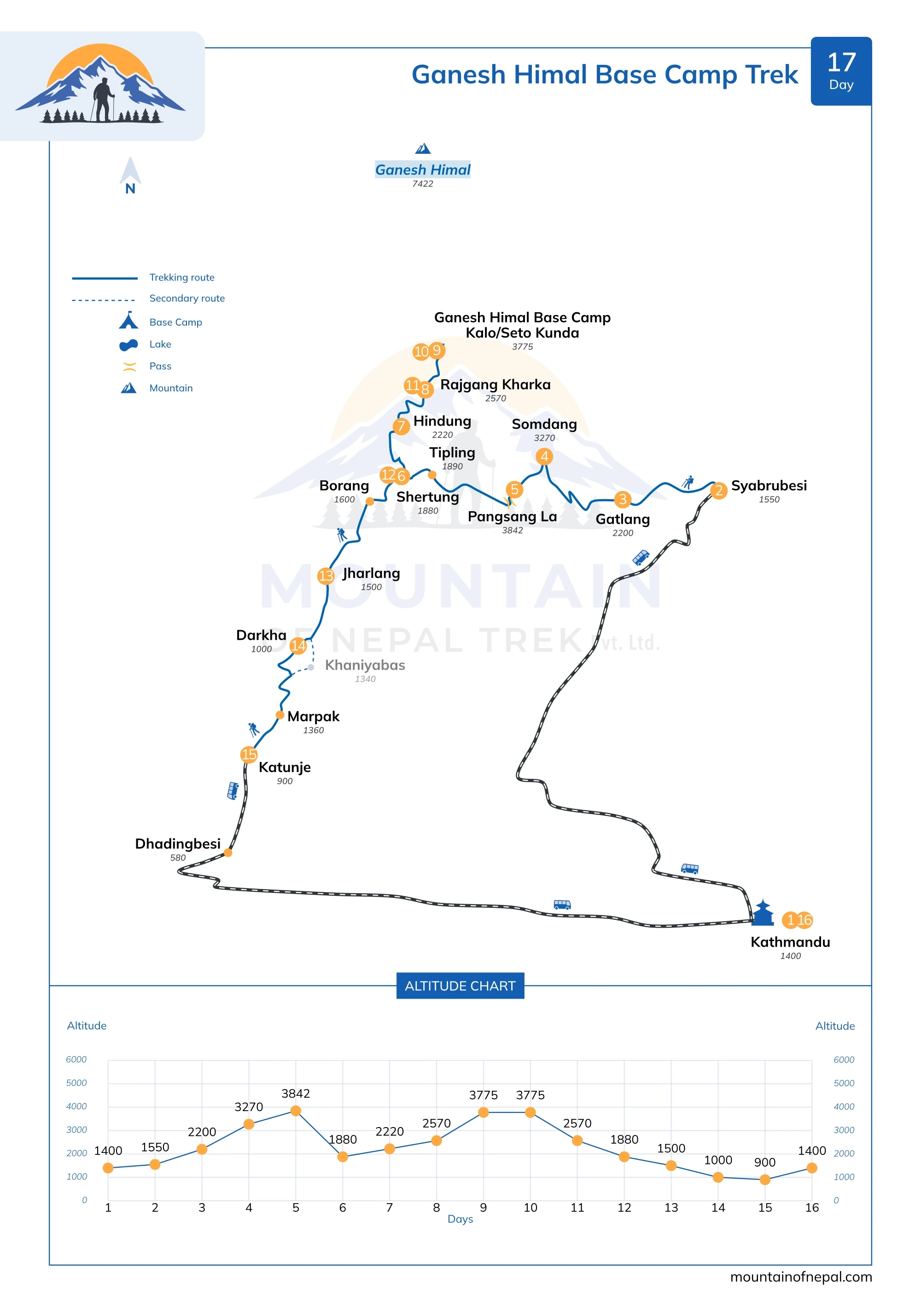
Ganesh Himal Base Camp Trek
| Trip code | |
| Package name | Ganesh Himal Base Camp Trek |
| Duration | 17 |
| Max. elevation | 3775 m |
| Level | Moderate |
| Transportation | All ground transportation as per the itinerary |
| Accomodation | Hotel in Kathmandu and Lodge / Tea House / Camps during trek |
| Starts at | Kathmandu |
| Ends at | Kathmandu |
| Trip route | |
| Cost | USD 0 per person |
Highlights
- Sacred Kalo Seto Kunda (Black & White Lakes) and Parvati Kunda
- Panoramic views of Ganesh Himal, Langtang Himal, and Manaslu Himal
- Remote, less-crowded trekking experience in a hidden Himalayan valley
- Authentic cultural encounters with Tamang, Gurung, Brahmin, Chhetri, and Newar communities
- Diverse landscapes: terraced farmland, lush alpine meadows, dense forests, and rugged hills
- Vibrant rhododendron, oak, and bamboo forests (especially beautiful in spring)
- Scenic trails featuring rivers, waterfalls, suspension bridges, and deep gorges
- Rich local wildlife: Himalayan thar, yak, wild goats, and other alpine species
- Natural hot springs en route to Neber
- Mineral-rich region known for zinc, crystal, ruby, and tin
Overview
The Ganesh Himal Base Camp Trek is one of Nepal’s hidden gems, offering a perfect blend of remote wilderness, cultural immersion, and breathtaking Himalayan scenery. Located northwest of Kathmandu, this trek explores the lesser-visited Ganesh Himal region, named after the elephant-headed Hindu deity Ganesh. Unlike crowded trekking routes, this journey provides solitude, authentic Tamang culture, and pristine landscapes.
The itinerary you provided is well-paced, allowing trekkers to gradually ascend from lower hills to high alpine terrain. Highlights include traditional villages like Gatlang and Shertung, panoramic passes such as Pangsang La, and the stunning Ganesh Himal Base Camp near Kalo Seto Kunda. The route showcases diverse ecosystems—from terraced farmland to dense forests and glacial valleys.
- Scenic drive through rural Nepal to Syabrubesi and Gatlang
- Cultural encounters with the Tamang and local communities
- Crossing Pangsang La Pass (3,842 m)
- Visit to Ganesh Himal Base Camp and the sacred Kalo Seto Kunda
- Less crowded and off-the-beaten-path trekking experience
Best Season for Ganesh Himal Base Camp Trek
Choosing the right season is crucial for a successful and enjoyable trek. The best time to undertake the Ganesh Himal Base Camp Trek is during spring (March to May) and autumn (September to November). These months offer stable weather, clear skies, and the best mountain views.
Spring brings blooming rhododendron forests and moderate temperatures, making the trail vibrant and colourful. Autumn, on the other hand, provides crystal-clear mountain vistas and dry trekking conditions after the monsoon. Winter trekking is possible but can be challenging due to cold temperatures and snow at higher elevations, especially near Pangsang La Pass.
Seasonal breakdown:
- Spring (Mar–May): Flowers, mild weather, great visibility
- Autumn (Sep–Nov): Best overall conditions, clear skies
- Winter (Dec–Feb): Cold, snow at high altitudes
- Monsoon (Jun–Aug): Rainy, slippery trails, limited views
Ganesh Himal Base Camp Trek Difficulty and Transportation
This trek is considered moderately challenging, suitable for trekkers with a reasonable level of fitness. Daily walking ranges from 5 to 8 hours, with gradual altitude gain. The highest point reaches 3,842 m at Pangsang La Pass and 3,775 m at base camp, making altitude acclimatisation important but manageable.
Transportation involves a mix of long scenic drives and trekking. The journey begins with a drive from Kathmandu to Syabrubesi and continues to Gatlang. Road conditions can be rough and time-consuming, especially in remote areas. However, these drives provide insight into rural Nepalese life and landscapes.
Difficulty & transport highlights:
- Moderate trekking difficulty (no technical climbing)
- Long trekking days with gradual ascents
- Jeep/bus drives on rough mountain roads
- Suitable for beginners with preparation and fitness
Food and Accommodation for Ganesh Himal Base Camp Trek
Food and accommodation during this trek are simple yet authentic. Unlike popular routes, this region has fewer developed teahouses, but local lodges and homestays provide warm hospitality. Meals are freshly prepared using locally sourced ingredients.
Trekkers can expect traditional Nepali dishes like dal bhat, along with basic options such as noodles, soups, and potatoes. Accommodation typically includes basic rooms with twin beds and shared facilities. In higher or remote areas like Somdang and Rajgang Kharka, camping may be required depending on availability.
What to expect:
- Traditional meals: Dal bhat, vegetables, soups
- Basic teahouses and homestays
- Occasional camping in remote sections
- Limited menu choices, but nutritious food
Ganesh Himal Base Camp Trek Permits
Permits are essential for trekking in the Ganesh Himal region, as it falls within a restricted conservation area. Proper documentation ensures safety, environmental protection, and support for local communities.
Trekkers need a Langtang National Park permit and a TIMS (Trekkers’ Information Management System) card. If your route passes through restricted zones, a special permit may also be required, typically arranged through a registered trekking company like Mountain of Nepal.
Required permits:
- Langtang National Park Entry Permit
- TIMS Card
- Restricted area permit (if applicable)
- Passport copies and photos
Why Choose Ganesh Himal Base Camp Trek
The Ganesh Himal Base Camp Trek is ideal for those seeking an authentic Himalayan adventure away from mass tourism. It offers untouched landscapes, cultural richness, and a sense of exploration rarely found on more commercial routes like Everest or Annapurna.
Choosing a reliable company such as Mountain of Nepal ensures a well-organised and safe trekking experience. Their local expertise, knowledgeable guides, and commitment to sustainable tourism enhance your journey while supporting local communities.
Reasons to choose this trek:
- Off-the-beaten-path adventure
- Rich Tamang culture and traditions
- Stunning Himalayan views without crowds
- Peaceful trails and untouched nature
- Support from experienced local operators like Mountain of Nepal
Trip Preparation
Trip Itinerary
Day 1 : Arrival in Kathmandu (1,400 m)
Upon arrival in Kathmandu, you will be warmly welcomed by the team from Mountain of Nepal and transferred to your hotel. The vibrant capital city offers a fascinating blend of ancient heritage and modern culture, with bustling streets, temples, and markets. After check-in, you will attend a detailed trek briefing where your guide will explain the route, safety measures, and cultural highlights of the journey. If time permits, you can explore nearby UNESCO World Heritage Sites or relax and recover from your journey. In the evening, enjoy a traditional Nepali dinner while preparing mentally for the adventure ahead.
Day 2 : Drive to Syabrubesi (1,550 m) – 6–7 hrs
After breakfast, embark on a scenic drive to Syabrubesi, the starting point of the Langtang Trek. The route follows the Bhote Koshi River, winding through terraced fields, lush forests, and riverside villages. While mountain peaks are not visible today, the journey offers a gradual transition from Kathmandu’s urban landscapes to the Himalayan foothills, with many photo opportunities of rivers, traditional villages, and forests.
Syabrubesi lies on the banks of the Bhote Koshi River and serves as the gateway for multiple trekking routes into the Langtang region and Ganesh Himal area. Upon arrival, check into a local guesthouse or mountain lodge, rest, and prepare for the trek ahead. Overnight stay in Syabrubesi.
Day 3 : Drive to Gatlang (2,200 m) via Syabrubesi – Drive: approx. 9-10 hrs
Your first day of trekking begins with a steady ascent along the Tamang Heritage Trail, heading west from your lodge in Syabrubesi. The initial climb is steep and can be challenging, as you gain significant elevation toward Gatlang (2,200 m).After approximately 5–6 hours of walking, you arrive at Gatlang, a picturesque ridge-top Tamang village known for its traditional stone houses and terraced fields.This beautiful settlement reflects a centuries-old Himalayan lifestyle, where the Tamang community—originally of Tibetan origin—continues to preserve its unique culture and traditions. After lunch, take time to explore the village and visit Parvatikunda Lake, a sacred site for locals. You can observe daily life, including farming, herding, and traditional crafts. The villagers live simply, cultivating crops like potatoes, barley, and maize, and raising livestock such as yaks and goats. Overnight, stay in a Tamang homestay or teahouse, where you’ll be warmly welcomed as part of the family. Enjoy a variety of home-cooked meals and experience genuine local hospitality. In the evening, relax in the peaceful mountain setting, take in stunning views, and immerse yourself in the authentic culture of this charming Himalayan village—often referred to as the “Black Village” for its distinctive stone-built homes.
Day 4 : Trek to Somdang (3,270 m) – Walk: approx. 6–7 hrs
The journey from Gatlang begins with a gradual ascent above the village, leading to the sacred Parvati Kunda, a tranquil alpine lake and important pilgrimage site, especially during local festivals. From here, the trail continues through lush rhododendron and pine forests, with occasional open pastures offering scenic mountain views. You reach Yuri Kharka, a peaceful grazing area, which makes an ideal stop for lunch and rest. The trail then climbs steadily toward Khurpudanda Pass (3,710 m), where you are rewarded with panoramic views of the Ganesh Himal range, Paldor Peak, and surrounding hills. After enjoying the views, the route descends past the beautiful Chukarma Waterfall, continuing through remote forested terrain before crossing the Somdang Khola, the natural boundary between Rasuwa and Dhading districts. A short final walk brings you to the quiet settlement of Somdang, surrounded by rugged hills and forests, offering a remote and authentic Himalayan experience. Accommodation: Tea house / Camping Meals: Lunch en route; dinner at lodge or prepared by crew
Day 5 : Trek to Pangsang La Pass (3,842 m) – Walk: approx. 3–4 hrs
Today is a short and relatively easy walk, allowing time to rest and enjoy the surroundings. Leaving Somdang, the trail ascends gradually through alpine forests of pine, fir, and rhododendron, with occasional clearings offering views of the surrounding hills. If you are trekking in spring, you can enjoy the sweet fragrance of blooming rhododendrons, adding vibrant color to the landscape. Along the way, you may also spot Himalayan birds, and if you are fortunate, even some wildlife. As you gain elevation, the forest opens into wide high-altitude meadows near Pangsang Kharka, leading toward Pangsang La Pass. From this open ridge, you can enjoy panoramic views of the Ganesh Himal, Langtang, Manaslu, and Annapurna ranges on clear days. You will reach the campsite around lunchtime, giving you a relaxed afternoon to rest and acclimatize. You can take a short hike to nearby hills for better views, explore the open meadows, or simply relax and enjoy the peaceful mountain setting. The area is also ideal for photography, especially during sunset, when the surrounding peaks are beautifully lit. In the evening, spend time with your crew, enjoy a warm meal, and experience remote camping under clear Himalayan skies, far from the crowds.
Day 6 : Trek to Shertung (1,880 m) – Walk: approx. 5–6 hrs
Start your day early to catch a stunning Himalayan sunrise, as the first light of day paints the surrounding peaks in golden hues—a perfect moment for photography and reflection. After breakfast, begin your descent from Pangsang La Pass, walking through open alpine meadows, pine and rhododendron forests, and enjoying panoramic mountain views along the way. The trail first brings you to Tipling Village, a quiet settlement known for its Buddhist monasteries and small Catholic churches. Explore the village, meet the locals, and learn about the unique cultural and spiritual life of this Himalayan community. From Tipling, continue your trek to Shetung Village, a charming Tamang settlement surrounded by lush forests and terraced fields. Chalish Village is a short 20-minute walk from here, providing another glimpse of traditional mountain life. Upon arrival in Shetung, settle into a local teahouse, relax, and enjoy a warm meal prepared by your crew or the lodge. If time permits, visit Fyanchyat Monastery and Chyamra Danda, two nearby sacred sites offering cultural insights and breathtaking views of the valley below. This section of the trek is relatively easy, giving you a chance to rest, take photos, and immerse yourself in the natural beauty and local culture of the Tamang communities. Along the way, keep an eye out for Himalayan birds and wildlife, and enjoy the vibrant alpine flora, especially in spring when rhododendrons are in bloom. Accommodation: Local teahouse/camp
Day 7 : Trek to Hindung (2,220 m) – Walk: approx. 5–6 hrs
The trek to Hindung offers a rewarding mix of scenic landscapes, cultural encounters, and varied trail conditions, making it one of the most interesting days in the Ganesh Himal region. The journey begins with a descent to Menchet Khola, where you cross a small mountain stream before starting a short but steep uphill climb. After this initial ascent, the trail becomes more gradual, winding through lush forests, terraced fields, and quiet hillside paths. Along the way, trekkers pass through small Tamang villages, where traditional stone houses, prayer flags, and daily farming activities provide a glimpse into authentic Himalayan life. A short detour leads to Tin Kanya Temple, a peaceful Hindu shrine that reflects the deep spiritual connection locals have with the land. Continuing onward, the trail follows sections of Khar Khola and reaches Pasabar Danda, a scenic ridge offering expansive views of surrounding hills and distant Himalayan peaks, including parts of the Ganesh Himal range on clear days. Nearby lies the sacred Tribeni River, a confluence of three rivers that holds religious importance for both Hindu and Buddhist communities, making it a culturally significant stop along the route. As the trek progresses, the landscape transitions between dense forests and open ridgelines, creating a diverse and ever-changing trekking experience. The day concludes at Hindung, a large and culturally rich Tamang settlement, known as the last permanent village before heading toward Ganesh Himal Base Camp. Here, trekkers can experience warm local hospitality, traditional lifestyle, and mountain culture in a peaceful setting surrounded by natural beauty. This stage of the trek perfectly combines nature, culture, and adventure, offering a well-balanced and memorable Himalayan experience.
Day 8 : Trek to Rajgang Kharka (2,570 m) – Walk: approx. 5–6 hrs
Today’s trail passes mostly through scenic forests and is easy to follow, though it includes some gentle ascents. Trekkers will walk through dense rhododendron forests and mixed alpine vegetation, enjoying the sights and sounds of the Himalayan wilderness. These forests are home to a variety of birds and small wildlife, making the trek especially rewarding for nature enthusiasts. During spring, the blooming rhododendrons add vibrant color and fragrance, creating a magical trekking experience.As the trail gradually climbs, you will notice fewer terraced fields, signaling your approach into more remote and forested terrain. The path eventually opens into Rajgang Kharka, a beautiful alpine pasture surrounded by forests and grasslands. This seasonal grazing area is used by local villagers, who bring their livestock—especially sheep and goats—during the warmer months. In winter, the pasture is quiet and mostly uninhabited due to snow and cold temperatures. The serene environment, fresh mountain air, and panoramic surroundings make Rajgang Kharka an ideal place to relax, take in the views, and enjoy a peaceful night under the Himalayas. Accommodation: Camping Meals: Lunch and dinner prepared by the crew
Day 9 : Trek to Ganesh Himal Base Camp / Kalo Seto Kunda (3,775 m) – Walk: approx. 6–7 hrs
After breakfast, the trek continues from Rajgang Kharka toward Kalo Seto Kunda (Black and White Lake) and the Ganesh Himal Base Camp. Today’s trail is a mix of narrow uphill paths and gentle level stretches, winding through dense forests of rhododendron, pine, and fir for the first few hours. The forest gradually gives way to open alpine meadows and grassy slopes, reflecting the higher altitude and sparse vegetation.
As you approach Ganesh Himal Base Camp, the landscape becomes increasingly rugged, with panoramic views of snow-capped peaks and glacial streams. The base camp itself is a peaceful, remote site surrounded by dramatic mountains, offering 360° vistas of Ganesh Himal, Langtang, and Annapurna ranges. It is an ideal place to rest, soak in the scenery, and prepare for nearby explorations.
Kalo Seto Kunda, the Black and White Lake, is a sacred alpine lake revered by local communities. According to local beliefs, the lakes hold spiritual power and are a place for meditation and offerings. Pilgrims and trekkers alike visit the lakes to pay respect, especially during religious festivals, adding a cultural and spiritual dimension to the high-altitude adventure. During winter, the lakes are typically frozen, creating a serene, pristine environment.
Overnight at Ganesh Himal Base Camp is in tents, where trekkers can enjoy a peaceful night under clear Himalayan skies, surrounded by fresh mountain air and the sounds of the high-altitude wilderness. Accommodation: Camping, Meals: Lunch and dinner prepared by the crew
Day 10 : Rest day at Ganesh Himal Base Camp (3,775 m)
Today is a free and relaxing day at Ganesh Himal Base Camp, allowing you to explore the area or simply enjoy the peaceful mountain surroundings. You can take a short excursion to Kalo Seto Kunda (Black and White Lake), one of the most unique and sacred sites in the region. Kalo Seto Kunda consists of two lakes with distinct appearances. The Black Lake (Kalo Kunda) is covered with dark stones, giving it a deep, dark color, while the White Lake (Seto Kunda) is filled with light-colored, shining stones, creating a beautiful contrast. These lakes are considered holy by local communities and are often visited for spiritual reflection and offerings. This region is also closely associated with Lord Ganesh, the Hindu god of wisdom and prosperity. The Ganesh Himal range is believed to be named after the deity, as the mountain’s shape is said to resemble Ganesh’s head. According to local belief, this land carries a special spiritual energy, and those who reach here may feel blessed with clarity, peace, and renewed energy. Many believe that spending time in this quiet and powerful landscape helps ease the mind and bring a sense of inner balance. From the base camp, you can enjoy stunning views of Ganesh Himal, Paldor Peak, and surrounding mountains, making it an ideal place for photography and quiet reflection. As this is the furthest point of the trek, it is a perfect place to pause and fully appreciate the remote beauty of the Himalayas. In the afternoon, relax at camp or explore nearby viewpoints. If you wish, you can also join our cook and help prepare your own dinner, adding a fun and memorable hands-on experience to your stay. In the evening, enjoy a warm meal under clear Himalayan skies.Accommodation: Camping, Meals: Breakfast, lunch, and dinner prepared by the crew
Day 11 : Trek back to Rajgang Kharka (2,570 m) – Walk: approx. 6–7 hrs
Today you retrace your steps back toward Rajgang Kharka, descending through the same landscapes you crossed on the way up. The trail feels different now, as the journey from the sacred Kalo Seto Kunda and Ganesh Himal Base Camp leaves a sense of calm and reflection. As you descend, the views take on a new perspective, with the mountains, valleys, and forests appearing both familiar and yet somehow more meaningful. With less physical effort compared to the ascent, you have more time to notice the small details—the vibrant colors of the forest, distant peaks, grazing pastures, and the sounds of nature that may have been missed earlier. You might also spot wildlife or colorful Himalayan birds that were hidden before, adding delightful surprises along the way. Walking back through alpine meadows and forest trails, there is a quiet satisfaction in revisiting the path, now with a deeper connection to the landscape. By the time you reach Rajgang Kharka, the peaceful pasture once again offers a comfortable place to rest, surrounded by nature and open skies., Accommodation: Camping, Meals: Breakfast, lunch, and dinner prepared by the crew
Day 12 : Trek back to Shertung (1,880 m) – Walk: approx. 6–7 hrs
Today, we begin our descent from the serene high pastures of Rajgang Kharka, retracing the trail toward Shertung. The downhill walk is gentler on the legs, giving you the chance to fully enjoy the surrounding landscapes. As you descend, the mountains, valleys, and forests appear in a new light, allowing you to notice details you may have missed on the way up—like hidden alpine flowers, distant grazing pastures, or Himalayan birds flitting among the trees. The trail passes through mixed forests of rhododendron, pine, and fir, gradually opening into pastures and terraced farmland as you approach lower altitudes. Walking through the villages again, you can observe the local Tamang culture more closely, spotting traditional houses, prayer flags, mani walls, and daily life activities that may have seemed rushed on the way up. Along the way, you might catch glimpses of wildlife such as Himalayan tahr or musk deer, adding small surprises to the journey. The combination of fresh mountain air, gentle descent, and scenic surroundings makes this trek section both relaxing and rewarding. By midday, you will reach Shertung, where a comfortable teahouse awaits. Spend the evening unwinding, sharing stories with your trekking companions, and enjoying the peaceful mountain atmosphere.
Accommodation: Teahouse | Meals: Breakfast, lunch, and dinner included
Day 13 : Trek to Jharlang (1,500 m) – Walk: approx. 7–8 hrs
The day starts with a gentle climb across lush green slopes, rising steadily to a scenic ridge. From this vantage point, trekkers are treated to breathtaking views of Ganesh Himal, cascading waterfalls, and the patchwork of terraced farms in the valleys below—perfect for photography and soaking in the Himalayan panorama. The trail then descends through remote Tamang villages and farmland, providing a rare glimpse into rural Himalayan life. You may see locals tending their fields, and children waving as you pass along the narrow village trails. T, and traditional stone-and-wood homes tucked into the hillsides. This section of the trek offers a genuine cultural experience, blending natural beauty with the daily rhythms of mountain life. After a midday lunch at Borang, the trail continues with gentle ups and downs toward Jharlang, a picturesque village reflecting the rich cultural heritage of the Tamang community. Here, trekkers can explore local traditions, admire traditional Himalayan architecture, and experience the authentic lifestyle of one of Nepal’s indigenous mountain communities.
Day 14 : Trek to Darkha (1,000 m) – Walk: approx. 7–8 hrs
Today’s trail gently descends from Jharlang into the lush lowland valleys, where warmer air and vibrant farmland replace the high-altitude chill. The path winds through terraced fields, dense forests, sparkling streams, and charming hanging bridges, offering a variety of scenic landscapes along the way. villages of Tamang and Brahmin communities dot the route, reflecting remarkable cultural harmony. Walking through these settlements, trekkers can observe traditional homes, local farming practices, and the simple daily life of these communities, creating a deep connection with Nepal’s rural culture. The gentle pace allows you to notice colorful flora, listen to birdsong, and perhaps glimpse domestic animals grazing in open pastures. As the trail continues downhill, panoramic views open to surrounding hills, rivers, and distant peaks, providing refreshing photo opportunities. This part of the trek is relaxing and lets you fully enjoy the peaceful rural surroundings.By late afternoon, the trail reaches Darkha, a tranquil village surrounded by forests and farmland. Overnight here at a local teahouse or campsite gives trekkers the chance to experience authentic village life, enjoy local cuisine, and prepare for the next stage of the adventure.
Day 15 : Trek to Katunje (900 m) – Walk: approx. 4–5 hrs
Today marks the last day of your incredible adventure. The trail gently winds downhill along scenic village paths and rough jeep tracks, offering one final opportunity to soak in the stunning Himalayan landscape. As you descend, a mix of relief, nostalgia, and excitement fills the air—relief for completing the challenging trek, nostalgia for the landscapes and villages you’ve encountered, and excitement for the memories and friendships you’ve built along the way. The path leads to Katunje, where we stop for lunch and spend the afternoon exploring the charming village. Take in the local lifestyle, observe daily activities, and feel the warmth and simplicity of rural Nepalese life. In the evening, we gather for a special farewell celebration with the trekking crew. Share laughter, stories, and traditional food while reflecting on your journey through Langtang, the Ganesh Himal region, and the heart of rural Nepal. These moments will leave lasting memories, creating a perfect ending to a life-changing trek.
Day 16 : Drive to Kathmandu – Drive: approx. 5–6 hrs
The drive from Katunje to Trishuli Bazar is mostly paved, flat, and gently winding, offering a comfortable journey through charming hillside villages, terraced farmlands, and small towns that highlight the beauty of rural Nepal. From Trishuli onward, the road to Kathmandu remains fully paved and mostly flat at first, before ascending through the winding paths of Shivapuri National Park and descending into the Kathmandu Valley. Along the way, you’ll enjoy scenic glimpses of rivers, dense forests, waterfalls, and distant Himalayan peaks—one last opportunity to soak in Nepal’s stunning landscapes from the comfort of your vehicle. The drive typically takes about 5–6 hours, depending on traffic, road conditions, and any stops you make for photos or refreshments.
Arriving in Kathmandu, you’ll feel a mix of accomplishment, nostalgia, and joy, marking the conclusion of your unforgettable Langtang–Ganesh Himal trek. This final journey through Nepal’s hills and valleys offers a peaceful transition from the high mountains back to city life, leaving lasting memories of your adventure.
Day 17 : Departure
Your journey concludes today as you prepare for departure from Kathmandu. Depending on your flight schedule, you may have time for some last sightseeing or shopping. The team from Mountain of Nepal will assist you with your airport transfer and ensure a smooth departure. As you leave Nepal, you will carry with you unforgettable memories of the Ganesh Himal Base Camp Trek, including stunning landscapes, cultural experiences, and personal achievements.
Inclusions
What is included?
- Airport transfers in Kathmandu
- All ground transportation as per the itinerary
- Hotel accommodation in Kathmandu
- Teahouse accommodations during the trek.
- All meals (breakfast, lunch, dinner) during the trek.
- Langtang National Park permit & TIMS Card
- Restricted area permit (if applicable)
- Experienced, English-speaking trek guide.
- Porters to carry luggage (1 per 2 trekkers).
- Trekking map and group medical kit.
- Welcome and farewell dinners in Kathmandu.
What isn't included?
- International flights to/from Kathmandu.
- Personal Expenses (Snacks, Drinks, etc.)
- Travel Insurance
- Nepal entry visa fee.
- Personal Trekking Gear
- Tips for Guides and Porters
Complimentary