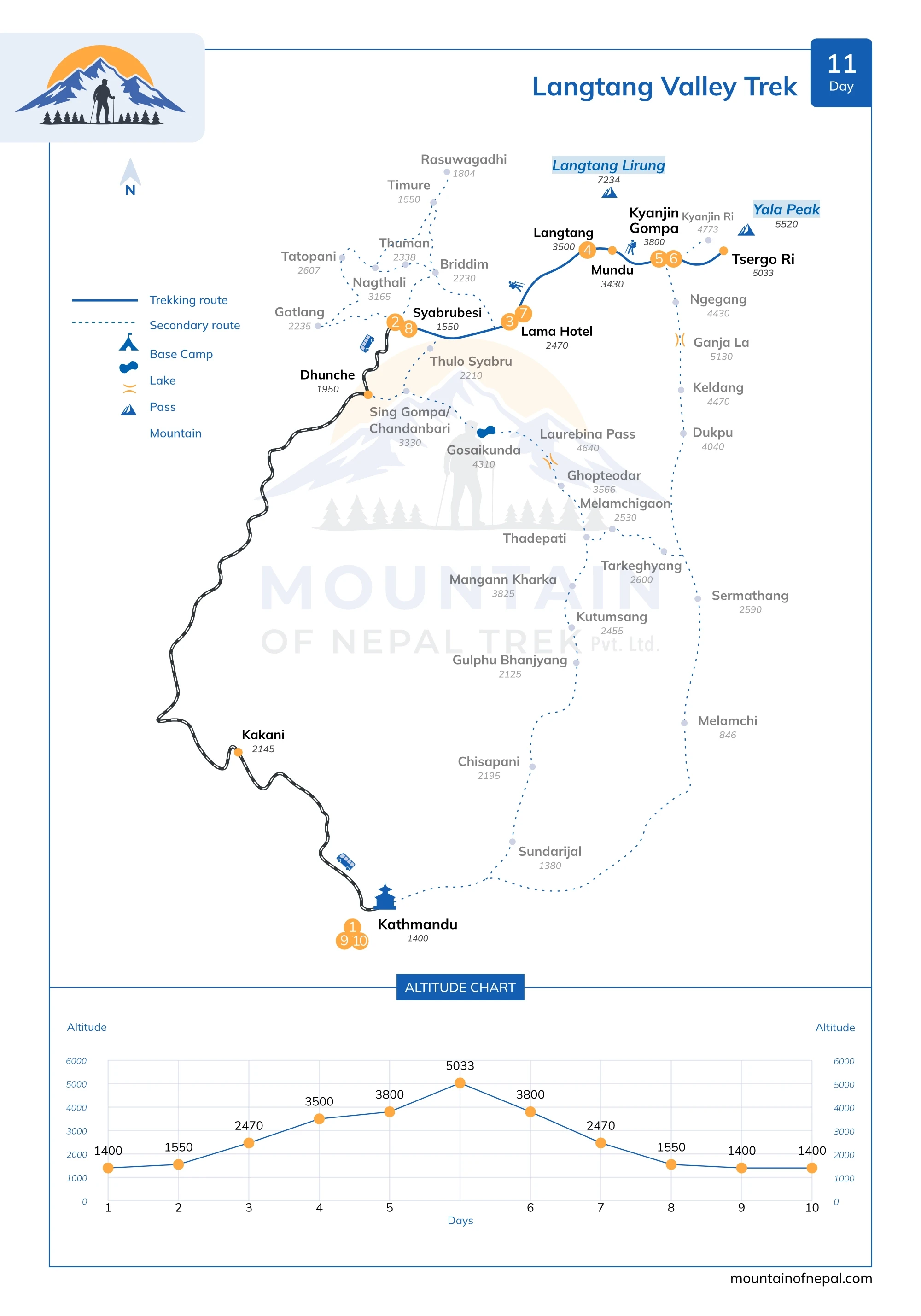
Langtang Valley Trek
| Trip code | |
| Package name | Langtang Valley Trek |
| Duration | 11 |
| Max. elevation | 5033 m |
| Level | Moderate |
| Transportation | All ground transportation as per the itinerary |
| Accomodation | Hotel in Kathmandu and Lodge / Tea House during trek |
| Starts at | Kathmandu |
| Ends at | Kathmandu |
| Trip route | |
| Cost | USD 970 per person |
Highlights
- Stunning views of Langtang Lirung, Ganesh Himal, and Dorje Lakpa
- Trek through lush rhododendron and bamboo forests, home to wildlife like red pandas and Himalayan black bears
- Visit Kyanjin Gompa, an ancient monastery amid Himalayan scenery
- Hike to Tserko Ri (5,033 m) for panoramic mountain views and sunrise
- Explore Langtang Village, rich in Tamang culture and Buddhist traditions
- Taste fresh yak cheese at the Kyanjin cheese factory
- Scenic walks along the Langtang River, with glacial streams and yak pastures
- Witness villages rebuilt after the 2015 earthquake, showing local resilience
- Less-crowded alternative to Everest and Annapurna treks
- Explore the serene landscapes of Langtang National Park
- Walk past prayer flags, mani walls, and Buddhist monasteries
- Enjoy warm hospitality in traditional teahouses and mountain lodges
- Perfect short Himalayan trek near Kathmandu
Overview
The Langtang Valley Trek is one of the most accessible and scenic treks in Nepal, ideal for travelers looking for breathtaking Himalayan views without the crowds of the Everest or Annapurna regions. Nestled in the Langtang National Park, the valley is home to snow-capped peaks, glaciers, alpine meadows, and rich Tibetan culture. The trek offers a perfect balance of natural beauty, cultural immersion, and moderate adventure, making it suitable for both novice and experienced trekkers.
Starting from Kathmandu, trekkers drive to Syabrubesi, which is the gateway to the valley. From here, the trail gradually ascends through rhododendron forests, terraced fields, and traditional Tamang villages. You’ll pass through Lama Hotel, Langtang Village, and finally reach Kyanjin Gompa, a small settlement at the foot of Tserko Ri. The trek allows for exploration of local monasteries, cheese factories, and stunning viewpoints along the way.
- Explore Langtang National Park with its unique flora and fauna.
- Spectacular views of Langtang Lirung, Ganesh Himal, and other Himalayan peaks.
- Cultural immersion in the Tamang and Tibetan communities.
- Opportunity to hike Tserko Ri for panoramic mountain views.
Best Season for Langtang Valley Trek
The best seasons to trek in Langtang Valley are spring (March to May) and autumn (September to November). During spring, rhododendrons bloom in vibrant colors, creating a stunning landscape, while autumn offers clear skies and stable weather for the best Himalayan views.
Winter trekking is possible but challenging due to heavy snowfall, especially at higher altitudes near Kyanjin Gompa and Tserko Ri. Monsoon season (June to August) is generally not recommended due to slippery trails and leeches, though the valley remains lush and green.
Season Highlights:
- Spring: Rhododendron forests, mild temperatures, clear skies.
- Autumn: Crisp air, excellent mountain visibility, festive local culture.
- Winter: Snowy landscapes, fewer crowds, need warm gear.
Langtang Valley Trek Difficulty and Transportation
The Langtang Valley Trek is considered moderate in difficulty, suitable for those with reasonable fitness and some prior trekking experience. Altitudes reach up to 5,033 m on Tserko Ri, which may pose mild altitude-related challenges. The daily walks average 4–7 hours, with gradual ascents and occasional steep sections.
Transportation is straightforward. From Kathmandu, travelers drive 6–8 hours to Syabrubesi, where the trek begins. Local jeeps or buses are commonly used, offering scenic routes through hills and valleys. The trek itself involves walking on well-marked trails, often alongside rivers and through forests.
Difficulty & Transport Summary:
- Trek difficulty: Moderate
- Highest altitude: 5,033 m (Tserko Ri)
- Daily walking: 4–7 hours
- Transportation: Jeep/Bus from Kathmandu to Syabrubesi
Food and Accommodation for Langtang Valley Trek
Accommodation along the Langtang Valley Trek is primarily in tea houses and lodges, which offer basic yet comfortable facilities. Rooms usually have twin beds, blankets, and shared bathrooms. Hot showers are available at major stops like Kyanjin Gompa for a small fee.
Food is a mix of Nepali, Tibetan, and Western cuisine, with options like dal bhat, momo, noodles, and soups. While the menu is varied, higher altitude locations may have limited supplies, and prices increase slightly due to transportation costs. Trekkers are advised to carry snacks and energy bars for longer walks.
Food & Stay Highlights:
- Tea houses with twin rooms and blankets.
- Dal bhat, noodles, and Tibetan momo are widely available.
- Hot showers at Kyanjin Gompa for a small fee.
- Snack and water availability along the trail.
Langtang Valley Trek Permits
To enter Langtang National Park and trek the valley, trekkers need two main permits: the Langtang National Park Entry Permit and the TIMS (Trekkers’ Information Management System) Card. These permits are typically arranged by trekking agencies such as Mountain of Nepal for convenience.
The park permit helps protect the environment and wildlife while providing funds for local communities. TIMS ensures trekkers are registered for safety and emergency support. Fees vary depending on nationality, with lower rates for South Asian citizens.
Permit Summary:
- Langtang National Park Permit – Required for all trekkers
- TIMS Card – Essential for trek registration and safety
- Agency support available for hassle-free processing
Why Choose Langtang Valley Trek
The Langtang Valley Trek is ideal for travelers seeking a combination of nature, culture, and adventure without the intense demands of higher-altitude treks like Everest Base Camp. It offers diverse landscapes, traditional villages, and a genuine Himalayan experience. Trekkers also get the chance to explore Kyanjin Gompa, interact with monks, and hike Tserko Ri for panoramic views.
Choosing Mountain of Nepal ensures a safe and well-organized experience. Their experienced guides, local knowledge, and logistical support make the trek enjoyable and stress-free, from permit arrangements to tea house bookings and emergency preparedness.
Reasons to Choose This Trek:
- Moderate difficulty, suitable for most trekkers.
- Stunning Himalayan scenery and cultural immersion.
- Expert guidance and logistics support by Mountain of Nepal.
- Opportunity to climb Tserko Ri for breathtaking views.
Trip Preparation
Trip Itinerary
Day 1 : Arrival in Kathmandu (1,400 m) and Transfer to Hotel
Upon arrival at Tribhuvan International Airport in Kathmandu, our representatives from Mountain of Nepal will welcome you and transfer you to your hotel. This day allows you to rest after your flight and acclimatize to the altitude. In the afternoon, we provide a briefing about the Langtang Valley Trek, covering the route, safety measures, and packing essentials. You will also have time to explore the vibrant streets of Thamel, shop for trekking gear, or enjoy traditional Nepali cuisine in one of the local restaurants.
Day 2 : Drive to Syabrubesi (1,550 m) – Drive: approx. 7–8 hrs
After breakfast in Kathmandu, embark on a scenic drive to Syabrubesi, the starting point of the Langtang Trek. The journey takes 8–9 hours along winding roads that follow the Bhote Koshi River, passing terraced fields, riverside hamlets, and lush forests. The drive offers a gradual transition from Kathmandu’s bustling urban landscape to the peaceful Himalayan foothills, with plenty of photo opportunities of suspension bridges, rivers, traditional settlements, and snow-capped mountains along the way. Syabrubesi sits on the banks of the Bhote Koshi River and serves as the gateway to multiple trekking routes into the Langtang region and Ganesh Himal area. While mountain peaks are not visible directly from this riverside settlement, it provides a serene introduction to rural Himalayan life and a chance to rest, acclimatize, and prepare for the trek ahead. Evenings in Syabrubesi are quiet and restful, perfect for enjoying a warm meal and soaking in the tranquil riverside atmosphere. Overnight stay at a comfortable guesthouse or mountain lodge in Syabrubesi, setting the stage for your Himalayan adventure.
Day 3 : Trek to Lama Hotel (2,470 m) – Walk: approx. 6 hrs
After breakfast, start trekking along the Langtang Khola, winding through dense rhododendron and oak forests. Watch for playful langurs and, if you’re lucky, the rare red panda. Pass riverside villages, traditional stone houses, and terraced fields that showcase local life. Cross a few suspension bridges as the trail gradually ascends, offering occasional views of waterfalls and surrounding peaks. The shaded forest and flowing river make the trek refreshing, with plenty of spots to pause and enjoy the scenery. Arrive at Lama Hotel in the late afternoon. Despite its name, it is not a single building but a small settlement of cozy teahouses scattered in the woodland. Stay in one of the lodges, enjoy warm meals, and relax amid the peaceful Himalayan surroundings.
Day 4 : Trek to Langtang Village (3,500 m) – Walk: approx. 6 hrs
After breakfast, continue ascending through pine and fir forests, breathing in crisp mountain air. Pass Ghoda Tabela, known for its grazing horses, with stunning views of Langtang Lirung, the valley’s majestic peak. The trail then passes traditional Tamang villages, where fluttering prayer flags and stone houses with wooden balconies provide a glimpse into local culture. As you gain elevation, the path becomes more rugged, and large trees give way to open alpine terrain. Arrive at Langtang Village, a Tibetan-style settlement and the largest in the valley. Check into a cozy teahouse or lodge, explore the village, and acclimatize for the night.
Day 5 : Trek to Kyanjin Gompa (3,800 m) – Walk: approx. 4 hrs
Today’s trek is shorter and relatively easy, making it ideal for gradual acclimatization as you move to higher altitude. After breakfast, leave Langtang Village and follow a well-defined trail that gently ascends through the wide open valley. Compared to previous days, the landscape becomes more alpine, with fewer trees and expansive views of the surrounding mountains. The trail passes through yak pastures and small seasonal settlements, where you can observe local life and grazing livestock. Along the way, you will encounter several Buddhist monuments, including mani walls carved with sacred prayers, prayer wheels, and colorful prayer flags fluttering in the wind—adding a strong spiritual atmosphere to the journey. As you continue, enjoy stunning views of peaks such as Langtang Lirung and Langshisha Ri, rising dramatically above the valley. The trail remains gradual and comfortable, allowing you to walk at a steady pace while fully taking in the scenery. After 3–4 hours of trekking, arrive at Kyanjin Gompa, a beautiful high-altitude village surrounded by snow-capped mountains. Check into a mountain lodge and relax. In the afternoon, explore the village, visit the ancient monastery, and stop by the local cheese factory. If time and energy permit, you can hike to Kyanjin Ri (4,773 m) for stunning panoramic views of Langtang Lirung, Ganchenpo, and surrounding peaks, especially at sunset. This easy and scenic day helps your body adjust to the altitude while offering a rich combination of natural beauty and cultural experience. Overnight stay at a lodge in Kyanjin Gompa.
Day 6 : Hike to Tserko Ri (5,033 m) & Return to Kyanjin Gompa – Duration: 6–7 hours (round trip)
Today is one of the most rewarding days of the trek. You’ll set out early, around 6:00 AM, for a hike to Tserko Ri (5,033 m), making the most of clear morning skies and aiding proper acclimatization. An early start also helps avoid afternoon clouds and strong winds at higher elevations. The trail begins with a gentle walk-through alpine meadows and yak pastures, with crisp mountain air and gradually unfolding views of Langtang Lirung. On the lower slopes, you may see grazing yaks, especially during summer, along with wildflowers and small alpine streams. As you ascend, the trail becomes steeper and rockier near the ridge, requiring a steady pace and regular breaks to adjust to the altitude. After approximately 3–4 hours of ascent, you reach the summit of Tserko Ri, where you are rewarded with breathtaking 360-degree views of the Himalayas, including Langshisha Ri, Ganesh Himal, and the entire Langtang Valley. Take time to rest, enjoy a light snack, and capture the stunning scenery. There are no teahouses along the route, so be sure to carry enough water, snacks, or a packed lunch. The descent retraces your path through the ridge and alpine meadows, with further opportunities to observe grazing yaks and the surrounding flora. By early afternoon, you arrive back at Kyanjin Gompa, where you can enjoy lunch, rest, and explore the village, including its monastery, cheese factory and Tibetan-style houses. This day hike serves as an ideal acclimatization trek, allowing your body to adjust to higher altitudes while experiencing the stunning natural and cultural beauty of the Langtang Valley. Overnight stay at the lodge in Kyanjin Gompa.
Day 7 : Trek back to Lama Hotel (2,470 m) – Walk: approx. 6–7 hrs
After breakfast, begin the descent along the Langtang Valley, retracing your steps through the forests and villages you passed earlier. Enjoy the serene landscapes, sparkling streams, and glimpses of local wildlife one last time. Arrive at Lama Hotel in the late afternoon, check into a lodge, and relax after a day of descending. Take in the peaceful surroundings and savor your final evening in the valley.
Day 8 : Trek to Syabrubesi (1,550 m) – Walk: approx. 5–6 hrs
After breakfast, continue descending along the Langtang Khola, passing small villages and suspension bridges. Enjoy the lush scenery one last time and capture final photographs of the valley’s stunning landscapes. Arrive at Syabrubesi in the afternoon, marking the end of your trek. In the evening, celebrate your final dinner with your guide and porters, sharing stories and gratitude over a delicious meal, marking a memorable conclusion to your journey. Overnight in Syabrubesi.
Day 9 : Drive from Syabrubesi to Kathmandu (1,400 m) – 6-7 hrs
Today marks the completion of your unforgettable Langtang Valley trek. After breakfast, begin your scenic drive back to Kathmandu by private bus or jeep, depending on the group size. The journey takes approximately 6–7 hours, following the Trishuli River and passing through picturesque hills, terraced fields, and small settlements. Enjoy the changing landscapes as you leave the mountains behind and return to the bustling capital city. Upon arrival in Kathmandu, transfer to your hotel and relax. Enjoy a hot shower and a nice dinner or take a short evening stroll around Thamel. Overnight in Kathmandu
Day 10 : Free day in Kathmandu
This day is reserved for rest and optional sightseeing. You can visit cultural landmarks like Pashupatinath Temple, Boudhanath Stupa, or Durbar Square, or simply relax at your hotel. It’s an opportunity to reflect on the trek, enjoy local cuisine, or shop for handicrafts. The team from Mountain of Nepal is available for any assistance, such as organizing day trips, arranging massages, or helping with photography. This day helps recover from the trek before your departure, allowing for a leisurely pace and personal exploration.
Day 11 : Departure
On the final day, you will be transferred to Tribhuvan International Airport for your flight home. Depending on your flight schedule, you may have time for last-minute shopping or sightseeing in Kathmandu. Our team ensures a smooth departure and assistance with airport formalities. You leave with lasting memories of the Langtang Valley, its stunning landscapes, unique culture, and the professional support of Mountain of Nepal, who made your Himalayan adventure safe, comfortable, and unforgettable.
- 1 - 1 pax US$ 1,085
- 2 - 4 pax US$ 970
- 5 - 9 pax US$ 955
- 10 - 15 pax US$ 940
- 16 - 20 pax US$ 925
Inclusions
What is included?
- Airport transfers in Kathmandu.
- All ground transportation as per the itinerary.
- Hotel accommodation in Kathmandu.
- Teahouse accommodations during the trek.
- All meals (breakfast, lunch, dinner) during the trek.
- Langtang National Park permit & TIMS Card
- Experienced, English-speaking trek guide.
- Porter(s) to carry luggage (1 per 2 trekkers).
- Trekking map and group medical kit.
- Welcome and farewell dinners in Kathmandu.
What isn't included?
- International flights to/from Kathmandu.
- Personal Expenses (Snacks, Drinks, etc.)
- Travel Insurance
- Nepal entry visa fee.
- Personal Trekking Gear
- Tips for Guides and Porters
Complimentary