Langtang Valley with Ganja La Pass Trek
| Trip code | |
| Package name | Langtang Valley with Ganja La Pass Trek |
| Duration | 14 |
| Max. elevation | 5122 m |
| Level | Moderate |
| Transportation | All ground transportation as per the itinerary |
| Accomodation | Hotel in Kathmandu and Lodge / Tea House / Camping during trek |
| Starts at | Kathmandu |
| Ends at | Kathmandu |
| Trip route | |
| Cost | USD 0 per person |
Highlights
- Breathtaking panoramic views of Langtang Lirung, Dorje Lakpa, and distant Shishapangma
- Cross the adventurous Ganja La Pass (5,130 m), one of the most challenging and rewarding high passes in the Langtang region
- Explore the rich Tamang culture and heritage in Langtang Village and Tarke Ghyang
- Hike to Tserko Ri (4,984 m) for spectacular sunrise views over the Langtang Himalayan range
- Trek through diverse landscapes, from dense rhododendron forests and waterfalls to alpine meadows and glacier-fed valleys
- Experience remote wilderness trekking with fewer crowds compared to other popular Nepal routes
- Discover traditional Buddhist monasteries, prayer flags, and ancient stone villages along the trail
- Witness dramatic altitude variation from subtropical valleys to high Himalayan passes
- Enjoy the glacial scenery and ice formations near the Kyanjin Gompa region
Overview
The Langtang Valley with Ganja La Pass Trek is a challenging and highly rewarding high-altitude adventure in Nepal, linking the scenic Langtang Valley with the quieter Helambu region through the dramatic Ganja La Pass (5,130 m / 16,800 ft). The pass is one of the most demanding in the region, offering stunning Himalayan panoramas of peaks such as Langtang Lirung, Langtang Ri, Dorje Lakpa, and other surrounding mountains. The trek begins with a scenic drive from Kathmandu to Syabrubesi, followed by classic Langtang Valley trails passing traditional villages, rhododendron forests, alpine meadows, and majestic peaks up to Kyanjin Gompa. Trekkers can enjoy optional hikes like Tserko Ri (4,984 m) for breathtaking 360° views and visit the monastery and yak cheese factory. From Kyanjin Gompa, the terrain becomes more rugged and remote, requiring camping for a few nights before and after the pass. Crossing Ganja La is technically challenging, often involving snowy or icy slopes, steep ascents, and even a ladder installed at one tricky section. Prior experience, such as walking on glaciers with crampons, using an ice axe, and rope techniques for crevasse safety, is recommended. However, if you are new to these skills but highly motivated to cross, our guide can provide on-site training, teaching all the necessary techniques to ensure the success of your trek. This makes it suitable for trekkers with good fitness and high-altitude experience. Wildlife is rich in Langtang National Park, including Himalayan black bears, Himalayan tahr (mountain sheep), langurs, musk deer, and occasional red pandas, adding to the diversity and excitement of the journey. After the pass, the trail descends into the scenic Helambu region, passing through remote alpine villages, lush forests, and terraced farmland before returning toward Kathmandu, completing a spectacular cross-mountain adventure.
The Langtang Valley with Ganja La Pass Trek is one of the most adventurous and culturally rich trekking routes in Nepal, organised professionally by Mountain of Nepal. This trek combines the classic beauty of the Langtang region with the challenging high-altitude crossing of Ganja La Pass (5,130 m approx.), making it a perfect blend of scenic valley trekking and alpine expedition. The journey begins from the bustling capital city of Kathmandu and continues through lush forests, Tamang villages, and glacier-fed valleys, leading deep into the Langtang Himalayas.
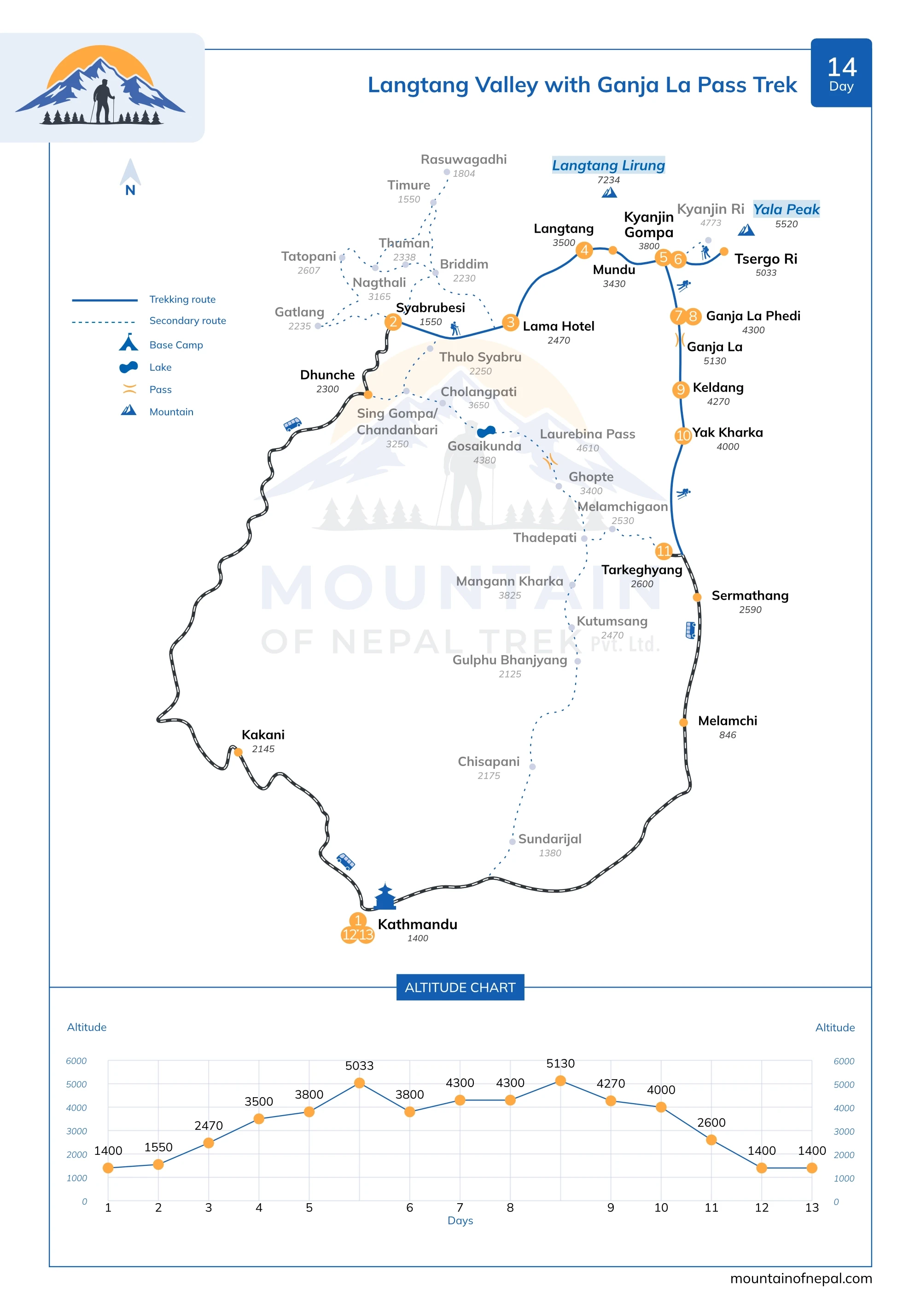
The trek route passes through iconic destinations such as Syabrubesi, Lama Hotel, Langtang Village, and the spiritual hub Kyanjin Gompa, before ascending toward high alpine terrain. A highlight of the journey is the acclimatisation hike to Tserko Ri, offering breathtaking panoramic views of Langtang Lirung and surrounding peaks.
After exploring Langtang Valley, trekkers cross the challenging Ganja La Pass, connecting to the remote Helambu region and ending at Tarke Ghyang. The trek is considered remote, less crowded, and highly rewarding for experienced trekkers.
Key highlights:
- Cultural experience with the Tamang heritage
- Remote alpine wilderness adventure
- Glacier and Himalayan panoramic views
- Ganja La Pass high-altitude crossing
- Organised support by Mountain of Nepal
Best Season for Langtang Valley with Ganja La Pass Trek
The best time to undertake the Langtang Valley with Ganja La Pass Trek is during the spring (March–May) and autumn (September–November) seasons. These periods provide the most stable weather conditions, clear mountain views, and safer trail conditions for crossing high passes like Ganja La Pass.
During spring, the trail is enriched with blooming rhododendrons, lush greenery, and active wildlife. Temperatures are moderate, especially around Kyanjin Gompa, making acclimatisation hikes like Tserko Ri more enjoyable. Autumn, on the other hand, is known for crystal-clear skies after the monsoon, offering uninterrupted Himalayan views throughout the trek route from Kathmandu to the remote high passes.
Winter (December–February) is possible but extremely cold and snow-covered at higher elevations, especially near Ganja La Pass. Monsoon (June–August) brings heavy rain, landslides, and slippery trails in lower regions like Syabrubesi, making it less favourable.
Season summary:
- Spring: Flowers, wildlife, moderate weather
- Autumn: Best visibility, stable conditions
- Winter: Cold, snow risk at the pass
- Monsoon: Avoid due to landslides
- Best choice: Spring & Autumn (recommended by Mountain of Nepal)
Langtang Valley with Ganja La Pass Trek: Difficulty and Transportation
The Langtang Valley with Ganja La Pass Trek is considered moderate to challenging, primarily due to the high-altitude crossing of Ganja La Pass and long trekking days. While the lower sections up to Kyanjin Gompa are relatively moderate, the ascent to over 5,000 meters requires strong physical fitness, prior trekking experience, and proper acclimatisation.
The trek involves steep ascents, rocky trails, glacier crossings, and remote camping sections. The hike to Tserko Ri is also physically demanding but essential for altitude preparation. Trekkers should be prepared for 5–8 hours of walking daily, especially during the pass-crossing section from Langtang Valley toward the Helambu region.
Transportation begins from Kathmandu with a drive to Syabrubesi, which takes approximately 7–8 hours on mountain roads. After completing the trek, another drive from Tarke Ghyang returns trekkers to Kathmandu.
Key difficulty points:
- High altitude above 5,000 m at Ganja La Pass
- Long trekking hours daily (5–8 hrs)
- Remote and rugged terrain
- Weather variability in high regions
- Requires good stamina and preparation
Transport summary:
- Kathmandu → Syabrubesi (jeep/bus)
- Trekking route through the Langtang region
- Return from the Helambu region to Kathmandu
Food and Accommodation for Langtang Valley with Ganja La Pass Trek
Accommodation during the Langtang Valley with Ganja La Pass Trek, organised by Mountain of Nepal, is mainly in tea houses and basic mountain lodges up to Kyanjin Gompa. These lodges provide simple but comfortable rooms with twin-sharing beds, warm blankets, and communal dining areas. Beyond Langtang Valley and toward Ganja La Pass, accommodation becomes more basic, and in some sections, camping support may be required depending on weather and group size.
Food along the route is mostly freshly prepared local meals such as dal bhat (rice, lentils, vegetables), noodles, soups, and Tibetan bread. In villages like Langtang Village and Syabrubesi, trekkers can also find limited Western-style food options such as pasta, pancakes, and fried rice. As altitude increases, food options become simpler due to limited supply access.
Clean drinking water is available, but it should be treated or filtered. Hot beverages like tea, coffee, and ginger lemon honey are widely available and highly recommended for altitude conditions.
Food & accommodation highlights:
- Tea houses in the lower and mid regions
- Basic lodging near high camps
- Traditional Nepali meals (dal bhat)
- Limited but available Western food
- Hot drinks for acclimatisation
- Camping support near high pass sections
Langtang Valley with Ganja La Pass Trek Permits
To complete the Langtang Valley with Ganja La Pass Trek, several permits are required, which are arranged smoothly by Mountain of Nepal for trekkers. The region lies within protected conservation areas, so proper documentation is mandatory before entering from Kathmandu toward Syabrubesi.
The main permits include the Langtang National Park Entry Permit and the TIMS (Trekkers’ Information Management System) card. These permits help regulate trekking activities, ensure safety, and support conservation efforts in the Langtang region, including areas like Langtang Village and Kyanjin Gompa.
For the Ganja La crossing route, additional local area permissions may be required depending on updated regulations from Nepal’s trekking authorities. These are handled by licensed agencies such as Mountain of Nepal, ensuring a hassle-free trekking experience.
Permit checklist:
- Langtang National Park Entry Permit
- TIMS Card (Trekkers’ registration)
- Local area permit (if required for Ganja La route)
- Passport copy & photos
- Agency support documentation
Proper permits ensure safety, environmental protection, and legal trekking access throughout the journey.
Why Choose Langtang Valley with Ganja La Pass Trek
The Langtang Valley with Ganja La Pass Trek is one of Nepal’s most rewarding high-altitude adventures, especially when organised by Mountain of Nepal. It offers a rare combination of cultural immersion, alpine wilderness, and a challenging Himalayan pass crossing that few trekking routes provide in a single itinerary.
Unlike more commercial trails, this trek passes through less crowded and more authentic regions such as Langtang Village, Kyanjin Gompa, and remote high-altitude landscapes beyond Ganja La Pass. The experience includes glacier views, traditional Tamang culture, and dramatic transitions from lush valleys to rugged alpine terrain.
The trek also challenges trekkers physically and mentally, making it ideal for those seeking adventure beyond standard routes. With professional guidance, safety management, and logistical support from Mountain of Nepal, trekkers can confidently explore one of Nepal’s most scenic and adventurous trekking circuits.
Why choose this trek:
- Unique combination of valley + high pass trek
- Less crowded and more remote experience
- Rich Tamang's cultural exposure
- Glacier and Himalayan panorama views
- Adventure-level challenge with expert support
- Fully organised by Mountain of Nepal
Trip Preparation
Trip Itinerary
Day 1 : Arrival in Kathmandu (1,400 m)
Upon your arrival at Tribhuvan International Airport in Kathmandu, a representative from Mountain of Nepal will warmly welcome you and transfer you to your hotel. After check-in, you will have time to rest and recover from your journey. In the evening, there will be a short briefing about the upcoming Langtang Valley with Ganja La Pass Trek, including safety guidelines, packing checks, and permit verification. You may also explore the lively streets of Thamel for trekking gear or cultural impressions. Dinner will be served at a traditional Nepali restaurant, where you will get introduced to local cuisine and hospitality before beginning your adventure.
Day 2 : Drive to Syabrubesi (1,550 m) – Drive: approx. 7–8 hrs
After breakfast in Kathmandu, embark on a scenic drive to Syabrubesi, the starting point of the Langtang Trek. The journey takes 8–9 hours along winding roads that follow the Bhote Koshi River, passing terraced fields, riverside hamlets, and lush forests. The drive offers a gradual transition from Kathmandu’s bustling urban landscape to the peaceful Himalayan foothills, with plenty of photo opportunities of suspension bridges, rivers, traditional settlements, and snow-capped mountains along the way. Syabrubesi sits on the banks of the Bhote Koshi River and serves as the gateway to multiple trekking routes into the Langtang region and Ganesh Himal area. While mountain peaks are not visible directly from this riverside settlement, it provides a serene introduction to rural Himalayan life and a chance to rest, acclimatize, and prepare for the trek ahead. Evenings in Syabrubesi are quiet and restful, perfect for enjoying a warm meal and soaking in the tranquil riverside atmosphere. Overnight stay at a comfortable guesthouse or mountain lodge in Syabrubesi, setting the stage for your Himalayan adventure.
Day 3 : Trek to Lama Hotel (2,470 m) – Walk: approx. 6–7 hrs
After breakfast, start trekking along the Langtang Khola, winding through dense rhododendron and oak forests. Watch for playful langurs and, if you’re lucky, the rare red panda. Pass riverside villages, traditional stone houses, and terraced fields that showcase local life. Cross a few suspension bridges as the trail gradually ascends, offering occasional views of waterfalls and surrounding peaks. The shaded forest and flowing river make the trek refreshing, with plenty of spots to pause and enjoy the scenery. Arrive at Lama Hotel in the late afternoon. Despite its name, it is not a single building but a small settlement of cozy teahouses scattered in the woodland. Stay in one of the lodges, enjoy warm meals, and relax amid the peaceful Himalayan surroundings.
Day 4 : Trek to Langtang Village (3,500 m) – Walk: approx. 6–7 hrs
After breakfast, continue ascending through pine and fir forests, breathing in crisp mountain air. Pass Ghoda Tabela, known for its grazing horses, with stunning views of Langtang Lirung, the valley’s majestic peak. The trail then passes traditional Tamang villages, where fluttering prayer flags and stone houses with wooden balconies provide a glimpse into local culture. As you gain elevation, the path becomes more rugged, and large trees give way to open alpine terrain. Arrive at Langtang Village, a Tibetan-style settlement and the largest in the valley. Check into a cozy teahouse or lodge, explore the village, and acclimatize for the night.
Day 5 : Trek to Kyanjin Gompa (3,800 m) – Walk: approx. 4–5 hrs
Today’s trek is shorter and relatively easy, making it ideal for gradual acclimatization as you move to higher altitude. After breakfast, leave Langtang Village and follow a well-defined trail that gently ascends through the wide open valley. Compared to previous days, the landscape becomes more alpine, with fewer trees and expansive views of the surrounding mountains. The trail passes through yak pastures and small seasonal settlements, where you can observe local life and grazing livestock. Along the way, you will encounter several Buddhist monuments, including mani walls carved with sacred prayers, prayer wheels, and colorful prayer flags fluttering in the wind—adding a strong spiritual atmosphere to the journey. As you continue, enjoy stunning views of peaks such asGangchempo, Langtang Lirung and Langshisha Ri, rising dramatically above the valley. The trail remains gradual and comfortable, allowing you to walk at a steady pace while fully taking in the scenery. After 3–4 hours of trekking, arrive at Kyanjin Gompa, a beautiful high-altitude village surrounded by snow-capped mountains. Check into a mountain lodge and relax. In the afternoon, explore the village, visit the ancient monastery, and stop by the local cheese factory. If time and energy permit, you can hike to Kyanjin Ri (4,773 m) for stunning panoramic views of Langtang Lirung, Ganchenpo, and surrounding peaks, especially at sunset. This easy and scenic day helps your body adjust to the altitude while offering a rich combination of natural beauty and cultural experience. Overnight stay at a lodge in Kyanjin Gompa.
Day 6 : Hike to Tserko Ri (5,033 m) & return to Kyanjin Gompa – Walk: approx. 7–8 hrs
Today is one of the most rewarding days of the trek. You’ll set out early, around 6:00 AM, for a hike to Tserko Ri (5,033 m), making the most of clear morning skies and aiding proper acclimatization. An early start also helps avoid afternoon clouds and strong winds at higher elevations. The trail begins with a gentle walk-through alpine meadows and yak pastures, with crisp mountain air and gradually unfolding views of Langtang Lirung. On the lower slopes, you may see grazing yaks, especially during summer, along with wildflowers and small alpine streams. As you ascend, the trail becomes steeper and rockier near the ridge, requiring a steady pace and regular breaks to adjust to the altitude. After approximately 3–4 hours of ascent, you reach the summit of Tserko Ri, where you are rewarded with breathtaking 360-degree views of the Himalayas, including Langshisha Ri, Ganesh Himal, and the entire Langtang Valley. Take time to rest, enjoy a light snack, and capture the stunning scenery. There are no teahouses along the route, so be sure to carry enough water, snacks, or a packed lunch. The descent retraces your path through the ridge and alpine meadows, with further opportunities to observe grazing yaks and the surrounding flora. By early afternoon, you arrive back at Kyanjin Gompa, where you can enjoy lunch, rest, and explore the village, including its monastery, cheese factory and Tibetan-style houses. This day hike serves as an ideal acclimatization trek, allowing your body to adjust to higher altitudes while experiencing the stunning natural and cultural beauty of the Langtang Valley. Overnight stay at the lodge in Kyanjin Gompa.
Day 7 : Trek to Ganja La Phedi (4,300 m) – Walk: approx. 5–6 hrs
After leaving the cozy surroundings of Kyanjin Gompa, you cross the Langtang River and begin your ascent through rhododendron forests. Soon, you enter true high-altitude wilderness. The trail gradually climbs through yak pastures, scattered boulders, and alpine meadows, offering your first taste of the remote terrain leading to Ganja La. Along the way, keep an eye out for wildlife such as Himalayan tahr and Himalayan monal pheasants. Your destination, Ganja La Phedi (“foot of Ganja La”), is a basic high camp, the last shelter before tackling the pass. The site provides minimal facilities, so be prepared for a cold night and simple camping conditions. Arrive early to rest, check your trekking and climbing gears, boots, crampons, and layered clothing, and acclimatize as much as possible for tomorrow’s challenging ascent across the pass. The sunset gives a first look at the views waiting at Ganja La. Meals: Today’s lunch and dinner will be freshly prepared by our cook, ensuring you have warm and nutritious food to fuel your trek. Overnight in a tented camp
Day 8 : Reserve day
Day 9 : Trek to Keldang (4,270 m) via Ganja La Pass – Walk: approx. 7–8 hrs
Today is the highlight of the trek: crossing the challenging Ganja La Pass. Depart early from Ganja La Phedi to take advantage of firm morning conditions. The ascent is steep and technical in sections, with icy or rocky terrain, and a ladder installed at one tricky section. Your guide will assist with navigation, fix ropes where necessary, and coordinate with porters and staff to ensure everyone’s safety throughout the crossing but focus and caution are essential. Reaching the summit of Ganja La, you are rewarded with breathtaking panoramic views of the Langtang and Helambu ranges, including peaks such as Langtang Lirung, Langtang Ri, Dorje Lakpa, and Loenpo Kang. Take time to rest, capture photos, and enjoy the alpine scenery. The descent begins after the summit, dropping into a remote valley, with alpine meadows and glacial streams marking the route. The trail requires full concentration, but the dramatic landscapes and sense of achievement make it unforgettable. Camping: Overnight at a high-altitude campsite beyond the pass. Meals: Lunch and dinner will be prepared by our cook, providing warm, energizing meals for recovery. Overnight in a tented camp
Day 10 : Trek to Yak Kharka (4,000 m) – Walk: approx. 5–6 hrs
Tired legs welcome a more moderate day as you descend into the remote upper Helambu region after crossing the challenging Ganja La Pass. The trail gradually transitions from rugged alpine terrain to gentler landscapes with patches of grass, low shrubs, and scattered vegetation, offering a refreshing contrast to the high mountain environment. Along the way, you may encounter grazing yaks and simple herders’ shelters, giving insight into traditional Himalayan pastoral life. This section of the Langtang–Helambu trek feels peaceful, remote and untouched, far from busy trekking routes, making it ideal for those seeking a true wilderness experience in Nepal. Yak Kharka provides a peaceful and scenic campsite surrounded by rolling hills and wide-open mountain views. It’s the perfect place to rest, recover, and reflect on your successful Ganja La Pass crossing while enjoying the peaceful beauty of the Himalayas. Overnight in a tented camp
Day 11 : Trek to Tarke Ghyang (2,600 m) – Walk: approx. 6–7 hrs
A significant descent day brings you back to village life as you enter the culturally rich Helambu region. Tarke Ghyang (also written Tarkeghyang) is one of the largest Hyolmo settlements, marking your entry into the Hyolmo Buddhist region, where traditions, language, and lifestyle differ from the Tamang communities of Langtang.
The village is known for its impressive monastery, where you can observe local religious practices and experience the spiritual atmosphere of the Himalayas. Walking through Tarke Ghyang, you’ll notice traditional stone houses, narrow village paths, and beautifully preserved architecture that reflect centuries-old mountain culture.
After several days of camping in remote wilderness, the return to teahouse accommodation brings a welcome level of comfort, allowing you to relax and enjoy warm meals while engaging with the local community. Overnight: Teahouse in Tarke Ghyang
Day 12 : Drive to Kathmandu – Drive: approx. 6–7 hrs
After your final breakfast in the mountain lodge, you will drive from Tarke Ghyang to Kathmandu in a 4WD vehicle. The drive takes you through rural mountain roads that gradually join the main highway network. The early section from Tarke Ghyang to Timbu is unpaved and can be bumpy, with narrow stretches along hillsides and occasional rough patches. From Timbu onward, the road is better paved and better maintained, though traffic can increase and the journey may take longer.Under normal conditions, the drive takes approximately 4–6 hours, depending on road conditions, weather, and traffic. The route offers scenic views of rivers, terraced fields, and traditional villages. Overnight in Katmandu.
Day 13 : Free day in Kathmandu
This free day in Kathmandu is an important part of the Ganja La Pass trek, providing flexibility and peace of mind for trekkers. High-altitude crossings like Ganja La Pass (5,122 m) are strongly affected by weather conditions. Snowfall, strong winds, or poor visibility can sometimes delay the crossing, and this buffer day ensures your itinerary stays on track without affecting your travel plans. After 10–12 days of trekking in the Himalayas, including a challenging high pass, your body will need time to rest and recover. This day allows you to relax, regain energy, and prepare for your journey home. The buffer day also helps manage travel uncertainties in Nepal, such as delays in road transport from remote areas. Having an extra day reduces the risk of missing international flights and avoids unnecessary stress. In addition, you can use this time to explore Kathmandu, visit cultural landmarks, or shop for souvenirs, making the end of your trek both comfortable and enjoyable. Overnight: Hotel in Kathmandu
Day 14 : Departure
On your final day, Mountain of Nepal will transfer you to Tribhuvan International Airport in Kathmandu according to your flight schedule. After breakfast, you will check out from your hotel and bid farewell to Nepal, taking with you unforgettable memories of the Langtang Valley with Ganja La Pass Trek. The journey concludes with a deep appreciation of Himalayan landscapes, cultural encounters, and personal achievement in one of Nepal’s most adventurous trekking routes.
Inclusions
What is included?
- Airport transfers in Kathmandu
- All ground transportation as per the itinerary
- Hotel accommodation in Kathmandu
- Teahouse accommodations during the trek.
- All meals (breakfast, lunch, dinner) during the trek.
- Langtang National Park permit & TIMS Card
- Local area permit (if required for Ganja La route)
- Experienced, English-speaking trek guide.
- Porters to carry luggage (1 per 2 trekkers).
- Trekking map and group medical kit.
- Welcome and farewell dinners in Kathmandu.
What isn't included?
- International flights to/from Kathmandu.
- Personal Expenses (Snacks, Drinks, etc.)
- Travel Insurance
- Nepal entry visa fee.
- Personal Trekking Gear
- Tips for Guides and Porters
Complimentary