Tamang Heritage Trail & Langtang Valley Trek
| Trip code | |
| Package name | Tamang Heritage Trail & Langtang Valley Trek |
| Duration | 15 |
| Max. elevation | 5033 m |
| Level | Moderate |
| Transportation | All ground transportation as per the itinerary |
| Accomodation | Hotel in Kathmandu and Lodge / Tea House during trek |
| Starts at | Kathmandu |
| Ends at | Kathmandu |
| Trip route | |
| Cost | USD 0 per person |
Highlights
- Stunning views of Langtang Lirung, Ganesh Himal, and Dorje Lakpa
- Trek through lush rhododendron and bamboo forests, home to wildlife such as red pandas and Himalayan black bears
- Visit Kyanjin Gompa, an ancient monastery surrounded by breathtaking Himalayan scenery
- Hike to Tserko Ri (5,033 m) for panoramic mountain views and a spectacular sunrise
- Explore Langtang Village, rich in Tamang culture and Buddhist traditions
- Taste fresh yak cheese at the local cheese factory in Kyanjin
- Enjoy scenic walks along the Langtang River with views of glacial streams and yak pastures
- Witness the resilience of villages rebuilt after the 2015 earthquake
- less-crowded than Everest and Annapurna region
- Explore the serene landscapes of Langtang National Park
- Walk past prayer flags, mani walls, and Buddhist monasteries
- Enjoy warm hospitality in traditional teahouses and mountain lodges
- Perfect short Himalayan trek close to Kathmandu
Overview
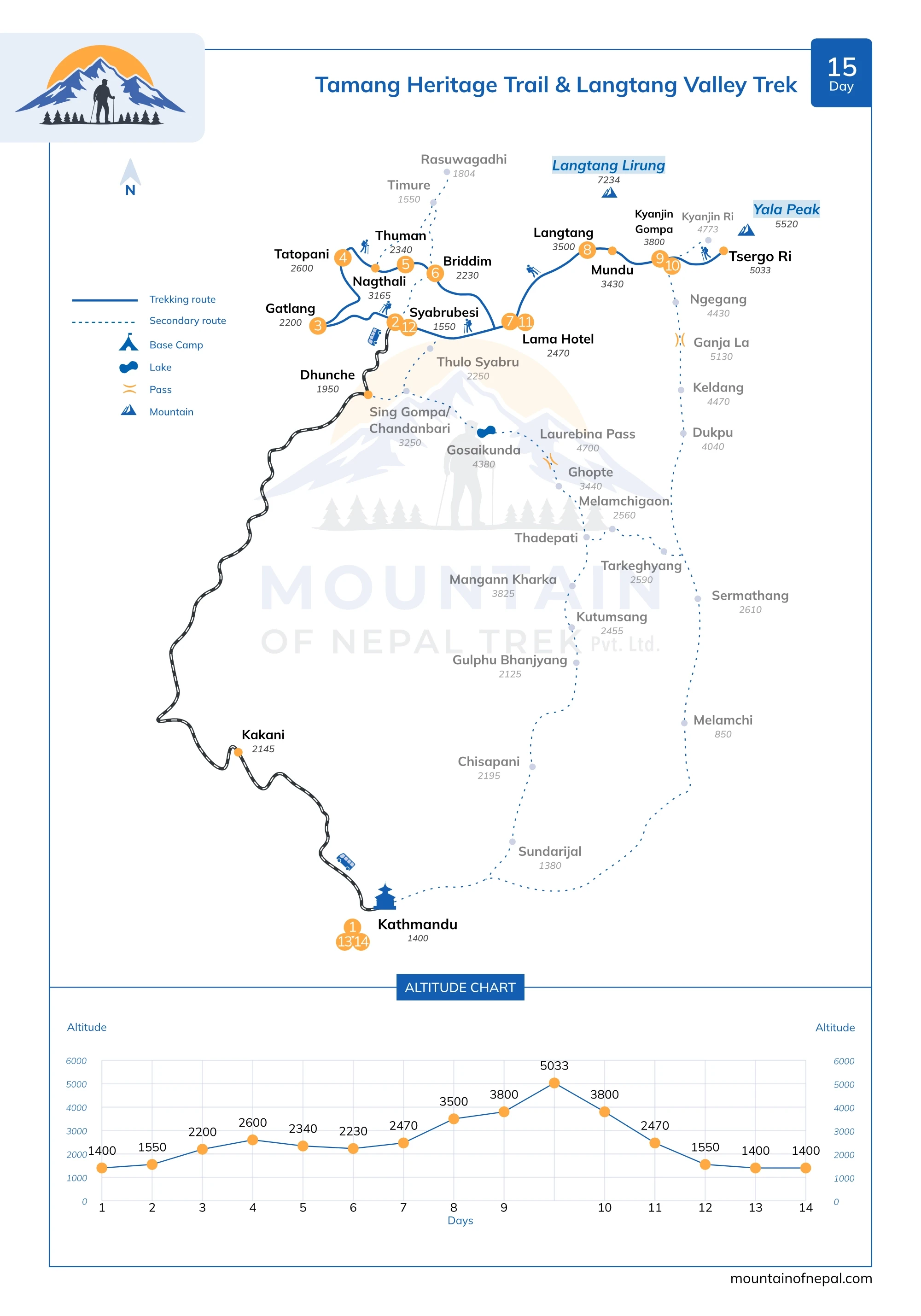
The Tamang Heritage Trail & Langtang Valley Trek is a culturally rich and scenically diverse journey in the northern Himalayan region of Nepal. Operated by Mountain of Nepal, this 15-day itinerary combines traditional Tamang villages with the spectacular alpine landscapes of the Langtang Valley region. The journey begins in Kathmandu, followed by a scenic drive to Syabrubesi, the gateway to both trekking routes. From there, trekkers explore culturally preserved villages like Gatlang, Tatopani, Thuman, and Briddim, before entering the core Langtang Valley trail.
This itinerary is designed to showcase both heritage and the high Himalayan wilderness. The route continues through Lama Hotel, Langtang Village, and finally reaches Kyanjin Gompa. A highlight of the journey is the ascent to Tserko Ri (5,033 m), offering panoramic Himalayan views.
- Combines cultural + mountain trekking experience
- Follows the Tamang ethnic villages + Langtang Valley route
- Managed by Mountain of Nepal professional guides
- Includes scenic drives, forest trails, and alpine climbs
- Ideal for cultural immersion and moderate adventure seekers
Best Season for Tamang Heritage Trail & Langtang Valley Trek
The best seasons for the Tamang Heritage Trail & Langtang Valley Trek are spring (March–May) and autumn (September–November). During these months, the weather remains stable, skies are clear, and mountain views are at their finest. Spring brings blooming rhododendrons and lush green hills, while autumn offers crystal-clear visibility and comfortable trekking temperatures.
Winter (December–February) is also possible but colder, especially above Kyanjin Gompa, where snowfall can affect trail conditions. Monsoon season (June–August) is less recommended due to landslides, slippery trails, and limited mountain visibility. However, the Tamang villages like Gatlang and Briddim remain culturally vibrant year-round.
Best seasons: Spring & Autumn
- Clear Himalayan views and stable weather
- Winter: cold but less crowded
- Monsoon: risky due to rain and landslides
- Operated safely by Mountain of Nepal with weather planning
Tamang Heritage Trail & Langtang Valley Trekking: Difficulty and Transportation
This trek is considered moderate in difficulty, making it suitable for trekkers with basic fitness levels. The route includes daily walking of 4–7 hours through forested hills, stone steps, and high-altitude terrain. The highest point is Tserko Ri (5,033 m), which requires good acclimatization and stamina.
Transportation begins with a drive from Kathmandu to Syabrubesi, taking around 6–7 hours on mountainous roads. The return follows the same route. Within the trekking region, all movement is on foot, passing through remote villages and forest trails managed by local communities.
- Moderate difficulty trek (suitable for beginners with fitness)
- Highest altitude: 5,033 m (Tserko Ri)
- Road transport: Kathmandu ↔ Syabrubesi
- Walking-only trekking route
- Guided support provided by Mountain of Nepal
Tamang Heritage Trail & Langtang Valley Trekking Food and Accommodation
Food and accommodation along the trail are simple but comfortable, reflecting the rural Himalayan lifestyle. Teahouses and local lodges are available in all major stops including Lama Hotel, Langtang Village, and Kyanjin Gompa. Rooms are typically twin-sharing with basic bedding, warm blankets, and shared bathrooms.
Meals are freshly prepared and usually include Dal Bhat (rice, lentils, vegetables), noodles, soups, potatoes, eggs, and Tibetan-style bread. In higher altitudes, menu options may be limited due to transportation constraints, but food remains nutritious and energy-rich for trekking needs.
- Teahouse/lodge accommodation throughout trek
- Fresh local meals (Dal Bhat, soups, noodles)
- Basic facilities, limited luxury but warm hospitality
- Food availability decreases with altitude
- Organized support by Mountain of Nepal ensures safety and hygiene
Tamang Heritage Trail & Langtang Valley Trek Permits
To complete the Tamang Heritage Trail & Langtang Valley Trek, trekkers must obtain specific permits issued by the Government of Nepal. Since the route passes through Langtang National Park, a national park entry permit is mandatory. Additionally, a TIMS (Trekkers’ Information Management System) card is required for safety tracking and registration.
These permits are usually arranged by trekking agencies such as Mountain of Nepal, making the process simple and hassle-free. All documents are checked at entry points like Syabrubesi and park checkpoints along the route.
- Langtang National Park Entry Permit required
- TIMS Card mandatory for all trekkers
- Issued in Kathmandu before trek start
- Checked at trail entry points
- Arranged easily by Mountain of Nepal
Why Choose Tamang Heritage Trail & Langtang Valley Trek
This trek is unique because it combines authentic cultural immersion with Himalayan adventure. The Tamang villages such as Gatlang, Tatopani, Thuman, and Briddim offer deep insight into Tibetan-influenced traditions, while the Langtang Valley section showcases glaciers, alpine meadows, and towering peaks.
With Mountain of Nepal, trekkers receive professional guidance, safety support, and well-planned logistics throughout the journey. The route is less crowded compared to other popular trekking regions, making it ideal for peaceful exploration and photography.
- Combination of culture + mountain scenery
- Less crowded than Everest or Annapurna routes
- Authentic Tamang heritage experience
- Stunning views from Tserko Ri
- Fully organized trekking by Mountain of Nepal
Trip Preparation
Trip Itinerary
Day 1 : Arrival in Kathmandu (1,400 m)
Upon your arrival in Kathmandu, a representative from Mountain of Nepal will welcome you at the airport and transfer you to your hotel. After check-in, you can rest or explore the lively streets of Thamel, a popular tourist hub filled with trekking shops, cafés, and cultural vibes. In the evening, there will be a short briefing about the Tamang Heritage Trail and Langtang Valley Trek, including route details, safety guidelines, and preparation tips. This day is mainly for recovery from travel fatigue and adjusting to Nepal’s atmosphere before beginning the adventure ahead.
Day 3 : Trek to Gatlang (2,200 m) Walk approx. 5-6 hrs
Your first day of trekking begins with a steady ascent along the Tamang Heritage Trail, heading west from your lodge in Syabrubesi. The initial climb is steep and can be challenging, as you gain significant elevation toward Gatlang (2,200 m).After approximately 5–6 hours of walking, you arrive at Gatlang, a picturesque ridge-top Tamang village known for its traditional stone houses and terraced fields.This beautiful settlement reflects a centuries-old Himalayan lifestyle, where the Tamang community—originally of Tibetan origin—continues to preserve its unique culture and traditions. After lunch, take time to explore the village and visit Parvatikunda Lake, a sacred site for locals. You can observe daily life, including farming, herding, and traditional crafts. The villagers live simply, cultivating crops like potatoes, barley, and maize, and raising livestock such as yaks and goats. Overnight, stay in a Tamang homestay or teahouse, where you’ll be warmly welcomed as part of the family. Enjoy a variety of home-cooked meals and experience genuine local hospitality. In the evening, relax in the peaceful mountain setting, take in stunning views, and immerse yourself in the authentic culture of this charming Himalayan village—often referred to as the “Black Village” for its distinctive stone-built homes.
Day 4 : Trek to Tatopani (2,600 m) – Walk: approx. 5–6 hrs
After breakfast, begin your trek with a descent toward Chilime and Thangbuchet, enjoying breathtaking views of the Ganesh Himal range and the surrounding lush landscapes. The trail then leads to a suspension bridge, followed by a steady uphill climb to Gonggang village, where you will stop for lunch. After lunch, continue trekking through forested paths and small settlements until you reach Tatopani, a small village famous for its natural hot springs. Upon arrival, relax and rejuvenate in the therapeutic waters—an ideal way to soothe your muscles after several days of trekking. Overnight stay in a local teahouse, where meals will be provided.
Day 5 : Trek to Thuman (2,340 m) – Walk: approx. 5–6 hrs
After breakfast, begin your uphill trek from Tatopani through forested paths and small settlements toward Nagthali Viewpoint. The trail is well-defined and non-technical, but the ascent can be tiring. The climb to Nagthali takes approximately 2.5–3.5 hours, depending on pace. At Nagthali, you’ll find a small monastery (gompa) with prayer flags, adding a cultural and spiritual touch to the stunning 360° panoramic views of Langtang Himal, Ganesh Himal, and surrounding valleys. Basic tea houses or lodges may be available at Nagthali during the busy season; in quieter periods, options can be limited, so it’s advisable to carry snacks. This is an ideal spot for lunch. The trail passes through parts of the Langtang and Helambu wildlife corridor, offering opportunities to spot wild animals if you’re fortunate. After lunch, descend through dense forest to Thuman Village, a traditional Tamang settlement where shamanic (Jhankri) practices coexist with Tibetan-Buddhist rituals. Shamans perform healing, blessings, and spiritual ceremonies, which visitors can observe respectfully. Overnight: Lodge in Thuman.
Day 6 : Trek to Briddim (2,230 m) – Walk: approx. 6–7 hrs
After breakfast, begin the trek from Thuman through beautiful forests, terraced farmlands, and traditional Tamang villages. The trail starts with a steep descent toward the Bhote Koshi River valley, passing rhododendron and mixed forests. Depending on trail conditions and water levels, you may cross the river or follow a path along its edge. After the river section, the trail gradually ascends through farmed fields and small hamlets such as Pelka and Lingling, offering scenic views of the surrounding Langtang and Ganesh Himal ranges. Arrive at Briddim, a quaint Tamang village known for its rich culture and homestay tradition. Explore the village and visit Dukchu Gompa, a local monastery of historical significance. Experience authentic Tamang hospitality, learn about their daily life, customs, and traditions, and enjoy a warm home-cooked meal. Overnight stay at a teahouse or homestay, surrounded by peaceful mountain landscapes. This section is a culturally rich and scenic segment of the Tamang Heritage Trail, blending nature, villages, and Buddhist heritage.
Day 7 : Trek to Lama Hotel (2,470 m) – Walk: approx. 6–7 hrs
Today is your last day in the Tamang Heritage Trail section, and by night you will join the classic Langtang Valley route at Lama Hotel, a renowned stop on the Langtang Valley Trek. The trek begins with a descent through mixed forest of rhododendron, bamboo, and oak into the Bhote Koshi / Ghopche river valley. The forests are alive with birds, and if you’re lucky, you may spot langurs, pheasants, or even red pandas. Along the way, you’ll cross small rivers and streams, often via wooden or suspension bridges. After walking through the river valley, the trail gradually ascends to Rimche village before continuing to Lama Hotel. Despite its name, Lama Hotel is not a single building but a small settlement of teahouses scattered in the woodland, serving as a gateway to the Langtang Valley We stay in one of the lodges at Lama Hotel
Day 8 : Trek to Langtang Village (3,500 m) – Walk: approx. 6–7 hrs
From today, you will be following the classic Langtang Valley trail. After breakfast, continue ascending through pine and fir forests, breathing in crisp mountain air. Pass Ghoda Tabela, known for its grazing horses, with stunning views of Langtang Lirung, the valley’s majestic peak. The trail then passes traditional Tamang villages, where fluttering prayer flags and stone houses with wooden balconies provide a glimpse into local culture. As you gain elevation, the path becomes more rugged, and large trees give way to open alpine terrain. Arrive at Langtang Village, a Tibetan-style settlement and the largest in the valley. Check into a cozy teahouse or lodge, explore the village, and acclimatize for the night.
Day 9 : Trek to Kyanjin Gompa (3,800 m) – Walk: approx. 4–5 hrs
Today’s trek is shorter and relatively easy, making it ideal for gradual acclimatization as you move to higher altitude. After breakfast, leave Langtang Village and follow a well-defined trail that gently ascends through the wide open valley. Compared to previous days, the landscape becomes more alpine, with fewer trees and expansive views of the surrounding mountains. The trail passes through yak pastures and small seasonal settlements, where you can observe local life and grazing livestock. Along the way, you will encounter several Buddhist monuments, including mani walls carved with sacred prayers, prayer wheels, and colorful prayer flags fluttering in the wind—adding a strong spiritual atmosphere to the journey. As you continue, enjoy stunning views of peaks such as Langtang Lirung and Langshisha Ri, rising dramatically above the valley. The trail remains gradual and comfortable, allowing you to walk at a steady pace while fully taking in the scenery. After 3–4 hours of trekking, arrive at Kyanjin Gompa, a beautiful high-altitude village surrounded by snow-capped mountains. Check into a mountain lodge and relax. In the afternoon, explore the village, visit the ancient monastery, and stop by the local cheese factory. If time and energy permit, you can hike to Kyanjin Ri (4,773 m) for stunning panoramic views of Langtang Lirung, Ganchenpo, and surrounding peaks, especially at sunset. This easy and scenic day helps your body adjust to the altitude while offering a rich combination of natural beauty and cultural experience. Overnight stay at a lodge in Kyanjin Gompa.
Day 10 : Hike to Tserko Ri (5,033 m) & return to Kyanjin Gompa – Walk: approx. 7–8 hrs
Today is one of the most rewarding days of the trek. You’ll set out early, around 6:00 AM, for a hike to Tserko Ri (5,033 m), making the most of clear morning skies and aiding proper acclimatization. An early start also helps avoid afternoon clouds and strong winds at higher elevations. The trail begins with a gentle walk-through alpine meadows and yak pastures, with crisp mountain air and gradually unfolding views of Langtang Lirung. On the lower slopes, you may see grazing yaks, especially during summer, along with wildflowers and small alpine streams. As you ascend, the trail becomes steeper and rockier near the ridge, requiring a steady pace and regular breaks to adjust to the altitude. After approximately 3–4 hours of ascent, you reach the summit of Tserko Ri, where you are rewarded with breathtaking 360-degree views of the Himalayas, including Langshisha Ri, Ganesh Himal, and the entire Langtang Valley. Take time to rest, enjoy a light snack, and capture the stunning scenery. There are no teahouses along the route, so be sure to carry enough water, snacks, or a packed lunch. The descent retraces your path through the ridge and alpine meadows, with further opportunities to observe grazing yaks and the surrounding flora. By early afternoon, you arrive back at Kyanjin Gompa, where you can enjoy lunch, rest, and explore the village, including its monastery, cheese factory and Tibetan-style houses. This day hike serves as an ideal acclimatization trek, allowing your body to adjust to higher altitudes while experiencing the stunning natural and cultural beauty of the Langtang Valley. Overnight stay at the lodge in Kyanjin Gompa.
Day 11 : Trek back to Lama Hotel (2,470 m) – Walk: approx. 7 hrs
After breakfast, begin the descent along the Langtang Valley, retracing your steps through the forests and villages you passed earlier. Enjoy the serene landscapes, sparkling streams, and glimpses of local wildlife one last time. Arrive at Lama Hotel in the late afternoon, check into a lodge, and relax after a day of descending. Take in the peaceful surroundings and savor your final evening in the valley.
Day 12 : Trek to Syabrubesi (1,550 m) – Walk: approx. 6 hrs
After breakfast, continue descending along the Langtang Khola, passing small villages and suspension bridges. Enjoy the lush scenery one last time and capture final photographs of the valley’s stunning landscapes. Arrive at Syabrubesi in the afternoon, marking the end of your trek. In the evening, celebrate your final dinner with your guide and porters, sharing stories and gratitude over a delicious meal, marking a memorable conclusion to your journey. Overnight in Syabrubesi.
Day 13 : Drive to Kathmandu (1,400 m) – Drive: approx. 7 hrs
Today marks the completion of your unforgettable Langtang Valley trek. After breakfast, begin your scenic drive back to Kathmandu by private bus or jeep, depending on the group size. The journey takes approximately 6–7 hours, following the Trishuli River and passing through picturesque hills, terraced fields, and small settlements. Enjoy the changing landscapes as you leave the mountains behind and return to the bustling capital city. Upon arrival in Kathmandu, transfer to your hotel and relax. Enjoy a hot shower and a nice dinner or take a short evening stroll around Thamel. Overnight in Kathmandu
Day 14 : Free day in Kathmandu
After returning from the Tamang Heritage-Langtang trek, today is a reserve and rest day in Kathmandu, allowing flexibility for unforeseen delays or simply to recharge before departure. This day can be spent relaxing in your hotel, shopping for souvenirs in Thamel, or exploring some of Kathmandu’s iconic landmarks such as Durbar Square, Pashupatinath Temple, or Boudhanath Stupa – the largest Buddhist stupa in the world. Trekkers often use this day to organize photos, share experiences with fellow travelers, and enjoy the comforts of the city after a challenging trek. Optional short excursions guided cultural tours, or visits to local museums can also enrich your understanding of Nepal’s history, art, and spiritual traditions. The evening offers a chance to enjoy a traditional Nepali meal and reflect on the trek, making this a smooth transition from trekking life back to the city. Overnight stay is at a comfortable hotel in Kathmandu.
Day 15 : Departure
On the final day, transfer to Tribhuvan International Airport for your onward flight, concluding the Tamang Heritage Langtang trek. Depending on your flight schedule, there may be time for a quick stroll, last-minute shopping in Thamel, or enjoying a cup of Nepali tea while taking in city views. This day is dedicated to travel logistics and ensuring a smooth departure, carrying with you unforgettable memories of the Himalayas, alpine villages, and the rich cultural experiences encountered throughout the trek. For trekkers returning home, this day provides time to rest, reflect, and plan future adventures in Nepal. Travel tips include reconfirming flights, organizing luggage, and allowing ample time for airport procedures, as Kathmandu’s traffic can be unpredictable. Your trek concludes with lasting impressions of Langtang Valley, Gosaikunda Lake, Laurebina La Pass, and the warm hospitality of the Nepali people.
Day 2 : Drive to Syabrubesi (1,550 m) – 6–7 hrs
After breakfast, embark on a scenic drive to Syabrubesi, the starting point of the Langtang Trek. The route follows the Bhote Koshi River, winding through terraced fields, lush forests, and riverside villages. While mountain peaks are not visible today, the journey offers a gradual transition from Kathmandu’s urban landscapes to the Himalayan foothills, with many photo opportunities of rivers, traditional villages, and forests.
Syabrubesi lies on the banks of the Bhote Koshi River and serves as the gateway for multiple trekking routes into the Langtang region and Ganesh Himal area. Upon arrival, check into a local guesthouse or mountain lodge, rest, and prepare for the trek ahead. Overnight stay in Syabrubesi.
Inclusions
What is included?
- Airport transfers in Kathmandu
- All ground transportation as per the itinerary
- Hotel accommodation in Kathmandu
- Teahouse accommodations during the trek.
- All meals (breakfast, lunch, dinner) during the trek.
- Langtang National Park permit & TIMS Card
- Experienced, English-speaking trek guide.
- Porters to carry luggage (1 per 2 trekkers).
- Trekking map and group medical kit.
- Welcome and farewell dinners in Kathmandu.
What isn't included?
- International flights to/from Kathmandu.
- Personal Expenses (Snacks, Drinks, etc.)
- Travel Insurance
- Nepal entry visa fee.
- Personal Trekking Gear
- Tips for Guides and Porters
Complimentary