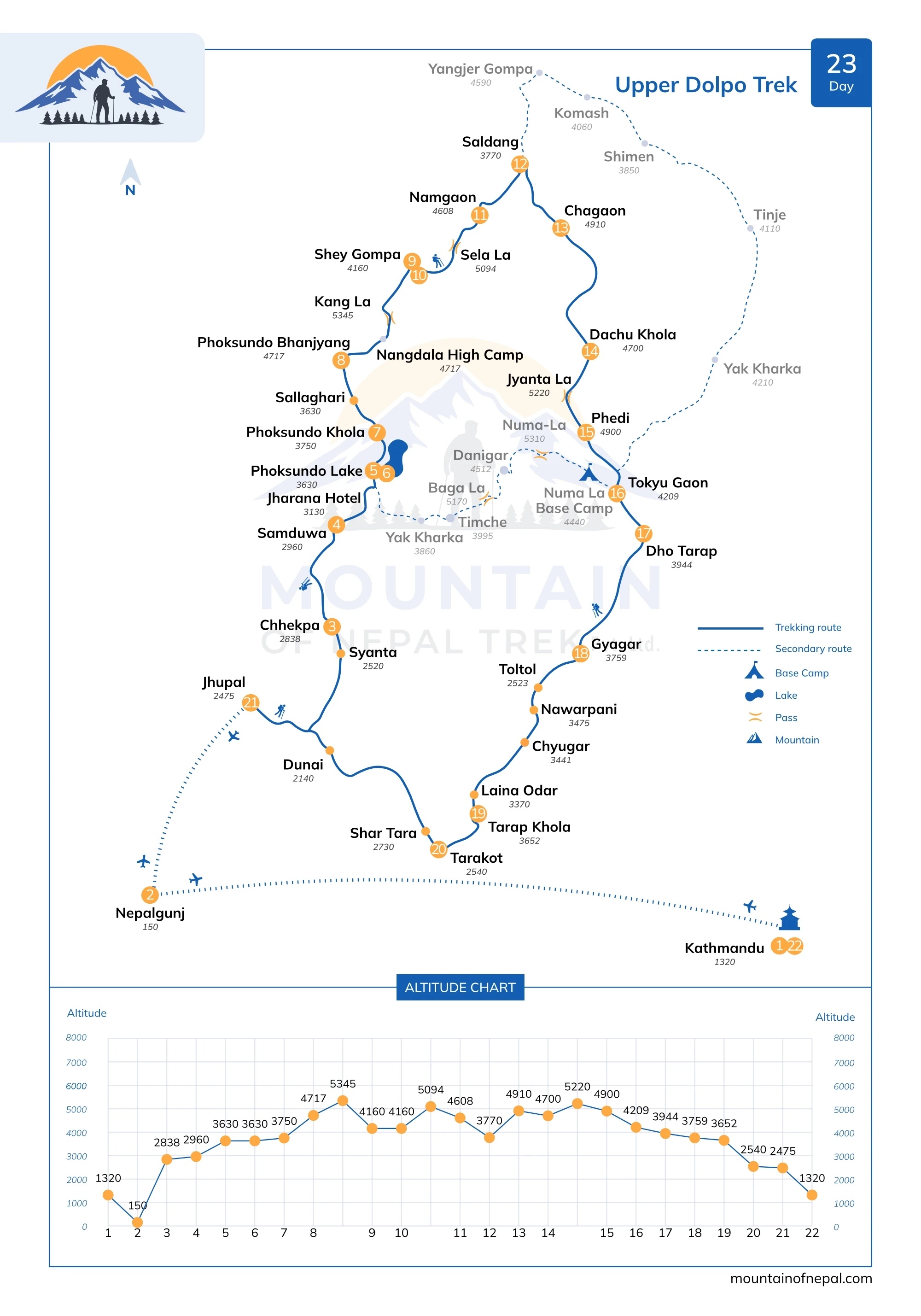
Upper Dolpo Trek
| Trip code | |
| Package name | Upper Dolpo Trek |
| Duration | 23 |
| Max. elevation | 5151 m |
| Level | Difficult |
| Transportation | All ground transportation and Domestic flight as per itinerary |
| Accomodation | Hotel in Kathmandu and Tea House / Lodge during the trek |
| Starts at | Kathmandu |
| Ends at | Kathmandu |
| Trip route | |
| Cost | USD 0 per person |
Highlights
- Visit the stunning turquoise waters of Phoksundo Lake
- Explore the ancient and spiritual Shey Gompa (Crystal Monastery)
- Cross high mountain passes like Kang-La (5,345 m) and Sela La (5,094 m)
- Experience authentic Tibetan-influenced culture in remote villages like Saldang and Dho Tarap
- Trek through Shey Phoksundo National Park with unique flora and fauna
- Enjoy dramatic landscapes of barren cliffs, deep gorges, and high-altitude deserts
- Witness traditional lifestyles untouched by modern development
- Encounter rare wildlife such as blue sheep and possible snow leopard habitat
- Adventure through one of Nepal’s most remote and restricted trekking regions
- Scenic flights from Kathmandu to Nepalgunj and Jhupal
Overview
The Upper Dolpo Trek is one of Nepal’s most isolated and culturally rich adventures, leading trekkers into the hidden corners of western Nepal. This region lies far from mainstream trekking routes and preserves a unique Tibetan-influenced lifestyle that has remained intact for centuries. Along the journey, trekkers encounter dramatic landscapes, including arid valleys, deep gorges, and the mesmerizing turquoise waters of Phoksundo Lake, one of the most գեղեցous lakes in the Himalayas.
A major spiritual highlight is a visit to Shey Gompa, an ancient monastery that holds deep religious significance for local communities. Organized by Mountain of Nepal, the trek spans around 24 days and includes careful acclimatization, making it both adventurous and culturally immersive. The route crosses high passes and remote villages, offering a rare glimpse into untouched Himalayan life.
Highlights:
- Remote and restricted trekking region
- Unique Tibetan Buddhist culture
- Stunning landscapes and high passes
- Visit sacred monasteries and villages
Best Season for Upper Dolpo Trek
The ideal seasons for the Upper Dolpo Trek are spring (April to June) and autumn (September to November). During these periods, the weather is generally stable with clear skies, allowing trekkers to enjoy uninterrupted mountain views and safe passage across high-altitude trails. Dolpo lies in a rain-shadow area, meaning it receives less rainfall compared to other regions of Nepal, making even monsoon trekking possible.
Spring brings blooming wildflowers and moderate temperatures, creating vibrant scenery along the trails. Autumn is equally popular due to its crisp air and excellent visibility. Winter months, however, can be extremely harsh with heavy snowfall, especially at high passes, making trekking risky. Mountain of Nepal plans trips according to the best seasonal windows to ensure safety and an enjoyable experience.
Best Time Summary:
- Spring: Blooming landscapes and mild weather
- Autumn: Clear skies and best visibility
- Monsoon: Possible due to dry conditions
- Winter: Difficult and not recommended
Upper Dolpo Trek Difficulty and Transportation
The Upper Dolpo Trek is considered physically demanding due to its remote terrain, long duration, and high altitude. Trekkers often walk 5–7 hours daily, crossing passes above 5,000 meters such as Kang-La and Sela La. Proper acclimatization is essential to avoid altitude sickness, and prior trekking experience is highly beneficial for completing this journey comfortably.
Transportation involves flights from Kathmandu to Nepalgunj, followed by another flight to Jhupal, where the trek begins. Weather conditions in remote areas can sometimes delay flights, so flexibility is important. Mountain of Nepal manages all logistics, including transport, guides, and safety measures, ensuring a well-organized trek.
Difficulty Factors:
- High altitude and steep passes
- Long trekking days
- Remote and limited infrastructure
- Weather-dependent travel
Food and Accommodation for Upper Dolpo Trek
Accommodation throughout the trek is a mix of basic teahouses and camping. In more remote sections, camping is necessary due to the lack of lodges. Teahouses provide simple rooms with shared facilities, while camping allows trekkers to explore deeper into isolated regions. Staying in local homes in some villages also offers a meaningful cultural experience.
Meals are simple but nutritious, designed to fuel long trekking days. Common dishes include dal bhat, noodles, soups, potatoes, and Tibetan bread. Food options may be limited, but they are filling and hygienically prepared. Mountain of Nepal ensures proper meal planning and camping arrangements, prioritizing both safety and comfort throughout the journey.
Food & Stay:
- A combination of teahouses and camping
- Freshly prepared, energy-rich meals
- Limited but reliable food choices
- Warm local hospitality
Upper Dolpo Trek Permits
Upper Dolpo is a restricted region, so special permits are required for trekking. Travelers must obtain a Restricted Area Permit (RAP) along with a Shey Phoksundo National Park entry permit. These permits help regulate tourism and protect the region’s fragile environment and cultural heritage.
Permits can only be arranged through authorized trekking agencies like Mountain of Nepal. The cost is higher compared to other trekking areas, but it supports conservation and local communities. Proper documentation, including a valid passport and visa, is necessary before applying.
Permit Requirements:
- Restricted Area Permit (Upper Dolpo)
- Shey Phoksundo National Park Permit
- Booking through a licensed agency
- Valid travel documents
Why Choose Upper Dolpo Trek
The Upper Dolpo Trek offers a truly off-the-beaten-path experience, perfect for those seeking solitude and authenticity. Unlike crowded trekking regions, Dolpo provides peaceful trails, untouched landscapes, and a deep connection with nature and culture. It is an ideal choice for adventurers looking for something unique and less commercialized.
With Mountain of Nepal, trekkers benefit from expert guidance, detailed planning, and strong safety standards. Their local knowledge ensures smooth logistics and meaningful cultural interactions. This trek is not just a physical journey but a profound exploration of Himalayan heritage and spirituality.
Why Choose This Trek:
- Remote and less crowded destination
- Rich cultural and spiritual experience
- Professional support from Mountain of Nepal
- Unique landscapes and authentic adventure
Trip Preparation
Trip Itinerary
Day 1 : Arrival in Kathmandu (1,320 m) and transfer to hotel
Upon arrival in Kathmandu, you will be warmly welcomed by the team from Mountain of Nepal and transferred to your hotel in the bustling heart of the city. The rest of the day is free to relax after your journey or explore nearby streets filled with traditional shops and cafes. In the evening, there will be a briefing about the Upper Dolpo Trek, including gear checks and an overview of the adventure ahead. This first day sets the tone, allowing you to ease into Nepal’s vibrant culture before heading into its remote wilderness.
Day 2 : Morning tour of Kathmandu, afternoon fly to Nepalgunj
After breakfast, enjoy a guided sightseeing tour of Kathmandu’s cultural highlights, including ancient temples, stupas, and UNESCO World Heritage Sites that reflect Nepal’s rich spiritual heritage. You’ll experience a blend of Hindu and Buddhist traditions before heading to the airport. In the afternoon, you take a scenic flight to Nepalgunj, a bustling city in the lowland Terai region near the Indian border. The climate here is warmer, offering a stark contrast to the mountains you will soon enter.
Day 3 : Fly to Jhupal (2,475 m), trek to Chepkpa (2,838 m) – 4 hrs
An early morning flight takes you from Nepalgunj to Jhupal, offering breathtaking views of the Himalayan foothills. Upon landing, the trek officially begins as you descend through terraced fields and villages. The trail follows the Thuli Bheri River, passing through pine forests and small settlements. After several hours of walking, you reach Chepkpa, where you camp for the night. This first trekking day introduces you to the rhythm of walking and the natural beauty of Dolpo.
Day 4 : Trek to Samduwa Village (2,960 m) – 6 hrs
The trail today becomes more rugged as you head deeper into Dolpo. You’ll cross suspension bridges and navigate narrow paths carved into cliffs above the river. The landscape begins to change, with fewer trees and more rocky terrain. Samduwa village offers a glimpse into the unique culture of the Dolpo region, heavily influenced by Tibetan traditions. The longer trekking hours today help build endurance while gradually increasing altitude.
Day 5 : Trek to Phoksundo Lake (3,630 m) – 6 hrs
One of the most spectacular days of the trek, you ascend towards the famous turquoise waters of Phoksundo Lake. The trail climbs steeply before revealing breathtaking views of waterfalls and cliffs. As you approach the lake, its striking blue color stands out against the barren landscape. This is one of Nepal’s most beautiful natural landmarks. Camping near the lake provides a serene atmosphere with incredible views of the surrounding peaks.
Day 6 : Rest day at Phoksundo Lake for local excursion
A well-deserved rest day allows for acclimatization and exploration around Phoksundo Lake. You can visit nearby monasteries, interact with local villagers, or take a short hike around the lake’s shoreline. The area is rich in both natural beauty and spiritual significance. This pause helps your body adjust to the altitude while giving you time to fully appreciate the unique environment of Dolpo.
Day 7 : Trek to Phoksundo Khola (3,750 m) – 5 hrs
Leaving the lake behind, the trail follows a dramatic path along cliffs above the river. The route is narrow and exciting, with stunning views of the valley below. The landscape becomes increasingly barren, reflecting the transition into a more Tibetan-like environment. You camp near the river, surrounded by rugged terrain and towering rock formations.
Day 8 : Trek to Phoksundo Bhanjyang (4,717 m) – 4 hrs
Today involves a steady climb to higher altitude, with the trail becoming more challenging. The air gets thinner, and the surroundings feel more remote. The campsite at Phoksundo Bhanjyang is set in an open, windswept area, preparing you for the high mountain passes ahead. Proper acclimatization and hydration are essential here.
Day 9 : Cross Kang-La (5,345 m / 17,536 ft) to Shey Gompa (4,160 m) – 6 hrs
Today is one of the most demanding yet unforgettable days of the journey as you cross the high Kang-La Pass. The climb begins early, following a gradual but relentless ascent over rocky terrain and glacial moraine. As you approach the summit, the thin air and altitude demand a steady pace, but the reward is extraordinary panoramic views of the Dolpo landscape, including snow-covered peaks and vast valleys stretching into Tibet. After celebrating at the top, you descend carefully toward Shey Gompa, also known as the Crystal Monastery. This sacred site, nestled beneath dramatic cliffs, holds deep spiritual significance for local Buddhists and offers a peaceful and mystical atmosphere for the night.
Day 10 : Rest day at Shey Gompa / Crystal Monastery
This essential acclimatization and exploration day allows you to fully experience the spiritual and natural beauty surrounding Shey Gompa. You may spend time visiting the monastery itself, observing monks in prayer, and learning about centuries-old Buddhist traditions that still thrive in this isolated region. Short hikes around the area reveal crystal deposits, ancient chortens, and stunning viewpoints of the surrounding peaks. The tranquility of this sacred valley provides a rare opportunity to slow down and absorb the deep cultural essence of Dolpo. Resting here also prepares your body for the continued high-altitude trekking in the coming days.
Day 11 : Trek to Nam-Gaon (4,608 m) via Sela (Gela) La (5,094 m) – 6 hrs
Leaving Shey Gompa, the trail ascends once again toward Sela La, another high mountain pass that tests both endurance and determination. The climb is steady, with increasingly dramatic views of barren high-altitude desert landscapes characteristic of Upper Dolpo. From the pass, you are rewarded with sweeping vistas of distant mountain ranges and isolated valleys. The descent toward Nam-Gaon introduces a more inhabited landscape, where traditional stone houses and barley fields appear. This village reflects strong Tibetan cultural influences, and interacting with locals offers insight into their resilient lifestyle in such a harsh yet beautiful environment.
Day 12 : Trek to Saldang (3,770 m) – 5 hrs
Today’s trek is relatively moderate as you traverse open terrain and gently descend toward Saldang, one of the largest and most important villages in Upper Dolpo. The trail passes through arid landscapes dotted with ancient mani walls and prayer flags fluttering in the wind. Saldang is a key stop along historical trade routes connecting Tibet and Nepal, and its wide fields and clustered homes give it a distinct character. Spending time here allows you to observe local agricultural practices and experience the unique blend of culture and isolation that defines life in Dolpo.
Day 13 : Trek to Cha-Gaon (4,910 m) – 5 hrs
The journey today takes you back into higher elevation terrain as you gradually ascend toward Cha-Gaon. The landscape becomes increasingly stark and rugged, with minimal vegetation and expansive views of rocky hills and distant peaks. The trail is less traveled, adding to the sense of remoteness and adventure. Cha-Gaon itself is a small settlement with limited facilities, but its location offers incredible scenery and a peaceful camping experience. This day helps you reconnect with the raw wilderness that makes Upper Dolpo such a special trekking destination.
Day 14 : Trek to Dachu Khola (4,700 m) – 6 hrs
Continuing through remote and rugged terrain, the trail leads you toward Dachu Khola, following ancient paths used by traders and locals. The route includes gradual ascents and descents across rocky ridges and narrow valleys. Along the way, you may encounter yak caravans transporting goods across the region. The campsite near Dachu Khola is set beside a river, providing a serene yet isolated environment. The untouched beauty of this area highlights the true wilderness of Dolpo, far removed from modern infrastructure and crowds.
Day 15 : Trek and cross Jyanta-La (5,220 m) to Phedi (4,900 m) – 6 hrs
Another challenging high pass day awaits as you climb toward Jyanta-La. The ascent is demanding, requiring both physical stamina and mental focus due to altitude. Upon reaching the pass, you are rewarded with sweeping views of snow-covered peaks and endless ridgelines. The descent toward Phedi is steep in sections but manageable with careful footing. Camping at Phedi offers a well-earned rest after one of the trek’s toughest segments. The dramatic scenery and sense of achievement make this day particularly memorable.
Day 16 : Trek to Tokyu Gaon (4,209 m) – 6 hrs
Descending from the high alpine terrain, you gradually enter a more hospitable environment as you approach Tokyu Gaon. This village is known for its traditional monasteries and strong Tibetan Buddhist heritage. The landscape begins to soften, with more vegetation and signs of human settlement. The warmer altitude provides relief after several days at extreme elevations. Exploring Tokyu Gaon offers a cultural highlight, with opportunities to observe local customs, architecture, and daily life.
Day 17 : Trek to Dho-Tarap (3,944 m) – 5 hrs
Today’s trek leads through wide valleys and open plains, offering a more relaxed walking experience compared to previous days. Dho-Tarap is a beautiful village surrounded by agricultural fields and rolling hills, making it one of the most picturesque settlements in Dolpo. The community here practices a unique blend of Bon and Buddhist traditions. Spending time in Dho-Tarap allows for cultural interaction and rest in a welcoming environment.
Day 18 : Trek to Gyagar (3,759 m) – 7 hrs
This is one of the longer trekking days as you descend through dramatic gorges carved by the Tarap River. The trail winds through narrow canyons with towering cliffs rising on both sides, creating a striking contrast to the open landscapes of previous days. The constant change in scenery keeps the journey engaging, while the gradual descent makes walking easier. Gyagar provides a peaceful campsite after a rewarding day of trekking.
Day 19 : Trek to Tarap Khola (3,652 m) via Chyugar (3,440 m) – 6 hrs
Following the river downstream, the trail becomes greener as vegetation increases and the air grows warmer. Passing through Chyugar village, you’ll notice a shift toward more fertile land and traditional farming practices. The sound of flowing water accompanies you throughout the day, adding to the tranquil atmosphere. Camping near Tarap Khola offers a refreshing change from the high-altitude desert environment experienced earlier in the trek.
Day 20 : Trek to Tarakot (2,540 m) – 6 hrs
The trail continues descending toward Tarakot, a historic fortress village that once played a vital role in regional trade. The route passes through forests and terraced fields, marking a clear transition into lower altitudes. Tarakot features ancient structures and a rich cultural history, making it an interesting place to explore. The warmer climate and increased oxygen levels provide a welcome comfort after days in the high Himalayas.
Day 21 : Trek to Dunai (2,140 m) and drive to Jhupal – 5 hrs trek, 2 hrs drive
On your final trekking day, you follow a well-defined trail along the river toward Dunai, the administrative center of the Dolpo region. The walk is relatively आसान and enjoyable, allowing you to reflect on the journey. After reaching Dunai, a short drive takes you to Jhupal. This marks the end of your trekking adventure with Mountain of Nepal, giving you time to celebrate your achievement with the team.
Day 22 : Fly to Kathmandu via Nepalgunj and transfer to hotel
You take an early morning flight from Jhupal to Nepalgunj, followed by a connecting flight to Kathmandu. The return journey offers one last chance to admire the Himalayan landscapes from above. Upon arrival in Kathmandu, you are transferred to your hotel where you can relax, enjoy a hot shower, and celebrate the successful completion of your Upper Dolpo Trek.
Day 23 : Final Departure
Your adventure concludes today as the team from Mountain of Nepal assists you with your airport transfer for your onward journey. Depending on your flight schedule, you may have time for some last-minute shopping or sightseeing in Kathmandu. As you depart, you carry unforgettable memories of Upper Dolpo’s remote beauty, high mountain passes, and rich cultural heritage, making this trek a truly once-in-a-lifetime experience.
Inclusions
What is included?
- Airport transfers
- Hotel accommodation in Kathmandu with breakfast
- Domestic flight as per Itinerary and all around transportation
- All required trekking permits
- Full board meals during trek (breakfast, lunch, dinner)
- Experienced trekking guide & porters (wages, food, accommodation, insurance covered)
- Welcome or farewell group dinner with trek briefing
- Comprehensive medical kit carried by guide
What isn't included?
- Nepal visa fees & travel/medical insurance
- Meals in Kathmandu & personal expenses (laundry, calls, etc.)
- Single room supplement (Kathmandu/trek where available)
- Emergency evacuation (helicopter or other transport)
- Personal trekking gear (sleeping bag, down jacket, duffel bag, etc.)
- Extra snacks, drinks & bottled water
- Costs due to early return from trek (personal/sickness reasons)
- Personal medical kit (as per doctor’s advice)
Complimentary