
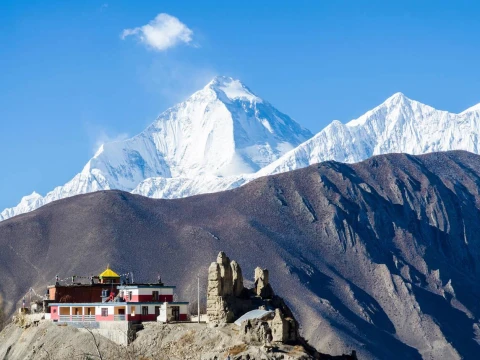
The Dhaulagiri Circuit Trek is one of Nepal’s most remote and challenging trekking routes, circling the majestic Dhaulagiri (8,167m), the seventh-highest mountain in the world. Unlike more commercialised trails such as Everest or Annapurna, this trek offers a raw and untouched Himalayan experience. Starting from Kathmandu, the journey takes you through traditional villages, dense forests, alpine meadows, glaciers, and high mountain passes, ultimately forming a complete circuit around the Dhaulagiri massif.What makes this trek truly special is its diversity. You begin in lush subtropical valleys and gradually ascend into rugged glacial terrain, crossing high passes like French Col and Dhampus Pass. The trek combines cultural immersion with extreme wilderness, giving trekkers a rare opportunity to experience both the human and natural aspects of Nepal’s Himalayas. The involvement of an experienced company like Mountain of Nepal ensures safety, logistics management, and a well-organised adventure.Remote and less crowded trekking routeCrossing high passes above 5,000mStunning glacier and mountain viewsAuthentic local culture and villagesBest Season for Dhaulagiri Circuit TrekThe best time to undertake the Dhaulagiri Circuit Trek is during the spring (March to May) and autumn (September to November) seasons. During these months, the weather is generally stable, the skies are clear, and the mountain views are at their best. Spring brings blooming rhododendron forests, while autumn offers crisp air and excellent visibility after the monsoon rains.Winter (December to February) is not ideal due to heavy snowfall and extreme cold, especially at higher elevations like French Col. Similarly, the monsoon season (June to August) brings heavy rain, landslides, and poor visibility, making trekking conditions difficult and sometimes unsafe. Choosing the right season is crucial for both safety and enjoyment, and Mountain of Nepal carefully plans itineraries around optimal weather windows.Best seasons summary:Spring: Blooming forests and moderate temperaturesAutumn: Clear skies and best mountain visibilityAvoid: Monsoon and winter for safety reasonsDhaulagiri Circuit Trek Difficulty and TransportationThe Dhaulagiri Circuit Trek is considered strenuous to extremely challenging, suitable only for experienced trekkers with strong physical fitness. The trek involves long walking days, steep ascents and descents, glacier crossings, and high-altitude passes exceeding 5,000 meters. Acclimatisation days are essential to prevent altitude sickness, and trekkers must be mentally prepared for remote conditions with limited facilities.Transportation plays a key role in the journey. The trek begins with a long drive from Kathmandu to Beni and then to Tatopani or Muri. Roads can be rough and winding, requiring patience. After the trek, a scenic drive to Pokhara offers a comfortable transition back to urban life. Mountain of Nepal arranges all logistics, including vehicles, guides, and porters, ensuring a smooth experience.Difficulty factors:High altitude (above 5,000m)Glacier and moraine trekkingLong trekking daysRemote and isolated trailsFood and Accommodation for Dhaulagiri Circuit TrekFood and accommodation vary greatly throughout the trek. In lower regions, trekkers stay in teahouses or lodges that provide basic yet comfortable rooms and meals such as dal bhat, noodles, soups, and tea. As you ascend into remote areas, especially beyond Muri, camping becomes necessary due to the absence of permanent settlements.During the camping phase, Mountain of Nepal provides a full support team including cooks, guides, and porters. Freshly prepared meals are served in tents, ensuring proper nutrition at high altitudes. While the facilities are basic, the experience of camping in remote Himalayan landscapes adds to the adventure.What to expect:Teahouses in the lower regionsTent camping in remote areasNutritious meals prepared by trekking staffLimited amenities at higher altitudesDhaulagiri Circuit Trek PermitsTrekking in the Dhaulagiri region requires several permits due to its restricted and protected status. The most important is the Restricted Area Permit (RAP), which is mandatory for sections of the trail. In addition, trekkers need an Annapurna Conservation Area Permit (ACAP) since parts of the route fall within this conservation zone.All permits are arranged by Mountain of Nepal, ensuring that trekkers comply with government regulations. Carrying proper documentation is essential, as checkpoints are present along the trail. These permits help preserve the environment and support local communities.Required permits:Restricted Area Permit (RAP)Annapurna Conservation Area Permit (ACAP)Valid passport and visaWhy Choose Dhaulagiri Circuit TrekChoosing the Dhaulagiri Circuit Trek means opting for adventure in its purest form. Unlike popular trekking routes, this trail offers solitude, untouched landscapes, and a deeper connection with nature. It is ideal for trekkers seeking a challenge beyond the ordinary and wanting to explore Nepal’s hidden Himalayan gems.With the Mountain of Nepal, the experience becomes safer and more organised. Their expertise in high-altitude trekking, experienced guides, and well-planned itineraries ensure that trekkers can focus on the journey rather than logistics. From cultural encounters to breathtaking mountain views, this trek delivers a truly unforgettable experience.Why this trek stands out:Off-the-beaten-path adventureStunning views of the Dhaulagiri massifHigh-altitude challenge for experienced trekkersProfessional support from Mountain of Nepal
Feel free to inquire, and together, we'll design the perfect journey to suit your preferences and desires.


 (2)
(2)  100% recommend (0)
 (0)
(0)