Need help with booking? Send us a message.
The Pikey Peak Trek is one of the most scenic and culturally rich short treks in the lower Everest region of Nepal, organized professionally by Mountain of Nepal. This trek offers an exceptional Himalayan experience without the extreme altitude risks of higher Everest Base Camp routes. Starting from the bustling capital city of Kathmandu (1,400m), the journey gradually ascends through rural settlements, lush hills, rhododendron forests, and high ridges before reaching the summit of Pikey Peak (4,065m).
What makes this trek special is its panoramic view of the Himalayan range, including Mount Everest, Makalu, Kanchenjunga, and other surrounding peaks. The itinerary is carefully designed to balance acclimatization and cultural immersion, passing through traditional Sherpa and Tamang villages such as Jhapre, Junbesi, and Phaplu. Each day offers a combination of natural beauty and authentic Himalayan lifestyle experiences.
Mountain of Nepal ensures a safe, guided, and enriching experience, combining local expertise with professional trekking support.
The best time to undertake the Pikey Peak Trek is during the spring (March to May) and autumn (September to November) seasons. These periods offer the clearest mountain views, stable weather conditions, and comfortable trekking temperatures. The trails are especially beautiful in spring when rhododendron forests bloom with vibrant colors across the lower Himalayan slopes.
Autumn is considered the peak trekking season in Nepal due to post-monsoon clarity, dry trails, and excellent visibility of the Himalayan range. Winter trekking is possible but can be challenging due to heavy snowfall at higher elevations like Pikey Peak Base Camp (3,640m). The monsoon season (June to August) is generally avoided because of slippery trails, leeches in lower forests, and limited mountain visibility.
Seasonal advantages:
Mountain of Nepal recommends spring and autumn departures for the safest and most rewarding trekking experience. Proper seasonal planning ensures better acclimatization, enjoyable hiking conditions, and unforgettable Himalayan scenery.
The Pikey Peak Trek is classified as a moderate-level trek, suitable for beginners with basic fitness as well as experienced trekkers looking for a quieter Himalayan route. The highest point is Pikey Peak at 4,065 meters, which is manageable compared to higher-altitude treks in Nepal. However, daily walking durations of 5–7 hours require stamina and gradual acclimatization.
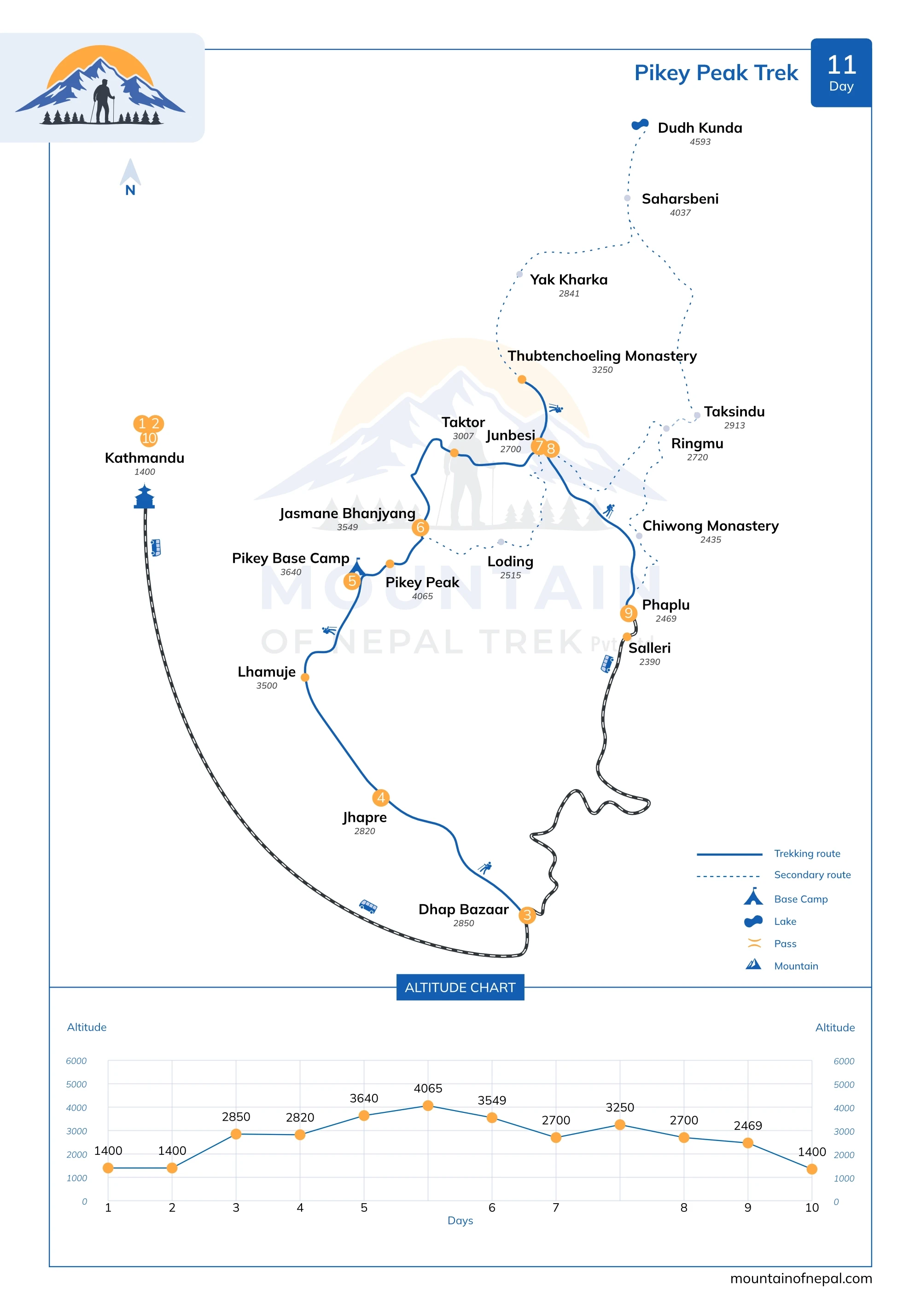
The trek involves a combination of driving and trekking. The journey begins with a scenic drive from Kathmandu to Dhap Bazaar (2,850m), which takes approximately 8–10 hours depending on road conditions. From there, trekking begins through Jhapre, Pikey Peak Base Camp, and onward to the summit. The return route continues through Jasmane Bhanjyang, Junbesi, and Phaplu before driving back to Kathmandu.
Difficulty breakdown:
Transportation highlights:
Mountain of Nepal ensures safe transportation arrangements, experienced guides, and flexible pacing to match group fitness levels.
Food and accommodation along the Pikey Peak Trek are simple but comfortable, reflecting the remote mountain lifestyle of the region. Tea houses and local lodges are available throughout the route, especially in villages like Jhapre, Junbesi, and Phaplu. Rooms are generally twin-sharing with basic bedding, warm blankets, and shared bathroom facilities.
Meals are freshly prepared by local tea houses and include a mix of Nepali and basic international dishes. The most common meal is Dal Bhat (rice, lentil soup, vegetables), which provides high energy for trekking. Other options include noodles, soups, pasta, pancakes, eggs, and Tibetan bread. At higher altitudes like Pikey Peak Base Camp, food variety becomes more limited due to transportation constraints.
Accommodation and food highlights:
Mountain of Nepal ensures hygienic meal arrangements and selects the best available lodges along the route. Clean drinking water, boiled or purified, is available at most stops, though trekkers are encouraged to carry water purification tablets or filters for safety.
To undertake the Pikey Peak Trek, certain permits are required as the route passes through regulated trekking and conservation areas of Nepal. Mountain of Nepal handles all permit arrangements for trekkers to ensure a hassle-free experience from arrival to departure.
The main permits required include the TIMS (Trekkers’ Information Management System) card and the Gaurishankar Conservation Area Permit (GCAP), as parts of the route fall under protected regions. These permits help support conservation efforts and ensure trekkers’ safety and tracking throughout the journey.
Permit details:
Trekkers are required to provide a valid passport copy, visa details, and passport-sized photos before departure. No special restricted area permit is needed for the Pikey Peak Trek, making it one of the more accessible Himalayan trekking routes.
Mountain of Nepal ensures all documentation is prepared in advance so trekkers can focus entirely on the experience rather than administrative procedures.
Choosing the Pikey Peak Trek with Mountain of Nepal guarantees a well-organized, safe, and culturally immersive Himalayan journey. Unlike crowded routes in the Everest region, Pikey Peak offers a peaceful trekking environment with equally stunning mountain views and deeper cultural interaction with local communities.
Mountain of Nepal specializes in personalized trekking experiences, ensuring small group sizes, experienced local guides, and flexible itineraries based on weather and fitness levels. The company prioritizes safety, acclimatization, and authentic cultural exposure throughout the journey.
Reasons to choose this trek with Mountain of Nepal:
The company also focuses on responsible tourism by supporting local tea houses and communities along the route. This ensures that your trek contributes positively to the local economy while preserving the natural environment.
Upon your arrival at Tribhuvan International Airport in Kathmandu, a representative from Mountain of Nepal will warmly welcome you and assist with your transfer to your hotel in the vibrant tourist district of Thamel. After check-in, you can rest and recover from your journey or take a gentle stroll around the lively streets filled with trekking shops, cafés, and cultural landmarks. In the evening, a pre-trek briefing will be conducted by your guide, where you will be introduced to the itinerary, safety guidelines, and necessary preparations for the Pikey Peak Trek. This is also a great time to ask questions and ensure all equipment is ready for the adventure ahead. Overnight stay in Kathmandu.
Today is dedicated to exploring the cultural and historical treasures of Kathmandu Valley while also completing final trek preparations with Mountain of Nepal. After breakfast, you will visit UNESCO World Heritage Sites such as Swayambhunath (Monkey Temple), Pashupatinath Temple, and Boudhanath Stupa, each offering deep insight into Nepal’s spiritual heritage. These visits also help acclimate you gradually while enjoying the city's rich history. Later in the afternoon, you will return to the hotel for a detailed gear check, permit confirmation, and final briefing with your trekking guide. You can also purchase or rent any missing equipment in Thamel. Overnight stay in Kathmandu.
Early in the morning, your journey begins with a scenic drive arranged by Mountain of Nepal from Kathmandu to Dhap Bazaar. The road gradually ascends through winding hills, terraced fields, rivers, and rural settlements, offering a beautiful introduction to Nepal’s countryside. The drive typically takes 7–9 hours, depending on road conditions. Along the way, you will pass through small towns and enjoy lunch at a local roadside restaurant. As you reach Dhap Bazaar, the air becomes noticeably cooler and the landscapes more mountainous, signaling the true beginning of your trekking adventure. Overnight stay at a local teahouse in Dhap Bazaar.
Today marks your first trekking day on foot with Mountain of Nepal, as you begin walking from Dhap Bazaar to Jhapre. The trail is moderate and passes through beautiful rhododendron forests, small villages, and open ridges offering occasional views of the Himalayas. You will also encounter friendly locals and grazing livestock along the way, giving you a glimpse into rural Sherpa and Tamang lifestyles. The walk is not too strenuous, allowing your body to gradually adjust to the altitude. Jhapre is a scenic village with stunning views of Everest and Numbur Himal on clear days. Overnight stay in a comfortable teahouse.
After breakfast, the trail continues uphill through lush forests and high alpine landscapes as you ascend toward Pikey Peak Base Camp. The route becomes more remote and peaceful, with fewer settlements and more natural wilderness. Along the way, you will enjoy panoramic views of rolling hills, distant peaks, and prayer flags fluttering in the wind. The climb is steady but rewarding, and your guide from Mountain of Nepal will ensure a safe and comfortable pace. As you reach Base Camp, the atmosphere becomes serene and dramatic, with breathtaking sunset views over the Himalayan range. Overnight stay at a teahouse or lodge.
This is the most exciting and challenging day of the trek. Early before sunrise, you will begin the steep climb to Pikey Peak Summit, guided carefully by Mountain of Nepal staff. From the summit, you will witness one of the best panoramic sunrise views in Nepal, including Everest, Kanchenjunga, Makalu, and Annapurna ranges on clear days. After spending time at the summit, you will descend back to Base Camp for breakfast and continue trekking down to Jasmane Bhanjyang. The descent offers changing landscapes from alpine ridges to forested paths. Overnight stay in a peaceful mountain teahouse.
Today’s trail leads you through beautiful rhododendron forests, peaceful valleys, and traditional Sherpa villages as you descend toward Junbesi. The journey is long but scenic, with plenty of opportunities to observe local culture and Buddhist monasteries along the way. Mountain of Nepal ensures regular rest stops so you can enjoy the surroundings comfortably. Junbesi is one of the most charming villages in the Solu region, known for its ancient monastery and welcoming atmosphere. Once you arrive, you can relax and explore the village surroundings in the evening. Overnight stay in Junbesi at a local lodge.
Today is set aside for rest and cultural exploration, allowing your body to recover while still enjoying the beauty of the region. With Mountain of Nepal, you can hike to the famous Thuptenchholing Monastery, one of the most important Buddhist monasteries in the Solu region, where monks practice traditional rituals. Alternatively, you may take a short hike to nearby viewpoints offering distant views of Everest and surrounding peaks. This day is also perfect for interacting with locals and learning about Sherpa culture, traditions, and daily life. Overnight stay in Junbesi.
After breakfast, you begin your descent toward Phaplu, walking through forests, farmland, and charming rural settlements. The trail is relatively easy compared to previous days, making it a pleasant and relaxing trekking experience. Along the way, you will pass small stupas, prayer flags, and traditional houses that reflect the cultural richness of the Solu region. Mountain of Nepal ensures a comfortable pace with breaks for refreshments and photography. Upon arrival in Phaplu, you can rest at a teahouse and reflect on your trekking journey. Overnight stay in Phaplu.
Today, you will drive back to Kathmandu with Mountain of Nepal, marking the end of your trekking adventure in the Himalayas. The journey takes you through winding mountain roads, river valleys, and scenic countryside landscapes. Depending on road conditions, the drive may take 8–10 hours. You will stop for lunch at a local restaurant along the way. As you return to Kathmandu, you will feel the contrast between the peaceful mountains and the bustling city. Once in Kathmandu, you will be transferred to your hotel for rest. Overnight stay in Kathmandu.
On your final day in Nepal, Mountain of Nepal will assist you with your airport transfer based on your flight schedule. If you have extra time before departure, you may enjoy last-minute shopping in Thamel or simply relax at your hotel. This marks the end of your memorable Pikey Peak Trek, filled with Himalayan views, cultural encounters, and peaceful mountain experiences. Our team will ensure a smooth and timely transfer to Tribhuvan International Airport, wishing you a safe journey home and hoping to welcome you again for another adventure in Nepal’s beautiful Himalayas.
Your Start Date is the day you land in Nepal, and your End Date is when you fly home.
If the set Pikey Peak Trek group dates don’t suit your schedule, we can offer alternative dates upon request.
Proper layering is important to stay warm and comfortable in changing mountain weather.
Good footwear makes trekking easier and safer.
The right gear keeps you safe, comfortable, and prepared.
Lightweight but important items keep you clean, healthy, and comfortable.
Keep important items safe and easy to reach.
The Pikey Peak Trek is a beautiful off-the-beaten-path trekking route in the lower Everest region of Nepal, organized by Mountain of Nepal. It is famous for offering one of the best panoramic views of Mount Everest along with other giants like Kanchenjunga, Makalu, and Annapurna. Unlike more crowded Everest routes, this trek provides a peaceful and authentic Himalayan experience through traditional Sherpa villages, monasteries, and rhododendron forests. It is ideal for trekkers seeking stunning mountain scenery without extreme altitude challenges or heavy tourist traffic.
The Pikey Peak Trek is considered a moderate trek, suitable for beginners with a reasonable level of fitness as well as experienced trekkers. According to Mountain of Nepal, the trail involves daily walking of 5–7 hours through hills, forests, and gradual ascents. The highest point, Pikey Peak at 4,065 meters, does not require technical climbing skills, but altitude awareness is important. With proper pacing, hydration, and guidance from professional guides, most trekkers can complete the journey comfortably without major difficulties.
The standard Pikey Peak Trek, organized by Mountain of Nepal, typically takes around 7 to 11 days, depending on the itinerary and travel preferences. The duration includes arrival and departure days in Kathmandu, scenic drives, trekking days, and optional rest or exploration days. Shorter versions can be arranged for experienced trekkers, while longer itineraries allow for a more relaxed pace and deeper cultural exploration of villages like Junbesi and Jhapre. The flexibility makes it suitable for many types of travelers.
Altitude sickness is generally less severe on the Pikey Peak Trek compared to higher Himalayan routes like Everest Base Camp. However, Mountain of Nepal still takes proper precautions as the highest point reaches 4,065 meters. Trekkers are advised to ascend gradually, stay hydrated, and avoid overexertion. Symptoms such as headache or dizziness are rare but possible. Guides are trained to monitor health conditions and respond appropriately. The itinerary is designed to allow natural acclimatization and reduce altitude-related risks.
No previous trekking experience is required for the Pikey Peak Trek, making it an excellent choice for first-time trekkers. According to Mountain of Nepal, the trek is designed for people with basic fitness levels who can walk for several hours a day. The trail does not involve technical climbing or extreme altitudes, making it beginner-friendly. However, prior hiking experience can be helpful in enjoying the journey more comfortably. A positive mindset and willingness to walk in varied terrain are the most important requirements.
Mountain of Nepal is a trusted trekking company known for professional service, experienced guides, and personalized travel experiences. For the Pikey Peak Trek, they ensure safe itineraries, proper acclimatization, quality accommodations, and cultural immersion. Their local expertise helps trekkers explore hidden gems of the Everest region while maintaining safety and comfort. The company focuses on responsible tourism and supporting local communities, making the trekking experience both meaningful and sustainable. Choosing Mountain of Nepal guarantees a well-organized and memorable Himalayan adventure.
The best time to undertake the Pikey Peak Trek with Mountain of Nepal is during spring (March to May) and autumn (September to November). These seasons offer the clearest skies, stable weather, and the best mountain visibility. Spring brings blooming rhododendrons, while autumn provides crisp air and excellent visibility of the Himalayan ranges. Winter is also possible but can be cold at higher elevations, while the monsoon season (June to August) brings rain and slippery trails, making trekking less ideal.
During the Pikey Peak Trek, Mountain of Nepal provides accommodation mainly in local teahouses and mountain lodges. These are simple but comfortable establishments run by local families, offering basic rooms with twin beds, blankets, and shared bathrooms in most places. In Kathmandu, trekkers stay in well-equipped hotels with modern facilities. While facilities in the mountains are basic, the warm hospitality of the locals and the traditional food experience make the stay memorable and culturally enriching.
During the Pikey Peak Trek, Mountain of Nepal ensures that trekkers receive fresh, hygienic, and nutritious meals throughout the journey. Teahouses typically offer traditional Nepali food such as dal bhat (rice, lentils, and vegetables), as well as noodles, soups, potatoes, eggs, and simple continental dishes. While menu options become more limited at higher elevations, meals are designed to provide enough energy for trekking. In Kathmandu, a wide variety of international cuisine is available before and after the trek.
For the Pikey Peak Trek, trekkers need a TIMS (Trekkers’ Information Management System) card and a local area permit depending on the route. Mountain of Nepal handles all necessary trekking permits and documentation on behalf of clients, ensuring a smooth and hassle-free experience. These permits are required for safety, conservation, and record-keeping purposes by Nepal’s tourism authorities. Trekkers do not need to worry about administrative procedures, as everything is managed by the trekking agency before the journey begins.
Packing properly is important for a comfortable trekking experience with Mountain of Nepal. Essential items include sturdy trekking boots, warm clothing layers, a down jacket, gloves, hat, and rain protection. A daypack, water bottle, sunscreen, and personal toiletries are also necessary. Since weather conditions change quickly in the mountains, layered clothing is highly recommended. Trekking poles can be useful for steep sections. Mountain of Nepal provides a detailed packing list before departure to ensure trekkers are fully prepared.


 (2)
(2)  100% recommend (0)
 (0)
(0)