The Churen Himal Base Camp Trek is one of the most remote and least explored trekking routes in western Nepal, offering an authentic Himalayan wilderness experience. Organised by Mountain of Nepal, this trek takes adventurers far away from crowded trails into the pristine landscapes of the Dhaulagiri region. The journey combines cultural immersion, high-altitude trekking, and breathtaking views of untouched mountain ranges, including Churen Himal, Dhaulagiri massif, and surrounding peaks. Unlike commercial trekking routes such as Everest or Annapurna, this trail provides a raw and pure experience of nature and traditional mountain life.
The trek typically begins with a drive from Kathmandu to Pokhara and continues toward Darbang, the gateway to the trekking region. From there, trekkers gradually ascend through traditional Magar and Gurung villages, dense forests, alpine meadows, and remote high-altitude kharkas (pasturelands). The highlight is reaching Churen Himal Base Camp, where trekkers stand at the foot of massive glaciers and snow-covered peaks in complete solitude.
This trek is ideal for those seeking adventure beyond mainstream routes. It requires physical endurance but rewards trekkers with unmatched serenity and cultural authenticity. With expert guidance from Mountain of Nepal, trekkers are supported with safety, logistics, and local expertise throughout the journey.
The best time to undertake the Churen Himal Base Camp Trek is during the spring (March to May) and autumn (September to November) seasons. These periods offer the most stable weather conditions, clear skies, and excellent mountain visibility. According to Mountain of Nepal, these months are ideal for both photography and safe trekking in high-altitude regions.
During spring, the trails are beautifully decorated with blooming rhododendrons and lush greenery. The temperature is moderate, making long trekking days more comfortable. Wildlife sightings are also more common during this time. In autumn, the weather is crisp and stable after the monsoon season, offering crystal-clear mountain views and dry trekking trails. This is also the most popular trekking season in Nepal.
Winter (December to February) is extremely cold in the higher regions, and snowfall may block some parts of the trail. Similarly, the monsoon season (June to August) brings heavy rain, landslides, and slippery paths, making trekking more challenging and less safe.
Best Season Highlights:
The Churen Himal Base Camp Trek is considered a moderate to challenging trek due to its remote location, long walking days, and high-altitude terrain. While it does not require technical climbing skills, trekkers must be physically fit and prepared for steep ascents, rugged trails, and basic facilities. The altitude gradually increases, reducing the risk of acute altitude sickness when properly acclimatised under the supervision of Mountain of Nepal guides.
The trekking route involves 5–8 hours of walking per day through forests, ridges, and alpine landscapes. Some sections are isolated, requiring camping support and self-sufficient preparation. However, the gradual ascent helps trekkers adapt naturally to altitude changes. Proper gear, mental preparation, and fitness training are highly recommended.
Transportation plays an important role in this trek. The journey starts with a flight or drive to Pokhara, followed by a long jeep ride to Darbang. From there, the trekking route begins on foot. After completing the trek, travellers return via the same route back to Pokhara and Kathmandu.
Difficulty & Transport Highlights:
Food and accommodation during the Churen Himal Base Camp Trek vary depending on the altitude and remoteness of the location. In lower villages like Darbang, Takam, and Lumsang, trekkers stay in basic teahouses or homestays run by local families. As you ascend higher, especially beyond Gurja Kharka, accommodation shifts to tented camps arranged by Mountain of Nepal.
Meals in lower regions include traditional Nepali food such as dal bhat (rice, lentils, and vegetables), noodles, soups, and seasonal vegetables. As altitude increases, food options become simpler due to transportation limitations. The trekking crew ensures hygienic, energy-rich meals to support high-altitude trekking demands. Hot drinks like tea, coffee, and soups are regularly provided to maintain warmth and hydration.
Camping at higher elevations includes organised tents, sleeping bags, and basic kitchen setups. The team ensures safe, clean, and warm sleeping arrangements even in remote areas. Although facilities are basic compared to urban standards, the experience of staying in the untouched Himalayan wilderness is highly rewarding.
Food & Accommodation Highlights:
To complete the Churen Himal Base Camp Trek, several trekking permits are required, as the route passes through protected and rural conservation areas. These permits are arranged in advance by Mountain of Nepal, ensuring a hassle-free trekking experience for participants.
The main permits include the Annapurna Conservation Area Permit (ACAP) or regional conservation permits, depending on the exact route, and the Trekkers’ Information Management System (TIMS) card. Since the region is remote and less commercialised, additional local permits from village municipalities may also be required.
These permits help support conservation efforts, maintain trail infrastructure, and contribute to local community development. Trekkers are advised not to carry out the process independently, as regulations may change depending on regional authorities. With Mountain of Nepal, all necessary documentation is handled professionally before the trek begins.
Permit Highlights:
The Churen Himal Base Camp Trek is one of Nepal’s hidden gems, offering an unmatched combination of adventure, isolation, and cultural richness. Unlike popular trekking routes, this journey allows trekkers to experience the untouched Himalayan wilderness without crowds. It is perfect for those who seek solitude, raw nature, and authentic village interactions.
Choosing this trek with Mountain of Nepal ensures professional guidance, safety, and local expertise. Their experienced guides understand the terrain, weather conditions, and cultural aspects of the region, making the journey safe and enriching. The trek also provides opportunities to interact with Magar and Gurung communities, experience traditional lifestyles, and explore high alpine landscapes rarely visited by outsiders.
Another major reason to choose this trek is its diversity. From lush green hills to snow-covered base camps, trekkers experience dramatic changes in landscape throughout the journey. The sense of achievement upon reaching Churen Himal Base Camp is unforgettable.
Why Choose Highlights:
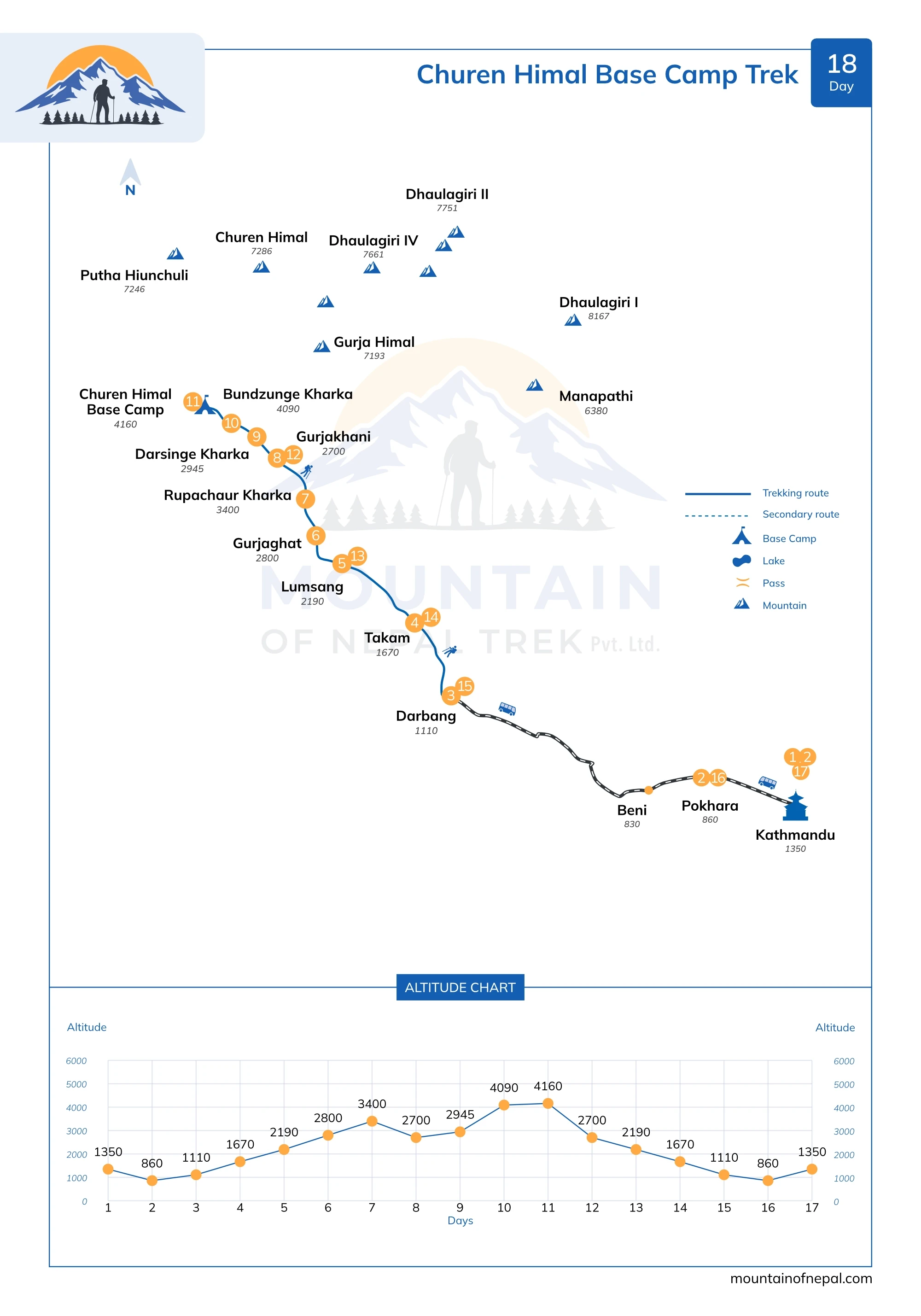
Upon your arrival at Tribhuvan International Airport in Kathmandu, a representative from Mountain of Nepal will warmly welcome you and assist with your transfer to the hotel. After check-in, you can relax and recover from your journey or take a short walk around the vibrant streets of the capital. Kathmandu offers a fascinating mix of ancient heritage, bustling markets, and spiritual atmosphere. In the evening, a brief trekking briefing will be conducted where your guide will explain the journey, safety measures, and preparations for the Churen Himal Base Camp Trek. Overnight stay at the hotel in Kathmandu.
Today, you begin your scenic overland journey from Kathmandu to Pokhara, a beautiful lakeside city. The drive takes around 6–8 hours along winding highways, passing rivers, terraced fields, and charming rural settlements. Pokhara is known for its stunning views of the Annapurna range and peaceful ambiance by Phewa Lake. Upon arrival, you will check into your hotel and have time to explore the lakeside area or simply relax. The city offers a perfect transition from urban life to trekking adventure. Overnight stay in Pokhara with preparation for the onward journey.
After breakfast in Pokhara, you continue your journey by jeep toward Darbang Village, the starting point of the trek. The drive takes you through off-road tracks, lush hills, and traditional Magar and Gurung settlements. As you move deeper into rural Nepal, the landscape becomes more remote and naturally beautiful. Darbang is a small but lively village where trekkers can observe local lifestyles and mountain culture. Upon arrival, you settle into a basic lodge and prepare for the trekking phase. The evening is spent resting and reviewing trekking equipment with your guide from Mountain of Nepal.
The trekking officially begins today as you ascend from Darbang toward Takam Village. The trail passes through forests, small streams, and terraced farmland, offering beautiful views of surrounding hills. You will encounter friendly locals working in fields and herding livestock. The walk is moderate but steady uphill, allowing gradual acclimatization. Takam is a traditional settlement with simple lodges and warm hospitality. The village provides a peaceful atmosphere surrounded by natural beauty. Overnight stay in Takam, where you can enjoy a freshly prepared local meal and rest for the next day’s journey.
Today’s trek leads you further into the less-traveled regions of western Nepal as you move toward Lumsang Village. The trail becomes quieter and more remote, with dense forests, ridge walking, and occasional wildlife sightings. You will experience stunning natural diversity along the way. Lumsang is a small settlement where traditional mountain life continues unchanged. The villagers are welcoming, and you may observe their farming practices and simple lifestyle. The peaceful environment helps you adjust to the trekking rhythm. Overnight stay in Lumsang in a basic teahouse managed by local families.
The trail today gradually ascends toward Gurjaghat, a scenic highland grazing area surrounded by alpine vegetation. The walk includes forest paths filled with rhododendron and pine trees, offering refreshing air and beautiful landscapes. As you gain altitude, views of distant peaks begin to appear. Gurjaghat is known for its open pastures where yaks and sheep are often seen grazing. It is an ideal place to experience the raw wilderness of the Churen Himal region. Overnight stay in a simple lodge or camping setup, depending on season and availability.
Today’s journey continues deeper into alpine terrain as you head toward Rupachaur Kharka. The trail becomes more rugged and less frequented, offering a true wilderness trekking experience. You will cross ridges and grassy meadows while enjoying panoramic mountain views. The silence of nature is profound, broken only by wind and distant animal sounds. Rupachaur Kharka is an open pastureland often used by local herders during summer months. The campsite here is peaceful, and the night sky is exceptionally clear for stargazing. Overnight stay in tents or basic shelter.
The trek descends slightly as you move toward Gurja Khani Village, one of the most culturally rich settlements in the region. The trail passes through mixed forests and traditional grazing areas. Gurja Khani is home to the Magar community, known for their unique traditions and hospitality. Upon arrival, you will experience authentic village life and warm local interaction. The village offers stunning views of surrounding hills and valleys. This is a great opportunity to learn about rural mountain culture. Overnight stay in Gurja Khani in a local lodge or homestay.
Today’s trail leads to Darsinge Kharka, a remote high-altitude pasture area. The route is more challenging with steep ascents and rocky paths, but rewards trekkers with breathtaking scenery. You will pass through untouched wilderness, where wildlife sightings are possible. Darsinge Kharka is a quiet and isolated area, perfect for those seeking solitude in the mountains. The landscape becomes more alpine and dramatic as you approach higher elevations. Overnight camping is arranged in a safe and scenic location managed by the trekking team of Mountain of Nepal.
This day is dedicated to reaching Bundzunge Kharka and exploring the surrounding region. The trail offers stunning views of snow-capped peaks and expansive valleys. Once at Bundzunge Kharka, you will have time for exploration, photography, and short hikes around the area. The region is rich in natural beauty and provides an excellent acclimatization opportunity before heading higher. The environment is peaceful and untouched by modern development. Overnight stay in camp, enjoying the serenity of the Himalayas under a star-filled sky.
Today is the most anticipated day of the trek as you ascend to Churen Himal Base Camp. The trail is challenging but incredibly rewarding, with dramatic mountain scenery unfolding at every step. Upon arrival, you will explore the base camp area, surrounded by majestic peaks and glaciers. The sense of achievement is immense as you stand at the foot of Churen Himal. Time is spent exploring, photographing, and soaking in the Himalayan atmosphere. Overnight camping at base camp, experiencing the raw beauty of high-altitude wilderness.
After an unforgettable experience at base camp, you begin your descent back to Gurja Khani Village. The return journey allows you to appreciate the landscapes from a different perspective. The downhill trail is easier but still requires careful walking. Upon arrival in Gurja Khani, you are welcomed again by the local community. Rest and relaxation are prioritized after the high-altitude adventure. Overnight stay in the village, enjoying warm meals and cultural interaction.
Today you continue descending toward Lumsang Village. The trail passes through forests and terraced hills, offering a pleasant and relaxing walk compared to higher altitudes. You may encounter local villagers and wildlife along the way. Lumsang provides a peaceful environment for rest after several days of trekking in higher regions. Upon arrival, you settle into a familiar lodge and enjoy the comfort of lower elevation. Overnight stay in Lumsang.
The journey continues back to Takam Village. The trail is familiar but still scenic, allowing you to reflect on the adventure so far. You pass through lush landscapes, rivers, and rural settlements. Takam offers a comfortable stop with good lodging and warm hospitality. The evening is spent relaxing and sharing experiences with fellow trekkers and guides. Overnight stay in Takam Village.
Today you descend further to Darbang Village, marking your return toward the end of the trekking route. The trail is easier and passes through beautiful countryside and agricultural land. Darbang is where your trekking section originally began, making it a symbolic return point. You will rest and prepare for the drive back to Pokhara the following day. Overnight stay in Darbang.
After breakfast, you take a jeep ride back to Pokhara. The journey offers a final chance to enjoy the rural landscapes of western Nepal. Upon arrival in Pokhara, you will be transferred to your hotel. The rest of the day is free for relaxation, shopping, or enjoying the lakeside atmosphere. Many trekkers choose to celebrate the completion of the trek with a peaceful evening by Phewa Lake. Overnight stay in Pokhara.
Today you drive back to Kathmandu, retracing the scenic highway route. The journey takes you through rivers, hills, and busy roadside towns. Upon arrival in Kathmandu, you check into your hotel and have free time for shopping, sightseeing, or rest. This is your final evening in Nepal, and you may explore local markets or enjoy a farewell dinner organized by Mountain of Nepal. Overnight stay in Kathmandu.
Your incredible journey with Mountain of Nepal comes to an end today. After breakfast, a representative will transfer you to Tribhuvan International Airport for your onward flight. You leave Nepal with unforgettable memories of the Churen Himal Base Camp Trek, enriched by mountain landscapes, cultural experiences, and personal achievement. The team bids you farewell with hopes of welcoming you again for another Himalayan adventure.
Your Start Date is the day you land in Nepal, and your End Date is when you fly home.
If the set Churen Himal Base Camp Trek group dates don’t suit your schedule, we can offer alternative dates upon request.
The Churen Himal Base Camp Trek is located in the remote western region of Nepal, within the Dhaulagiri massif area. It lies between the Myagdi and Dolpa districts and is one of the least explored trekking routes in the Himalayas. This trek offers a true wilderness experience far from crowded trails. With Mountain of Nepal, trekkers get a carefully planned route that passes through traditional villages, high alpine pastures, and eventually reaches the stunning base of Churen Himal, surrounded by dramatic, untouched mountain landscapes.
This trek is considered moderately difficult to challenging due to its remote trails, long walking days, and high-altitude sections above 4,000 meters. It requires good physical fitness and prior trekking experience is helpful but not mandatory. The terrain includes steep ascents, forest paths, and rocky alpine zones. With proper acclimatization and guidance from Mountain of Nepal, most fit trekkers can complete the journey safely. Preparation through cardio training and hiking practice before arrival is strongly recommended to fully enjoy the adventure.
The Churen Himal Base Camp Trek typically takes around 18 days, including arrival and departure from Kathmandu. The trekking portion itself covers remote villages, high passes, and base camp exploration. The itinerary designed by Mountain of Nepal includes gradual ascent and descent to ensure proper acclimatization and safety. Extra buffer days are sometimes included depending on weather conditions or group pace. The duration allows trekkers to fully experience both cultural villages and pristine Himalayan wilderness without rushing through the journey.
Yes, altitude sickness can be a concern as the trek reaches elevations above 4,500 meters near Churen Himal Base Camp. However, the itinerary designed by Mountain of Nepal includes gradual ascent and proper acclimatization days to reduce risk. Trekkers are advised to stay hydrated, walk slowly, and listen to their bodies. Guides are trained to identify symptoms early and take necessary action. In case of severe symptoms, descent is the immediate solution to ensure safety during the trek.
Mountain of Nepal is a trusted local trekking company specializing in remote Himalayan adventures, including the Churen Himal Base Camp Trek. The company provides experienced guides, well-planned itineraries, and strong safety management in high-altitude regions. Their deep local knowledge ensures authentic cultural experiences and reliable logistics in off-the-beaten-path areas. With a strong focus on safety, comfort, and personalized service, Mountain of Nepal ensures trekkers enjoy a memorable and well-supported journey through one of Nepal’s most untouched trekking regions.
The best seasons for the Churen Himal Base Camp Trek are spring (March to May) and autumn (September to November). During these months, the weather is stable, skies are clear, and mountain views are spectacular. Spring offers blooming rhododendrons, while autumn provides crisp air and excellent visibility. Mountain of Nepal highly recommends avoiding monsoon season due to landslides and winter due to heavy snowfall at higher altitudes. Choosing the right season ensures a safer and more enjoyable trekking experience.
Yes, hiring a licensed trekking guide is highly recommended and often essential for the Churen Himal Base Camp Trek due to its remote and less-developed trails. A guide ensures navigation safety, cultural understanding, and emergency support. With Mountain of Nepal, experienced local guides lead the journey, helping trekkers stay on the correct route and manage altitude challenges. Porters are also available to carry luggage, allowing trekkers to focus on enjoying the natural beauty and cultural experiences of the region.
Accommodation on this trek varies depending on the location. In lower villages, simple teahouses and homestays are available, offering basic rooms and local meals. In higher and remote sections, camping is often required, especially near base camp areas. Mountain of Nepal provides all necessary camping equipment when required, including tents and kitchen facilities. While facilities are basic, they are clean and comfortable enough for a trekking adventure. The focus of this trek is more on wilderness experience than luxury stays.
During the Churen Himal Base Camp Trek, meals are simple, nutritious, and mostly locally prepared. Common food options include dal bhat (rice, lentils, and vegetables), noodles, soups, potatoes, and seasonal vegetables. In camping sections, a professional cook team from Mountain of Nepal prepares fresh meals for trekkers. Food variety may reduce at higher altitudes, but energy-rich meals are provided to support long trekking days. Clean drinking water and hot drinks like tea are also available throughout the journey.
Trekkers need several permits, including the Annapurna Conservation Area Permit (ACAP) and TIMS card, depending on the route access points. Since the Churen Himal region is remote, additional local permits may also be required. Mountain of Nepal handles all necessary paperwork and permit arrangements before the trek begins, ensuring a smooth and hassle-free experience for travelers. This allows trekkers to focus entirely on the journey without worrying about administrative procedures or government formalities.


 (2)
(2)  100% recommend (0)
 (0)
(0)