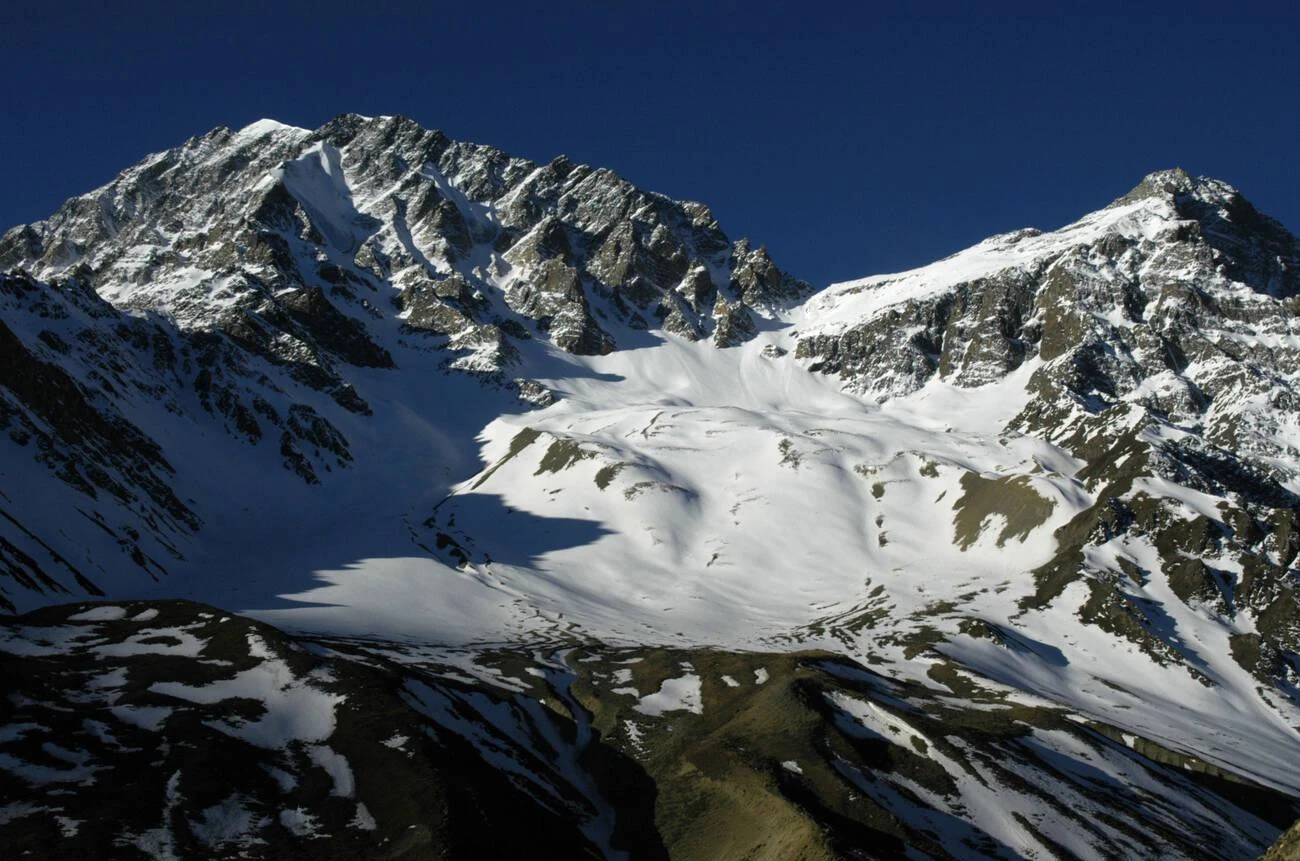
Pisang Peak Climbing (6,091m) is one of the most popular trekking peaks in the Annapurna region of Nepal, offering a perfect combination of trekking adventure and basic mountaineering experience. Organised by Mountain of Nepal, this expedition follows the classic Annapurna Circuit trail before heading toward the technical ascent of Pisang Peak. The journey begins in Kathmandu and gradually enters the remote Himalayan landscapes, passing through villages like Jagat, Dharapani, Chame, and Upper Pisang before reaching the climbing section. The route provides stunning views of Annapurna II, III, IV, Gangapurna, and Tilicho Peak.
The climb itself is considered moderately technical, making it ideal for trekkers who want to step into alpine climbing without extreme mountaineering difficulty. The ascent involves glacier travel, rope fixing, ice axe use, and crampons during summit day. The peak rises above the Manang Valley, offering a spectacular 360-degree Himalayan panorama. The itinerary designed by Mountain of Nepal ensures proper acclimatisation, safety, and gradual altitude gain, which is essential for a successful summit.
The best seasons for Pisang Peak Climbing are spring (March–May) and autumn (September–November). These periods offer the most stable weather conditions, clear skies, and excellent mountain visibility. Spring is especially beautiful due to blooming rhododendrons, while autumn provides crisp air and the clearest Himalayan views. The Mountain of Nepal strongly recommends these seasons for both safety and summit success.
During spring, temperatures are moderate at lower elevations but cold at higher camps. Snow conditions are generally stable, making the climb more manageable. Autumn is considered the most popular season because of minimal rainfall, dry trails, and predictable weather patterns. Winter climbs are possible but extremely cold and require advanced mountaineering experience. Monsoon season (June–August) is not recommended due to heavy rainfall, landslides, and poor visibility.
Proper seasonal planning significantly increases summit success rates. Mountain of Nepal ensures all expeditions are scheduled according to weather forecasts, route conditions, and safety requirements.
Key Points:
Pisang Peak Climbing is classified as a moderate to moderately difficult trekking peak. While the trekking portion is not highly technical, the final summit push requires mountaineering skills such as rope handling, ice axe usage, and crampon walking. The steep snow slopes and altitude above 6,000m make acclimatisation essential. Mountain of Nepal provides experienced climbing guides who ensure safety training before the summit attempt.
Transportation begins with arrival in Kathmandu, followed by a long drive to Jagat via private jeep or local transport. From Jagat onward, the journey continues on foot through trekking trails. After completing the climb and descending via Muktinath and Jomsom, a short scenic flight takes trekkers to Pokhara, followed by a drive back to Kathmandu. This combination of road, trekking, and flight makes the journey both adventurous and diverse.
Altitude is the main challenge, along with cold temperatures and unpredictable weather near the summit. However, with proper pacing, acclimatisation, and guidance from Mountain of Nepal, climbers with good fitness levels can complete the expedition.
Key Points:
Food and accommodation during Pisang Peak Climbing are arranged in teahouses along the trekking route and tented camps during climbing sections. Mountain of Nepal ensures hygienic meals, safe lodging, and proper camping equipment at base and high camps. Lower regions such as Jagat, Chame, and Manang offer comfortable teahouses with basic rooms, warm blankets, and shared bathrooms.
Meals typically include traditional Nepali food such as dal bhat (rice and lentils), along with pasta, noodles, soups, potatoes, eggs, and bread items. As altitude increases, food variety decreases due to remoteness, but high-energy meals are prioritised. At base camp and high camp, professional cooks prepare nutritious meals suitable for climbers’ energy needs.
Accommodation becomes more basic as altitude increases. While teahouses provide shelter in lower areas, climbers stay in expedition tents at higher camps. Mountain of Nepal provides high-quality camping gear, including sleeping bags, mattresses, and kitchen tents for comfort and safety.
Key Points:
Climbing Pisang Peak requires several official permits issued by the Government of Nepal. Mountain of Nepal manages all permit arrangements to ensure a smooth expedition process. The primary permits include the Annapurna Conservation Area Permit (ACAP), Trekkers’ Information Management System (TIMS) card, and Pisang Peak Climbing Permit issued by the Nepal Mountaineering Association (NMA).
The cost of the climbing permit varies depending on the season (spring being the most expensive and winter the cheapest). All permits are mandatory and checked at various checkpoints along the route. Without proper documentation, entry into the conservation area and climbing zones is not allowed. Mountain of Nepal handles all paperwork, ensuring trekkers do not face administrative difficulties during the expedition.
Proper permit management ensures environmental protection, safety regulation, and support for local communities in the Annapurna region. Fees collected contribute to conservation efforts and sustainable tourism development.
Key Points:
Choosing Pisang Peak Climbing with Mountain of Nepal ensures a safe, well-organised, and professionally guided Himalayan expedition. The company provides experienced climbing guides, proper acclimatisation schedules, high-quality camping equipment, and personalised support throughout the journey. Their itinerary is carefully designed to maximise summit success while minimising altitude risks.
One of the main advantages is the combination of trekking and climbing experience. Participants not only summit Pisang Peak but also complete part of the famous Annapurna Circuit, making the journey more rewarding. Mountain of Nepal emphasises safety, gradual ascent, and proper training before summit day. Emergency support, oxygen backup (if needed), and first-aid assistance are always available.
Additionally, the company focuses on small group sizes, which ensures better attention and flexibility. Ethical tourism practices, local support, and environmental responsibility are also key values. This makes the expedition not just a climb but a meaningful Himalayan adventure.
Key Points:
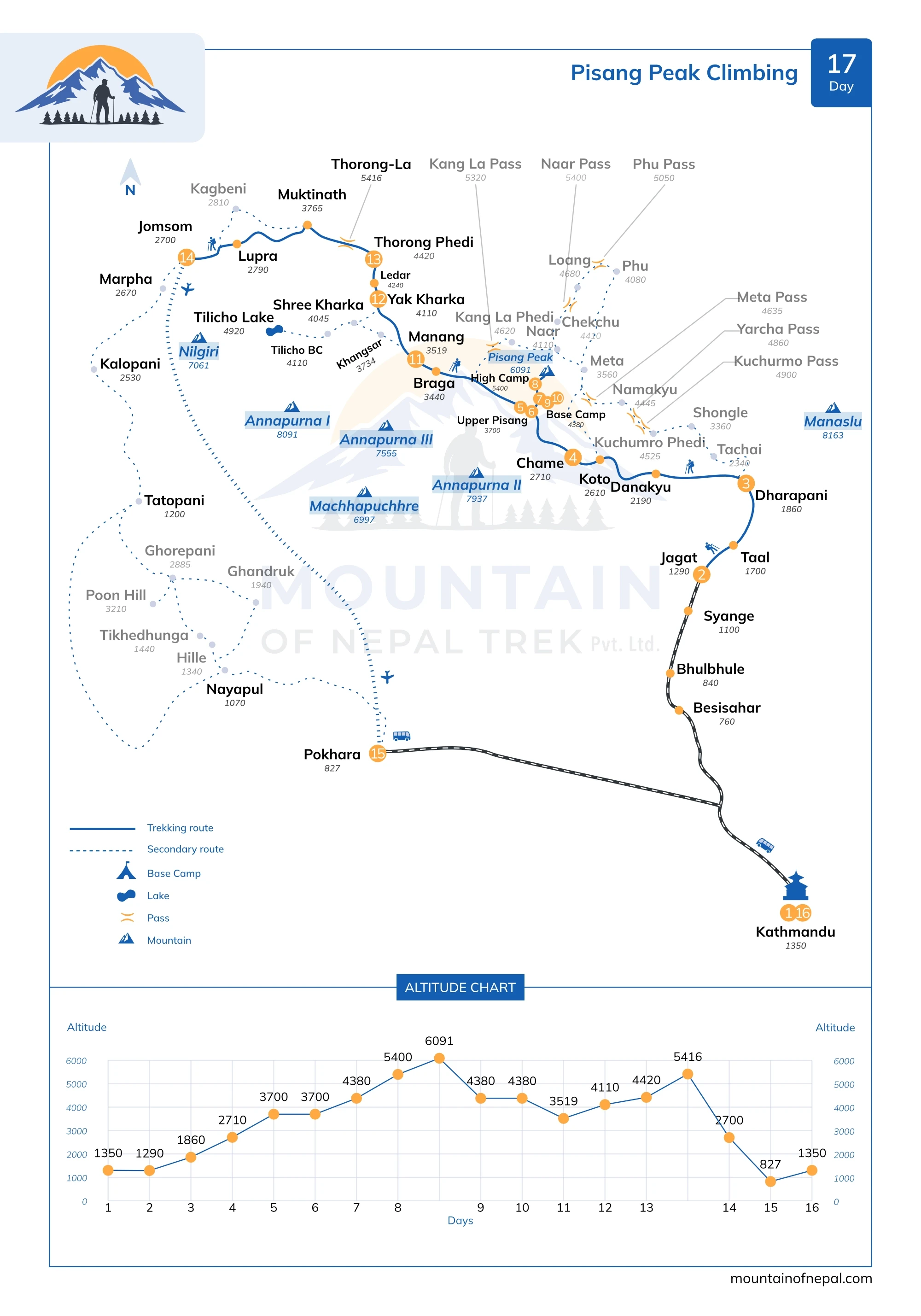
Upon your arrival at Tribhuvan International Airport in Kathmandu, a representative from Mountain of Nepal will warmly welcome you and transfer you to your hotel in the city. After check-in, you can rest from your journey or explore the nearby tourist area of Thamel, which is filled with trekking shops, cafés, and cultural energy. In the evening, there will be a pre-trip briefing where your climbing guide will explain the full itinerary, safety procedures, and equipment checklist. This is also the time for final gear inspection and any last-minute shopping or rental arrangements. Overnight stay at a comfortable hotel in Kathmandu, preparing for the adventure ahead.
Today begins your overland journey toward the Annapurna region. After an early breakfast, you will drive along the Prithvi Highway and then follow rugged mountain roads leading toward Jagat. The drive takes around 7–9 hours, depending on road conditions. Along the way, you will pass rivers, terraced fields, and small rural settlements that showcase Nepal’s countryside lifestyle. You will also see the Marsyangdi River valley gradually opening up as you approach the trekking region. Jagat is a small but important checkpoint village where permits are checked. Overnight at a local teahouse arranged by Mountain of Nepal, offering simple yet warm hospitality.
After breakfast, the trek officially begins as you follow the trail along the Marsyangdi River. The path includes stone steps, suspension bridges, and forested sections filled with pine and oak trees. You will gradually gain altitude while passing through small villages such as Chamje and Tal, where waterfalls and cliffside trails create dramatic scenery. The trek takes around 6–7 hours, depending on pace and weather conditions. Dharapani is a peaceful village and a key entry point into the Annapurna Conservation Area. Here, you will notice a shift in culture with more Tibetan-influenced traditions. Overnight stay at a teahouse managed under Mountain of Nepal arrangements.
Today’s trail continues through dense forests, river valleys, and suspension bridges as you ascend steadily toward Chame, the district headquarters of Manang. The trek takes about 5–6 hours and offers stunning views of Lamjung Himal and Annapurna II. You will pass through Bagarchhap and Danakyu villages, where traditional stone houses reflect local architecture. As altitude increases, the air becomes noticeably cooler and fresher. Chame is a well-developed mountain town with hot springs nearby and better facilities. You may explore the town in the evening while preparing for higher elevation trekking. An overnight stay arranged by Mountain of Nepal in a comfortable lodge.
The trek today becomes more dramatic as you enter deeper into the Manang valley. The trail climbs through alpine forests and narrow gorges with breathtaking views of Paungda Danda, a massive curved rock face. The path includes both gradual ascents and steeper sections, taking around 5–6 hours. As you reach Upper Pisang, the landscape becomes more arid and Tibetan-influenced, with prayer flags, monasteries, and traditional stone houses. The mountain views become more prominent, especially Annapurna II and Pisang Peak itself. You will spend the night in Upper Pisang, allowing your body to adjust to increasing altitude under the guidance of Mountain of Nepal.
This day is crucial for acclimatization to prevent altitude sickness. Instead of resting fully, you will take short hikes around Upper Pisang, including a visit to the historic Ghyaru village or nearby ridge viewpoints. These hikes help your body adapt while offering incredible panoramic views of the Annapurna range. Your guide from Mountain of Nepal will provide detailed briefings on high-altitude safety, breathing techniques, and their importance. You may also visit local monasteries and interact with Tibetan-influenced communities. The peaceful environment helps you mentally and physically prepare for the upcoming climb to base camp.
Today’s trek takes you into more remote and rugged terrain as you head toward Pisang Peak Base Camp. The trail ascends gradually through alpine landscapes with fewer settlements and more rocky paths. The air becomes thinner, and the environment more challenging, requiring a steady pace. After about 4–5 hours, you reach Base Camp, where the climbing preparation begins. The Mountain of Nepal climbing team will set up tents and organize equipment. You will receive technical training on ropes, crampons, and ice axes, essential for the summit push. Overnight in tents surrounded by dramatic Himalayan scenery.
This is a physically demanding day as you climb toward High Camp. The trail becomes steeper, involving rocky slopes and glacier sections that require careful navigation. Your guide will use fixed ropes where necessary for safety. The ascent takes about 4–5 hours, depending on weather and group pace. High Camp is set in a stark alpine environment with incredible views of Annapurna II, Gangapurna, and Tilicho Peak. Due to the altitude, rest and hydration are extremely important. The Mountain of Nepal team ensures proper tent setup, warm meals, and a final briefing for the summit attempt scheduled for the next day.
This is the most challenging and rewarding day of the expedition. You begin the summit push early in the morning, often around 2–3 AM, using headlamps to navigate icy slopes and ridges. The climb requires the use of ropes, crampons, and ice axes under expert supervision from Mountain of Nepal guides. After several hours of steady ascent, you reach the summit of Pisang Peak, where breathtaking 360-degree Himalayan views await. After celebrating and taking photos, you carefully descend back to High Camp and continue to Base Camp for rest. This long and exhausting day demands endurance, focus, and determination.
This day is reserved as a buffer for weather delays or additional acclimatization needs. If the summit was not achieved on Day 9 due to weather conditions, this day will be used for another attempt. Otherwise, it serves as a rest and recovery day at Base Camp. The Mountain of Nepal team will monitor weather forecasts and group conditions to decide the best use of this day. You may also use the time to relax, explore the nearby surroundings, or review climbing techniques with your guides. This flexibility ensures safety and improves summit success rates.
After the climbing phase, you descend back into the beautiful Manang Valley. The trail gradually becomes easier, passing through alpine meadows and rocky landscapes. The descent takes around 5–6 hours, offering a welcome relief after high-altitude climbing. Manang is a culturally rich village with monasteries, bakeries, and excellent views of surrounding peaks. Here, you can rest, recover, and enjoy warmer temperatures compared to higher elevations. Mountain of Nepal arranges comfortable lodge accommodation where you can relax and reflect on your successful climb.
Today’s trek is relatively short and gentle as you continue along the Annapurna Circuit route. The trail ascends gradually through alpine terrain where yaks graze freely. You will pass small settlements and enjoy stunning mountain scenery. The walk takes about 3–4 hours, allowing plenty of time for rest and acclimatization. Yak Kharka is a peaceful stopping point surrounded by vast open landscapes and Himalayan views. The mountain of Nepal ensures proper accommodation and warm meals to help your body recover from previous high-altitude exertion.
The trail today takes you closer to Thorong La Pass, one of the highest passes in the world. The trek involves gradual ascents with some steep sections and landslide-prone areas that require caution. It takes about 3–4 hours to reach Thorong Phedi, the final stop before crossing the pass. This area is rugged and remote, with limited facilities, but essential for acclimatization. The Mountain of Nepal team prepares you for the challenging crossing ahead, ensuring proper rest, hydration, and early preparation for the long day ahead.
This is the longest and most demanding trekking day. You start early in the morning, climbing steadily toward Thorong La Pass. The ascent is steep and exhausting due to the high altitude, but the views are rewarding. After reaching the pass, you descend sharply toward Muktinath, a sacred pilgrimage site, and then continue to Jomsom. The total journey takes around 9–10 hours. The dramatic change from high mountains to lower valleys is remarkable. The mountain of Nepal ensures strong logistical support throughout this long descent.
After breakfast, you take a scenic mountain flight from Jomsom to Pokhara, weather permitting. The flight offers spectacular aerial views of the Annapurna and Dhaulagiri ranges. Upon arrival in Pokhara, you transfer to your hotel and enjoy a relaxed day by Phewa Lake. This is a perfect time to unwind after days of trekking and climbing. You may explore lakeside cafés or simply rest in the peaceful environment. Mountain of Nepal ensures smooth airport transfers and hotel arrangements for your comfort.
Today you return to Kathmandu by tourist vehicle, a journey of around 6–7 hours depending on traffic and road conditions. The drive follows rivers, hills, and rural settlements, giving you one last look at Nepal’s diverse landscapes. Upon arrival in Kathmandu, you will be transferred to your hotel. The evening is free for shopping, sightseeing, or celebrating your successful Pisang Peak expedition with the Mountain of Nepal team. A farewell dinner may also be organized depending on the group's schedule.
After breakfast, you will be transferred to Tribhuvan International Airport for your final departure. The Mountain of Nepal team will assist you with luggage and airport procedures, ensuring a smooth farewell. This marks the end of your Pisang Peak Climbing adventure, filled with high-altitude challenges, cultural encounters, and unforgettable Himalayan scenery. You leave Nepal with lifelong memories of the mountains, friendships, and achievements earned during the expedition. The team warmly bids you farewell, hoping to welcome you again for future Himalayan adventures.
Your Start Date is the day you land in Nepal, and your End Date is when you fly home.
If the set Pisang Peak Climbing group dates don’t suit your schedule, we can offer alternative dates upon request.
Pisang Peak Climbing is a popular trekking peak expedition in the Annapurna region of Nepal, organized by Mountain of Nepal. The peak stands at 6,091 meters and is considered a moderately challenging climb suitable for trekkers with good fitness and some basic mountaineering experience. While it is not technically extreme compared to higher Himalayan peaks, climbers still need to use equipment such as crampons, ropes, and ice axes. The climb involves glacier travel, steep snow slopes, and high-altitude conditions, making proper acclimatization and guidance essential for a safe and successful summit.
Previous climbing experience is not mandatory, but it is highly recommended to have basic trekking experience at high altitudes. Mountain of Nepal provides pre-climb training at base camp, where professional guides teach essential skills such as using climbing boots, harnesses, ropes, and ice axes. Many beginners successfully summit Pisang Peak with proper guidance, physical preparation, and determination. However, good stamina and mental readiness are important because the climb involves long trekking days and exposure to thin air above 5,000 meters.
Climbers should have a good level of physical fitness, including strong cardiovascular endurance, leg strength, and stamina. The expedition involves long trekking days of 5–10 hours and high-altitude climbing above 6,000 meters. Mountain of Nepal strongly recommends regular training, such as hiking, running, cycling, or stair climbing, for at least 2–3 months before the trip. While technical climbing skills are taught during the expedition, physical fitness plays a major role in summit success and safety at high altitude.
Altitude sickness is a serious concern during Pisang Peak Climbing due to elevations above 6,000 meters. Mountain of Nepal follows a carefully designed itinerary that includes proper acclimatization days in places like Upper Pisang and Manang. Guides monitor climbers regularly for symptoms such as headache, nausea, or dizziness. Slow ascent, hydration, and rest are key preventive measures. In case of severe symptoms, immediate descent is arranged. Emergency oxygen and medical kits are also carried by the expedition team for safety.
Choosing Mountain of Nepal ensures a safe, professional, and well-organized climbing experience. The company provides experienced certified guides, high-quality logistics, and personalized support throughout the expedition. From permits and accommodation to climbing training and safety management, everything is handled professionally. Their team focuses on safety, success, and customer satisfaction, making them a reliable choice for both beginner and experienced climbers. With strong local expertise in the Annapurna region, Mountain of Nepal increases your chances of a successful Pisang Peak summit.
The best seasons for Pisang Peak Climbing organized by Mountain of Nepal are spring (March to May) and autumn (September to November). During these periods, the weather is generally stable, the skies are clear, and the mountain views are spectacular. Spring offers blooming rhododendrons and slightly warmer conditions, while autumn provides excellent visibility and dry trails. Winter climbing is possible but extremely cold, and the monsoon season (June to August) is not recommended due to heavy rainfall, slippery trails, and poor visibility.
To climb Pisang Peak, several permits are required, including the Annapurna Conservation Area Permit (ACAP) and a climbing permit issued by the Nepal Mountaineering Association (NMA). Mountain of Nepal handles all necessary permit arrangements on behalf of climbers, ensuring a hassle-free experience. These permits help regulate tourism, support conservation efforts, and ensure safety in the region. Without proper permits, climbing is not allowed, so it is essential to book through a registered and experienced operator like Mountain of Nepal.
During the trekking sections, accommodation is provided in local teahouses and lodges, which offer basic but comfortable rooms with meals. As you move higher toward base camp and high camp, accommodation changes to tented camps organized by Mountain of Nepal. These camps include insulated tents, sleeping mats, and hot meals prepared by the support team. Facilities become more basic with altitude due to remoteness, but the expedition crew ensures safety, hygiene, and comfort as much as possible throughout the journey.
Food during the Pisang Peak expedition is a combination of local Nepali meals and basic international dishes. In lower regions, teahouses serve items like dal bhat, noodles, pasta, soups, and eggs. At higher camps, Mountain of Nepal provides freshly prepared meals such as rice, lentils, vegetables, and energy-rich foods to maintain strength. Special dietary requirements can also be arranged in advance. Nutritious food is carefully planned to ensure climbers maintain energy levels throughout the physically demanding journey.
Climbers need personal trekking gear such as warm clothing, waterproof jackets, trekking boots, gloves, and sleeping bags. Technical equipment like crampons, ice axes, helmets, harnesses, and ropes is essential for summit day. Mountain of Nepal provides a detailed equipment checklist before departure and also offers rental options for technical gear in Kathmandu. Proper equipment is crucial for safety, especially in icy and steep sections of the climb. Guides ensure all climbers are well-prepared before attempting the summit.
Yes, travel insurance is absolutely mandatory for Pisang Peak Climbing. It must cover high-altitude trekking and emergency helicopter evacuation up to at least 6,500 meters. Mountain of Nepal strongly advises all climbers to purchase comprehensive insurance before arriving in Nepal. In case of accidents, altitude sickness, or unforeseen emergencies, helicopter rescue may be required, which can be very expensive without insurance. Proper insurance ensures peace of mind and financial protection throughout the expedition.


 (2)
(2)  100% recommend (0)
 (0)
(0)