Need help with booking? Send us a message.
The Ghorepani Poon Hill Trek is one of the most popular short trekking routes in Nepal, located in the heart of the Annapurna region. Operated by Mountain of Nepal, this trek offers a perfect combination of natural beauty, cultural experience, and Himalayan sunrise views. The journey passes through traditional villages such as Ulleri, Ghorepani, Tadapani, and Ghandruk, offering trekkers a deep insight into the lifestyle of the Gurung and Magar communities. The highlight of the trek is the early morning hike to Poon Hill, where panoramic views of the Annapurna and Dhaulagiri mountain ranges create an unforgettable experience.
This trek is suitable for beginners as well as experienced trekkers who want a short but rewarding Himalayan adventure. Starting from the lowlands near Pokhara and gradually ascending to alpine landscapes, the route provides diverse scenery, including rhododendron forests, stone staircases, terraced fields, and snow-capped peaks. The trek usually takes 5–7 days, depending on the itinerary and pace.
The best time to experience the Ghorepani Poon Hill Trek is during spring (March–May) and autumn (September–November). During these seasons, the weather is clear, stable, and perfect for mountain views. In spring, the forests around Ghorepani bloom with vibrant rhododendron flowers, creating a colorful trekking environment. Autumn offers crystal-clear skies and excellent visibility of the Annapurna and Dhaulagiri ranges.
Winter (December–February) is also possible but can be cold, especially at higher elevations like Ghorepani, where snow may block trails. The monsoon season (June–August) is less recommended due to heavy rainfall, slippery trails, and limited mountain visibility.
With Mountain of Nepal, trekkers are guided to choose the best departure dates based on real-time weather conditions, ensuring safety and maximum scenic value.
Best season highlights:
The Ghorepani Poon Hill Trek is considered a moderate trek, making it suitable for beginners with average fitness levels. The trail includes several uphill stone staircases, especially the climb from Ulleri to Ghorepani, which is physically demanding but achievable with steady pacing. Daily walking hours range from 4 to 7 hours, depending on the itinerary.
Transportation begins from Kathmandu with a domestic flight or drive to Pokhara, followed by a road journey to Ulleri. From there, trekking begins on foot. The return journey from Ghandruk includes a drive back to Pokhara and then Kathmandu. Mountain of Nepal organizes all transportation logistics, including private vehicles and local transfers for comfort and safety.
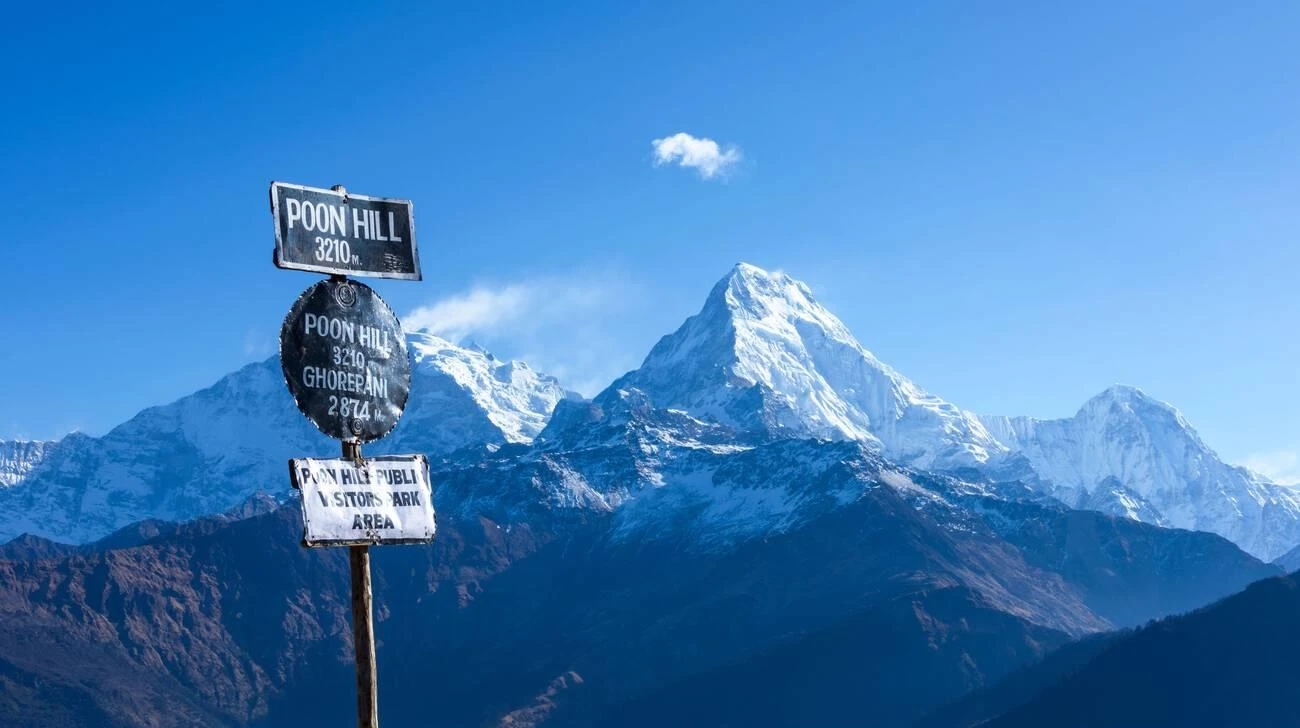
The altitude gain is gradual, with the highest point being Poon Hill at 3,210 meters, minimizing the risks of severe altitude sickness.
Difficulty & transport points:
Accommodation along the trek is provided in comfortable teahouses and lodges, offering basic but clean rooms with twin beds and shared bathrooms. In villages like Ghorepani, Tadapani, and Ghandruk, trekkers experience warm hospitality from local families. The Mountain of Nepal ensures pre-booked lodging during peak seasons for a hassle-free experience.
Food options are diverse, ranging from traditional Nepali meals like dal bhat to noodles, soups, pancakes, and eggs. Meals are freshly prepared using local ingredients, providing the energy needed for daily trekking. Although menu choices become limited at higher elevations, food remains hygienic and satisfying.
Drinking water is available in most teahouses, and trekkers are encouraged to use purification tablets or bottled water.
Food & accommodation highlights:
To trek in the Ghorepani Poon Hill region, two main permits are required. These are mandatory for entry into the Annapurna Conservation Area. Mountain of Nepal handles all permit arrangements for trekkers, ensuring a smooth and stress-free process.
The required permits include the Annapurna Conservation Area Permit (ACAP) and the Trekkers’ Information Management System (TIMS) card. These permits help regulate trekking activity, ensure safety, and support conservation efforts in the Annapurna region.
Permits are checked at various checkpoints along the route, especially near entry points and conservation areas.
Permit details:
The Ghorepani Poon Hill Trek is ideal for trekkers who want a short Himalayan adventure with maximum scenic rewards. It combines mountain views, cultural exploration, and accessible trekking routes within a limited timeframe. The sunrise view from Poon Hill is one of the most iconic experiences in Nepal, attracting thousands of trekkers every year.
Choosing Mountain of Nepal ensures a well-organized, safe, and personalized trekking experience. From transportation and accommodation to permits and guiding services, everything is managed professionally. The trek also provides opportunities to explore traditional villages like Ghandruk and experience authentic Himalayan culture.
This trek is perfect for beginners, families, and photographers seeking breathtaking landscapes without extreme difficulty.
Why choose this trek:
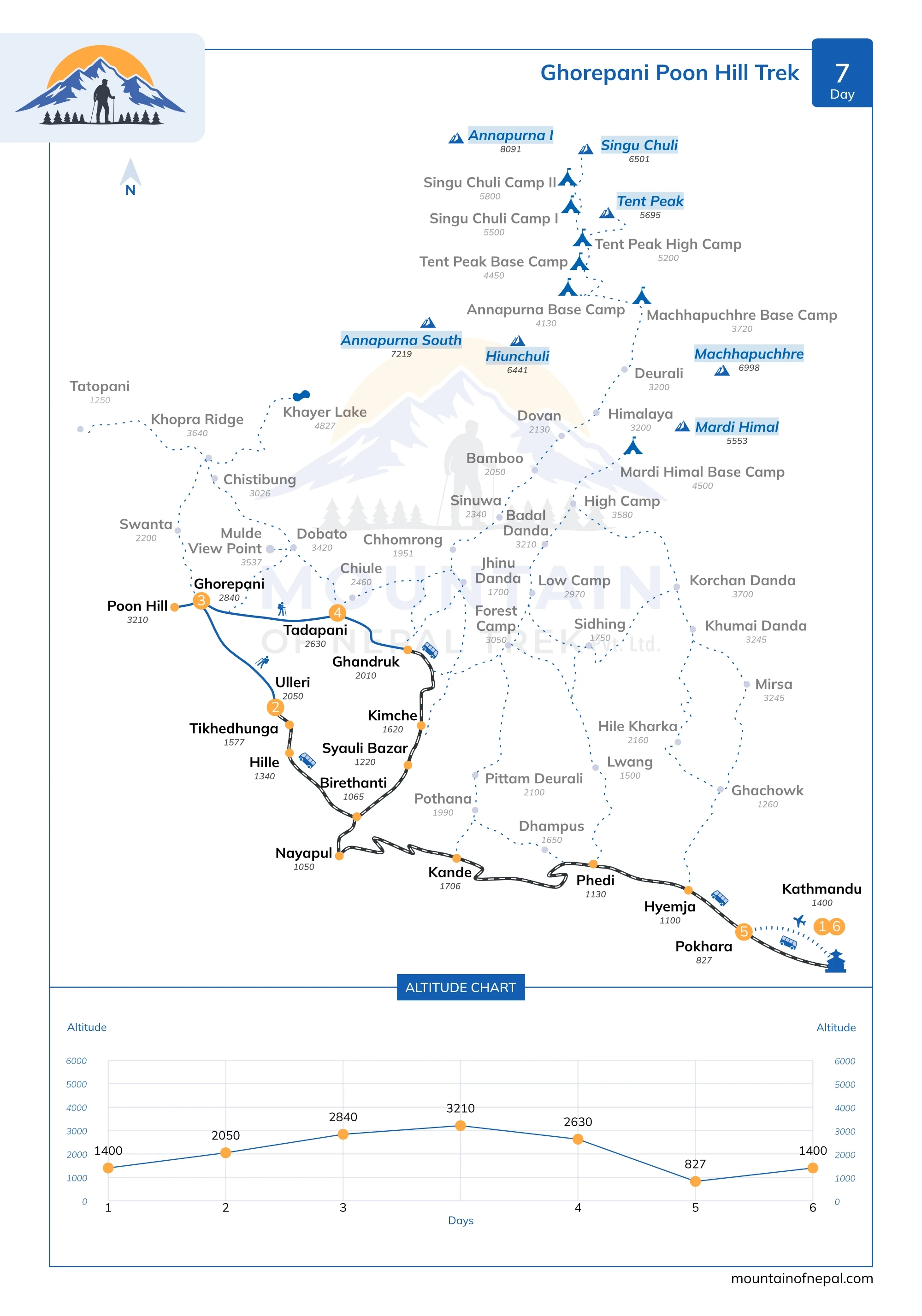
Upon your arrival at Kathmandu, a representative from Mountain of Nepal will welcome you at the airport and transfer you to your hotel in the heart of the city. After check-in, you can rest from your journey or take a gentle walk around the lively streets of Thamel, known for trekking shops, cafés, and cultural atmosphere. In the evening, there will be a short briefing about the trek itinerary, safety guidelines, and necessary preparations. You may also have time to explore nearby heritage streets or enjoy authentic Nepali cuisine. This first day is mainly for relaxation, adjustment to the altitude, and getting ready for the adventure ahead.
Early in the morning, you will take a scenic flight to Pokhara, offering stunning views of the Himalayas. Upon arrival, the journey continues with a drive toward Ulleri, passing through beautiful landscapes, rivers, and terraced hillsides. The road becomes more rural and adventurous as you approach the trailhead. Ulleri is a charming Magar village known for its steep stone steps and mountain views. After reaching, you will check into a local teahouse and relax. The Mountain of Nepal guide will ensure all arrangements are smooth. This day helps you transition from city comfort into the beginning of the trekking environment.
Today marks your first full trekking day with Mountain of Nepal. The trail ascends gradually through lush rhododendron forests, stone staircases, and small traditional settlements. You will pass waterfalls and enjoy fresh mountain air while trekking toward Ghorepani, a beautiful village surrounded by dense forests and panoramic Himalayan views. The trail can be moderately challenging due to continuous uphill sections, but the scenery makes it rewarding. Upon arrival, you will settle into a teahouse and rest. In the evening, your guide will prepare you for the early morning hike to Poon Hill, explaining timing and expectations for sunrise photography.
Very early in the morning, you will hike to Poon Hill to witness one of the most iconic Himalayan sunrises. From here, you can see breathtaking views of Annapurna and Dhaulagiri ranges glowing in golden light. After descending back to Ghorepani for breakfast, the trek continues toward Tadapani. The trail passes through dense rhododendron forests, ridgelines, and occasional wildlife sightings. The day involves both ascents and descents, making it moderately challenging but incredibly scenic. Upon reaching Tadapani, you will relax in a cozy teahouse surrounded by forest and mountain views arranged by Mountain of Nepal.
After breakfast, you will descend toward Ghandruk, a traditional Gurung village known for its cultural heritage and close-up views of Annapurna South and Machhapuchhre. The trek is mostly downhill and takes around 4 hours, passing through forests and small settlements. Once in Ghandruk, you can explore the village, visit the Gurung museum, and interact with locals. After lunch, a vehicle arranged by Mountain of Nepal will take you back to Pokhara. The drive offers scenic countryside views and marks a comfortable transition back to city life. Evening at leisure in Pokhara lakeside.
Today, you will travel back to Kathmandu by tourist bus or private vehicle depending on your package with Mountain of Nepal. The journey takes around 6–8 hours and follows winding roads along rivers, hills, and rural settlements. Along the way, you can observe Nepal’s diverse landscapes and daily life outside major cities. Upon arrival in Kathmandu, you will be transferred to your hotel for rest. The evening is free for shopping, exploring Thamel, or enjoying a farewell dinner organized by your trekking company. This day allows you to reflect on your trekking experience in the Annapurna region.
The final day is reserved for relaxation, last-minute sightseeing, or departure arrangements with Mountain of Nepal. Depending on your flight schedule, you may visit nearby UNESCO heritage sites, shop for souvenirs, or simply unwind at your hotel. If you wish to explore more, Kathmandu offers cultural landmarks, temples, and vibrant markets within short distance. Your guide will assist you with airport transfer for your onward journey. This concludes your Ghorepani Poon Hill Trek, leaving you with unforgettable memories of Himalayan sunrises, traditional villages, and scenic mountain trails experienced with Mountain of Nepal.
Your Start Date is the day you land in Nepal, and your End Date is when you fly home.
If the set Ghorepani Poon Hill Trek group dates don’t suit your schedule, we can offer alternative dates upon request.
Proper layering is important to stay warm and comfortable in changing mountain weather.
Good footwear makes trekking easier and safer.
The right gear keeps you safe, comfortable, and prepared.
Lightweight but important items keep you clean, healthy, and comfortable.
Keep important items safe and easy to reach.
The Ghorepani Poon Hill Trek is one of the most popular short treks in the Annapurna region of Nepal, famous for its breathtaking sunrise views over the Himalayas. Organized by Mountain of Nepal, this trek takes you through charming villages, lush rhododendron forests, and scenic mountain landscapes. The highlight is the early morning hike to Poon Hill, where trekkers can witness panoramic views of Annapurna, Dhaulagiri, Machhapuchhre, and other peaks. It is considered a moderate trek suitable for beginners with reasonable fitness.
This trek is generally classified as easy to moderate, making it suitable for beginners, families, and first-time trekkers. With Mountain of Nepal, you will be guided by experienced professionals who ensure a safe and comfortable journey. The main challenge comes from stone staircases and uphill climbs, especially between Ulleri and Ghorepani. However, the trekking duration each day is manageable, usually between 4 to 7 hours. Proper preparation, hydration, and steady pacing make the trek achievable for most people with average fitness levels.
No prior trekking experience is required for the Ghorepani Poon Hill Trek. It is one of the most beginner-friendly treks in Nepal. Mountain of Nepal designs the itinerary in a way that allows gradual acclimatization and comfortable walking hours. Even if you are a first-time trekker, you can complete this journey with basic physical fitness and preparation. Regular walking, light exercise, and stamina building before the trek are helpful, but not mandatory for enjoying this Himalayan adventure.
Altitude sickness is generally not a major concern on the Ghorepani Poon Hill Trek because the maximum altitude is around 3,210 meters at Poon Hill. However, some trekkers may still experience mild symptoms like headache or fatigue. Mountain of Nepal ensures a safe trekking pace with proper rest and hydration to minimize risks. The itinerary is designed for gradual ascent, which helps the body adjust naturally. If any symptoms occur, guides are trained to provide immediate support and care.
The standard Ghorepani Poon Hill Trek usually takes 5 to 7 days depending on the itinerary. With Mountain of Nepal, the typical package is 7 days including arrival and departure from Kathmandu. The trekking portion itself involves around 4 to 5 days of walking through villages, forests, and viewpoints. Each day’s walking time ranges between 4 to 7 hours. This makes it an ideal short trek for travelers who want a Himalayan experience within a limited time frame.
Choosing Mountain of Nepal ensures a safe, well-organized, and memorable trekking experience. The company provides experienced guides, proper logistics, comfortable accommodation arrangements, and personalized care throughout the journey. Their team is knowledgeable about the local culture, trails, and safety measures, ensuring a smooth adventure for all trekkers. From airport pickup to final departure, everything is handled professionally. With strong local expertise and customer-focused service, Mountain of Nepal aims to make your Ghorepani Poon Hill Trek truly unforgettable.
The best seasons for the Ghorepani Poon Hill Trek are spring (March to May) and autumn (September to November). During these months, the weather is clear, skies are blue, and mountain views are at their best. In spring, rhododendron forests bloom beautifully, adding color to the trails. Autumn offers stable weather and excellent visibility. Mountain of Nepal recommends these seasons for the best trekking experience. Winter is also possible but colder, while monsoon months may bring rain and slippery trails.
During the trek, accommodation is provided in local teahouses and mountain lodges, which are simple but comfortable. Rooms are usually twin-sharing with basic bedding facilities. Bathrooms may be shared in most places, especially at higher altitudes. Mountain of Nepal carefully selects clean and safe teahouses to ensure a good resting environment for trekkers. In cities like Kathmandu and Pokhara, you will stay in standard hotels with modern amenities. Overall, accommodation is designed to give an authentic Himalayan trekking experience.
Food during the Ghorepani Poon Hill Trek is freshly prepared at teahouses and includes a mix of Nepali and international dishes. You can expect meals such as dal bhat (rice, lentils, vegetables), noodles, soups, pasta, pancakes, and eggs. Mountain of Nepal ensures hygienic and filling meals to keep trekkers energized throughout the journey. Vegetarian options are widely available, and special dietary needs can often be accommodated. Meals are simple but nutritious, suitable for high-altitude trekking conditions.
Packing the right gear is important for a comfortable trekking experience. You should bring warm clothing, a waterproof jacket, trekking shoes, gloves, hats, and comfortable layers. A backpack, water bottle, sunscreen, and personal medications are also essential. Mountain of Nepal provides a detailed packing list before the trek to help you prepare properly. Since weather can change quickly in the mountains, carrying both light and warm clothing is recommended. Proper packing ensures safety and comfort throughout the journey.


 (2)
(2)  100% recommend (0)
 (0)
(0)