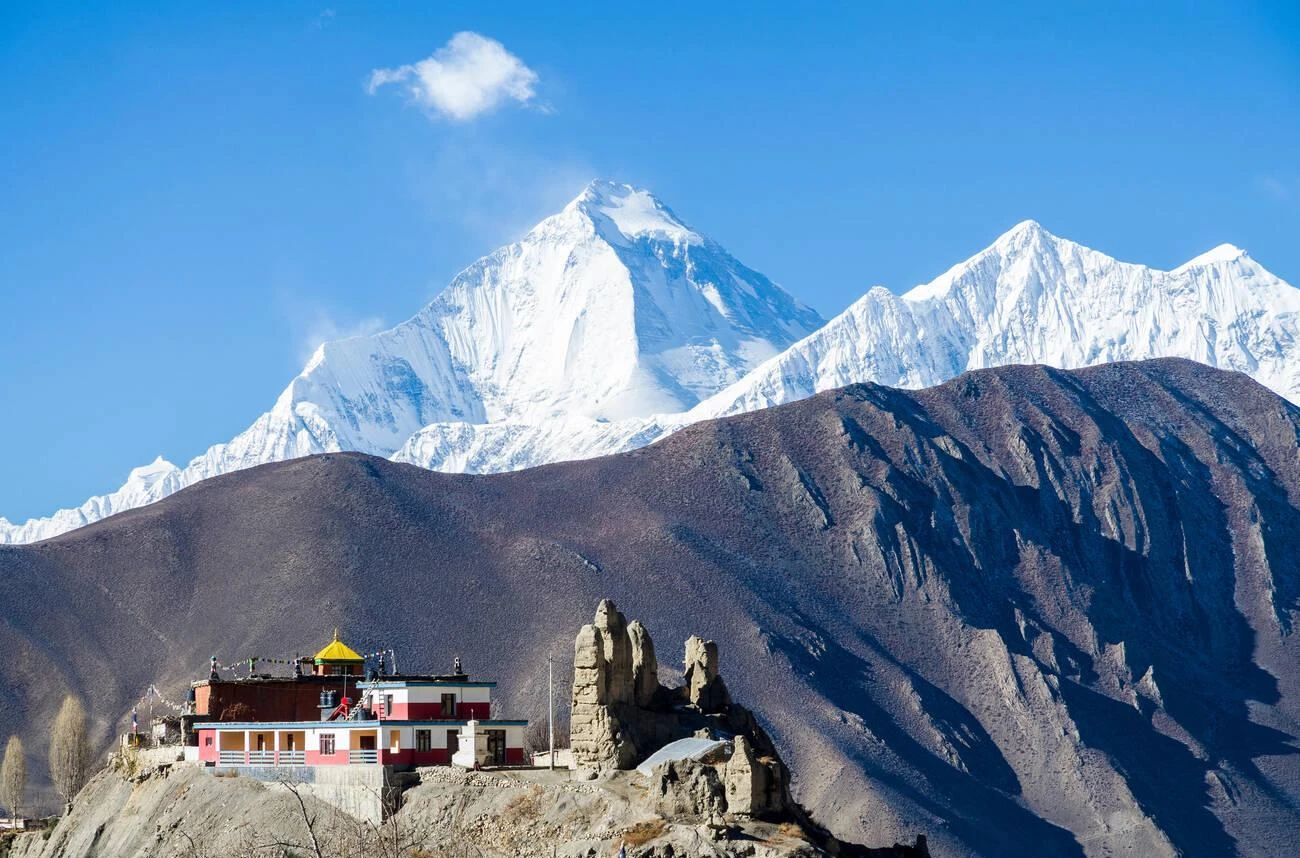
The Dhaulagiri Circuit Trek is one of Nepal’s most remote and challenging trekking routes, circling the majestic Dhaulagiri (8,167m), the seventh-highest mountain in the world. Unlike more commercialised trails such as Everest or Annapurna, this trek offers a raw and untouched Himalayan experience. Starting from Kathmandu, the journey takes you through traditional villages, dense forests, alpine meadows, glaciers, and high mountain passes, ultimately forming a complete circuit around the Dhaulagiri massif.
What makes this trek truly special is its diversity. You begin in lush subtropical valleys and gradually ascend into rugged glacial terrain, crossing high passes like French Col and Dhampus Pass. The trek combines cultural immersion with extreme wilderness, giving trekkers a rare opportunity to experience both the human and natural aspects of Nepal’s Himalayas. The involvement of an experienced company like Mountain of Nepal ensures safety, logistics management, and a well-organised adventure.
The best time to undertake the Dhaulagiri Circuit Trek is during the spring (March to May) and autumn (September to November) seasons. During these months, the weather is generally stable, the skies are clear, and the mountain views are at their best. Spring brings blooming rhododendron forests, while autumn offers crisp air and excellent visibility after the monsoon rains.
Winter (December to February) is not ideal due to heavy snowfall and extreme cold, especially at higher elevations like French Col. Similarly, the monsoon season (June to August) brings heavy rain, landslides, and poor visibility, making trekking conditions difficult and sometimes unsafe. Choosing the right season is crucial for both safety and enjoyment, and Mountain of Nepal carefully plans itineraries around optimal weather windows.
Best seasons summary:
The Dhaulagiri Circuit Trek is considered strenuous to extremely challenging, suitable only for experienced trekkers with strong physical fitness. The trek involves long walking days, steep ascents and descents, glacier crossings, and high-altitude passes exceeding 5,000 meters. Acclimatisation days are essential to prevent altitude sickness, and trekkers must be mentally prepared for remote conditions with limited facilities.
Transportation plays a key role in the journey. The trek begins with a long drive from Kathmandu to Beni and then to Tatopani or Muri. Roads can be rough and winding, requiring patience. After the trek, a scenic drive to Pokhara offers a comfortable transition back to urban life. Mountain of Nepal arranges all logistics, including vehicles, guides, and porters, ensuring a smooth experience.
Difficulty factors:
Food and accommodation vary greatly throughout the trek. In lower regions, trekkers stay in teahouses or lodges that provide basic yet comfortable rooms and meals such as dal bhat, noodles, soups, and tea. As you ascend into remote areas, especially beyond Muri, camping becomes necessary due to the absence of permanent settlements.
During the camping phase, Mountain of Nepal provides a full support team including cooks, guides, and porters. Freshly prepared meals are served in tents, ensuring proper nutrition at high altitudes. While the facilities are basic, the experience of camping in remote Himalayan landscapes adds to the adventure.
What to expect:
Trekking in the Dhaulagiri region requires several permits due to its restricted and protected status. The most important is the Restricted Area Permit (RAP), which is mandatory for sections of the trail. In addition, trekkers need an Annapurna Conservation Area Permit (ACAP) since parts of the route fall within this conservation zone.
All permits are arranged by Mountain of Nepal, ensuring that trekkers comply with government regulations. Carrying proper documentation is essential, as checkpoints are present along the trail. These permits help preserve the environment and support local communities.
Required permits:
Choosing the Dhaulagiri Circuit Trek means opting for adventure in its purest form. Unlike popular trekking routes, this trail offers solitude, untouched landscapes, and a deeper connection with nature. It is ideal for trekkers seeking a challenge beyond the ordinary and wanting to explore Nepal’s hidden Himalayan gems.
With the Mountain of Nepal, the experience becomes safer and more organised. Their expertise in high-altitude trekking, experienced guides, and well-planned itineraries ensure that trekkers can focus on the journey rather than logistics. From cultural encounters to breathtaking mountain views, this trek delivers a truly unforgettable experience.
Why this trek stands out:
Upon arrival in Kathmandu, you’ll be warmly welcomed by the team from Mountain of Nepal and transferred to your hotel. The city greets you with a blend of ancient heritage and vibrant modern life. After check-in, you can relax or explore nearby markets like Thamel, known for trekking gear shops and cafés. In the evening, a briefing session will introduce you to the Dhaulagiri Circuit Trek, covering safety, itinerary, and logistics. This is also the time to meet your guide and fellow trekkers. A traditional Nepali welcome dinner often sets the tone for the adventure ahead.
Today is dedicated to cultural immersion and final trek preparation. You’ll visit UNESCO World Heritage Sites such as Pashupatinath Temple, Boudhanath Stupa, and Swayambhunath. These landmarks offer insight into Nepal’s spiritual richness and architectural beauty. After sightseeing, you’ll finalize gear checks and permits with Mountain of Nepal. Guides ensure everything is in place, from equipment to acclimatization planning. The evening is free to rest or explore more of Kathmandu’s lively streets before the journey begins.
An early morning departure takes you on a scenic drive along winding highways, passing terraced hills, rivers, and rural settlements. The journey to Beni is long but visually rewarding, followed by a shorter drive to Tatopani, a village famous for its natural hot springs. After arrival, you can soak in the warm mineral waters, easing travel fatigue. This relaxing experience is a perfect introduction before trekking begins. Overnight in Tatopani allows you to prepare mentally and physically for the trail ahead.
Start your day with another rejuvenating dip in Tatopani’s hot springs before heading out by jeep to Muri. The drive winds through narrow mountain roads, offering glimpses of waterfalls, traditional villages, and lush forests. Muri is a charming Magar village with terraced fields and warm hospitality. Once there, you’ll notice the shift from road travel to trekking atmosphere. Spend the evening exploring the village and interacting with locals, gaining insight into rural Himalayan life.
Your first trekking day begins with a descent to a river, followed by a steady climb through terraced farmland and forested paths. The trail offers stunning views of the surrounding hills and distant snow-capped peaks. Passing through small settlements, you’ll experience authentic village life. The route can be physically demanding with ups and downs, but the serene environment makes it rewarding. Bagar, your destination, is a peaceful riverside campsite surrounded by nature.
Today’s trail leads through dense forests of bamboo and rhododendron, crossing suspension bridges over roaring rivers. The path becomes more remote and wild, giving a sense of entering deeper Himalayan terrain. Wildlife sightings are possible along the way. The steady ascent prepares your body for higher altitudes. Dobhan Kharka is a quiet campsite at the confluence of two rivers, offering a tranquil setting for rest and acclimatization.
This is a long but incredibly scenic day. The trail gradually ascends through alpine forests before opening into wide meadows with dramatic mountain views. As you approach Italian Base Camp, the landscape transforms into a glacial valley surrounded by towering peaks, including Dhaulagiri. The campsite offers breathtaking panoramic views, making the effort worthwhile. The altitude gain is significant, so proper pacing and hydration are essential.
A crucial rest day to help your body adjust to the altitude. You can take short hikes around the camp, exploring nearby ridges for even better views of the Dhaulagiri massif. Guides will monitor your health and provide advice on acclimatization techniques. This day also allows you to enjoy the serene beauty of the Himalayas without the pressure of trekking. Proper rest here greatly increases your chances of a successful and safe high-altitude crossing later.
Leaving the grassy meadows behind, you’ll enter a rugged glacial environment. The trail becomes more challenging, with rocky paths and sections of moraine. You’ll traverse the Chhonbardan Glacier, requiring careful footing and guidance from experienced staff. The campsite is set on the glacier itself, offering a unique high-altitude experience. Surrounded by ice and towering peaks, this night in a tent camp feels truly remote and adventurous.
Today’s trek continues across glacial terrain, gradually ascending toward Dhaulagiri Base Camp. The views become increasingly dramatic, with massive ice walls and snow-covered summits dominating the landscape. Reaching base camp is a major milestone, placing you at the foot of one of the world’s highest peaks. The campsite offers awe-inspiring scenery, making it a highlight of the trek. Overnight in tents under the shadow of Dhaulagiri.
Another essential acclimatization day. You can explore the surrounding glacier or simply rest and take in the incredible surroundings. Guides will ensure you remain healthy and prepared for the upcoming high passes. The silence and raw beauty of this high-altitude environment create a memorable experience. This day is vital for adjusting to the extreme elevation before crossing French Col.
One of the most challenging and rewarding days of the trek. You’ll cross the French Col, reaching over 5,300 meters, with stunning panoramic views of surrounding peaks. The descent into Hidden Valley reveals a vast, high-altitude plateau surrounded by mountains. The sense of isolation and grandeur is unmatched. Overnight in a tent camp in Hidden Valley.
Another demanding day as you cross Dhampus Pass. The ascent is steep but rewarded with spectacular views. The descent is long and requires careful navigation. As you drop in altitude, the landscape gradually becomes greener. Reaching Yak Kharka or Alu Bari brings relief after a strenuous day. Overnight in a tent camp.
A relatively shorter and easier trek as you descend toward Marpha, a beautiful Thakali village known for its apple orchards and traditional architecture. The change in scenery is refreshing after days in high-altitude terrain. Comfortable lodges and local cuisine make this a pleasant stop. It’s a great place to relax and celebrate nearing the end of the trek.
After breakfast, you’ll begin a scenic drive to Pokhara. The journey passes through diverse landscapes, from arid mountain regions to lush valleys. Upon arrival, you can unwind by Phewa Lake or enjoy the city’s vibrant lakeside atmosphere. Pokhara offers a well-deserved rest after the demanding trek.
The return drive to Kathmandu offers another chance to appreciate Nepal’s countryside. Upon arrival, you’ll check into your hotel and have free time for shopping or relaxation. In the evening, Mountain of Nepal may host a farewell dinner, celebrating your successful completion of the Dhaulagiri Circuit Trek.
Your adventure concludes today. The team from Mountain of Nepal will transfer you to the airport for your onward journey. With unforgettable memories of the Himalayas, challenging trails, and breathtaking landscapes, you leave Nepal with a deep sense of accomplishment and inspiration.
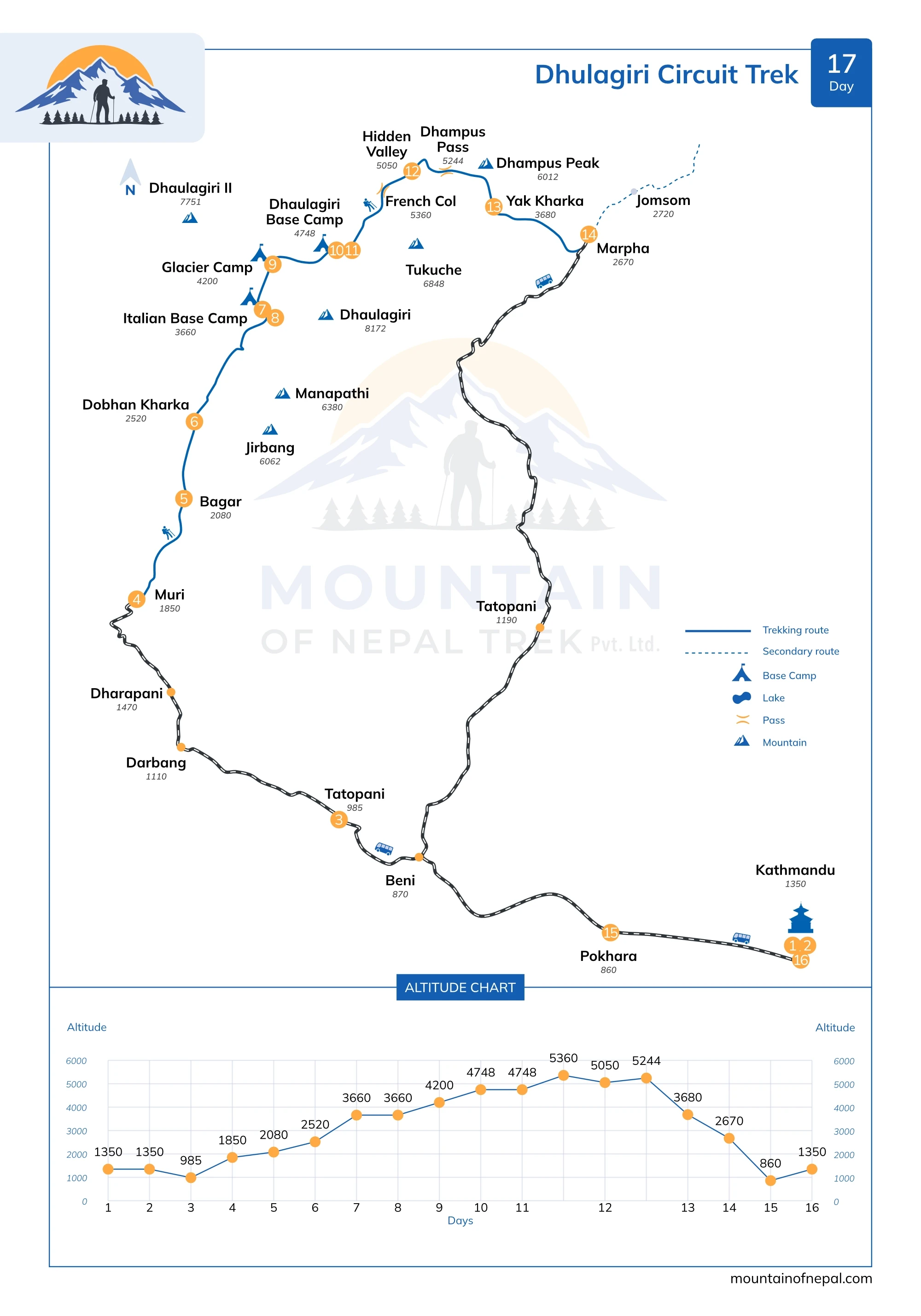
Your Start Date is the day you land in Nepal, and your End Date is when you fly home.
If the set Dhaulagiri Circuit Trek group dates don’t suit your schedule, we can offer alternative dates upon request.
The Dhaulagiri Circuit Trek is considered one of the most remote and challenging trekking routes in Nepal, offering a raw and less commercialized Himalayan experience. Unlike popular trails such as Everest or Annapurna, this trek takes you through isolated valleys, dense forests, and high-altitude glaciers. The journey circles around Dhaulagiri, the seventh-highest mountain in the world, providing dramatic scenery and a true wilderness adventure. With Mountain of Nepal, trekkers benefit from expert guidance and logistics in these remote conditions.
This trek is rated as strenuous and is best suited for experienced trekkers with good physical fitness and prior high-altitude trekking experience. The route involves long walking days, steep ascents and descents, and crossing high mountain passes such as French Col and Dhampus Pass. Altitudes exceed 5,000 meters, which increases the risk of altitude sickness. Mountain of Nepal ensures proper acclimatization days and safety measures, but mental preparation and endurance are equally important.
Yes, prior trekking experience is highly recommended for the Dhaulagiri Circuit Trek. The challenging terrain, high altitude, and remote conditions require familiarity with multi-day trekking and physical endurance. Experience with camping treks is especially helpful, as several nights are spent in tented camps rather than teahouses. Mountain of Nepal can provide guidance and training tips beforehand, but beginners may find this trek overwhelming without adequate preparation.
Altitude sickness is a serious concern due to elevations exceeding 5,000 meters. Proper acclimatization, gradual ascent, hydration, and rest are key preventive measures. The itinerary includes dedicated acclimatization days at strategic points such as Italian Base Camp and Dhaulagiri Base Camp. Guides from Mountain of Nepal are trained to recognize symptoms and take necessary action, including descent if required. Trekkers are also advised to consult doctors and consider medications before the trip.
The trek typically takes around 17 to 20 days, depending on the itinerary and acclimatization schedule. This includes travel days to and from Kathmandu and trekking through diverse landscapes. The duration allows for gradual altitude gain and proper rest, which are essential for a safe and enjoyable experience. Mountain of Nepal designs itineraries that balance adventure with safety.
The ideal seasons for this trek are spring (March to May) and autumn (September to November). During these months, the weather is generally stable, skies are clear, and mountain views are spectacular. Spring offers blooming rhododendrons, while autumn provides crisp air and excellent visibility. Winter can be extremely cold with heavy snow at high passes, and the monsoon season brings rain, landslides, and poor visibility. Mountain of Nepal recommends planning your trek during peak seasons for safety and the best experience.
Accommodation varies along the route. In lower regions, you’ll stay in basic teahouses with simple rooms and local meals. As you move into more remote and higher-altitude areas, accommodation shifts to fully supported tent camps organized by Mountain of Nepal. These camps include sleeping tents, dining tents, and kitchen support. While facilities are basic, the experience of camping in the high Himalayas adds to the adventure and authenticity of the trek.
In the lower regions, teahouses offer a variety of meals, including traditional Nepali dishes like dal bhat, as well as basic international options. In higher and more remote sections, meals are prepared by the trekking crew at camp. These typically include soups, rice, pasta, vegetables, and hot drinks to maintain energy levels. Mountain of Nepal ensures hygienic and nutritious meals throughout the trek, even in challenging conditions.
Trekkers need several permits, including the Annapurna Conservation Area Permit (ACAP) and a Restricted Area Permit (RAP). These documents are mandatory and help regulate tourism and protect the environment. Mountain of Nepal handles all permit arrangements, ensuring a hassle-free process so trekkers can focus entirely on the journey.
Yes, travel insurance is mandatory and must cover high-altitude trekking and emergency evacuation, including helicopter rescue. Due to the remoteness and difficulty of the Dhaulagiri Circuit, unexpected situations can arise. Mountain of Nepal strongly advises comprehensive insurance to ensure safety and peace of mind during the expedition.
Packing for this trek requires careful planning due to varying climates and high altitudes. Essential items include warm layered clothing, a high-quality sleeping bag, trekking boots, gloves, hats, and personal medical supplies. Technical gear like crampons may be needed depending on conditions. Mountain of Nepal provides a detailed packing list and may supply some group equipment, ensuring trekkers are well-prepared for the journey.


 (2)
(2)  100% recommend (0)
 (0)
(0)