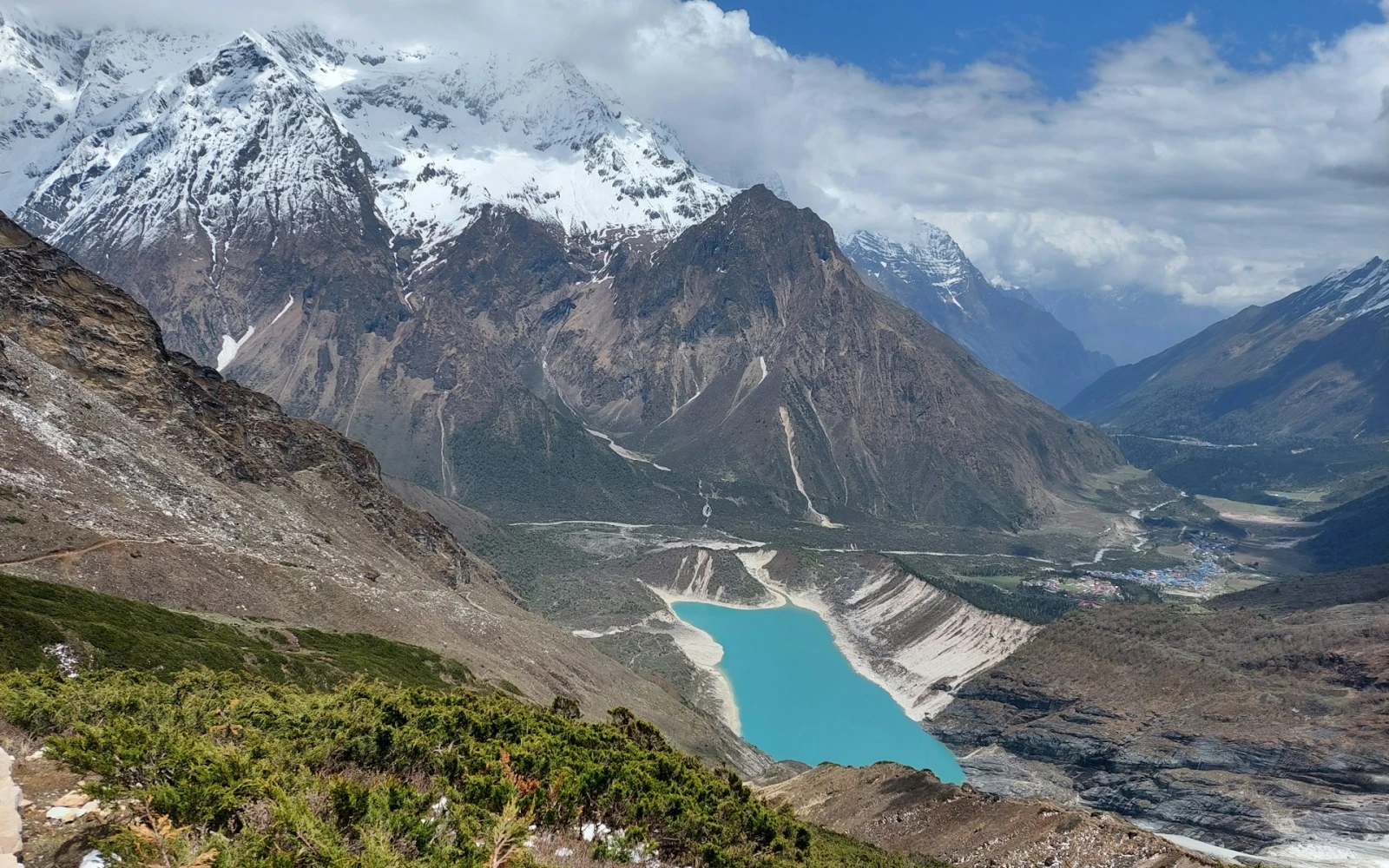
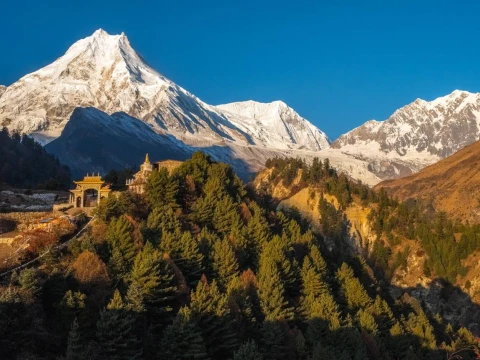
The Manaslu Circuit Trek is one of Nepal’s most spectacular and less-crowded trekking routes, circling the world’s eighth-highest mountain, Mount Manaslu (8,163 m). Organized by Mountain of Nepal, this trek offers a perfect combination of natural beauty, cultural diversity, and high-altitude adventure. The route passes through remote villages, deep gorges, alpine forests, and finally crosses the challenging Larkya La Pass (5,106 m) before descending into the Annapurna region.This trek is ideal for trekkers seeking an authentic Himalayan experience away from the busy Everest and Annapurna trails. The trail starts from Machha Khola and gradually ascends through Buddhist and Tibetan-influenced villages such as Jagat, Deng, Namrung, Sama Gaon, and Samdo. Along the way, trekkers experience dramatic changes in landscapes—from subtropical forests to icy alpine terrain.A major highlight is the acclimatization day at Sama Gaon, where trekkers can explore Manaslu Base Camp or Pungyen Gompa. The journey concludes after crossing Larkya La Pass and descending toward Bhimtang and Dharapani.Remote and less crowded trekking routeStunning views of Mount Manaslu and the surrounding peaksRich Tibetan-influenced cultureHigh mountain pass crossing (Larkya La – 5,106 m)Organized by Mountain of Nepal with expert guidanceBest Season for Manaslu Circuit TrekThe best seasons for the Manaslu Circuit Trek are spring (March to May) and autumn (September to November). During these months, the weather is stable, skies are clear, and mountain visibility is at its best. Mountain of Nepal highly recommends these periods for safe and enjoyable trekking experiences.In spring, the trail becomes vibrant with blooming rhododendrons, green landscapes, and pleasant temperatures. Similarly, autumn offers crystal-clear views of Manaslu, Himlung, and Ganesh Himal ranges after the monsoon cleans the atmosphere. These seasons also provide the most reliable trekking conditions for crossing Larkya La Pass.Winter (December to February) is extremely cold, especially above 3,500 meters, and heavy snowfall can block the pass. Monsoon season (June to August) brings heavy rain, landslides, and leeches in lower regions, making trekking more challenging.Best Season Summary:Spring: Blooming forests, stable weatherAutumn: Best visibility, ideal trekking conditionsWinter: Very cold, possible route blockageMonsoon: Wet, risky, landslides possibleRecommended by Mountain of Nepal: Spring & AutumnManaslu Circuit Trek Difficulty and TransportationThe Manaslu Circuit Trek is considered a moderate to challenging trek due to its long duration, remote trails, and high-altitude crossing. The most difficult section is the ascent to Larkya La Pass (5,106 m), where thin air and cold weather require strong physical fitness and proper acclimatization.Trekkers should be prepared for 6–8 hours of walking daily on rocky, steep, and sometimes snowy trails. Previous trekking experience is helpful but not mandatory. Mountain of Nepal ensures proper acclimatization days, especially at Sama Gaon, to reduce the risk of altitude sickness.Transportation includes a drive from Kathmandu to Machha Khola (rough road conditions) and return via Dharapani to Besisahar, followed by a drive back to Kathmandu. Off-road travel is part of the adventure and gives trekkers a glimpse of rural Nepal.Difficulty & Transport Highlights:Moderate to challenging trekking levelHigh altitude pass crossing required6–8 hours walking dailyRough jeep drive from Kathmandu to trailheadScenic but bumpy road return via BesisaharFully managed by Mountain of NepalFood and Accommodation for Manaslu Circuit TrekAccommodation during the Manaslu Circuit Trek is mainly in local tea houses and lodges run by villagers. These provide basic but comfortable facilities such as twin beds, blankets, and shared bathrooms. As the altitude increases, facilities become simpler but still welcoming.Food options are surprisingly diverse considering the remoteness of the region. Trekkers can enjoy traditional Nepali meals like dal bhat (rice, lentils, vegetables), as well as noodles, soups, potatoes, Tibetan bread, and momos. At lower elevations, some lodges also offer pasta, fried rice, and pancakes.Mountain of Nepal carefully selects clean and hygienic tea houses to ensure safety and comfort. At higher elevations like Dharmasala and Samdo, food options become limited due to supply difficulties, so simple but energy-rich meals are recommended.Food & Accommodation Highlights:Tea house and lodge-based accommodationBasic rooms with shared facilitiesTraditional Nepali and Tibetan-style foodLimited menu at higher altitudeHygienic lodges arranged by Mountain of NepalFreshly cooked meals available dailyManaslu Circuit Trek PermitsThe Manaslu region is a restricted trekking area, so special permits are required to complete the trek legally. Mountain of Nepal handles all permit arrangements to ensure a smooth trekking experience.Trekkers need multiple permits, including the Manaslu Restricted Area Permit (RAP), Manaslu Conservation Area Permit (MCAP), and Annapurna Conservation Area Permit (ACAP), since the trek exits through the Annapurna region. Additionally, a licensed guide is mandatory, and trekkers must be in a group of at least two people (excluding guide/staff).Permit costs vary depending on the season and duration in the restricted zone. These regulations help preserve the natural environment and protect local culture.Permit Requirements:Manaslu Restricted Area Permit (RAP)Manaslu Conservation Area Permit (MCAP)Annapurna Conservation Area Permit (ACAP)Licensed trekking guide mandatoryMinimum group requirement (2 trekkers)Managed fully by Mountain of NepalWhy Choose Manaslu Circuit TrekChoosing the Manaslu Circuit Trek with Mountain of Nepal means experiencing one of the most authentic Himalayan adventures with professional support, safety, and local expertise. Unlike crowded trekking routes, Manaslu offers a peaceful journey through untouched landscapes and traditional mountain culture.This trek is ideal for trekkers who want adventure, cultural immersion, and dramatic Himalayan scenery in one package. The route combines river valleys, glaciers, ancient monasteries, and high mountain passes, making it a complete trekking experience.Mountain of Nepal ensures safety through experienced guides, proper acclimatization planning, and well-organized logistics. From permits to accommodation, everything is handled professionally so trekkers can fully enjoy the journey.Why Choose This Trek:Less crowded and more peaceful trailAuthentic Tibetan-influenced cultureStunning Himalayan landscapesChallenging yet rewarding experienceProfessional service by Mountain of NepalFully organized logistics and safety support
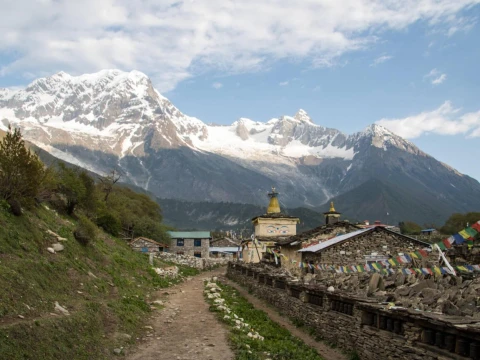
The Manaslu Tsum Valley Trek is one of Nepal’s most culturally rich and naturally diverse trekking routes, combining the remote beauty of the Tsum Valley with the classic Manaslu Circuit. Organized by Mountain of Nepal, this 19-day journey takes trekkers through ancient Tibetan-influenced villages, deep river gorges, and high Himalayan passes. Starting from Kathmandu, the trail gradually ascends through Machha Khola, Jagat, and Lokpa into the hidden Tsum Valley, where spiritual landmarks like Rachen Gompa and Mu Gompa offer a rare glimpse into preserved Buddhist traditions.As the trek continues, it merges with the Manaslu Circuit, leading toward high-altitude settlements like Samagaon and Samdo, before crossing the challenging Larkya La Pass (5160m). This trek stands out because it combines both cultural immersion and high-altitude adventure without the crowds of more commercial routes. Trekkers experience dramatic changes in landscape—from lush forests to alpine terrain—making it a complete Himalayan journey.Exploration of the sacred Tsum ValleyVisit to ancient monasteries like Mu GompaCrossing Larkya La Pass (5160m)Stunning views of Manaslu and the surrounding peaksBest Season for Manaslu Tsum Valley TrekThe ideal seasons for the Manaslu Tsum Valley Trek are spring (March to May) and autumn (September to November). During these periods, the weather is stable, the skies are clear, and the mountain views are at their best. Spring brings blooming rhododendron forests and mild temperatures, while autumn offers crisp air and excellent visibility after the monsoon clears the dust from the atmosphere.Winter (December to February) is possible but challenging due to heavy snowfall, especially near Larkya La Pass. The monsoon season (June to August) brings heavy rain, landslides, and leeches in lower regions, making trekking less comfortable and sometimes risky. For the best experience, Mountain of Nepal recommends planning your trek during peak seasons when both safety and scenery are optimal.Best Time Summary:Spring: Warm weather, blooming landscapesAutumn: Clear skies, best mountain viewsWinter: Cold, high pass may be blockedMonsoon: Wet and less favorable conditionsManaslu Tsum Valley Trek Difficulty and TransportationThis trek is considered moderately to highly difficult due to its long duration, remote trails, and high altitude. Trekkers must be physically fit and prepared for daily walks of 6–8 hours, with gradual altitude gain and a demanding crossing of Larkya La Pass. Acclimatization days, such as in Samagaon, are crucial to reduce the risk of altitude sickness.Transportation involves a scenic but rugged drive from Kathmandu to Machha Khola and a return drive from Dharapani to Kathmandu. Roads can be rough, especially in remote areas, but they offer incredible views of rural Nepal. Mountain of Nepal ensures safe and comfortable transportation arrangements, including experienced drivers and well-maintained vehicles.Key Points:Trek duration: 19 daysDaily walking: 6–8 hoursMaximum altitude: 5160mA combination of driving and trekkingFood and Accommodation for Manaslu Tsum Valley TrekAccommodation during the trek is primarily in teahouses, which are simple yet comfortable lodges run by local families. Rooms are usually twin-sharing with basic facilities, and common dining areas provide warmth and social interaction. In remote areas like Tsum Valley, facilities are more basic but still welcoming.Food options are surprisingly varied, including traditional Nepali dal bhat, Tibetan bread, noodles, soups, and some Western dishes. Meals are freshly prepared, providing the necessary energy for trekking. With Mountain of Nepal, hygiene and quality are prioritized to ensure a safe and enjoyable experience.What to Expect:Teahouse accommodationLocal and simple mealsWarm dining spacesLimited luxury but an authentic experienceManaslu Tsum Valley Trek PermitsSince this trek lies in restricted areas, several permits are required. These include the Manaslu Restricted Area Permit, Tsum Valley Restricted Area Permit, Manaslu Conservation Area Permit (MCAP), and Annapurna Conservation Area Permit (ACAP). These permits help regulate tourism and preserve the region’s natural and cultural heritage.Trekkers must travel with a licensed guide and in a group of at least two people. Mountain of Nepal handles all permit arrangements, ensuring a hassle-free process so trekkers can focus on enjoying their journey.Required Permits:Manaslu Restricted Area PermitTsum Valley Restricted Area PermitMCAP & ACAP permitsLicensed guide requirementWhy Choose Manaslu Tsum Valley TrekChoosing the Manaslu Tsum Valley Trek means stepping into a less-explored region of Nepal that offers both adventure and cultural depth. Unlike crowded trekking routes, this trail provides tranquility, authenticity, and a deeper connection with nature and local traditions. The blend of high mountain passes and sacred valleys makes it a truly unique experience.With Mountain of Nepal, trekkers benefit from expert guides, well-planned itineraries, and a commitment to safety and sustainability. The company focuses on personalized service, ensuring each trekker enjoys a memorable and meaningful journey in the Himalayas.Reasons to Choose:Less crowded trekking routeUnique cultural experiencesDiverse landscapes and sceneryProfessional support from Mountain of Nepal
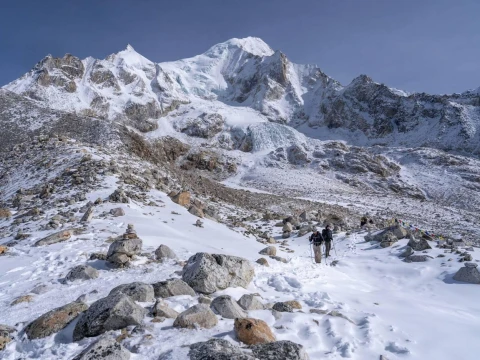
This isolated region opened its doors to trekkers in 1992. The trek offers stunning mountain vistas, serene Buddhist villages near the Tibetan border, and a blend of both Hindu and Buddhist cultures and landscapes. The journey starts in the lower altitudes of lush foothills and gradually ascends to rugged, high-altitude terrain. We'll trek along an ancient salt-trading route beside the mighty Budhi Gandaki river for several days. After passing through Lho village, we'll enter the Nupri region, where Tibetan immigrants have settled. Here, the landscape comes alive with colorful Buddhist prayer flags, ancient mani walls, and tranquil monasteries. The Manaslu region is a special place for endangered animals like snow leopards and red pandas. Keep an eye out for them, along with other wildlife, during your trek. We might get lucky and see them in their natural habitat. Along the way, we'll catch sight of ten peaks, some over 7,000 meters, all towering above 6,500 meters. One of them is mighty Manaslu (8,163), the seventh highest mountain in the world. Our highest overnight stop is at the foot of the Larkya La, at 4,460 meters, and the highest point we reach is the majestic Larkya La Pass (5,160 meters). This impressive pass is surrounded by towering peaks and offers outstanding vistas in every direction of the Himalaya. After successfully crossing Larkya La, we'll descend into the lush, forested Marsyangdi River valley and complete our rewarding circuit of Manaslu on the bustling route of the Annapurna circuit.
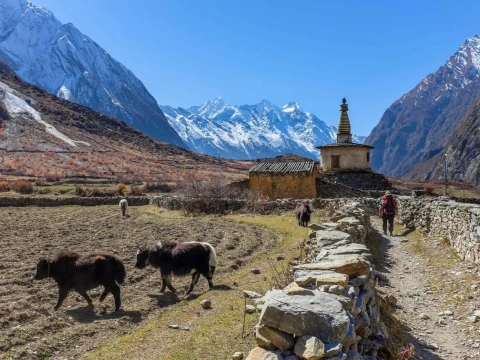
Discover the hidden gem of Tsum Valley, nestled in the northern part of Manaslu along the Nepal-Tibet border. Immerse yourself in the colorful and diverse world of Tibetan culture, ancient traditions, and captivating art. This sacred land opened its doors to trekkers in 2008, providing a rare chance to explore a world still untouched by mainstream tourism. Since 1920, the upper Tsum region has been protected as a Shyakya (non-sacrificing area) by local Buddhist communities, strictly forbidding activities like hunting, wildlife disturbance, and honey collection. Following this admirable tradition, the lower Tsum region was declared a non-sacrificing area, establishing a tranquil sanctuary in 2012. The valley is inhabited by nuns, monks, and the indigenous Tsum people, offering a unique cultural experience. Discover Tibetan-style villages , numerous monasteries, sacred caves, breathtaking landscapes, deep gorges, and rivers fed by glaciers. Observe the enduring practice of polyandry marriage, a tradition that maintains economic stability by keeping land and property undivided among brothers. This serene valley provides a safe refuge for wildlife, including the renowned blue sheep, Himalayan Thar, and various other animals. The Tsum Valley trek offers awe-inspiring vistas of Manaslu, Ganesh Himal, Sringi Himal, Himal Chuli, and Boudha Himal ranges for a magical mountain experience. If you're seeking an extraordinary adventure, consider combining the Tsum Valley trek with the renowned Manaslu Circuit, crossing Larkya pass starting from Macchakhola and concluding in Dharapani, or extend your adventure to the Annapurna Circuit, crossing the world-famous Thorang La or Mesokanta La pass before reaching your ending point in Jomsom. The trek meanders through low land of Hindu villages, lush greenery, pine and rhododendron forests and and up into the picturesque Tsum Valley. Along the journey, we find welcoming guesthouses or unique homestays, ensuring a comfortable trek without the need for camping. Come, be a part of this extraordinary journey in the heart of the Himalayas


 (2)
(2)  100% recommend (0)
 (0)
(0)