The Annapurna Circuit Trek with Tilicho Lake via Upper Pisang and Ngawal is one of the most diverse and dramatic trekking journeys in the Himalayas of Nepal. Operated by Mountain of Nepal, this itinerary combines the classic Annapurna Circuit with the detour to the breathtaking Tilicho Lake (4,919 m), one of the highest lakes in the world. The route starts from the vibrant capital Kathmandu, followed by a long drive to Chame, the gateway to the Manang region. From here, trekkers gradually ascend through traditional villages like Upper Pisang, Ngawal, and Braga, each offering unique cultural and Himalayan landscape experiences.
This trek is a blend of natural beauty, high-altitude adventure, and cultural immersion. The trail passes through the arid landscapes of Manang, alpine forests, glacial valleys, and eventually leads to the sacred lake of Tilicho before rejoining the main circuit. The adventure continues toward Yak Kharka and the challenging high-altitude crossing of Thorong La Pass, before descending to the holy site of Muktinath and ending the trekking section at Jomsom. The journey concludes with a scenic flight via Pokhara back to Kathmandu.
The best time to experience the Annapurna Circuit Trek with Tilicho Lake is during spring (March to May) and autumn (September to November). These seasons provide the most stable weather conditions, clear mountain views, and safer trail conditions, especially for high passes like Thorong La Pass and the Tilicho Lake region. During spring, the trails are decorated with blooming rhododendrons, while autumn offers crystal-clear skies after the monsoon washes away dust and haze.
Winter (December to February) is also possible but extremely cold, especially around Tilicho Base Camp and Thorong Phedi. Heavy snowfall may block the pass, making the route more challenging or even inaccessible. Monsoon season (June to August) is generally not recommended due to landslides, slippery trails, and poor visibility, although the Manang region lies in a partial rain shadow and receives less rainfall compared to lower regions like Pokhara.
Seasonal breakdown:
Choosing the right season ensures safety, comfort, and maximum enjoyment on this high-altitude adventure operated by Mountain of Nepal.
This trek is considered moderate to challenging, primarily due to high altitude, long trekking days, and the demanding crossing of Thorong La Pass at 5,416 meters. The addition of Tilicho Lake makes the itinerary more strenuous because of steep ascents, landslide-prone sections, and thin air conditions above 4,000 meters. However, with proper acclimatization days in Manang and a steady pace, most fit trekkers can complete the route successfully.
The journey begins with a drive from Kathmandu to Chame, which takes around 9–10 hours on mountainous roads. From there, trekking starts toward Upper Pisang and Ngawal, continuing through the Manang valley. The route includes both trekking and transport segments, ending with a flight from Jomsom to Pokhara and then back to Kathmandu. Some sections may also involve jeep transport depending on weather and road conditions.
Difficulty factors:
Transportation summary:
Operated by Mountain of Nepal, proper acclimatization schedules are strictly followed to ensure safety.
Accommodation along the Annapurna Circuit Trek with Tilicho Lake route is mainly in tea houses, which are simple mountain lodges run by local families. In lower regions like Chame, Upper Pisang, and Ngawal, facilities are relatively comfortable with private rooms, shared bathrooms, and dining halls. As you move higher toward Yak Kharka and Thorong La Pass, accommodation becomes more basic due to remote conditions and limited resources.
Food options are surprisingly diverse considering the altitude. Common meals include dal bhat (rice, lentils, vegetables), noodles, pasta, soups, eggs, and Tibetan bread. In higher areas like Tilicho Base Camp and Thorong Phedi, food availability becomes limited but still sufficient for trekkers. Hot drinks such as tea, ginger lemon honey, and garlic soup are highly recommended for altitude adaptation.
Accommodation features:
Food highlights:
Important note from Mountain of Nepal: Prices increase with altitude due to transportation difficulty, and menu variety decreases after the Manang region. Proper hydration and balanced meals are essential for high-altitude trekking success.
To complete the Annapurna Circuit Trek with Tilicho Lake, trekkers must obtain specific permits issued by the Government of Nepal. These permits are mandatory for entry into the Annapurna Conservation Area and for trekking in restricted regions like Manang and Mustang. Mountain of Nepal arranges all necessary documentation for trekkers to ensure a hassle-free experience.
The main permits required are the Annapurna Conservation Area Permit (ACAP) and the Trekkers’ Information Management System (TIMS) card. These permits help regulate tourism, ensure safety, and support conservation efforts in sensitive Himalayan ecosystems. They are checked at multiple entry points, including checkpoints near Chame and Jomsom.
Required permits:
Why permits matter:
Permits can be obtained in Kathmandu or Pokhara through authorized agencies. When trekking with Mountain of Nepal, all permits are included in the package, eliminating administrative stress and allowing trekkers to focus fully on the journey.
Choosing this specific itinerary offers one of the most complete Himalayan experiences in Nepal. The combination of classic Annapurna Circuit villages like Upper Pisang and Ngawal with the side trip to Tilicho Lake creates a perfect balance of culture, adventure, and extreme natural beauty. The trek also includes the dramatic crossing of Thorong La Pass, making it a once-in-a-lifetime achievement for many trekkers.
This route is ideal for trekkers who want more than just a standard circuit. It provides deeper cultural immersion in the Manang region, panoramic views of the Annapurna and Dhaulagiri ranges, and the spiritual experience of visiting Muktinath. The journey also transitions from lush valleys to barren high-altitude deserts, offering incredible geographical diversity.
Why choose this trek with Mountain of Nepal:
Ultimately, this trek is not just a physical journey but a transformative Himalayan experience. With Mountain of Nepal, trekkers receive professional guidance, safety assurance, and a deeply enriching adventure across one of the world’s most iconic trekking regions.
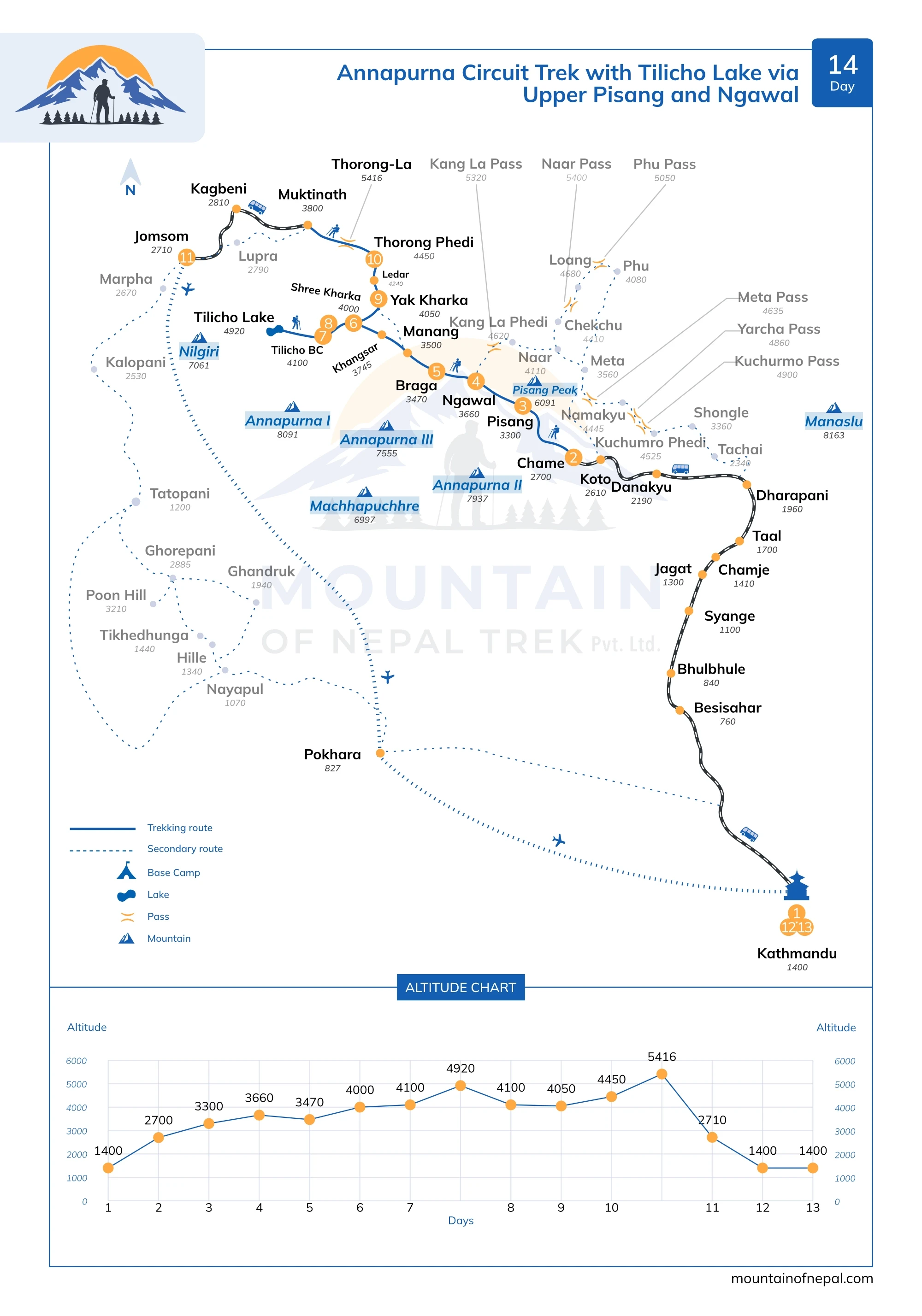
You arrive in the vibrant capital city of Kathmandu, where a representative from Mountain of Nepal will welcome you at the airport and transfer you to your hotel. This day is mainly for rest after your journey, but you can also explore the lively streets of Thamel, filled with trekking shops, cafes, and cultural energy. In the evening, a detailed trek briefing will be provided, covering the route, safety guidelines, and preparation tips for the Annapurna region. You’ll also meet your trekking guide and possibly other group members. The atmosphere of Kathmandu introduces you to Nepal’s rich heritage and sets the tone for your Himalayan adventure.
Today begins with a long but scenic drive from Kathmandu toward the Annapurna region, passing through winding roads, rivers, and terraced hillsides. You travel toward Chame, the administrative headquarters of Manang district. The journey passes through Besisahar and gradually climbs into higher mountain terrain, offering dramatic views of waterfalls and lush valleys. This drive introduces you to rural Nepal’s lifestyle and changing landscapes. Upon arrival in Chame, you check into a teahouse and rest. The air becomes noticeably cooler and fresher, signaling your entry into the Himalayan highlands and preparing your body for the upcoming trek.
The trek begins along forested trails, river crossings, and steep ascents as you leave Chame behind. You gradually ascend toward Upper Pisang, a beautiful village offering panoramic views of Annapurna II and Pisang Peak. The trail provides both lower and upper route options, but the upper trail is chosen for its stunning Himalayan scenery. As you climb, the landscape becomes drier and more alpine. Prayer flags, monasteries, and traditional stone houses appear more frequently. Once in Upper Pisang, you enjoy a peaceful evening surrounded by dramatic mountain vistas and Tibetan-influenced culture.
Today’s trail continues along the upper valley route, offering one of the most scenic sections of the trek. You leave Upper Pisang and head toward Ngawal, a traditional village known for its monastery and wide Himalayan views. The path is relatively less crowded and passes through high-altitude terrain, dry landscapes, and ancient stone settlements. As you gain altitude, the air becomes thinner, and the views of Annapurna III and Gangapurna become more striking. Ngawal offers a peaceful environment, perfect for acclimatization and experiencing authentic mountain culture.
Leaving Ngawal, the trail descends gradually toward the main Manang Valley. You pass through scenic ridges and alpine landscapes before reaching Braga, a historic village famous for its centuries-old monastery perched on a hill. This monastery is one of the oldest in the region and offers deep spiritual insight into Tibetan Buddhism. The village sits beneath dramatic cliffs and snow-capped peaks, creating a spectacular setting. Today’s walk is relatively moderate, allowing time to relax and explore the cultural richness of the area while preparing for higher altitude trekking ahead.
The trail leaves the main Annapurna Circuit route and climbs toward quieter, less-traveled paths leading to Shree Kharka. The terrain becomes more rugged and alpine, with fewer settlements and more open mountain views. You pass yak pastures and rocky slopes while enjoying clear views of Annapurna ranges. The increase in altitude requires a steady pace and good acclimatization. Shree Kharka is a remote resting point surrounded by natural beauty, offering a peaceful environment under star-filled skies. This day marks your transition toward the Tilicho Lake region, one of the most dramatic parts of the trek.
A shorter but important trekking day takes you from Shree Kharka to Tilicho Base Camp. The trail becomes narrow and rugged, with landslide-prone sections and dramatic cliffside paths. As you approach base camp, the scenery turns more barren and glacier-fed valleys become visible. Upon arrival, you settle into a basic teahouse surrounded by towering mountains. The atmosphere is remote and adventurous, giving you a real sense of Himalayan wilderness. Rest and hydration are essential today as you prepare for your visit to Tilicho Lake tomorrow.
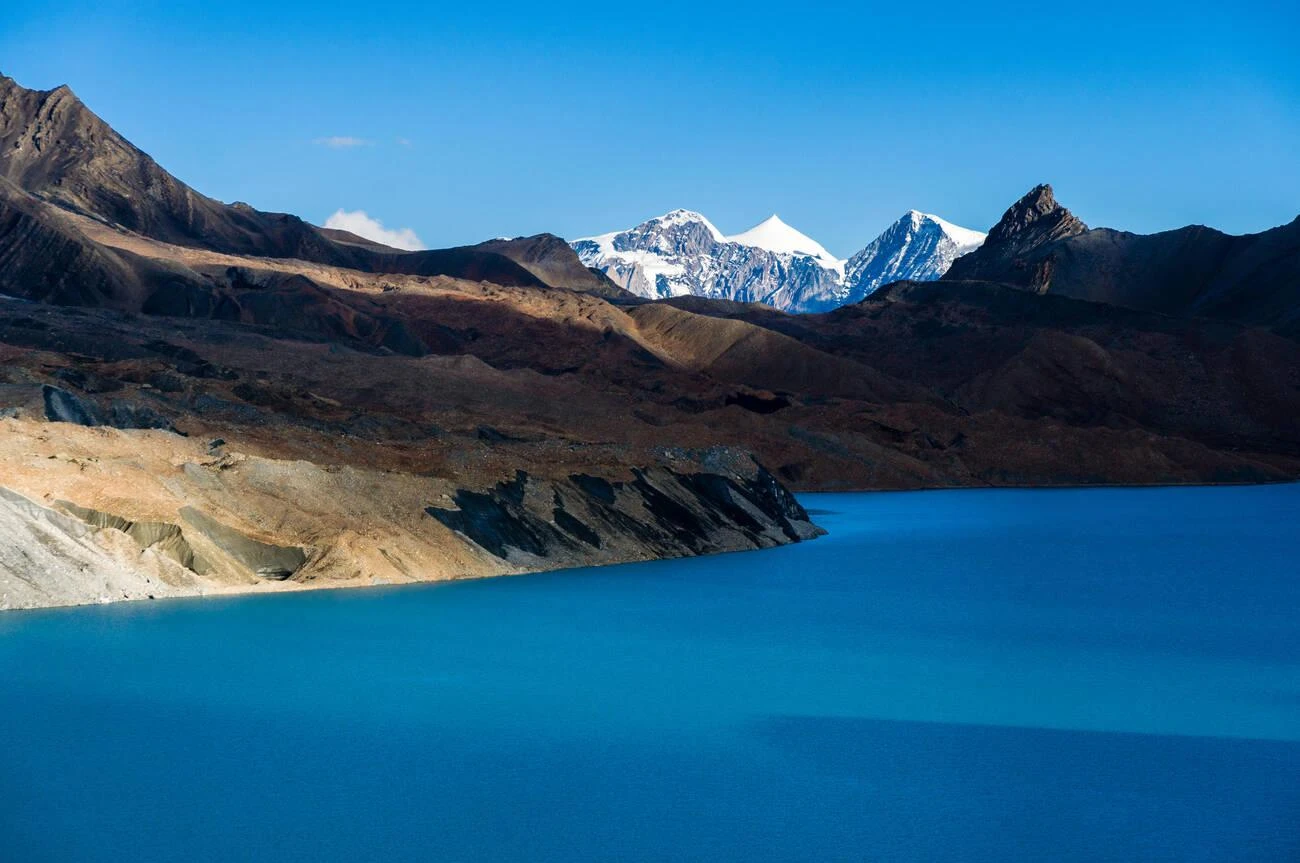
Today is one of the highlights of the entire journey as you trek to Tilicho Lake, one of the highest lakes in the world. The early morning hike involves steep ascents and rocky trails, but the reward is breathtaking turquoise waters surrounded by snow-covered peaks. After spending time at the lake for photography and reflection, you return carefully to Tilicho Base Camp. The descent requires caution due to loose terrain. The day is physically demanding but emotionally rewarding, offering unforgettable Himalayan scenery and a sense of achievement.
You retrace your steps and reconnect with the main Annapurna Circuit trail, moving toward Yak Kharka. The landscape opens into wide alpine meadows where yaks graze freely. The walk is moderate, allowing your body to recover after the Tilicho Lake excursion. Along the way, you enjoy views of towering peaks and vast valleys. Yak Kharka is a small settlement used as a rest stop for trekkers heading toward Thorong La Pass. The peaceful environment and gradual descent in physical intensity make this a comfortable and scenic trekking day.
From Yak Kharka, you ascend gradually toward either Thorong Phedi or High Camp. The landscape becomes increasingly rugged and barren as you approach the base of Thorong La Pass. The air is thinner, and the climb requires slow and steady pacing. High Camp offers closer access to the pass but is more challenging due to altitude. Whichever option you choose, this day is crucial for acclimatization and preparation. You rest early, as tomorrow involves the most demanding crossing of the entire trek.
An early pre-dawn start takes you across Thorong La Pass, one of the highest trekking passes in the world. The climb is steep and exhausting but rewarding with panoramic Himalayan views. After reaching the summit, you descend toward Muktinath, a sacred pilgrimage site for Hindus and Buddhists. Here you can visit the famous temple complex before continuing a scenic drive to Jomsom. The long day combines trekking and driving, marking a major milestone in your journey.
From Jomsom, you take an early morning flight to Pokhara, enjoying aerial views of deep valleys and snow peaks. After a short transit, you continue your journey back to Kathmandu. The return to the capital feels like stepping back into modern life after days in the mountains. This day is comfortable and relaxing, allowing you to reflect on your successful completion of the Annapurna Circuit and Tilicho Lake trek. Evening at leisure for shopping or celebration with your Mountain of Nepal team.
You spend a relaxed day in Kathmandu exploring cultural landmarks, shopping for souvenirs, or visiting UNESCO heritage sites. After days of trekking, this day allows full recovery and cultural immersion. You may visit temples, local markets, or enjoy traditional Nepali cuisine. The Mountain of Nepal team remains available for any assistance or optional sightseeing arrangements. It’s also a good time to celebrate your trekking achievement and prepare for departure.
Your adventure with Mountain of Nepal comes to an end as you transfer to the airport in Kathmandu for your international flight. After an unforgettable journey through high passes, sacred lakes, and Himalayan villages, you depart with lifelong memories of the Annapurna region. The trek not only challenges your physical endurance but also rewards you with cultural insights and natural beauty that remain etched in memory long after you leave Nepal.
Your Start Date is the day you land in Nepal, and your End Date is when you fly home.
If the set Annapurna Circuit Trek with Tilicho Lake via Upper Pisang and Ngawal group dates don’t suit your schedule, we can offer alternative dates upon request.
Proper layering is important to stay warm and comfortable in changing mountain weather.
Good footwear makes trekking easier and safer.
The right gear keeps you safe, comfortable, and prepared.
Lightweight but important items keep you clean, healthy, and comfortable.
Keep important items safe and easy to reach.
The Annapurna Circuit Trek with Tilicho Lake is considered a moderate to challenging trek due to its long duration, high altitude, and varied terrain. With elevations reaching above 5,000 meters at Thorong La Pass and around 4,900 meters at Tilicho Lake, trekkers must be physically fit and mentally prepared. Daily walking hours range from 4 to 8 hours. However, with proper acclimatization, guidance from Mountain of Nepal, and a steady pace, even first-time high-altitude trekkers can complete the journey.
Prior trekking experience is not mandatory, but it is highly recommended. The trek involves long walking days, steep ascents, and high-altitude conditions that can be physically demanding. Beginners with good fitness levels and preparation can also complete the trek successfully. The Mountain of Nepal ensures proper pacing, acclimatization days, and professional guidance to support trekkers at every stage. Regular cardio training, hiking practice, and stamina-building exercises before arrival will significantly improve your comfort and enjoyment during the trek.
Altitude sickness is a potential risk as the trek reaches elevations above 5,000 meters. Symptoms may include headache, nausea, dizziness, and fatigue. Proper acclimatization is essential, especially in the Manang region and before crossing Thorong La Pass. The itinerary designed by Mountain of Nepal includes gradual ascent and rest points to minimize risk. Drinking plenty of water, avoiding alcohol, and walking at a steady pace are important preventive measures. Our guides are trained to monitor symptoms and ensure your safety throughout the journey.
Yes, visiting Tilicho Lake is one of the more challenging parts of the itinerary due to steep, narrow, and landslide-prone trails. However, it is also one of the most rewarding highlights of the entire trek. The hike from Tilicho Base Camp to the lake involves rocky terrain and high altitude, requiring good stamina and careful walking. Mountains of Nepal ensure experienced guides accompany trekkers for safety. The breathtaking view of the turquoise lake surrounded by snow peaks makes the effort completely worthwhile.
Choosing Mountain of Nepal ensures a professional, safe, and personalized trekking experience in the Himalayas. Our team consists of experienced local guides who understand the terrain, culture, and altitude challenges deeply. We focus on safety, comfort, and authentic cultural immersion throughout the journey. From permits and logistics to accommodation and meals, everything is carefully managed. Our goal is to make your Annapurna Circuit and Tilicho Lake adventure not just a trek, but a lifelong memory filled with breathtaking landscapes and meaningful experiences.
The best seasons for the Annapurna Circuit Trek with Tilicho Lake are spring (March to May) and autumn (September to November). During these months, the weather is stable, the skies are clear, and the mountain views are at their best. Spring offers blooming rhododendrons, while autumn provides crisp air and excellent visibility. Winter can be very cold and snowy at high passes, and the monsoon season brings landslides and slippery trails. The Mountain of Nepal strongly recommends spring or autumn for the safest and most rewarding trekking experience.
Accommodation along the Annapurna Circuit and Tilicho Lake route consists mainly of teahouses and lodges run by local families. Rooms are usually simple, twin-shared, and basic but comfortable enough for resting after long trekking days. In lower regions like Ngawal and Braga, facilities are slightly better, while higher areas such as Tilicho Base Camp are more basic. Mountain of Nepal carefully selects clean and safe accommodations to ensure trekkers have a warm bed, nutritious meals, and a welcoming atmosphere throughout the journey.
Meals during the trek are served in teahouses and include a variety of local and international dishes. The most common meal is Dal Bhat (rice, lentil soup, vegetables), which provides excellent energy for trekking. Other options include noodles, pasta, soups, potatoes, eggs, and Tibetan bread. As altitude increases, food choices become simpler but still nutritious. The mountain of Nepal ensures hygienic and balanced meals are available to keep trekkers energized and healthy throughout the demanding journey in the Himalayas.
This trek involves a combination of road travel, trekking, and flight. The journey typically begins with a drive from Kathmandu to Chame in a private jeep or local vehicle. After completing the trek, there is a scenic flight from Jomsom to Pokhara and then back to Kathmandu. Mountain of Nepal arranges all transportation to ensure comfort, safety, and reliability. Road conditions in mountainous areas can be rough, but experienced drivers and well-maintained vehicles are used for all long-distance transfers.
To complete the Annapurna Circuit Trek with Tilicho Lake, trekkers need two main permits: the Annapurna Conservation Area Permit (ACAP) and the TIMS (Trekkers’ Information Management System) card. These permits are mandatory and help regulate trekking activities while supporting conservation efforts in the region. Mountain of Nepal handles all permit arrangements on behalf of trekkers, ensuring a hassle-free process. You only need to provide passport copies and the necessary documents before the trek begins.
The trek is generally safe when undertaken with proper preparation, experienced guides, and a well-planned itinerary. The main risks include altitude sickness, weather changes, and challenging terrain, especially near Tilicho Lake and Thorong La Pass. Mountain of Nepal prioritizes safety by providing trained guides, emergency support, and acclimatization schedules. Weather conditions are closely monitored, and flexible planning ensures trekkers are never exposed to unnecessary risk. With proper guidance, the trek is considered a safe and highly rewarding Himalayan adventure.


 (2)
(2)  100% recommend (0)
 (0)
(0)