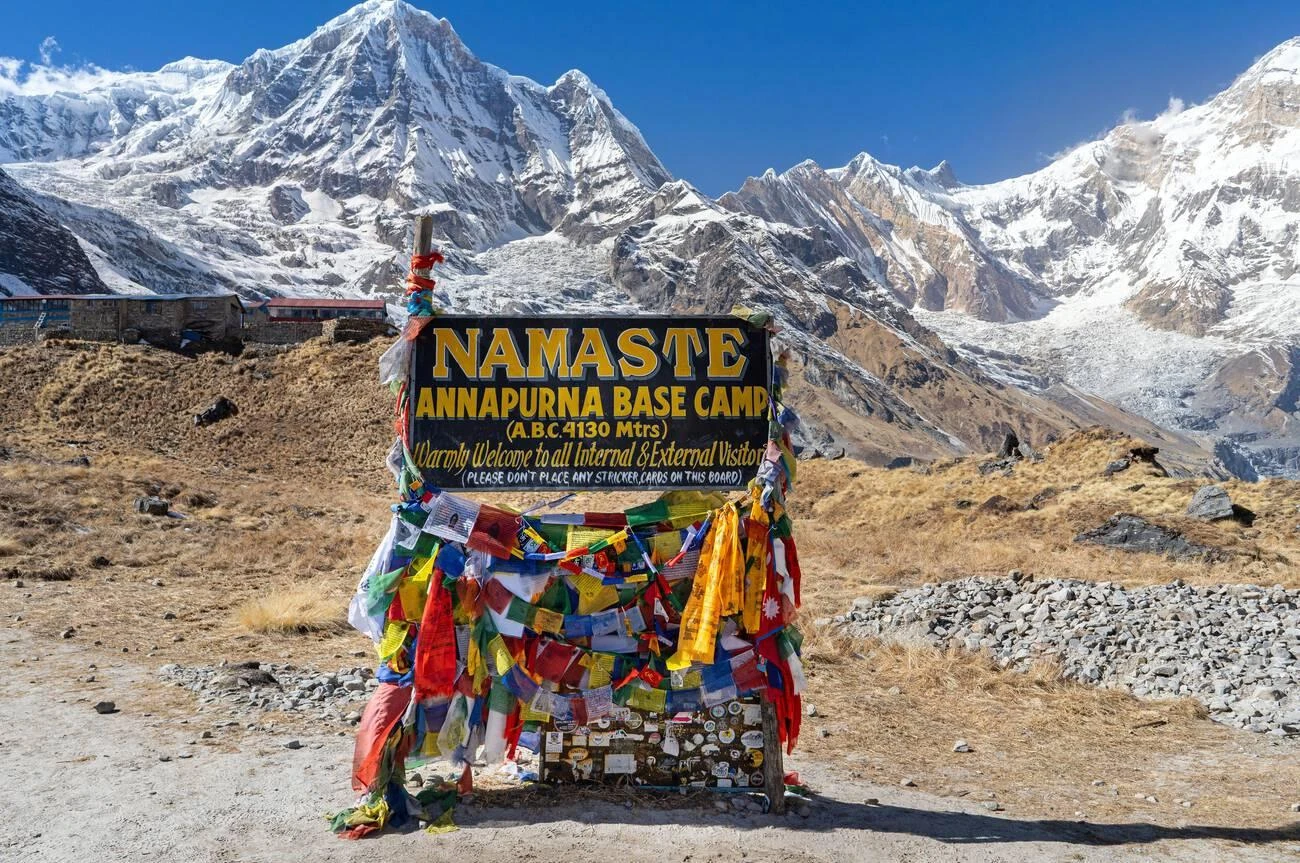
The Annapurna Base Camp Trek 8 Days is one of the most iconic Himalayan journeys in Nepal, offering a perfect blend of mountain scenery, cultural immersion, and moderate adventure. Organized by Mountain of Nepal, this trek takes you from the bustling capital of Kathmandu to the scenic lakeside city of Pokhara and deep into the heart of the Annapurna region. The trail leads through traditional Gurung and Magar villages, dense rhododendron forests, and glacial river valleys before reaching the spectacular amphitheater of Annapurna Sanctuary.
This trek is designed to be completed in 8 days, making it ideal for travelers with limited time but a strong interest in high-mountain trekking. The highlight is reaching Annapurna Base Camp at 4,100 meters, surrounded by towering peaks like Annapurna I, Machhapuchhre, and Hiunchuli. Along the way, trekkers experience an authentic Himalayan lifestyle, warm hospitality, and dramatic landscape transitions.
The best time for the Annapurna Base Camp Trek 8 Days is during the spring (March–May) and autumn (September–November) seasons. These periods offer the clearest skies, stable weather conditions, and the best mountain visibility. Spring brings blooming rhododendron forests, while autumn offers crisp air and stunning panoramic views of snow-covered peaks.
During these seasons, trekking conditions are generally safe and comfortable, with moderate daytime temperatures and minimal rainfall. Winter trekking (December–February) is possible but colder, especially at higher altitudes like Machhapuchhre Base Camp and ABC. Monsoon season (June–August) is less recommended due to heavy rain, slippery trails, and potential landslides in lower sections.
Seasonal breakdown:
Mountain of Nepal strongly recommends spring or autumn departures for the best trekking experience.
The Annapurna Base Camp Trek 8 Days is considered a moderate-level trek. It does not require technical climbing skills, but trekkers should have a reasonable level of fitness due to long walking hours, steep ascents, and high-altitude conditions. Daily trekking ranges from 5 to 8 hours, with the highest altitude being 4,100 meters at ABC.
The journey includes multiple transportation segments, starting from Kathmandu to Pokhara by flight or road. From Pokhara, a drive takes you to Siwai or Jhinu Danda trailheads. The return follows the same route back, combining trekking and driving for convenience and time efficiency.
Difficulty highlights:
Transportation summary:
With proper pacing and acclimatization support from Mountain of Nepal guides, most trekkers complete the journey successfully.
Accommodation during the trek is provided in local teahouses, which are basic but comfortable lodges run by local families. Rooms are usually twin-sharing with simple beds, blankets, and shared bathrooms. In lower regions like Chhomrong, facilities are more developed, while higher areas like Machhapuchhre Base Camp offer more basic lodging due to remoteness.
Food is fresh, locally prepared, and designed to provide energy for trekking. The most common meal is “Dal Bhat,” which includes rice, lentils, vegetables, and pickles, offering unlimited refills in many lodges. Other options include noodles, pasta, soups, pancakes, eggs, and Tibetan bread.
Accommodation highlights:
Food options:
Mountain of Nepal ensures hygienic food arrangements and selects reliable teahouses for safe and comfortable stays throughout the journey.
To complete the Annapurna Base Camp Trek 8 Days, trekkers must obtain official permits regulated by the Government of Nepal. The trek lies within the Annapurna Conservation Area, which requires environmental and entry permissions.
The two main permits include the Annapurna Conservation Area Permit (ACAP) and the Trekkers’ Information Management System (TIMS) Card. These permits help support conservation efforts, trail maintenance, and trekkers’ safety monitoring.
Required permits:
Mountain of Nepal handles all permit arrangements on behalf of trekkers, ensuring a smooth and hassle-free experience. Travelers only need to provide passport copies and passport-sized photos.
Important notes:
Proper documentation ensures legal trekking access and supports sustainable tourism in the Annapurna region.
Choosing Mountain of Nepal for the Annapurna Base Camp Trek 8 Days ensures a safe, organized, and enriching Himalayan experience. The company focuses on professional guiding, responsible tourism, and personalized service, making the trek suitable for both beginners and experienced hikers.
The route offers one of the most rewarding mountain experiences in Nepal, combining cultural immersion, natural beauty, and high-altitude adventure within a short timeframe. From lush forests to the glacier basin of Annapurna Base Camp, every day presents a new landscape and experience.
Why choose Mountain of Nepal:
Trek benefits:
With Mountain of Nepal, the Annapurna Base Camp Trek becomes more than just a journey—it becomes a carefully guided Himalayan adventure filled with safety, comfort, and unforgettable natural beauty.
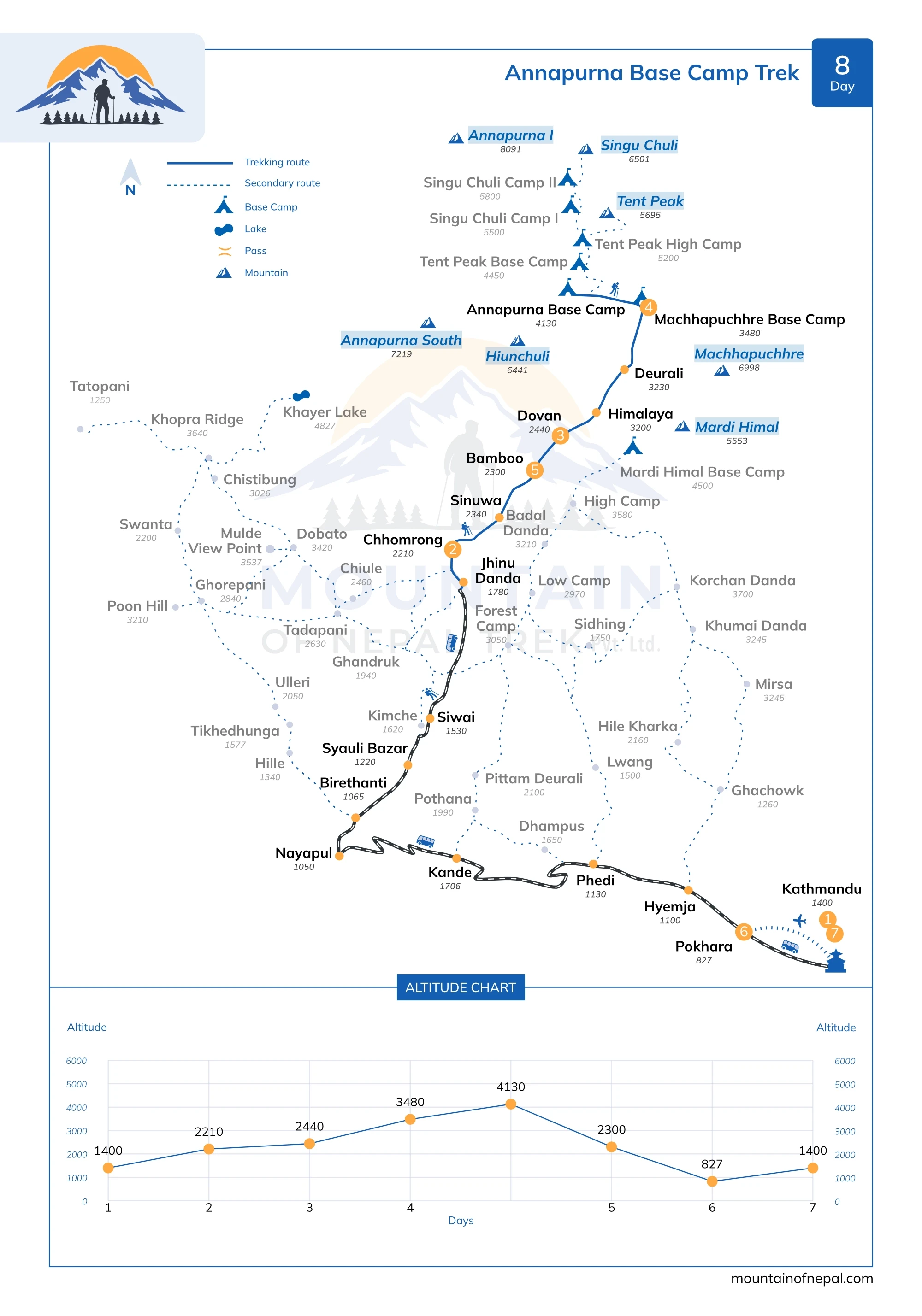
Upon your arrival at the international airport in Kathmandu, a representative from Mountain of Nepal will warmly welcome you and transfer you to your hotel in the city center. After check-in, you can rest and recover from your journey or take a gentle walk around the vibrant streets of Thamel, known for trekking shops, cafes, and cultural ambiance. In the evening, there will be a short briefing about the Annapurna Base Camp Trek, including route overview, safety instructions, and preparation tips. This day is designed for relaxation, final gear checks, and cultural immersion before heading into the Himalayas.
Early morning, you take a scenic flight from Kathmandu to Pokhara, offering breathtaking views of the Himalayas. From Pokhara, a short drive takes you to Siwai, the starting point of your trek. The trail begins through lush forests, terraced fields, and small villages, gradually ascending toward Chhomrong. You will pass traditional Gurung settlements and enjoy views of Annapurna South and Machhapuchhre (Fishtail). Chhomrong is a beautiful village perched on a hillside and serves as a gateway to the Annapurna Sanctuary. Overnight stay in a teahouse with warm hospitality and mountain views.
Today’s trek descends from Chhomrong before crossing the Chhomrong Khola river and then steadily ascends through dense rhododendron and bamboo forests. You will enter the protected region of the Annapurna Conservation Area, where biodiversity becomes richer and the landscape more remote. The trail is peaceful, with occasional sightings of monkeys, birds, and waterfalls. Passing through Sinuwa and Bamboo, the journey continues deeper into the valley toward Doban. The atmosphere becomes cooler and more serene as you gain altitude. Overnight at a teahouse in Doban, surrounded by forested hills and the soothing sound of the river.
The trail today becomes more alpine as you move beyond the tree line. You will pass Himalaya and Deurali, where the valley opens up dramatically with towering cliffs and glacial landscapes. As you approach Machhapuchhre Base Camp, the views of Machhapuchhre (Fishtail Mountain) become incredibly close and majestic. The air becomes thinner, and the environment feels more rugged and dramatic. Snow-capped peaks surround you in a natural amphitheater. After reaching base camp, you will rest, acclimatize, and enjoy the spectacular sunset over the Annapurna range. Overnight stay in a mountain lodge.
Early morning, you ascend gradually to Annapurna Base Camp, one of the most iconic trekking destinations in the world. The route leads through the heart of the Annapurna Sanctuary, surrounded by peaks such as Annapurna I, Annapurna South, Hiunchuli, and Machhapuchhre. Upon arrival, you will witness a breathtaking 360-degree panorama of Himalayan giants glowing in golden light. After spending quality time exploring and capturing memories, you begin a long descent back to Bamboo. The return trek is challenging but rewarding, as you pass through changing landscapes from alpine to lush forest.
From Bamboo, the trail continues downhill through lush forests and traditional settlements, eventually reaching Jhinu Danda. This village is famous for its natural hot springs located near the river, where you can relax and soothe tired muscles after days of trekking. After spending some time at the hot springs, you take a drive back to Pokhara. The return journey offers scenic countryside views, rivers, and terraced hills. Once in Pokhara, you check into your hotel and enjoy a comfortable evening by Phewa Lake, reflecting on your completed Himalayan adventure.
After breakfast, you begin your return journey from Pokhara to Kathmandu either by tourist bus or private vehicle arranged by Mountain of Nepal. The drive follows the Prithvi Highway, offering views of rivers, hills, and rural settlements along the way. You may stop for lunch at a roadside restaurant overlooking the Trishuli River. Upon arrival in Kathmandu, you check into your hotel and enjoy free time for shopping, sightseeing, or relaxation. Many trekkers use this evening to explore Thamel for souvenirs or celebrate the successful completion of the Annapurna Base Camp Trek.
On your final day, a representative from Mountain of Nepal will transfer you to Kathmandu International Airport according to your flight schedule. Depending on your departure time, you may have a short opportunity for last-minute shopping or a relaxed breakfast at the hotel. This marks the end of your unforgettable Annapurna Base Camp journey, filled with Himalayan landscapes, cultural encounters, and personal achievement. You leave Nepal with lifelong memories of trekking through one of the most beautiful mountain regions in the world, carrying experiences that will stay with you forever.
Your Start Date is the day you land in Nepal, and your End Date is when you fly home.
If the set Annapurna Base Camp Trek 8 Days group dates don’t suit your schedule, we can offer alternative dates upon request.
Proper layering is important to stay warm and comfortable in changing mountain weather.
Good footwear makes trekking easier and safer.
The right gear keeps you safe, comfortable, and prepared.
Lightweight but important items keep you clean, healthy, and comfortable.
Keep important items safe and easy to reach.
The Annapurna Base Camp Trek is considered a moderate-level trek suitable for beginners with good fitness as well as experienced trekkers. The trail involves daily walking of 5–8 hours through stone steps, forests, and mountain paths, with gradual altitude gain up to Annapurna Base Camp at 4,100 meters. While no technical climbing skills are required, trekkers must be prepared for long walking days and changing weather conditions. The itinerary designed by Mountain of Nepal ensures proper acclimatization and rest, making the journey achievable for most active travelers who prepare with basic cardio training and stamina building before the trek.
Yes, altitude sickness can be a concern as the trek reaches above 4,000 meters at Annapurna Base Camp. However, the risk is manageable with proper acclimatization, hydration, and a steady walking pace. Symptoms may include headache, dizziness, and fatigue, which should never be ignored. The itinerary designed by Mountain of Nepal includes gradual ascent and rest periods to minimize risk. Trekkers are advised to communicate any discomfort immediately to guides, who are trained in first aid and altitude-related safety protocols. In serious cases, descending to a lower altitude is the best solution.
A reasonable level of fitness is required for the Annapurna Base Camp Trek, as it involves long hours of walking over consecutive days. You do not need to be an athlete, but regular walking, jogging, or stair climbing for a few weeks before the trek is highly recommended. The highest point at Annapurna Base Camp demands endurance and mental determination. Mountain of Nepal suggests preparing with cardiovascular exercises and leg-strength training to improve stamina. A positive mindset and steady pace are equally important for successfully completing the journey.
Mobile network coverage is available in some parts of the Annapurna region, especially in lower villages like Chhomrong and Jhinu Danda, but it becomes weak or unavailable at higher altitudes such as Machhapuchhre Base Camp and Annapurna Base Camp. Wi-Fi is available in some teahouses for an extra charge, but it may be slow. ATMs are not available along the trekking route, so trekkers must withdraw enough cash in Pokhara before starting the trek. Mountain of Nepal advises carrying sufficient Nepali currency for personal expenses throughout the journey.
Mountain of Nepal is a trusted trekking company known for experienced guides, well-planned itineraries, and personalized service in the Himalayas. Choosing this company for the Annapurna Base Camp Trek ensures safety, comfort, and expert guidance throughout the journey. From airport pickup in Kathmandu to final departure, every detail is carefully managed. Their team focuses on responsible tourism, local support, and high-quality service in regions like the Annapurna Conservation Area. With professional assistance, trekkers can fully enjoy the beauty of the Himalayas while leaving logistics and safety in expert hands.
The best seasons for the Annapurna Base Camp Trek are spring (March to May) and autumn (September to November). During these months, the weather is generally stable, skies are clear, and mountain views are at their best. Spring brings blooming rhododendron forests inside the Annapurna Conservation Area, while autumn offers crisp air and excellent visibility. Winter trekking is possible but very cold at higher altitudes, and monsoon season (June to August) brings heavy rain and slippery trails. Mountain of Nepal recommends these peak seasons for the safest and most visually rewarding trekking experience.
Yes, trekkers need two essential permits for the Annapurna Base Camp Trek: the Annapurna Conservation Area Permit (ACAP) and the TIMS (Trekkers’ Information Management System) card. These permits help regulate tourism and support conservation efforts within the region. The journey passes through protected areas such as the Annapurna Conservation Area, where entry is strictly monitored. When you book with Mountain of Nepal, all necessary permits are arranged in advance, so you do not need to worry about paperwork. This ensures a smooth and hassle-free trekking experience from arrival to departure.
Accommodation on the Annapurna Base Camp Trek consists mainly of local teahouses and mountain lodges run by families in villages along the route. Rooms are usually basic with twin beds, blankets, and shared bathrooms, though comfort decreases as altitude increases. In places like Chhomrong and Jhinu Danda, facilities are slightly better compared to higher camps. At higher elevations near Machhapuchhre Base Camp and Annapurna Base Camp, accommodation becomes simpler due to remote conditions. Mountain of Nepal ensures clean, safe, and pre-arranged lodging throughout the trek.
During the Annapurna Base Camp Trek, trekkers can enjoy a variety of freshly prepared meals at teahouses, including traditional Nepali dishes like dal bhat (rice, lentils, vegetables), noodles, soups, pasta, and basic continental options. As altitude increases, food choices become simpler due to limited supply logistics. Safe drinking water is available at lodges, often boiled or filtered for trekkers. Hydration is very important at high altitude near Annapurna Base Camp. Mountain of Nepal recommends avoiding alcohol and maintaining a balanced diet during the trek to support energy levels and acclimatization.
Packing for the Annapurna Base Camp Trek requires careful planning to handle changing temperatures and terrain. Essential items include trekking boots, warm layers, waterproof jackets, gloves, thermal wear, a sleeping bag, sunscreen, sunglasses, and a reusable water bottle. A basic first aid kit and personal medications are also important. Since the trail passes through regions like the Annapurna Conservation Area, weather conditions can shift quickly. Mountain of Nepal provides a detailed packing checklist before departure to ensure trekkers are fully prepared for both warm lowlands and cold high-altitude environments.


 (2)
(2)  100% recommend (0)
 (0)
(0)