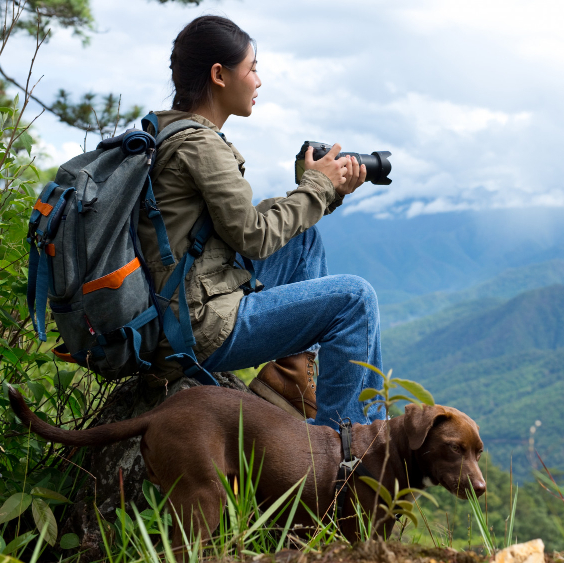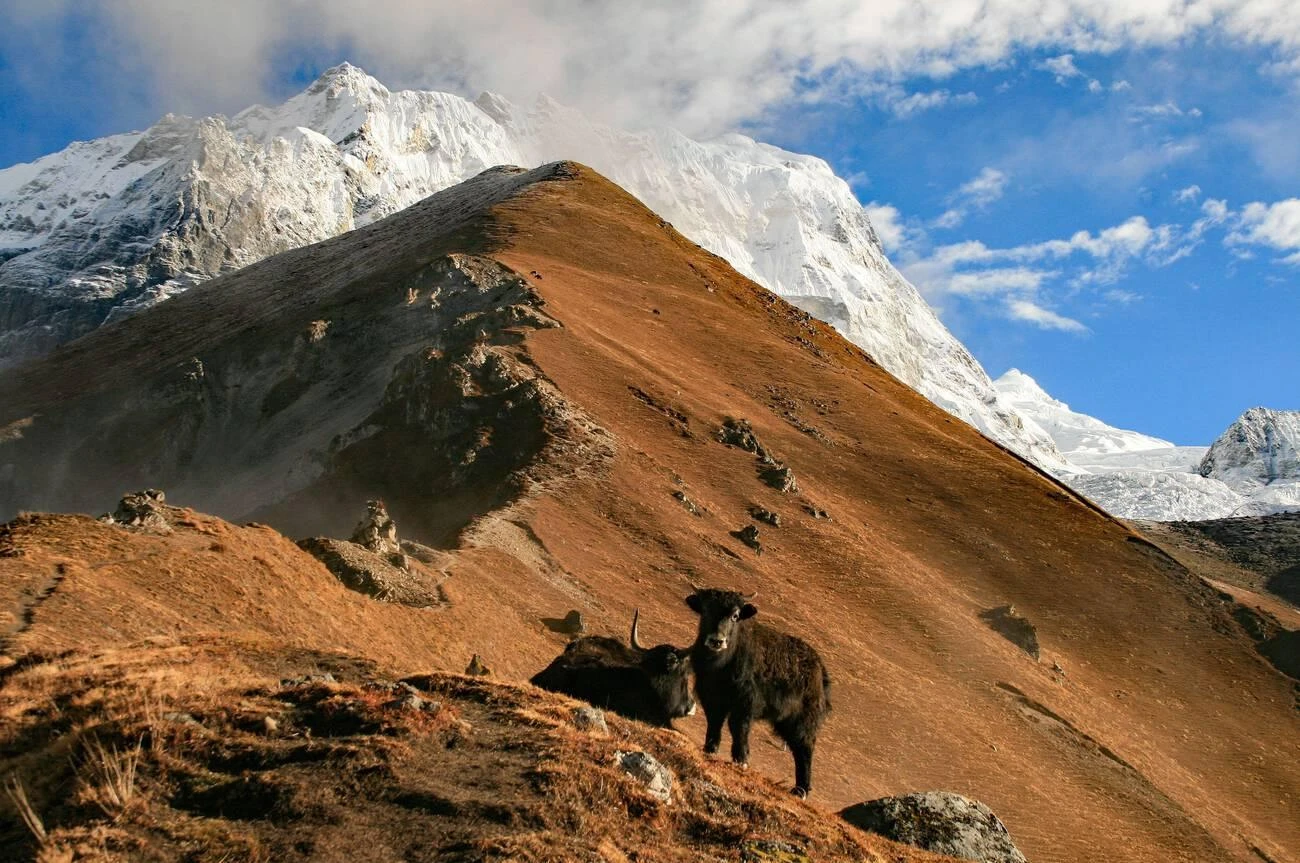
The Langtang Gosaikunda Trek is a stunning Himalayan adventure located north of Kathmandu in Nepal’s Langtang region, bordering Tibet. The trek can typically be started from Syabrubesi or Dhunche, which are accessible by a new road from Kathmandu in about six to seven hours, depending on the season. The region has a rich history of trade and pilgrimage, with trails once used by Tamang and Tibetan traders and sacred sites such as Gosaikunda, revered in Hindu and Buddhist traditions. According to mythology, Lord Shiva created the lake, and thousands of pilgrims still visit during the full moon each year. The trek can be done in reverse, but it is not recommended due to the increased risk of altitude sickness and the fact that crossing Lauribina La Pass is generally tougher from the opposite direction. Highlights of the trek include the Tserko Ri day hike, offering spectacular panoramic views of Langtang Lirung, Langtang Ri, and Ganesh Himal, and the challenging Lauribina La Pass, which provides breathtaking 360° views of the surrounding Himalayan peaks. The trek winds through lush oak, rhododendron, and pine forests, passing traditional Sherpa, Tamang, and Hyolmo villages with stone-and-wood houses, monasteries, prayer flags, mani walls, and chortens. Along the trail, high meadows are dotted with grazing yaks and cows, and wildlife such as Himalayan monal pheasants, langurs, musk deer, and occasionally red pandas can be spotted. The route passes through Langtang National Park and, on the return toward Kathmandu, enters Shivapuri National Park, offering a final stretch of serene forest paths.
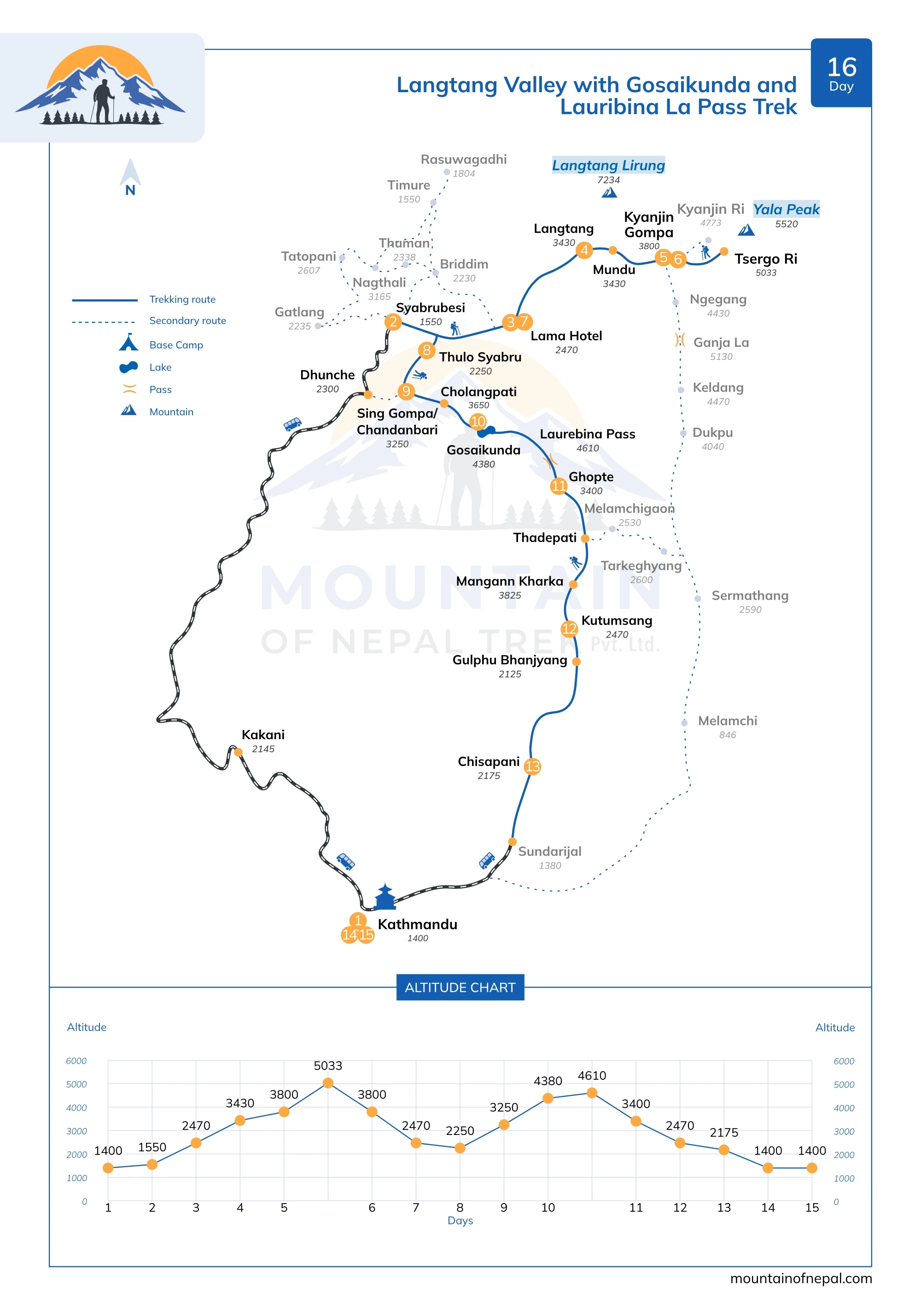
The Langtang Valley with Gosaikunda and Lauribina La Pass Trek is one of Nepal’s most rewarding combined trekking adventures, blending alpine valleys, sacred lakes, and a high Himalayan pass crossing. Organized by Mountain of Nepal, this itinerary connects the beautiful Langtang region with the holy Gosaikunda Lake basin and the challenging Lauribina La Pass (4,610 m), offering a complete Himalayan experience in one journey.
The trek begins from the vibrant capital city of Kathmandu and moves north toward the scenic trailhead of Syabrubesi. From here, trekkers enter the heart of the Langtang region, passing through lush forests, Tamang villages, yak pastures, and dramatic mountain landscapes. Key highlights include Langtang Village, the spiritual hub of Kyanjin Gompa, and the breathtaking glacial viewpoints of Tserko Ri.
The journey continues toward the sacred alpine lakes of Gosaikunda, revered by Hindu and Buddhist pilgrims. The route then crosses the high-altitude pass of Lauribina La Pass before descending into the Helambu region, ending at Sundarijal near Kathmandu.
The best time to undertake this trek is during the pre-monsoon (spring) and post-monsoon (autumn) seasons when weather conditions are stable, skies are clear, and mountain views are at their best. Mountain of Nepal strongly recommends these periods for safety, visibility, and overall trekking comfort.
During spring (March to May), the trails of the Langtang region bloom with rhododendrons and wildflowers. Temperatures are moderate, and the forests between Syabrubesi and Kyanjin Gompa are especially vibrant. Wildlife sightings are more common, and the trail conditions remain stable even at higher elevations like Gosaikunda.
Autumn (September to November) is considered the peak trekking season. After monsoon rains, the air becomes crisp, offering crystal-clear views of Himalayan peaks and sacred lakes such as Gosaikunda. The crossing of Lauribina La Pass is more manageable during this season due to reduced snowfall and predictable weather patterns.
Winter trekking (December–February) is possible but challenging due to heavy snow around Lauribina La Pass and Gosaikunda. Monsoon season (June–August) is less recommended due to slippery trails and poor visibility.
Best season summary:
This trek is considered moderate to challenging due to long walking days and high-altitude exposure, especially when crossing Lauribina La Pass at 4,610 meters. Trekkers should have good physical fitness and prior hiking experience. The mountain of Nepal ensures proper acclimatization scheduling, especially at Kyanjin Gompa and Gosaikunda.
The most demanding sections include the ascent to Tserko Ri (5,033 m), the climb toward Gosaikunda Lake, and the steep crossing of Lauribina La Pass. Weather conditions can change rapidly at high altitude, making preparation essential.
Transportation begins with a scenic drive from Kathmandu to Syabrubesi, taking approximately 7–8 hours on mountainous roads. The return journey ends with a descent to Sundarijal, followed by a short drive back to Kathmandu.
Difficulty highlights:
Throughout the trek, accommodation is provided in traditional teahouses run by local families, offering basic but comfortable lodging. Mountain of Nepal arranges clean rooms with shared facilities, ensuring trekkers have a safe resting environment at each stop.
Food options along the route include traditional Nepali meals such as dal bhat (rice and lentils), noodles, soups, potatoes, and seasonal vegetables. In higher regions like Kyanjin Gompa and Gosaikunda, food choices may be limited but remain nutritious and energy-rich to support trekking demands.
Tea houses in villages like Langtang Village and Cholangpati offer warm hospitality and cultural interaction with local Tamang communities. At higher altitudes, accommodations become simpler due to limited resources, but warm blankets and common dining areas are typically available.
Food & accommodation summary:
To complete this trek legally, trekkers must obtain specific permits, which are arranged by Mountain of Nepal as part of the package. These permits ensure conservation of the region and support local communities.
The main required permit is the Langtang National Park Entry Permit, as most of the trek lies within protected areas. Additionally, a TIMS (Trekkers’ Information Management System) card may be required depending on current regulations.
The trail passes through both Langtang Valley and the sacred Gosaikunda region, which are environmentally sensitive zones. Permit checks are conducted at entry points such as Dhunche and along trekking checkpoints.
Permit requirements:
This trek is ideal for travelers who want a complete Himalayan experience without venturing into extremely remote expedition zones. It combines cultural richness, natural beauty, and spiritual significance in a single itinerary.
With Mountain of Nepal, trekkers receive expert guidance, experienced local guides, safety-focused planning, and well-organized logistics. The combination of Langtang Valley, Gosaikunda Lake, and Lauribina La Pass offers unmatched diversity from lush forests to alpine glaciers and sacred lakes.
Unlike other popular trekking routes, this journey remains less crowded, offering a peaceful and authentic Himalayan experience. The spiritual energy of Gosaikunda and the panoramic views from Lauribina La Pass make it unforgettable.
Why choose this trek:
Upon your arrival in Kathmandu, the vibrant capital city of Nepal, you will be warmly welcomed by a representative from Mountain of Nepal and transferred to your hotel. The rest of the day is dedicated to rest after your flight and adjustment to the local environment. Depending on your arrival time, you may explore nearby areas such as Thamel, a popular tourist hub filled with trekking shops, cafes, and cultural attractions. In the evening, a pre-trek briefing will be conducted where your guide will explain the itinerary, safety protocols, and gear preparation for the journey ahead.
After breakfast in Kathmandu, embark on a scenic drive to Syabrubesi, the starting point of the Langtang Trek. The journey takes 8–9 hours along winding roads that follow the Bhote Koshi River, passing terraced fields, riverside hamlets, and lush forests. The drive offers a gradual transition from Kathmandu’s bustling urban landscape to the peaceful Himalayan foothills, with plenty of photo opportunities of suspension bridges, rivers, traditional settlements, and snow-capped mountains along the way. Syabrubesi sits on the banks of the Bhote Koshi River and serves as the gateway to multiple trekking routes into the Langtang region and Ganesh Himal area. While mountain peaks are not visible directly from this riverside settlement, it provides a serene introduction to rural Himalayan life and a chance to rest, acclimatize, and prepare for the trek ahead. Evenings in Syabrubesi are quiet and restful, perfect for enjoying a warm meal and soaking in the tranquil riverside atmosphere. Overnight stay at a comfortable guesthouse or mountain lodge in Syabrubesi, setting the stage for your Himalayan adventure.
After breakfast, start trekking along the Langtang Khola, winding through dense rhododendron and oak forests. Watch for playful langurs and, if you’re lucky, the rare red panda. Pass riverside villages, traditional stone houses, and terraced fields that showcase local life. Cross a few suspension bridges as the trail gradually ascends, offering occasional views of waterfalls and surrounding peaks. The shaded forest and flowing river make the trek refreshing, with plenty of spots to pause and enjoy the scenery. Arrive at Lama Hotel in the late afternoon. Despite its name, it is not a single building but a small settlement of cozy teahouses scattered in the woodland. Stay in one of the lodges, enjoy warm meals, and relax amid the peaceful Himalayan surroundings.
After breakfast, continue ascending through pine and fir forests, breathing in crisp mountain air. Pass Ghoda Tabela, known for its grazing horses, with stunning views of Langtang Lirung, the valley’s majestic peak. The trail then passes traditional Tamang villages, where fluttering prayer flags and stone houses with wooden balconies provide a glimpse into local culture. As you gain elevation, the path becomes more rugged, and large trees give way to open alpine terrain. Arrive at Langtang Village, a Tibetan-style settlement and the largest in the valley. Check into a cozy teahouse or lodge, explore the village, and acclimatize for the night.
Today’s trek is shorter and relatively easy, making it ideal for gradual acclimatization as you move to higher altitude. After breakfast, leave Langtang Village and follow a well-defined trail that gently ascends through the wide open valley. Compared to previous days, the landscape becomes more alpine, with fewer trees and expansive views of the surrounding mountains. The trail passes through yak pastures and small seasonal settlements, where you can observe local life and grazing livestock. Along the way, you will encounter several Buddhist monuments, including mani walls carved with sacred prayers, prayer wheels, and colorful prayer flags fluttering in the wind—adding a strong spiritual atmosphere to the journey. As you continue, enjoy stunning views of peaks such asGangchempo, Langtang Lirung and Langshisha Ri, rising dramatically above the valley. The trail remains gradual and comfortable, allowing you to walk at a steady pace while fully taking in the scenery. After 3–4 hours of trekking, arrive at Kyanjin Gompa, a beautiful high-altitude village surrounded by snow-capped mountains. Check into a mountain lodge and relax. In the afternoon, explore the village, visit the ancient monastery, and stop by the local cheese factory. If time and energy permit, you can hike to Kyanjin Ri (4,773 m) for stunning panoramic views of Langtang Lirung, Ganchenpo, and surrounding peaks, especially at sunset. This easy and scenic day helps your body adjust to the altitude while offering a rich combination of natural beauty and cultural experience. Overnight stay at a lodge in Kyanjin Gompa.
Today is one of the most rewarding days of the trek. You’ll set out early, around 6:00 AM, for a hike to Tserko Ri (5,033 m), making the most of clear morning skies and aiding proper acclimatization. An early start also helps avoid afternoon clouds and strong winds at higher elevations. The trail begins with a gentle walk-through alpine meadows and yak pastures, with crisp mountain air and gradually unfolding views of Langtang Lirung. On the lower slopes, you may see grazing yaks, especially during summer, along with wildflowers and small alpine streams. As you ascend, the trail becomes steeper and rockier near the ridge, requiring a steady pace and regular breaks to adjust to the altitude. After approximately 3–4 hours of ascent, you reach the summit of Tserko Ri, where you are rewarded with breathtaking 360-degree views of the Himalayas, including Langshisha Ri, Ganesh Himal, and the entire Langtang Valley. Take time to rest, enjoy a light snack, and capture the stunning scenery. There are no teahouses along the route, so be sure to carry enough water, snacks, or a packed lunch. The descent retraces your path through the ridge and alpine meadows, with further opportunities to observe grazing yaks and the surrounding flora. By early afternoon, you arrive back at Kyanjin Gompa, where you can enjoy lunch, rest, and explore the village, including its monastery, cheese factory and Tibetan-style houses. This day hike serves as an ideal acclimatization trek, allowing your body to adjust to higher altitudes while experiencing the stunning natural and cultural beauty of the Langtang Valley. Overnight stay at the lodge in Kyanjin Gompa.
After breakfast, begin the descent along the Langtang Valley, retracing your steps through the forests and villages you passed earlier. Enjoy the serene landscapes, sparkling streams, and glimpses of local wildlife one last time. Arrive at Lama Hotel in the late afternoon, check into a lodge, and relax after a day of descending. Take in the peaceful surroundings and savor your final evening in the valley.
Today’s journey marks an important stage where the Langtang Valley trek meets the Gosaikunda trek, bringing a noticeable change in landscape and trail experience. The day begins with a gentle descent to Bamboo, a quiet settlement nestled in dense forest, before continuing downhill toward Pairo, a landslide-affected area that reflects the rugged nature of the region. After crossing this section, the trail follows the river briefly and then climbs gradually to a junction. From here, take the left path toward Syabru, where the trek shifts from a relaxed walk to a more challenging uphill ascent. The trail soon becomes steeper, winding through forested zig-zag paths. Crossing a suspension bridge high above the river adds an adventurous highlight, followed by a steady climb on stone steps. As you gain elevation, scattered lodges appear along the hillside, offering rest points along the way. Reaching Thulo Syabru, a charming mountain village perched above the valley, is truly rewarding. Surrounded by rolling hills and distant Himalayan peaks, it offers a peaceful atmosphere, warm hospitality, and an ideal place to spend night and prepare for the next stage of the Gosaikunda trek. Overnight is at a tea house in Thulo Syabru.
Today, the trek begins with a steep ascent through dense forests of silver oak, pine, and rhododendron. In spring, the rhododendrons bloom vibrantly, creating picturesque scenery perfect for photography. You’ll enjoy a delicious hot lunch in the middle of the forest before continuing the ascent toward Cholangpati. As you approach Cholangpati, the forested trail gradually opens up to panoramic views of the Langtang and Jugal Himal ranges. This quiet stretch also offers chances to spot Himalayan wildlife such as Himalayan monal pheasants, red pandas (rarely), and various bird species, making it particularly rewarding for nature lovers and photographers. Cholangpati is a serene mountain settlement with a cozy tea house and unmatched sunrise and sunset views of Langtang Lirung (7,227 m), Langtang Ri (7,205 m), and the Ganesh Himal range. On exceptionally clear days, distant peaks of Manaslu and Annapurna may also be visible. Overnight in Cholangpati with mountain views and warm meals.
A shorter day today ensures proper acclimatization as you trek higher into the Himalayas. The trail climbs steadily through alpine terrain toward Gosaikunda Lake, a sacred site in both Hinduism and Buddhism The lake is set against snow-capped peaks, creating a serene and spiritual atmosphere. According to legend, Lord Shiva created Gosaikunda by striking a glacier with his trident to drink water after consuming poison that could have destroyed the world. Every year, during the full moon in August, Hindu and Buddhist pilgrims visit the lake for worship and ritual bathing, making it a culturally significant stop on the Langtang Gosaikunda trek. The trail today passes through rocky alpine paths, sparse vegetation, and occasional snowfields, with panoramic views of surrounding peaks including Langtang Lirung and Ganesh Himal. Optional short hikes near the lake help trekkers acclimatize while providing additional viewpoints. Overnight is at a cozy tea house near Gosaikunda Lake, surrounded by peaceful alpine landscapes, where trekkers can rest and prepare for the challenging pass crossing tomorrow.
Today is one of the most challenging and rewarding days of the Langtang Gosaikunda trek, as you cross the high-altitude Laurebina La Pass at 4,650 m. After breakfast, the trail ascends steadily, passing a series of sacred alpine lakes, including Dudh Kund, Ganesh Kund, and Surya Kund. These lakes not only add scenic beauty but also hold cultural and spiritual significance for local communities and visiting pilgrims. Trekkers are treated to panoramic views of surrounding peaks, glacial valleys, and wide-open alpine landscapes. The ascent to Laurebina La requires a slow and steady pace, regular hydration, and frequent breaks to reduce the risk of altitude sickness. The area is often covered in snow, and trekkers can get lost, so always take extra care and stay with your guide in a group. At the top, a small cairn and colorful prayer flags mark the summit, offering spectacular 360° views of Langtang, Ganesh Himal, and surrounding Himalayan peaks. After enjoying the scenery, the trail descends through rugged alpine terrain toward Phedi, taking about two hours. As you descend further, green hills begin to appear. Continue across a bridge, walk uphill for about an hour, and then descend again to Ghopte. This remote settlement has a comfortable tea house where trekkers can rest, enjoy warm meals, and reflect on the day’s accomplishments. This day combines physical challenge, cultural immersion, and stunning natural beauty, making it a true highlight of the Langtang Gosaikunda trek.
Today is another long day, but the walk is enjoyable. You descend from Ghopte Cave and trek through a mix of alpine forests, open meadows, and small mountain hamlets. The trail winds gently through juniper, rhododendron, and pine forests before reaching Tharepati, an open plateau offering sweeping views of Ganesh Himal, Gaurishankar, and other surrounding Himalayan peaks. The plateau is a great spot for photos and to rest while enjoying the crisp mountain air. From Tharepati, the trail continues along a wide, easy path, descending gradually along ridges through beautiful forests with old chortens and small piles of prayer stones. You will pass small settlements such as Magin Goth (3,265 m) and Kuala Bhanjyang (3,335 m), where you can observe Sherpa (Hyolmo), and Tamang village life. Stone and wood houses, mani walls, and fluttering prayer flags add vibrant cultural touches to the trek. Along the way, keep an eye out for grazing yaks, local farmers at work, and seasonal wildflowers in spring. The descent ends at Kutumsang (2,470 m), a traditional Sherpa (Hyolmo), and Tamang village with a welcoming tea house for an overnight stay. Here, you can enjoy warm meals, relax, and take in the surrounding Himalayan scenery. This day is long and physically demanding but very rewarding, combining cultural immersion, serene landscapes, and opportunities to reflect in the peaceful mountain environment. Kutumsang is a good rest stop before continuing the trek toward Chisapani and eventually Sundarijal. In the morning, you can take a jeep on a bumpy road to Kathmandu if you wish to finish the trek early. There is also a check post in Kutumsang for the Langtang National Park permit.
The trek begins with a gentle descent from Kutumsang through alpine forests and open trails, passing small farmhouses along the way. The trail becomes slightly steeper at times, but the effort is rewarded with panoramic views of the surrounding Himalayan peaks and valleys. You pass through Thankune Bhanjyang and Pati Bhanjyang, small villages with terraced fields, stone houses, and colorful prayer flags. Observing local life, including grazing cattle and traditional farming, adds a cultural dimension to the trek. A short climb leads to Gul Bhanjyang (2,140 m), offering scenic views of rolling hills and forested slopes. From here, the final uphill section takes you to Chisapani, a picturesque hilltop village with panoramic views of the Langtang and Ganesh Himal ranges. Its hilltop location offers stunning Himalayan sunrise and sunset views and great photo opportunities. Chisapani’s lodges and tea houses provide comfort, warm meals, and rest. Scenic trails, village stops, and panoramic vistas make this one of the most rewarding sections of the Langtang Gosaikunda trek.
On the final day of trekking, descend from Chisapani through small villages and the scenic landscapes of Shivapuri National Park. The trail passes through mixed forests, terraced farmland, and traditional settlements, offering a last glimpse of rural Himalayan life. Along the way, trekkers can enjoy peaceful natural surroundings, spot local birds and wildlife, and capture final photos of the mountains and valleys. Upon reaching Sundarijal, a short drive returns you to Kathmandu. This marks the end of the Langtang Gosaikunda trek, leaving trekkers with lasting memories of high-altitude trekking, panoramic Himalayan views, and immersive cultural experiences in Tamang and Hyolmo communities. Overnight stay in Kathmandu allows for rest, shopping, and optional sightseeing in the capital city, providing a perfect conclusion to the trek. This final day combines the serenity of natural landscapes with the practical return journey to Nepal’s bustling capital.
This day is reserved for relaxation and personal exploration in Kathmandu. You may visit UNESCO World Heritage Sites such as Boudhanath Stupa or Swayambhunath, explore local markets, or simply rest at your hotel. It is also a good opportunity for souvenir shopping or cultural experiences such as traditional Nepali cuisine or spa treatments. The Mountain of Nepal team remains available for any assistance or optional sightseeing arrangements.
On your final day, you will be transferred to the international airport for your departure. As your journey concludes, you leave with unforgettable memories of the Langtang Valley, Gosaikunda Lake, and Lauribina La Pass trek. The experience combines natural beauty, cultural richness, and spiritual landscapes, making it one of Nepal’s most rewarding trekking adventures. The Mountain of Nepal team bids you farewell with gratitude and hopes to welcome you again for another Himalayan journey.
Your Start Date is the day you land in Nepal, and your End Date is when you fly home.
If the set Langtang Valley with Gosaikunda and Lauribina La Pass Trek group dates don’t suit your schedule, we can offer alternative dates upon request.
Proper layering is important to stay warm and comfortable in changing mountain weather.
Good footwear makes trekking easier and safer.
The right gear keeps you safe, comfortable, and prepared.
Lightweight but important items keep you clean, healthy, and comfortable.
Keep important items safe and easy to reach.
The Langtang Valley with Gosaikunda and Lauribina La Pass Trek is a combined Himalayan journey that explores both the beautiful Langtang Valley and the sacred Gosaikunda Lake region, connected through the challenging Lauribina La Pass (4,610 m). Operated by Mountain of Nepal, this trek offers a perfect mix of nature, culture, and spirituality. Trekkers experience lush forests, traditional Tamang villages, high alpine landscapes, and glacial lakes. It is considered one of Nepal’s most rewarding moderate-to-challenging trekking routes due to its diversity and breathtaking scenery.
This trek is graded as moderate to challenging due to its long duration, high altitude, and the crossing of Lauribina La Pass. While previous trekking experience is helpful, it is not mandatory for physically fit beginners. Daily walking hours range from 5 to 8 hours, often on steep and rugged terrain. The altitude gain above 4,000 meters requires proper acclimatization. Mountain of Nepal ensures guided support, pacing, and safety briefing throughout the journey, making it achievable for determined trekkers with good stamina and preparation.
Altitude sickness is a potential risk as the trek reaches above 5,000 meters at Tserko Ri and crosses Lauribina La Pass. Proper acclimatization days, slow ascent, hydration, and rest are essential. Mountain of Nepal carefully designs the itinerary to allow gradual altitude gain, reducing risk. Guides are trained to recognize symptoms such as headache, nausea, or dizziness and take immediate action if needed. In severe cases, descent is prioritized for safety. Trekkers are advised to follow all guidance and maintain a steady walking pace.
Mobile network coverage is available in lower regions such as Syabrubesi and parts of Langtang Valley, but becomes weak or unavailable at higher altitudes like Gosaikunda and Lauribina La Pass. Some teahouses offer limited Wi-Fi for an additional charge, but connectivity is not reliable. Trekkers are advised to inform family and friends beforehand about limited communication access. Mountain of Nepal recommends treating the trek as a digital detox experience, allowing full immersion in nature, mountains, and local culture.
The best seasons for the Langtang Valley with Gosaikunda and Lauribina La Pass Trek are spring (March to May) and autumn (September to November). During these months, the weather is stable, the skies are clear, and the mountain views are at their best. Spring offers blooming rhododendrons, while autumn provides crystal-clear visibility and pleasant temperatures. Winter is possible but very cold, especially near the pass, while the monsoon brings heavy rain and slippery trails. Mountain of Nepal recommends spring and autumn for the safest and most scenic experience.
Yes, hiring a licensed guide is highly recommended, and porter support is also strongly advised for comfort and safety. The trail passes through remote areas and high-altitude terrain where navigation and weather conditions can change quickly. A guide from Mountain of Nepal ensures proper route management, cultural insights, and emergency assistance if needed. Porters help carry heavy luggage, allowing trekkers to walk comfortably and focus on the experience. This support significantly enhances safety, enjoyment, and successful completion of the trek.
Yes, the trek is generally safe for solo travelers when done with a licensed trekking company like Mountain of Nepal. Traveling with a guide greatly improves safety, especially in remote and high-altitude sections like Lauribina La Pass. The trail is well-established but can be challenging due to weather and terrain. Solo trekkers benefit from group joining options, which also reduce costs and enhance social experience. Proper preparation, guidance, and communication make this trek safe and enjoyable even for solo adventurers.
Trekkers need two main permits: the Langtang National Park Entry Permit and the TIMS (Trekkers’ Information Management System) card. These permits are mandatory for entering the Langtang and Gosaikunda regions. The process is simple and can be fully arranged by Mountain of Nepal as part of the trekking package. These permits help with conservation efforts and ensure trekkers’ safety tracking in remote areas. It is important to carry copies during the trek as they are checked at various checkpoints along the route.
Booking the trek is simple and can be done directly through Mountain of Nepal by contacting their office or website inquiry system. After confirming your travel dates, you will receive a detailed itinerary, cost breakdown, and packing guidance. A deposit is usually required to secure your booking, with the remaining payment settled upon arrival in Kathmandu. The company handles permits, accommodation, transport, and guiding services. Early booking is recommended, especially during peak trekking seasons in spring and autumn.
Accommodation along the route consists mainly of teahouses and basic mountain lodges run by local families. Rooms are simple, usually twin-sharing with shared bathrooms in most areas. Facilities become more basic as altitude increases, especially near Gosaikunda and Lauribina La Pass. Despite simplicity, teahouses provide warm meals and a welcoming atmosphere. Mountain of Nepal carefully selects comfortable and clean lodges to ensure a safe resting environment. Hot showers and Wi-Fi may be available in lower regions but are limited at higher elevations.
Food along the trekking route includes a variety of local and international dishes such as dal bhat (rice and lentils), noodles, soups, pasta, eggs, pancakes, and Tibetan bread. Meals are freshly prepared in teahouses using locally available ingredients. As altitude increases, menu options become more limited but still nutritious enough for trekking energy needs. Mountain of Nepal ensures trekkers are guided toward safe, hygienic food choices. Drinking plenty of fluids and maintaining a balanced diet is important for energy and acclimatization.
Packing correctly is essential for comfort and safety. Essential items include warm layered clothing, a down jacket, waterproof gear, trekking boots, gloves, thermal wear, sunglasses, sunscreen, and a sleeping bag suitable for cold temperatures. A first aid kit, water purification tablets, and personal hygiene items are also important. Mountain of Nepal provides a detailed packing checklist before departure. Since weather changes quickly in high mountains, carrying lightweight but warm and waterproof gear is highly recommended for this trek.


 (2)
(2)  100% recommend (0)
 (0)
(0)