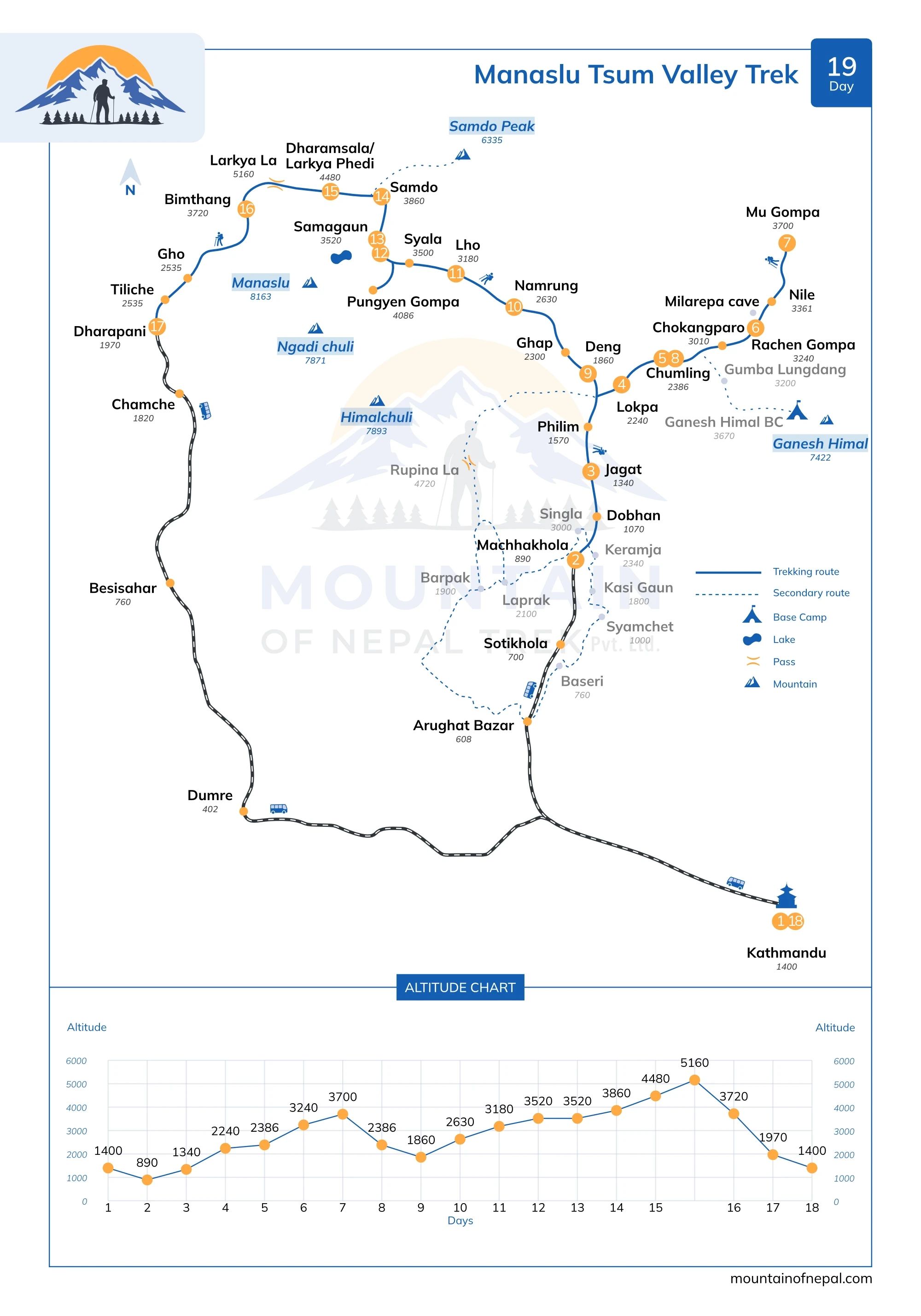
The Manaslu Tsum Valley Trek is one of Nepal’s most culturally rich and naturally diverse trekking routes, combining the remote beauty of the Tsum Valley with the classic Manaslu Circuit. Organized by Mountain of Nepal, this 19-day journey takes trekkers through ancient Tibetan-influenced villages, deep river gorges, and high Himalayan passes. Starting from Kathmandu, the trail gradually ascends through Machha Khola, Jagat, and Lokpa into the hidden Tsum Valley, where spiritual landmarks like Rachen Gompa and Mu Gompa offer a rare glimpse into preserved Buddhist traditions.
As the trek continues, it merges with the Manaslu Circuit, leading toward high-altitude settlements like Samagaon and Samdo, before crossing the challenging Larkya La Pass (5160m). This trek stands out because it combines both cultural immersion and high-altitude adventure without the crowds of more commercial routes. Trekkers experience dramatic changes in landscape—from lush forests to alpine terrain—making it a complete Himalayan journey.
The ideal seasons for the Manaslu Tsum Valley Trek are spring (March to May) and autumn (September to November). During these periods, the weather is stable, the skies are clear, and the mountain views are at their best. Spring brings blooming rhododendron forests and mild temperatures, while autumn offers crisp air and excellent visibility after the monsoon clears the dust from the atmosphere.
Winter (December to February) is possible but challenging due to heavy snowfall, especially near Larkya La Pass. The monsoon season (June to August) brings heavy rain, landslides, and leeches in lower regions, making trekking less comfortable and sometimes risky. For the best experience, Mountain of Nepal recommends planning your trek during peak seasons when both safety and scenery are optimal.
Best Time Summary:
This trek is considered moderately to highly difficult due to its long duration, remote trails, and high altitude. Trekkers must be physically fit and prepared for daily walks of 6–8 hours, with gradual altitude gain and a demanding crossing of Larkya La Pass. Acclimatization days, such as in Samagaon, are crucial to reduce the risk of altitude sickness.
Transportation involves a scenic but rugged drive from Kathmandu to Machha Khola and a return drive from Dharapani to Kathmandu. Roads can be rough, especially in remote areas, but they offer incredible views of rural Nepal. Mountain of Nepal ensures safe and comfortable transportation arrangements, including experienced drivers and well-maintained vehicles.
Key Points:
Accommodation during the trek is primarily in teahouses, which are simple yet comfortable lodges run by local families. Rooms are usually twin-sharing with basic facilities, and common dining areas provide warmth and social interaction. In remote areas like Tsum Valley, facilities are more basic but still welcoming.
Food options are surprisingly varied, including traditional Nepali dal bhat, Tibetan bread, noodles, soups, and some Western dishes. Meals are freshly prepared, providing the necessary energy for trekking. With Mountain of Nepal, hygiene and quality are prioritized to ensure a safe and enjoyable experience.
What to Expect:
Since this trek lies in restricted areas, several permits are required. These include the Manaslu Restricted Area Permit, Tsum Valley Restricted Area Permit, Manaslu Conservation Area Permit (MCAP), and Annapurna Conservation Area Permit (ACAP). These permits help regulate tourism and preserve the region’s natural and cultural heritage.
Trekkers must travel with a licensed guide and in a group of at least two people. Mountain of Nepal handles all permit arrangements, ensuring a hassle-free process so trekkers can focus on enjoying their journey.
Required Permits:
Choosing the Manaslu Tsum Valley Trek means stepping into a less-explored region of Nepal that offers both adventure and cultural depth. Unlike crowded trekking routes, this trail provides tranquility, authenticity, and a deeper connection with nature and local traditions. The blend of high mountain passes and sacred valleys makes it a truly unique experience.
With Mountain of Nepal, trekkers benefit from expert guides, well-planned itineraries, and a commitment to safety and sustainability. The company focuses on personalized service, ensuring each trekker enjoys a memorable and meaningful journey in the Himalayas.
Reasons to Choose:
Upon arrival in Kathmandu, a representative from Mountain of Nepal will warmly welcome you at the airport and transfer you to your hotel. After check-in, you can relax and recover from your journey or take a short walk through the lively streets of Thamel, a popular tourist hub filled with shops, cafes, and cultural sights. In the evening, you’ll attend a pre-trek briefing where your guide will explain the upcoming adventure, check your equipment, and answer any questions. This day is also a great opportunity to experience Nepalese hospitality and cuisine while preparing mentally for the trek ahead.
After an early breakfast, you’ll begin a scenic drive from Kathmandu toward Machha Khola. The journey is long but incredibly rewarding, taking you through winding mountain roads, terraced farmlands, and traditional villages. As you follow the Trishuli River and later the Budhi Gandaki River, you’ll witness changing landscapes from urban settings to rural hills. Occasional stops allow you to stretch and enjoy local tea houses along the way. The road becomes rougher as you approach Machha Khola, a small riverside settlement where you will spend the night, preparing for the trekking portion of your journey.
Your trek officially begins today as you follow the Budhi Gandaki River upstream. The trail includes several ascents and descents, crossing suspension bridges and passing through small Gurung villages. You’ll walk through lush forests and rocky paths while enjoying the soothing sound of the river below. Along the way, you may encounter mule caravans transporting goods to higher regions. After several hours of trekking, you reach Jagat, a charming village with stone-paved streets that serves as an entry point to the Manaslu Conservation Area. Here, your permits will be checked before settling into your lodge.
Today’s trek brings noticeable changes in both elevation and culture as you gradually ascend toward Lokpa. The trail climbs through dense forests, crossing ridges and offering occasional views of waterfalls and steep valleys. You’ll pass through traditional villages where Tibetan Buddhist culture begins to emerge more prominently. As you gain altitude, the air becomes cooler and the surroundings more serene. Lokpa is a quiet village that marks the gateway to the hidden Tsum Valley, offering your first glimpse into this remote and culturally rich region.
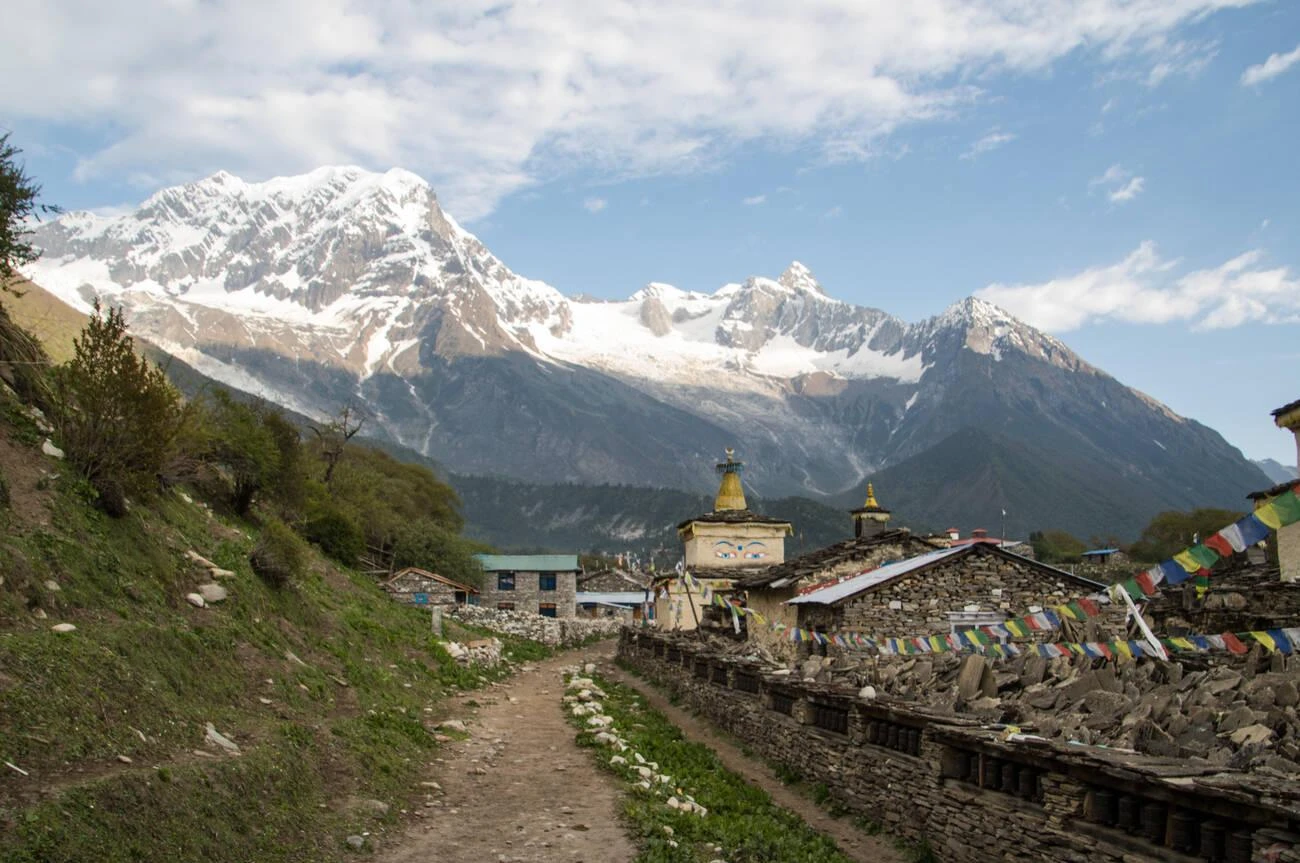
Descending from Lokpa into the Tsum Valley, you’ll traverse a beautiful trail surrounded by pine and rhododendron forests. The route includes suspension bridges and narrow paths with stunning views of Ganesh Himal in the distance. As you approach Chumling, you’ll notice intricately carved mani walls and prayer flags fluttering in the wind, reflecting the strong Buddhist influence. Chumling is a picturesque village with traditional stone houses, monasteries, and friendly locals. This peaceful setting provides a deeper cultural experience and a chance to interact with the Tsumba community.
The trail ascends steadily today, taking you deeper into the Tsum Valley. You’ll pass through villages like Chhokang Paro, where the valley opens up to wide landscapes and panoramic mountain views. Along the way, you’ll see ancient monasteries, chortens, and prayer wheels that highlight the spiritual significance of the region. After several hours of trekking, you arrive at Rachen Gompa, a serene nunnery monastery set in a tranquil environment. The peaceful atmosphere and surrounding mountains make it an ideal place for reflection and rest.
Today is one of the most culturally enriching days of the trek. You’ll continue ascending toward the upper Tsum Valley, passing through the village of Nile, one of the last settlements before the Tibetan border. From there, you hike further up to Mu Gumpa, the highest and most remote monastery in the region. The monastery offers incredible views of the surrounding Himalayan peaks and provides insight into centuries-old Buddhist traditions. After exploring Mu Gumpa, you return to Nile for the night, carrying unforgettable memories of this sacred place.
Retracing your steps, you begin the descent back down the Tsum Valley. The return journey offers a different perspective of the landscapes you passed earlier, with more opportunities to appreciate the valley’s beauty. The downhill trek is easier on the lungs but still requires careful footing. You’ll pass through familiar villages and enjoy interactions with locals once again. By the time you reach Chumling, you’ll feel a sense of accomplishment for having explored one of Nepal’s most hidden valleys.
Leaving the Tsum Valley behind, you rejoin the Manaslu Circuit trail and head toward Deng. The route involves descending through forests and crossing rivers, gradually transitioning back to the Budhi Gandaki Valley. The landscape becomes greener and more humid as you lose altitude. Deng is a small village inhabited mainly by Tibetan-influenced communities, offering insight into their lifestyle and traditions. The day’s trek is moderately long but rewarding with its diverse scenery.
Today’s trail climbs steadily through forests of bamboo and rhododendron, with occasional glimpses of snow-capped peaks. You’ll pass through villages like Rana and Bihi Phedi, where you can observe traditional Himalayan lifestyles. As you approach Namrung, the scenery becomes more alpine, and the air noticeably cooler. Namrung is a beautiful village with stone houses and spectacular views of the surrounding mountains, making it a perfect place to rest and acclimatize.
The trek from Namrung to Lho offers some of the first clear views of Mount Manaslu. The trail passes through lush forests and charming villages like Lihi and Sho, where you’ll see mani walls and prayer flags. As you gain altitude, the vegetation becomes sparser, revealing dramatic mountain vistas. Lho is a culturally rich village known for its monastery and stunning views of Manaslu, providing a memorable overnight stay.
Continuing along the trail, you’ll gradually ascend to Samagaon, one of the largest and most important villages in the Manaslu region. The route offers breathtaking views of glaciers and surrounding peaks. You’ll pass through Shyala village, where the panorama of the Himalayas is especially impressive. Upon reaching Samagaon, you’ll notice its strong Tibetan influence, with monasteries, yak pastures, and traditional homes. This village will serve as your base for acclimatization.
To adapt to the high altitude, you’ll spend a rest day in Samagaon with optional hikes. You can visit Birendra Lake, a stunning turquoise glacial lake, or hike to Pungen Monastery for incredible views of Manaslu. For the more adventurous, a longer hike to Manaslu Base Camp is possible, offering a closer look at the towering Himalayas. These excursions help your body acclimatize while providing unforgettable scenery and experiences.
Today’s trek is relatively short but crucial for acclimatization. The trail gradually ascends along the Budhi Gandaki River, passing through barren landscapes and yak pastures. You’ll notice the environment becoming more rugged and alpine. Samdo is a small village near the Tibetan border, offering insights into cross-border trade and culture. The afternoon can be spent exploring the area or resting in preparation for higher altitudes.
The trail climbs steadily toward Larkya Phedi, also known as Dharamsala, the base for crossing the high pass. The landscape is stark and dramatic, with glacial moraines and sweeping mountain views. The trek is shorter to conserve energy for the challenging day ahead. Upon arrival, you’ll rest, hydrate, and prepare for the early morning ascent over Larkya La Pass.
This is the most demanding and rewarding day of the trek. Starting early, you ascend to Larkya La Pass, one of the highest points of the journey. The climb is steep and challenging, but the panoramic views of the Himalaya peaks are breathtaking. After celebrating your achievement at the pass, you descend toward Bimthang through glacial valleys and snow-covered landscapes. This long day tests your endurance but offers unparalleled beauty.
The descent continues through lush forests, rhododendron groves, and fertile valleys. As you lose altitude, the air becomes warmer and more comfortable. You’ll pass through villages like Tilije, where the trail merges with the Annapurna Circuit route. Dharapani is a bustling village with better facilities, marking the end of your trekking adventure.
After breakfast, you begin the return journey to Kathmandu by road. The drive offers a final chance to enjoy Nepal’s diverse landscapes, from mountain views to river valleys and rural settlements. Upon arrival in Kathmandu, you’ll be transferred to your hotel, where you can relax, celebrate your achievement, and enjoy a farewell dinner organized by Mountain of Nepal.
Your incredible journey comes to an end today. A representative from Mountain of Nepal will transfer you to the airport for your departure. As you leave Nepal, you carry unforgettable memories of the Manaslu Tsum Valley Trek, from its remote valleys and rich culture to its majestic mountain scenery.
Your Start Date is the day you land in Nepal, and your End Date is when you fly home.
If the set Manaslu Tsum Valley Trek group dates don’t suit your schedule, we can offer alternative dates upon request.
Proper layering is important to stay warm and comfortable in changing mountain weather.
Good footwear makes trekking easier and safer.
The right gear keeps you safe, comfortable, and prepared.
Lightweight but important items keep you clean, healthy, and comfortable.
Keep important items safe and easy to reach.
The Manaslu Tsum Valley Trek stands out for its combination of remote wilderness, rich Tibetan-influenced culture, and relatively fewer crowds compared to popular routes like the Everest or Annapurna regions. The hidden Tsum Valley was only opened to trekkers in 2008, which means it has preserved its ancient traditions, monasteries, and way of life. With the Mountain of Nepal, trekkers get a deeper cultural immersion, visiting sacred monasteries and interacting with local communities while enjoying pristine Himalayan landscapes. The trek also offers diverse terrain, from lush forests to high alpine passes, making it both visually and culturally rewarding.
This trek is considered moderately challenging to strenuous, mainly due to its long duration, high altitude, and rugged terrain. Trekkers walk for several hours daily, often on steep ascents and descents, with the highest point being Larkya La Pass at 5,160 meters. While no technical climbing skills are required, good physical fitness and prior trekking experience are highly recommended. The mountain of Nepal ensures proper acclimatization days and experienced guides to help manage altitude risks, making the trek achievable for well-prepared adventurers who are ready for a physically demanding journey.
Yes, altitude sickness is a potential risk due to the high elevations reached during the trek. Symptoms can include headaches, nausea, dizziness, and fatigue. Proper acclimatization is essential, which is why the itinerary includes rest days, such as in Samagaon. Mountain of Nepal prioritizes safety by employing experienced guides trained in altitude awareness and first aid. They monitor trekkers closely and adjust the pace if necessary, ensuring a safe ascent and minimizing the risk of serious altitude-related complications.
The trek typically takes around 18 to 20 days, depending on the itinerary and pace. This includes travel days, trekking, and acclimatization periods. The extended duration allows trekkers to fully explore both the Manaslu Circuit and the hidden Tsum Valley without rushing. Mountain of Nepal designs well-paced itineraries that balance adventure with safety, ensuring trekkers have enough time to adapt to altitude and enjoy the experience fully.
Yes, comprehensive travel insurance is highly recommended and often mandatory when trekking in remote Himalayan regions. Your insurance should cover high-altitude trekking (above 5,000 meters), emergency evacuation, medical expenses, and trip cancellations. Due to the remoteness of the Manaslu region, helicopter evacuation may be required in case of emergencies. Mountain of Nepal strongly advises trekkers to arrange proper insurance coverage before arrival to ensure peace of mind throughout the journey.
While beginners can attempt this trek, it is better suited for those with some prior trekking experience due to its length and altitude. First-time trekkers should prepare thoroughly with physical training and possibly start with shorter treks before attempting this one. With the support of Mountain of Nepal, including experienced guides and a well-structured itinerary, even less experienced trekkers can complete the journey successfully if they are determined, well-prepared, and willing to adapt to the challenges.
Yes, multiple permits are required for this trek due to its restricted area status. Trekkers need a Manaslu Restricted Area Permit, a Tsum Valley Restricted Area Permit, a Manaslu Conservation Area Permit (MCAP), and an Annapurna Conservation Area Permit (ACAP). These permits help regulate tourism and protect the region’s natural and cultural heritage. When booking with Mountain of Nepal, all permit arrangements are handled efficiently, allowing you to focus entirely on enjoying your trekking experience without administrative concerns.
The best seasons for this trek are spring (March to May) and autumn (September to November). During these periods, the weather is stable, the skies are clear, and the mountain views are at their best. Spring offers blooming rhododendron forests, while autumn provides crisp air and excellent visibility. Winter trekking is possible but extremely cold at higher altitudes, especially around Larkya La Pass, while the monsoon season brings heavy rain, landslides, and poor visibility. Mountain of Nepal recommends planning your trek during peak seasons for the safest and most enjoyable experience.
Accommodation along the Manaslu Tsum Valley Trek mainly consists of teahouses or lodges, which are simple but comfortable. Rooms are typically twin-sharing with basic bedding, and bathrooms are often shared. As you go higher, facilities become more basic, reflecting the remoteness of the region. Despite the simplicity, the hospitality of local hosts is warm and welcoming. Mountain of Nepal carefully selects the best available lodges to ensure cleanliness, comfort, and a pleasant stay throughout your journey.
Teahouses offer a variety of meals, including traditional Nepali dishes like dal bhat, as well as international options such as pasta, noodles, soups, and pancakes. The food is nutritious and designed to provide energy for long trekking days. As you ascend, menu options may become more limited, but meals remain hearty and satisfying. Mountain of Nepal encourages trekkers to eat well and stay hydrated, as proper nutrition plays a key role in maintaining energy levels and preventing altitude-related issues.
Yes, hiring a licensed guide is mandatory for this trek as it lies in a restricted region. Trekkers must also travel in a group of at least two people with a registered trekking agency. Porters are optional but highly recommended to carry heavy stuff, allowing you to focus on the trek itself. Mountain of Nepal provides experienced guides and reliable porters who enhance your journey with local knowledge, cultural insights, and logistical support.
Packing properly is crucial for a successful trek. Essential items include layered clothing for varying temperatures, a good quality sleeping bag, trekking boots, Down jackets, rain gear, and personal stuff such as toiletries and medications. Accessories like trekking poles, sunglasses, and sunscreen are also important. Mountain of Nepal provides a detailed packing list before your trip, ensuring you are fully prepared for the diverse conditions encountered along the trail.


 (2)
(2)  100% recommend (0)
 (0)
(0)