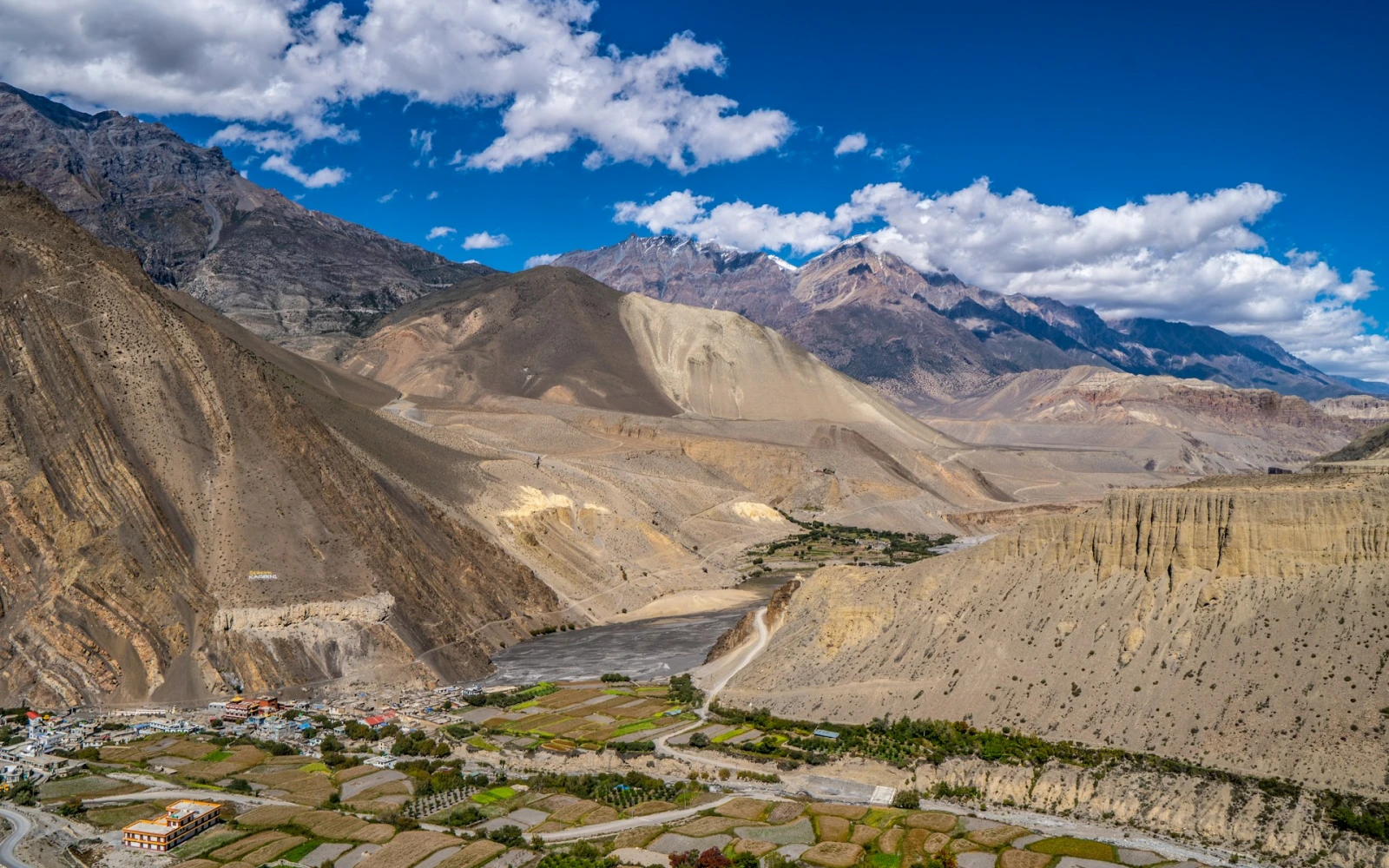
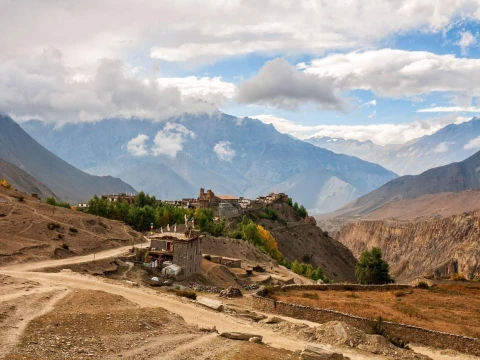
The Lower Mustang Trek is one of Nepal’s most fascinating journeys, combining dramatic Himalayan landscapes with deep cultural richness. Organized by Mountain of Nepal, this itinerary is designed to give you a gradual and immersive experience of the Mustang region, starting from the vibrant capital Kathmandu and extending into the windswept Kali Gandaki valley. The route passes through diverse terrain—from lush hills around Pokhara to the arid, desert-like landscapes of Mustang that resemble Tibetan plateaus.Your journey begins with cultural exploration in Kathmandu Valley, followed by a scenic drive to Pokhara and a short but thrilling flight to Jomsom. From there, the trek gradually unfolds through traditional villages like Kagbeni and reaches the sacred site of Muktinath. This region is not only visually striking but also spiritually significant for both Hindus and Buddhists, offering a rare blend of natural and religious experiences.Scenic flight between Pokhara and JomsomWalk through the Kali Gandaki Gorge (the world’s deepest)Visit the sacred Muktinath TempleExperience Tibetan-influenced cultureStunning views of the Nilgiri and Dhaulagiri rangesBest Season for Lower Mustang TrekChoosing the right season can significantly enhance your trekking experience in Lower Mustang. The most favorable times are spring (March to May) and autumn (September to November). During these periods, the weather is stable, the skies are clear, and the mountain views are at their best. Spring also brings blooming rhododendrons along the lower trails, adding vibrant colors to your journey.Interestingly, Lower Mustang lies in a rain-shadow area, which makes it suitable even during the monsoon season (June to August). While other regions of Nepal receive heavy rainfall, Mustang remains relatively dry, offering a unique trekking opportunity when most trails are less crowded. Winter (December to February), however, can be quite cold, especially in higher elevations like Muktinath, where temperatures drop below freezing.Best times at a glance:Spring: Warm, blooming landscapesAutumn: Clear skies, best mountain viewsMonsoon: Less crowded, dry Mustang regionWinter: Cold but quiet and less busyLower Mustang Trek Difficulty and TransportationThe Lower Mustang Trek is considered a moderate trek, making it suitable for beginners with reasonable fitness levels. The trails are well-defined and do not require technical climbing skills, but altitude and daily walking (5–7 hours) can still be challenging. The highest point, Muktinath at 3,900 meters, requires careful acclimatization, which is well-managed in this itinerary.Transportation is a key part of the experience. The drive from Kathmandu to Pokhara offers scenic views of rivers and hills, while the flight from Pokhara to Jomsom is a highlight in itself—short but incredibly scenic. The return journey follows the same route, ensuring a balanced mix of trekking and travel without excessive physical strain.Difficulty & transport notes:Moderate difficulty, beginner-friendlyMax altitude: 3,900 m (Muktinath)Scenic drives and short flights includedNo technical climbing requiredGradual acclimatization is built into the itineraryFood and Accommodation for Lower Mustang TrekFood and accommodation along the Lower Mustang Trek are comfortable and cater well to trekkers. You will stay in local teahouses and lodges that provide basic but cozy rooms, usually with twin beds and shared bathrooms. In popular stops like Jomsom and Muktinath, accommodations are slightly more developed, offering better facilities.Meals are typically served in communal dining areas and include a mix of Nepali and international dishes. The staple meal is Dal Bhat (rice, lentils, vegetables), which is nutritious and energy-rich. You can also find noodles, soups, pancakes, and even pasta in some places. While options become simpler at higher elevations, the quality remains satisfying.What to expect:Teahouse lodging with basic comfortNutritious meals like Dal BhatHot drinks available (tea, coffee)Limited luxury but an authentic experienceFriendly local hospitalityLower Mustang Trek PermitsTo trek in the Lower Mustang region, you need specific permits regulated by the Nepalese government. These permits ensure environmental conservation and support local communities. With Mountain of Nepal, the process is handled smoothly, so you don’t have to worry about paperwork.The main permits required are the Annapurna Conservation Area Permit (ACAP) and the TIMS (Trekkers’ Information Management System) card. These documents are checked at various points along the trail, so it’s important to carry them at all times.Permit requirements:ACAP (Annapurna Conservation Area Permit)TIMS CardPassport copies and photos neededOrganized easily through your trekking companyMandatory checkpoints along the routeWhy Choose Lower Mustang TrekThe Lower Mustang Trek stands out as a unique Himalayan experience that blends accessibility with extraordinary landscapes. Unlike more demanding treks, it offers high-altitude adventure without extreme difficulty, making it ideal for a wide range of travelers. The cultural richness, influenced heavily by Tibetan traditions, adds a deeper dimension to the journey beyond just scenery.Choosing a trusted operator like Mountain of Nepal ensures a well-organized, safe, and enriching experience. From logistics to local insights, having expert guidance allows you to fully immerse yourself in the trek without stress. Whether it’s the sacred aura of Muktinath or the dramatic Kali Gandaki valley, this trek delivers a memorable Himalayan journey.Why it’s worth it:Moderate and accessible trekking routeUnique desert-like Himalayan landscapeRich cultural and spiritual experienceLess crowded than other popular treksWell-supported by experienced guides
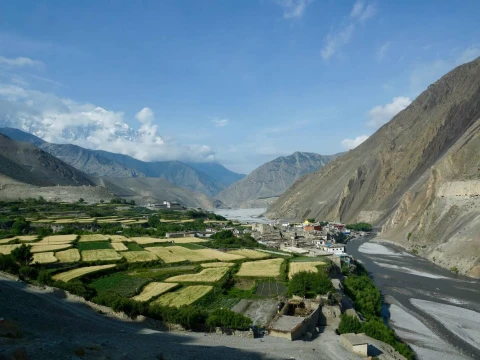
The Upper Mustang Trek is one of Nepal’s most unique and culturally rich journeys, taking you deep into the former Kingdom of Mustang. Starting from Kathmandu, the route follows a scenic drive to Pokhara, then a short but dramatic flight to Jomsom. From there, trekkers walk through arid landscapes, ancient caves, and centuries-old monasteries, eventually reaching Lo Manthang. The region lies in the rain shadow of the Himalayas, giving it a desert-like terrain unlike other parts of Nepal.This trek stands out for its preserved Tibetan culture, remote villages, and restricted access, making it feel like stepping back in time. With Mountain of Nepal, trekkers benefit from well-organized logistics and expert local guides who provide deep insights into the region’s history and traditions. The itinerary you provided ensures gradual acclimatization while showcasing the best of Mustang.Ancient monasteries and sky cavesUnique desert-like Himalayan landscapesCultural immersion in Tibetan-influenced villagesScenic flight between Pokhara and JomsomBest Season for Upper Mustang TrekThe best time for the Upper Mustang Trek is from May to October, which is quite different from other trekking regions in Nepal. Because Upper Mustang lies in a rain-shadow area, it remains relatively dry even during the monsoon season. This makes it one of the few treks ideal for summer travel when other trails are wet and slippery.Spring (March–May) and autumn (September–November) are also excellent, offering clear mountain views and comfortable temperatures. Traveling with Mountain of Nepal during these seasons ensures proper planning around weather conditions and local festivals, such as the famous Tiji Festival in Lo Manthang.Best time summary:May–August: Ideal due to dry conditionsSpring: Blooming landscapes and mild weatherAutumn: Clear skies and stable climateUpper Mustang Trek Difficulty and TransportationThe Upper Mustang Trek is considered moderate in difficulty, suitable for trekkers with a reasonable level of fitness. Daily walking ranges from 4 to 7 hours on rocky and windy trails. The altitude gradually increases, with the highest point around 3,800 meters, so proper acclimatization is essential.Transportation is a mix of road and air travel. The journey begins with a drive from Kathmandu to Pokhara, followed by a short but scenic flight to Jomsom. Mountain of Nepal ensures smooth transfers, reliable flights, and contingency plans in case of weather delays, which are common in mountainous regions.Key points:Moderate trekking level (no technical climbing)Daily hikes of 4–7 hoursFlight: Pokhara–Jomsom (weather dependent)Scenic road journey between Kathmandu and PokharaFood and Accommodation for Upper Mustang TrekAccommodation during the trek is mainly in teahouses and lodges, offering basic but comfortable facilities. Rooms are typically twin-sharing with simple bedding, and common dining areas are used for meals and socializing. In places like Lo Manthang, accommodations are slightly more developed due to its popularity.Food options include a mix of Nepali and Tibetan dishes such as dal bhat, noodles, soups, and bread. With Mountain of Nepal, trekkers are guided to hygienic and reliable lodges, ensuring a safe and enjoyable experience even in remote areas.What to expect:Basic teahouse accommodationNutritious meals (dal bhat, soups, noodles)Limited but sufficient amenitiesWarm hospitality from localsUpper Mustang Trek PermitsUpper Mustang is a restricted area, requiring special permits for entry. Trekkers must obtain a Restricted Area Permit (RAP) along with an Annapurna Conservation Area Permit (ACAP). These permits help regulate tourism and preserve the region’s unique culture and environment.Booking with Mountain of Nepal simplifies this process, as they handle all permit arrangements, documentation, and government requirements. This ensures a hassle-free trekking experience and allows you to focus entirely on the journey.Required permits:Restricted Area Permit (RAP)Annapurna Conservation Area Permit (ACAP)Licensed guide (mandatory)Why Choose Upper Mustang TrekThe Upper Mustang Trek offers a rare combination of natural beauty, cultural heritage, and exclusivity. Unlike crowded trekking routes, Mustang provides a quieter and more authentic experience. The dramatic landscapes, ancient traditions, and historical significance make it a once-in-a-lifetime adventure.Choosing the Mountain of Nepal adds significant value to your trek. Their experienced team, personalized service, and deep local knowledge ensure safety, comfort, and cultural enrichment throughout the journey. They also tailor itineraries to match your pace and preferences, making the trek both enjoyable and memorable.Reasons to choose:Unique landscape and Tibetan cultureLess crowded trekking routeWell-organized logistics with expert guidesPersonalized service and safety assurance


 (2)
(2)  100% recommend (0)
 (0)
(0)