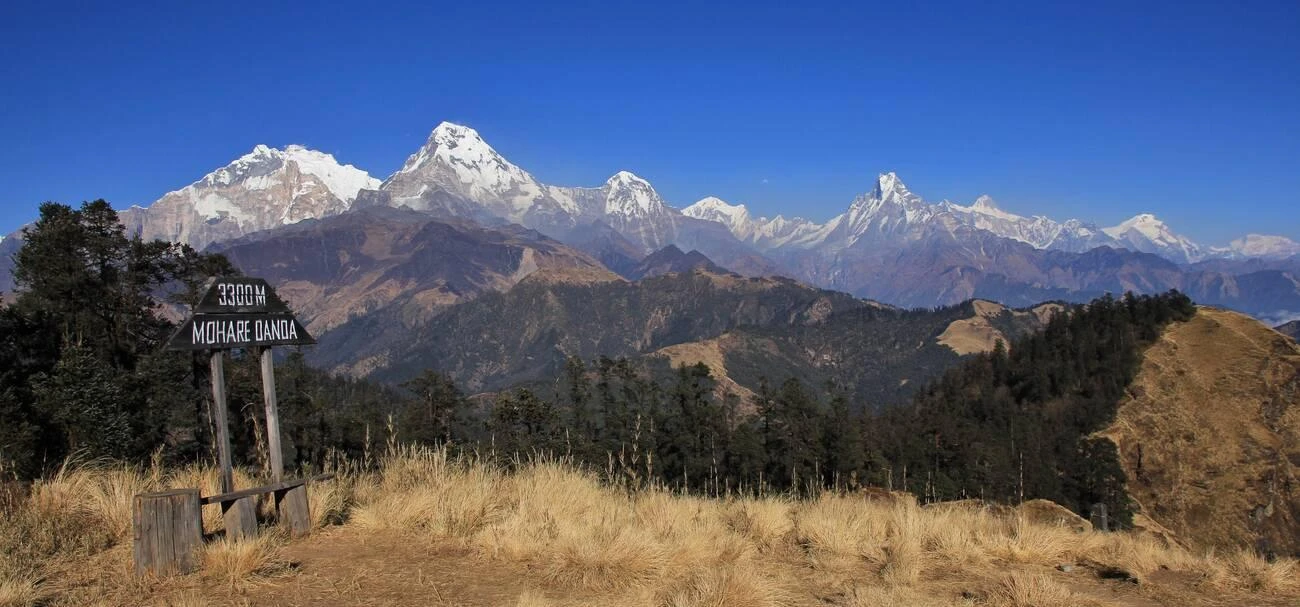
Mohare Danda (3,300 m / 10,827 ft)
Poon Hill (3,210 m / 10,531 ft)
Khopra Danda (3,660 m / 11,811 ft)
Mulde Viewpoint / Dobato (3,650 m / 11,975 ft)
Cultural & Village Experiences
Scenic Diversity
The Annapurna Four Viewpoints Trek is a scenic trekking journey in the Annapurna region of Nepal that connects four iconic vantage points: Mohare Danda, Poon Hill, Khopra Danda, and Mulde Peak, offering some of the best panoramic Himalayan views. The route passes through traditional villages, dense rhododendron forests, terraced farmlands, and high alpine ridges, creating a perfect blend of culture and nature. The trek is designed to provide multiple sunrise and sunset viewpoints of the Annapurna and Dhaulagiri mountain ranges.
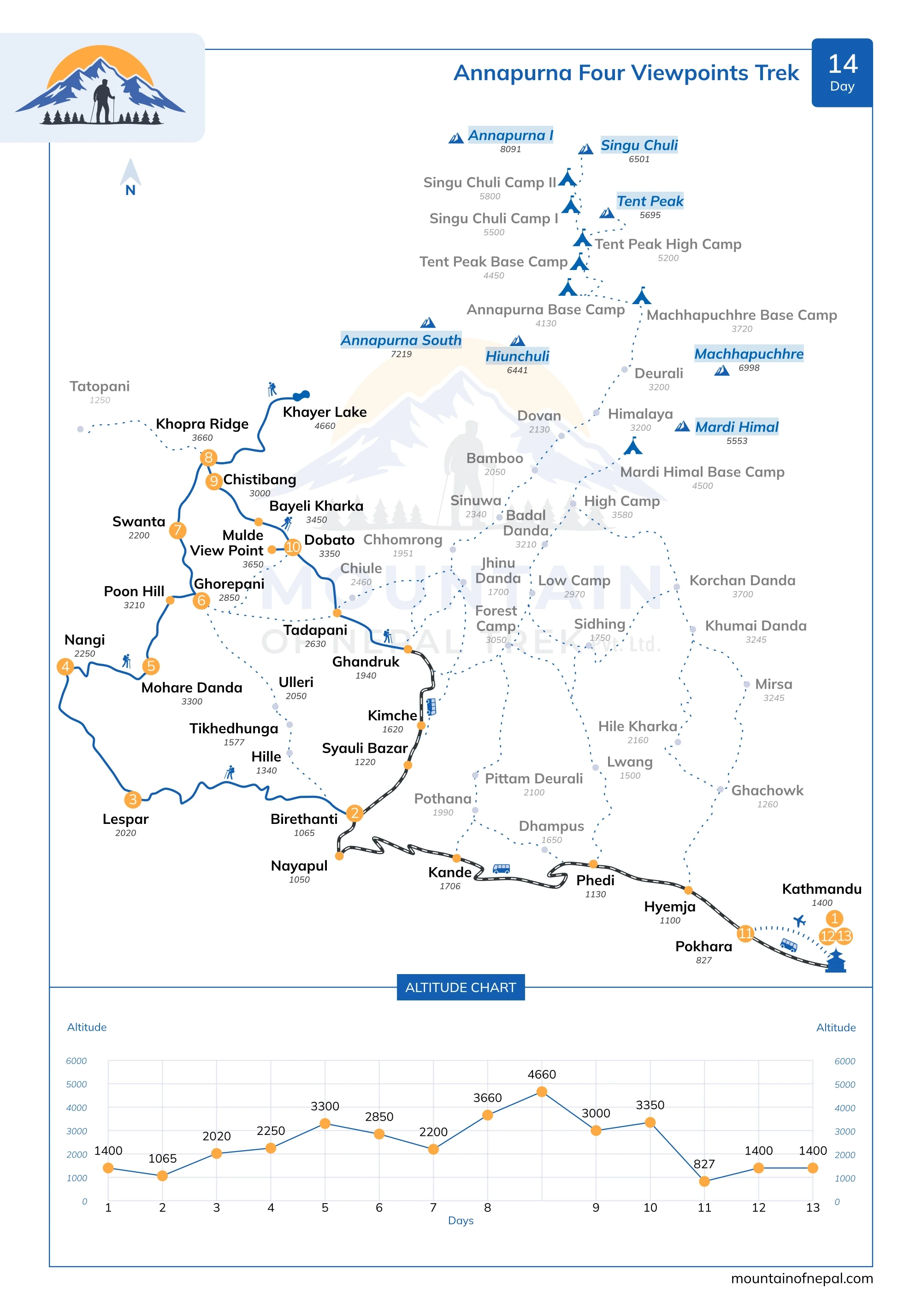
This itinerary starts from the bustling capital city of Kathmandu and travels through Pokhara before entering remote mountain trails. Key destinations like Ghorepani, Poon Hill, Mohare Danda, Khopra Danda, and Mulde Peak form the backbone of the trek.
The best time to undertake the Annapurna Four Viewpoints Trek is during spring (March–May) and autumn (September–November). In spring, the entire trail blooms with vibrant rhododendron flowers, while autumn offers crystal-clear skies and the most stable weather conditions. These seasons provide the best visibility for Himalayan peaks and comfortable trekking temperatures.
Winter (December–February) is also possible, but it can be cold at higher elevations like Khopra Danda and Mohare Danda. Snow may block trails near viewpoints, but it offers a peaceful, less crowded experience. The monsoon season (June–August) is generally not recommended due to slippery trails, leeches, and limited mountain visibility.
Short Highlights:
The Annapurna Four Viewpoints Trek is considered moderate to moderately challenging. It involves daily walking of 5–8 hours through steep ascents, stone steps, and high ridgelines. The highest elevation reaches around 3,650 meters at Mulde Peak, so altitude adaptation is important, though the risk of severe altitude sickness is relatively low compared to higher Himalayan treks.
Transportation begins with a drive from Kathmandu to Pokhara, followed by a journey to Nayapul. From there, trekking starts toward Birethanti and continues through remote villages. The return leg includes a descent to Ghandruk, followed by a drive back to Pokhara and onward transport to Kathmandu.
Short Highlights:
Accommodation on this trek is primarily in community lodges and teahouses, which are simple but comfortable. Villages like Nangi Village, Khopra Danda, and Ghorepani offer basic rooms with twin beds, shared bathrooms, and warm dining halls. In higher elevations, facilities become more rustic, but hospitality remains warm and welcoming.
Food is freshly prepared and typically includes Nepali staples like dal bhat (rice, lentils, vegetables), noodles, soups, potatoes, and Tibetan bread. In lower villages, menus are more varied, while higher regions focus on energy-rich meals. Hot drinks like tea, coffee, and ginger lemon honey are widely available to keep trekkers warm.
Short Highlights:
To trek in the Annapurna region, trekkers need two essential permits: the Annapurna Conservation Area Permit (ACAP) and the Trekkers’ Information Management System (TIMS) card. These permits help regulate tourism and support conservation efforts in the region.
The trekking agency Mountain of Nepal handles all permit arrangements for travelers, ensuring a smooth and hassle-free process. Permits are checked at multiple entry points along the trail, especially near conservation checkpoints in villages like Birethanti and Ghorepani.
Short Highlights:
The Annapurna Four Viewpoints Trek is unique because it combines four major Himalayan viewpoints in one route, offering diverse perspectives of the Annapurna and Dhaulagiri ranges. Unlike standard treks, this itinerary is less crowded and emphasizes community-based eco-tourism, making it more sustainable and culturally immersive.
Choosing Mountain of Nepal ensures professional guidance, experienced local guides, well-planned logistics, and safety-focused trekking support. The company also promotes responsible tourism by staying in community lodges and supporting local villages throughout the route.
Short Highlights:
Upon arrival in Kathmandu, a representative from Mountain of Nepal will welcome you at the airport and transfer you to your hotel in the city center. After check-in, you can rest or take a light walk around the bustling streets of Thamel, known for trekking shops and cultural energy. In the evening, a short briefing session is conducted regarding the Annapurna Four Viewpoints Trek itinerary, safety guidelines, and trekking preparation. This day is important for recovery after travel and for adjusting to Nepal’s atmosphere before the adventure begins.
After an early breakfast, you drive from Kathmandu to Pokhara, enjoying scenic highway views of rivers, hills, and rural settlements. From Pokhara, the journey continues by road to Nayapul and then a short trek begins toward Birethanti. The trail follows riverside paths, small bridges, and terraced fields. This gentle hiking introduction helps your body gradually adapt to trekking conditions. Overnight stay in a local teahouse offers a peaceful rural atmosphere, where you experience traditional Nepali hospitality and prepare mentally for the higher elevations ahead.
Today’s trek takes you deeper into quieter hills as you move toward Lespar. The trail gradually ascends through forests, small Gurung settlements, and farmland. You will notice fewer crowds compared to mainstream trekking routes, making the experience more immersive and natural. The hike usually takes 7–8 hours, depending on pace and weather conditions. Along the way, you can observe daily rural life, yak grazing areas, and panoramic hillside views. Overnight at Lespar offers a calm environment surrounded by nature, ideal for rest and acclimatization.
The trail continues through forested ridges and scenic hill paths toward Nangi Village. This village is known for community tourism initiatives and sustainable living practices. The trek takes approximately 5–6 hours and includes gradual ascents and occasional descents. You will pass through rhododendron forests and enjoy wide views of the surrounding valleys. Upon arrival, you may interact with local villagers involved in eco-projects, schools, and handicrafts. An overnight stay in a community lodge provides a meaningful cultural exchange experience while supporting local development.
Today’s journey leads to one of the most rewarding viewpoints of the trek, Mohare Danda. The trail becomes steeper, passing through dense forests filled with birds and seasonal flowers. As you ascend, Himalayan views gradually open up, revealing peaks of the Annapurna and Dhaulagiri ranges. The 5–6 hour trek is physically demanding but highly rewarding. At the top, panoramic sunset views create a memorable experience. Overnight at Mohare Danda offers one of the best mountain sunrise and sunset perspectives in the entire region.
Early morning begins with a hike to Poon Hill to witness one of Nepal’s most iconic sunrises over the Annapurna and Dhaulagiri ranges. After spending time at the viewpoint, you descend and continue trekking toward Ghorepani. The trail passes through forests and stone stairways, taking about 3 hours total after the viewpoint visit. Ghorepani is a lively trekking settlement with teahouses and mountain views. The evening is free to relax and recover from the early morning climb.
Today’s trail moves toward the quieter and less-traveled region of Swata Village. The trek is long, around 7–8 hours, but rewarding in terms of cultural exposure and natural beauty. You walk through forests, terraced farmland, and small hillside communities. The absence of heavy tourist traffic allows a more authentic experience of rural Nepal. You will likely encounter friendly locals engaged in agriculture and livestock farming. Overnight in Swata Village offers a peaceful environment with simple but warm hospitality, surrounded by green hills and fresh mountain air.
The journey continues upward toward Khopra Danda, one of the highlights of the trek. The trail ascends steeply through rhododendron forests and alpine landscapes. Depending on the pace, the trek takes around 5–6 hours. As you reach the ridge, breathtaking panoramic views of Annapurna South, Nilgiri, and Dhaulagiri ranges open up. The isolated setting makes Khopra Danda a peaceful high-altitude retreat. Sunset views here are particularly stunning, and the lodge stay provides a memorable Himalayan experience above the clouds.
Today is a challenging but rewarding excursion toward Khayer Lake. The trail involves steep climbs, rocky terrain, and high-altitude walking. After reaching the sacred lake, you return to Chistibung for an overnight stay. The total trek takes around 7–8 hours. The lake is considered spiritually significant and offers dramatic mountain reflections. Chistibung provides a simple but comfortable resting place surrounded by alpine meadows and grazing animals.
Today’s route ascends toward Dobato and continues toward Mulde Peak. The 6–7 hour trek is filled with forest trails, ridgelines, and occasional steep sections. Mulde Peak is one of the best vantage points in the region, offering 360-degree views of the Annapurna and Dhaulagiri ranges. The sunset and sunrise from here are exceptional, making it a highlight for photography and mountain appreciation. Overnight stay provides a quiet, high-altitude experience surrounded by alpine silence.
The trail descends toward Ghandruk Village, a culturally rich settlement known for stone houses and mountain views. The trek takes about 7 hours through forests and terraced landscapes. Upon arrival, you explore the village and enjoy views of Annapurna South and Machhapuchhre. After lunch, you drive approximately 2.5 hours back to Pokhara. The evening in Pokhara allows you to relax near Lakeside, enjoy restaurants, and celebrate the completion of the trekking section.
After breakfast, you either take a scenic drive or a short flight back to Kathmandu. The drive offers countryside views, while the flight provides quick and panoramic Himalayan scenery. Upon arrival, you are transferred to your hotel. The rest of the day is free for rest, souvenir shopping, or optional sightseeing around heritage sites. Mountain of Nepal ensures smooth logistics for your return journey, allowing you to transition comfortably from trekking mode to city life.
This day is reserved for rest or optional exploration in Kathmandu. You may visit UNESCO heritage sites like temples, stupas, or local markets. Alternatively, you can enjoy cafes, spa treatments, or cultural shows. This buffer day is important in case of delays or simply to relax after the demanding trek. The Mountain of Nepal team can also arrange guided sightseeing tours if requested. It is a perfect opportunity to reflect on the journey and enjoy Nepal’s cultural richness.
On the final day, you are transferred to the airport for your international departure. The Mountain of Nepal representative assists with the final check-out and ensures a timely arrival at the terminal. As you leave Nepal, you carry unforgettable memories of the Annapurna Four Viewpoints Trek—ranging from lush forests and remote villages to high Himalayan panoramas. The journey offers both natural beauty and cultural depth, making it one of the most rewarding trekking experiences in the Annapurna region.
Your Start Date is the day you land in Nepal, and your End Date is when you fly home.
If the set Annapurna Four Viewpoints Trek group dates don’t suit your schedule, we can offer alternative dates upon request.
Proper layering is important to stay warm and comfortable in changing mountain weather.
Good footwear makes trekking easier and safer.
The right gear keeps you safe, comfortable, and prepared.
Lightweight but important items keep you clean, healthy, and comfortable.
Keep important items safe and easy to reach.
The Annapurna Four Viewpoints Trek is a specially designed trekking route that combines four major panoramic viewpoints in the Annapurna region: Mohare Danda, Poon Hill, Khopra Danda, and Mulde Peak. This trek is organized by Mountain of Nepal and offers an alternative to crowded trails by focusing on community-based tourism and quieter routes. Trekkers experience a mix of cultural villages, rhododendron forests, and stunning Himalayan views, including the Annapurna and Dhaulagiri ranges. It is ideal for those seeking a balanced adventure of nature, culture, and scenic photography opportunities.
This trek is considered moderate in difficulty, making it suitable for trekkers with average fitness levels. While the route includes long walking days of 5–8 hours and some steep ascents, there are no technical climbing sections. The highest points, like Khopra Danda and Mulde Peak, require good stamina due to altitude, but proper acclimatization helps reduce risks. The mountain of Nepal ensures a gradual itinerary so trekkers can adjust comfortably. Previous trekking experience is helpful but not mandatory, and beginners with good preparation can also complete the journey successfully.
The highest point of this trek is Mulde Peak at approximately 3,650 meters above sea level. Khopra Danda and Mohare Danda also reach over 3,000 meters, offering spectacular Himalayan panoramas. At these elevations, some trekkers may feel mild altitude effects, but the itinerary designed by Mountain of Nepal includes proper acclimatization days and gradual ascent. Staying hydrated, walking at a steady pace, and avoiding overexertion are important to ensure safety. Most trekkers complete the route comfortably with proper guidance and preparation.
No prior trekking experience is strictly required for this trek, although it is beneficial. The Annapurna Four Viewpoints Trek is designed for adventure enthusiasts with moderate fitness levels who enjoy walking in natural terrain. Mountain of Nepal provides experienced guides who assist trekkers throughout the journey, ensuring safety and comfort. First-time trekkers are advised to prepare with basic cardio training before arrival. The route is non-technical, meaning no climbing gear or mountaineering skills are needed, making it accessible for motivated beginners.
Yes, there is a mild risk of altitude sickness since the trek reaches above 3,500 meters at Mulde Peak and Khopra Danda. However, the risk is generally low because the itinerary is designed with gradual ascent and proper rest periods. Mountain of Nepal guides are trained to monitor symptoms such as headaches, dizziness, or nausea. Staying hydrated, walking slowly, and avoiding alcohol help reduce risks. In rare cases, descending to a lower altitude is recommended. Proper acclimatization is key to a safe and enjoyable trekking experience.
Mobile network coverage is available in some lower regions of the trek, but becomes limited at higher elevations such as Khopra Danda and Mulde Peak. Some lodges may offer basic Wi-Fi, but connectivity is not reliable. This allows trekkers to enjoy a digital detox and fully experience nature. Mountain of Nepal recommends informing family and friends in advance about limited communication during the trek. In emergencies, guides carry communication tools to ensure safety and coordination throughout the journey.
Mountain of Nepal is a professional trekking company known for experienced guides, safe operations, and responsible tourism practices. The company focuses on community-based trekking routes like the Annapurna Four Viewpoints Trek, ensuring that local villages benefit directly from tourism. They provide well-planned itineraries, trained staff, and full logistical support from arrival to departure. Choosing Mountain of Nepal guarantees a safe, culturally immersive, and environmentally responsible trekking experience in the Annapurna region with personalized care and attention throughout the journey.
The best seasons for the Annapurna Four Viewpoints Trek are spring (March to May) and autumn (September to November). During these months, the weather is stable, the skies are clear, and the mountain views are at their best. Spring offers blooming rhododendron forests, while autumn provides crisp air and excellent visibility. Winter trekking is possible, but it can be cold at higher altitudes, and the monsoon season is generally avoided due to rain and slippery trails. Mountain of Nepal recommends planning your trip during peak seasons for the most rewarding experience.
Accommodation on this trek is mainly in teahouses and community lodges operated by local families and villages. Places like Nangi, Mohare Danda, and Khopra Danda are known for eco-community lodges that offer simple but clean rooms and warm hospitality. Facilities are basic, with shared bathrooms in most locations, but the experience is authentic and culturally rich. The mountains of Nepal ensure that trekkers stay in safe and comfortable lodges, supporting local communities and sustainable tourism while providing traditional Nepali meals during the journey.
During the Annapurna Four Viewpoints Trek, trekkers are served freshly prepared meals in teahouses and lodges. The most common dish is Dal Bhat (rice, lentil soup, vegetables), which provides high energy for trekking. Other options include noodles, pasta, soups, pancakes, and eggs. Vegetarian meals are widely available, and special dietary requirements can be arranged with prior notice. The mountain of Nepal ensures hygienic food arrangements throughout the trek. While variety may be limited in remote areas, meals are nutritious and sufficient for maintaining energy levels during long hiking days.
Packing for the Annapurna Four Viewpoints Trek should include layered clothing, a warm jacket, trekking boots, gloves, a hat, sunscreen, and a good backpack. Since weather changes quickly in the mountains, waterproof gear is also essential. Mountain of Nepal provides a detailed packing checklist before departure to ensure trekkers are well-prepared. Essential items also include a water bottle, a basic first aid kit, personal toiletries, and a power bank. Carrying light but sufficient gear is important for comfort during long trekking days.


 (2)
(2)  100% recommend (0)
 (0)
(0)