Need help with booking? Send us a message.
The Manaslu Circuit Trek is one of Nepal’s most spectacular and less-crowded trekking routes, circling the world’s eighth-highest mountain, Mount Manaslu (8,163 m). Organized by Mountain of Nepal, this trek offers a perfect combination of natural beauty, cultural diversity, and high-altitude adventure. The route passes through remote villages, deep gorges, alpine forests, and finally crosses the challenging Larkya La Pass (5,106 m) before descending into the Annapurna region.
This trek is ideal for trekkers seeking an authentic Himalayan experience away from the busy Everest and Annapurna trails. The trail starts from Machha Khola and gradually ascends through Buddhist and Tibetan-influenced villages such as Jagat, Deng, Namrung, Sama Gaon, and Samdo. Along the way, trekkers experience dramatic changes in landscapes—from subtropical forests to icy alpine terrain.
A major highlight is the acclimatization day at Sama Gaon, where trekkers can explore Manaslu Base Camp or Pungyen Gompa. The journey concludes after crossing Larkya La Pass and descending toward Bhimtang and Dharapani.
The best seasons for the Manaslu Circuit Trek are spring (March to May) and autumn (September to November). During these months, the weather is stable, skies are clear, and mountain visibility is at its best. Mountain of Nepal highly recommends these periods for safe and enjoyable trekking experiences.
In spring, the trail becomes vibrant with blooming rhododendrons, green landscapes, and pleasant temperatures. Similarly, autumn offers crystal-clear views of Manaslu, Himlung, and Ganesh Himal ranges after the monsoon cleans the atmosphere. These seasons also provide the most reliable trekking conditions for crossing Larkya La Pass.
Winter (December to February) is extremely cold, especially above 3,500 meters, and heavy snowfall can block the pass. Monsoon season (June to August) brings heavy rain, landslides, and leeches in lower regions, making trekking more challenging.
Best Season Summary:
The Manaslu Circuit Trek is considered a moderate to challenging trek due to its long duration, remote trails, and high-altitude crossing. The most difficult section is the ascent to Larkya La Pass (5,106 m), where thin air and cold weather require strong physical fitness and proper acclimatization.
Trekkers should be prepared for 6–8 hours of walking daily on rocky, steep, and sometimes snowy trails. Previous trekking experience is helpful but not mandatory. Mountain of Nepal ensures proper acclimatization days, especially at Sama Gaon, to reduce the risk of altitude sickness.
Transportation includes a drive from Kathmandu to Machha Khola (rough road conditions) and return via Dharapani to Besisahar, followed by a drive back to Kathmandu. Off-road travel is part of the adventure and gives trekkers a glimpse of rural Nepal.
Difficulty & Transport Highlights:
Accommodation during the Manaslu Circuit Trek is mainly in local tea houses and lodges run by villagers. These provide basic but comfortable facilities such as twin beds, blankets, and shared bathrooms. As the altitude increases, facilities become simpler but still welcoming.
Food options are surprisingly diverse considering the remoteness of the region. Trekkers can enjoy traditional Nepali meals like dal bhat (rice, lentils, vegetables), as well as noodles, soups, potatoes, Tibetan bread, and momos. At lower elevations, some lodges also offer pasta, fried rice, and pancakes.
Mountain of Nepal carefully selects clean and hygienic tea houses to ensure safety and comfort. At higher elevations like Dharmasala and Samdo, food options become limited due to supply difficulties, so simple but energy-rich meals are recommended.
Food & Accommodation Highlights:
The Manaslu region is a restricted trekking area, so special permits are required to complete the trek legally. Mountain of Nepal handles all permit arrangements to ensure a smooth trekking experience.
Trekkers need multiple permits, including the Manaslu Restricted Area Permit (RAP), Manaslu Conservation Area Permit (MCAP), and Annapurna Conservation Area Permit (ACAP), since the trek exits through the Annapurna region. Additionally, a licensed guide is mandatory, and trekkers must be in a group of at least two people (excluding guide/staff).
Permit costs vary depending on the season and duration in the restricted zone. These regulations help preserve the natural environment and protect local culture.
Permit Requirements:
Choosing the Manaslu Circuit Trek with Mountain of Nepal means experiencing one of the most authentic Himalayan adventures with professional support, safety, and local expertise. Unlike crowded trekking routes, Manaslu offers a peaceful journey through untouched landscapes and traditional mountain culture.
This trek is ideal for trekkers who want adventure, cultural immersion, and dramatic Himalayan scenery in one package. The route combines river valleys, glaciers, ancient monasteries, and high mountain passes, making it a complete trekking experience.
Mountain of Nepal ensures safety through experienced guides, proper acclimatization planning, and well-organized logistics. From permits to accommodation, everything is handled professionally so trekkers can fully enjoy the journey.
Why Choose This Trek:
Upon arrival at Tribhuvan International Airport in Kathmandu, a representative from Mountain of Nepal will warmly welcome you and assist with your transfer to the hotel. The bustling capital introduces you to Nepal’s vibrant culture, chaotic yet charming streets, and a blend of ancient heritage and modern life. After check-in, you can rest after your journey or take a gentle walk around Thamel, a popular tourist hub filled with trekking shops, cafes, and local markets. In the evening, a short briefing session will be conducted by your trekking guide, explaining the Manaslu Circuit route, safety measures, and preparation details for the days ahead.
Today is dedicated to final trekking preparations organized by Mountain of Nepal, including permit processing, gear checks, and last-minute equipment shopping if needed. After preparation, you will enjoy a guided sightseeing tour of UNESCO World Heritage Sites in Kathmandu Valley, such as Swayambhunath (Monkey Temple), Pashupatinath Temple, and Boudhanath Stupa. These cultural landmarks offer deep insight into Nepal’s spiritual traditions and history. The evening is free to relax or explore local restaurants. Your guide will also review the itinerary again and ensure you are fully prepared for the remote Himalayan trail starting the next day.
The journey begins with an early morning scenic drive organized by Mountain of Nepal, heading west along winding roads, rivers, and hillside settlements. The drive passes through Arughat and continues toward Machha Khola, offering glimpses of rural Nepalese life, terraced fields, and lush green valleys. The road becomes more rugged as you approach the Budhi Gandaki River region. Upon reaching Machha Khola, a small riverside village, you will settle into a local teahouse. The evening is spent relaxing, preparing for the trekking days ahead, and enjoying the peaceful sound of the river flowing through the valley.
Today marks your first trekking day with Mountain of Nepal, following the Budhi Gandaki River upstream. The trail includes a mix of narrow paths, suspension bridges, and natural hot springs along the way. You pass through Tatopani and Dovan, surrounded by dense forest, waterfalls, and rocky cliffs. The climb gradually becomes steeper as you approach Jagat, a beautiful stone-paved village that serves as an entry checkpoint for the Manaslu Conservation Area. After approximately 6–7 hours of trekking, you arrive at Jagat, where you rest in a cozy teahouse and enjoy mountain hospitality.
The trail today continues through culturally rich villages and scenic landscapes. With the Mountain of Nepal guiding your way, you pass through Philim, a large Gurung settlement known for its traditional lifestyle and terraced farming. The route offers views of cascading waterfalls, pine forests, and deep river gorges. As you gain altitude, the environment becomes noticeably more alpine. The climb to Deng involves both ascents and descents, crossing several suspension bridges. Upon arrival, you will find a quiet village surrounded by forested hills, perfect for resting after a rewarding trekking day.
Today’s trek gradually introduces you to Buddhist-influenced regions of the Manaslu area. The trail passes through bamboo forests, small settlements like Rana and Bihi Phedi, and scenic valleys. Guided by the Mountain of Nepal, you will notice changes in culture, architecture, and lifestyle as prayer flags and mani walls become more common. The climb becomes more challenging as you approach Namrung, a well-developed village with stunning mountain views. From here, you may catch your first clear glimpses of Manaslu and the surrounding peaks. An overnight stay in Namrung provides a comfortable rest before entering higher altitudes.
The trek continues through picturesque alpine terrain with increasing Himalayan scenery. Today’s route takes you through Lho village, famous for its monastery and panoramic views of Manaslu. With Mountain of Nepal, you will experience rich Tibetan Buddhist culture, including prayer wheels, chortens, and ancient monasteries. The landscapes open dramatically, revealing snow-capped peaks and wide valleys. The gradual ascent helps acclimatization while providing breathtaking photo opportunities. By afternoon, you reach Lo-Gaon, a peaceful settlement where you can enjoy a close-up view of Manaslu and a serene mountain sunset.
Today’s journey is relatively short but incredibly scenic. The trail descends slightly before climbing toward Sama-Gaon, one of the most significant villages on the Manaslu Circuit. With Mountain of Nepal, you pass through Shyala village, offering panoramic views of Manaslu, Himalchuli, and Ngadi Chuli. The valley opens into wide grazing fields surrounded by towering peaks. Sama-Gaon is a culturally rich Tibetan-style village where yak herding is common. After arrival, you settle into a teahouse and enjoy the peaceful high-altitude atmosphere with majestic mountain surroundings.
Acclimatization is essential at this altitude, and the Mountain of Nepal ensures a well-planned rest day. You may take short hikes to Manaslu Base Camp or Pungyen Gompa, both offering stunning glacier and mountain views. These excursions help your body adjust to the thinner air while allowing deeper exploration of the region. Alternatively, you can explore Sama-Gaon village, interact with locals, or simply relax. The day is crucial for preparing for higher elevations ahead, especially before crossing Larkya La Pass.
The trail today ascends gradually along the Budhi Gandaki valley toward Samdo, a remote Tibetan refugee settlement. Guided by the Mountain of Nepal, you walk through barren landscapes, yak pastures, and ancient mani walls. The vegetation becomes sparse as altitude increases, and the air feels noticeably thinner. Samdo offers incredible views of the surrounding peaks and is located close to the Tibetan border. After a few hours of trekking, you reach the village, where you rest and prepare for higher altitude trekking in the coming days.
Today is a short but high-altitude ascent toward Dharmasala, also known as Larkya Phedi. With the Mountain of Nepal, the trail climbs gradually through rugged terrain, glacial rivers, and windy landscapes. The vegetation disappears almost completely, replaced by rocky alpine terrain. Dharmasala is a basic resting point for trekkers preparing to cross the Larkya La Pass. Due to the altitude, rest and hydration are important. The evening is spent preparing gear, checking weather conditions, and mentally preparing for the challenging pass crossing tomorrow.
This is the most challenging and rewarding day of the trek with Mountain of Nepal. You begin early, before sunrise, ascending steadily toward Larkya La Pass. The climb is steep and physically demanding, but the panoramic views of Himlung Himal, Cheo Himal, and Annapurna II are unforgettable. After reaching the pass, you descend carefully through icy trails and moraines toward Bhimtang. The descent is long but rewarding as the landscape becomes greener again. Bhimtang offers a peaceful valley setting where you can finally relax after the toughest day of the trek.
After crossing the high pass, the trail descends through beautiful rhododendron forests and river valleys. With the Mountain of Nepal, you walk through lush scenery, waterfalls, and charming settlements. The air becomes warmer and richer in oxygen, making the walk more comfortable. The route offers stunning views of Manaslu and the surrounding peaks from a different angle. Gowa is a small settlement where you can rest and enjoy the return to greener landscapes after days in the alpine zone.
The final trekking day takes you through forested trails and traditional villages as you descend toward Dharapani. Guided by the Mountain of Nepal, you gradually re-enter the Annapurna region. After reaching Dharapani, you officially complete the trekking section of the Manaslu Circuit. From here, you take a jeep drive toward Besisahar, passing rivers, hills, and rural landscapes. The transition from remote mountains to accessible roads feels refreshing, marking the end of your trekking adventure.
Today, you return to Kathmandu with Mountain of Nepal via a scenic drive along winding highways, riverside roads, and hillside settlements. The journey takes several hours but offers time to reflect on your Himalayan adventure. As you approach Kathmandu Valley, the busy city life gradually returns. Upon arrival, you check into your hotel and enjoy a well-deserved rest. In the evening, you may celebrate your successful trek with a farewell dinner or explore the vibrant streets of Thamel one last time.
On your final day, a representative from Mountain of Nepal will transfer you to Tribhuvan International Airport for your onward journey. Depending on your flight schedule, you may have some free time for last-minute shopping or relaxing in Kathmandu. As you leave Nepal, you carry unforgettable memories of the Manaslu Circuit Trek—towering peaks, remote villages, challenging trails, and rich cultural experiences. The journey concludes, but the Himalayan experience remains with you long after departure.
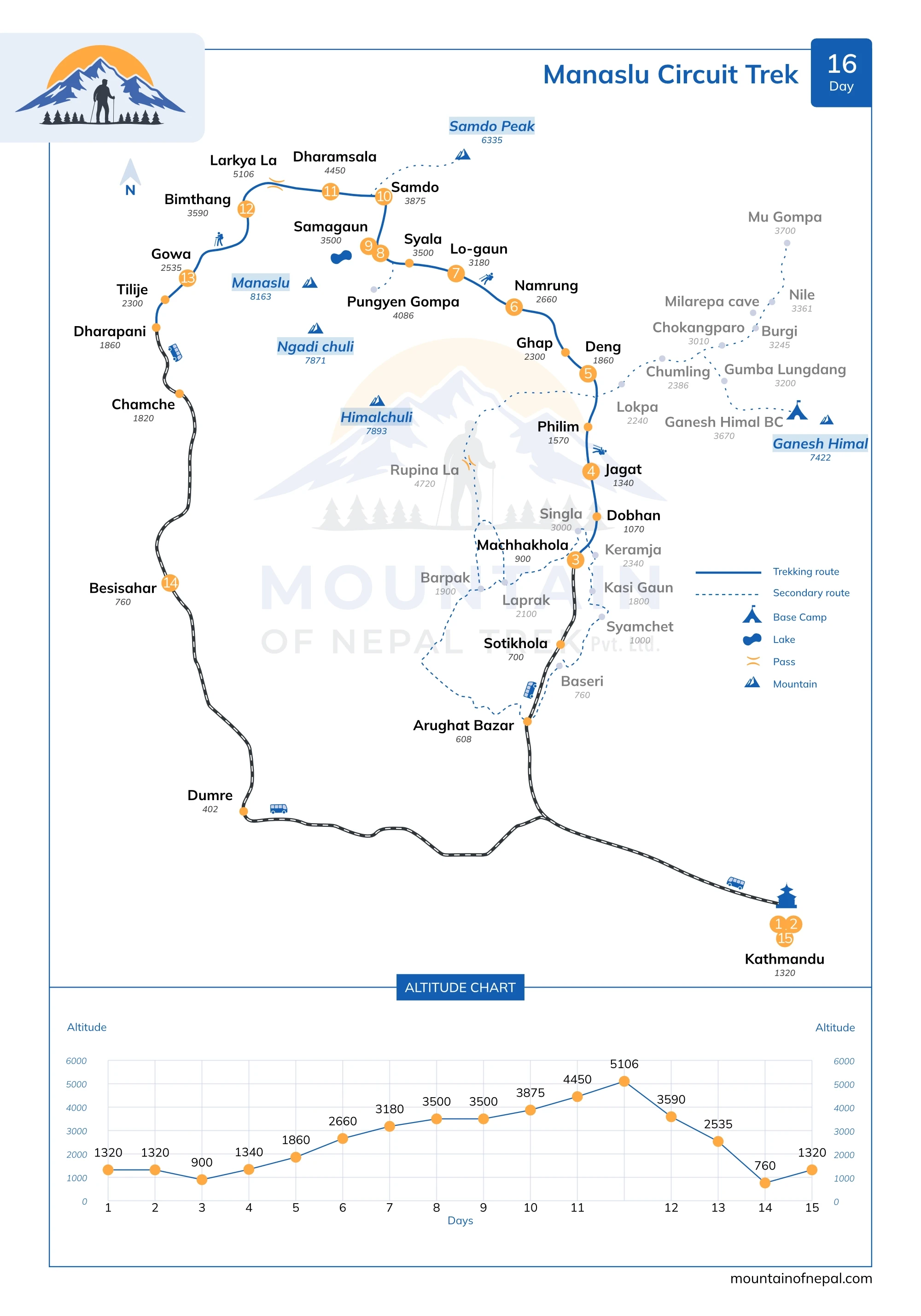
Your Start Date is the day you land in Nepal, and your End Date is when you fly home.
If the set Manaslu Circuit Trek group dates don’t suit your schedule, we can offer alternative dates upon request.
Proper layering is important to stay warm and comfortable in changing mountain weather.
Good footwear makes trekking easier and safer.
The right gear keeps you safe, comfortable, and prepared.
Lightweight but important items keep you clean, healthy, and comfortable.
Keep important items safe and easy to reach.
The Manaslu Circuit Trek is one of Nepal’s most spectacular and less-crowded trekking routes that circles Mount Manaslu (8,163 m), the eighth-highest mountain in the world. Organized professionally by Mountain of Nepal, this trek offers a perfect blend of natural beauty, remote Himalayan landscapes, and rich Tibetan-influenced culture. Unlike more commercial routes, it provides an authentic wilderness experience with diverse scenery ranging from lush forests to high alpine passes. The highlight is crossing the challenging Larkya La Pass, which rewards trekkers with breathtaking panoramic mountain views.
The Manaslu Circuit Trek is considered a moderately difficult to challenging trek, depending on fitness and prior experience. With the Mountain of Nepal, the itinerary is carefully designed to include proper acclimatization and gradual altitude gain. Trekkers should be prepared for long walking days, steep ascents, and high-altitude conditions, especially while crossing Larkya La Pass at 5,106 meters. Although technical climbing skills are not required, a good level of physical fitness, stamina, and mental preparation is essential to complete the trek comfortably and safely.
The standard Manaslu Circuit Trek takes around 14 to 18 days, depending on the itinerary and pace. The professionally designed route by Mountain of Nepal typically follows a 16-day schedule, including arrival, acclimatization, trekking days, and return to Kathmandu. This duration ensures proper altitude adjustment and reduces the risk of altitude sickness. Some trekkers may choose to extend the trek with side trips such as Manaslu Base Camp or Tsum Valley, which adds more cultural and scenic exploration.
Yes, altitude sickness is a potential risk, especially above 3,000 meters, as the trek reaches over 5,100 meters at Larkya La Pass. Mountain of Nepal carefully designs the itinerary with proper acclimatization days, particularly in Sama-Gaon, to reduce this risk. Trekkers are advised to stay hydrated, ascend gradually, and avoid overexertion. Guides are trained to monitor symptoms and take necessary precautions. In case of severe altitude sickness, descent is the immediate and most effective treatment.
Choosing Mountain of Nepal ensures a safe, well-organized, and enriching trekking experience in the Manaslu region. The company provides experienced licensed guides, full permit arrangements, carefully planned itineraries, and strong safety protocols. Their team focuses on personalized service, cultural immersion, and responsible tourism. From arrival in Kathmandu to the final departure, every detail is managed professionally, allowing trekkers to fully enjoy the Himalayan adventure without stress. Their expertise in remote treks makes them a trusted choice for the Manaslu Circuit Trek.
The Manaslu region is a restricted trekking area, so special permits are required. With Mountain of Nepal, all necessary permits are arranged for trekkers, including the Manaslu Restricted Area Permit (RAP), Manaslu Conservation Area Permit (MCAP), and Annapurna Conservation Area Permit (ACAP). Additionally, trekkers must travel with a registered guide and in a group of at least two people due to government regulations. These permits ensure controlled tourism, environmental protection, and cultural preservation of this remote Himalayan region.
The best seasons for the Manaslu Circuit Trek are spring (March to May) and autumn (September to November). During these periods, Mountain of Nepal ensures trekkers enjoy clear skies, stable weather, and excellent mountain visibility. Spring offers blooming rhododendrons and warmer temperatures, while autumn provides crisp air and the best trekking conditions after the monsoon. Winter can be extremely cold with heavy snow at high passes, and the monsoon season brings rain, landslides, and poor trail conditions, making trekking more difficult.
Yes, travel insurance is mandatory for the Manaslu Circuit Trek. Mountain of Nepal strongly recommends insurance that covers high-altitude trekking up to at least 5,500 meters, emergency helicopter evacuation, medical treatment, and trip cancellation. Since the trek passes through remote regions with limited medical facilities, insurance provides essential financial protection in case of emergencies. Trekkers must carry a copy of their insurance policy, which may be required for permit processing and rescue coordination if needed.
Accommodation on the Manaslu Circuit Trek consists mainly of teahouses and basic lodges run by local families. With the Mountain of Nepal, trekkers stay in clean and comfortable teahouses offering twin-sharing rooms and simple meals. Facilities become more basic as altitude increases, especially beyond Sama-Gaon and Samdo. Hot showers, electricity, and Wi-Fi may be limited or available at an extra cost. Despite the simplicity, the warm hospitality of local communities makes the experience culturally enriching and memorable.
Packing properly is essential for a successful trek. Mountain of Nepal provides a detailed checklist, but key items include warm layered clothing, waterproof jackets, trekking boots, gloves, hats, sleeping bags, and personal medical supplies. Since weather conditions change rapidly in the Himalayas, layering is crucial. A good backpack, trekking poles, sunscreen, and water purification tablets are also recommended. Carrying light but efficient gear helps improve comfort and endurance throughout the journey.
Yes, beginners with good physical fitness and strong determination can complete the Manaslu Circuit Trek. With proper preparation and guidance from Mountain of Nepal, even first-time trekkers can complete the route. However, it is important to train beforehand with hiking, cardio exercises, and endurance activities. The itinerary includes acclimatization days and gradual elevation gain, making it more manageable. Having an experienced guide ensures safety, navigation support, and cultural understanding throughout the journey.


 (2)
(2)  100% recommend (0)
 (0)
(0)