Need help with booking? Send us a message.
The Annapurna Circuit Trek is one of the most iconic trekking adventures in the world, and it is perfectly structured in the 11-day itinerary organized by Mountain of Nepal. This journey takes you through diverse landscapes ranging from subtropical valleys to high Himalayan desert terrain, offering a complete Himalayan experience. Starting from Kathmandu at 1,400 meters, the trek gradually ascends through culturally rich villages, alpine forests, and high-altitude settlements before crossing the legendary Thorong La Pass. The route is designed to provide both adventure and proper acclimatization, ensuring trekkers experience the beauty of the Annapurna region safely and meaningfully.
As the journey progresses, trekkers pass through key destinations such as Chame, Pisang, and the culturally significant village of Manang. Each location introduces unique Tibetan-influenced cultures, monasteries, and panoramic mountain views. The highlight of the trek is the crossing of Thorong La Pass, one of the highest trekking passes in the world, followed by a descent to Muktinath and onward travel to Jomsom. The final leg includes a scenic flight via Pokhara back to Kathmandu, completing a full Himalayan circuit experience.
The best seasons for the Annapurna Circuit Trek with Mountain of Nepal are spring (March to May) and autumn (September to November). During these months, the weather remains stable, skies are generally clear, and mountain visibility is at its peak. Spring brings blooming rhododendrons and lush green hills, making the lower sections of the trek especially beautiful. Autumn, on the other hand, offers crisp air, dry trails, and the clearest Himalayan views, making it the most popular trekking season.
Winter (December to February) is also possible but challenging due to heavy snowfall, especially around Thorong La Pass. Summer/monsoon (June to August) brings rain, landslides, and slippery trails in lower regions, although the rain-shadow areas like Manang and Mustang remain relatively dry. However, the trekking experience is generally less predictable during this period.
Mountain of Nepal carefully schedules departures to match optimal weather windows, ensuring trekkers get maximum visibility, safety, and comfort throughout the journey.
Key Highlights:
The Annapurna Circuit Trek is considered a moderate to challenging trek due to its long walking days and high-altitude crossing at Thorong La Pass. However, with proper acclimatization days, such as the rest day in Manang, the trek becomes manageable for fit and determined trekkers. Daily walking ranges from 4 to 7 hours, with some longer days during ascent and descent phases. The high-altitude segment requires mental endurance and physical preparation, but no technical climbing skills are needed.
Transportation is a key part of the itinerary designed by Mountain of Nepal. The journey includes a long scenic drive from Kathmandu to Chame, followed by trekking sections through Pisang, Manang, and Yak Kharka. After crossing Thorong La Pass, trekkers descend to Muktinath and drive to Jomsom. The return journey includes a flight from Jomsom to Pokhara and then back to Kathmandu, providing a comfortable exit after the strenuous trek.
Key Highlights:
Food and accommodation along the Annapurna Circuit Trek are simple but comfortable, offering a warm and authentic Himalayan experience. Throughout the journey, trekkers stay in teahouses operated by local families. These lodges provide basic rooms with twin beds, warm blankets, and shared bathroom facilities in most locations. As altitude increases, accommodations become more basic but still welcoming, especially in places like Yak Kharka and high-altitude stops near Thorong Phedi.
Meals are freshly prepared and typically include a mix of Nepali and international dishes. The most common meal is dal bhat (rice, lentils, vegetables), which provides high energy for trekking days. Other options include noodles, pasta, soups, potatoes, eggs, and Tibetan bread. Hydration and high-calorie intake are strongly encouraged due to altitude demands. The mountains of Nepal ensure trekkers receive hygienic, nutritious meals throughout the journey.
In larger villages like Manang and Jomsom, food variety increases, and bakeries or cafés may also be available. Overall, the teahouse system supports both comfort and cultural immersion.
Key Highlights:
To complete the Annapurna Circuit Trek, trekkers require official permits regulated by Nepal’s trekking authorities. Mountain of Nepal handles all permit arrangements to ensure a smooth and hassle-free experience. The two main permits required are the Annapurna Conservation Area Permit (ACAP) and the Trekkers’ Information Management System (TIMS) card. These permits are mandatory for entering the Annapurna region and help support conservation and safety monitoring.
The ACAP permit contributes directly to environmental protection and local community development in the Annapurna region. The TIMS card ensures trekkers are registered and traceable in case of emergencies. These documents are checked at various checkpoints along the route, especially in areas like Chame and Manang.
Mountain of Nepal ensures all paperwork is completed before the trek begins in Kathmandu, allowing trekkers to focus entirely on the adventure rather than administrative procedures.
Key Highlights:
Choosing the Annapurna Circuit Trek with Mountain of Nepal ensures a professionally organized, safe, and enriching Himalayan experience. The company focuses on small-group personalized service, experienced guides, and carefully planned itineraries that balance adventure with acclimatization. With an 11-day structured route, trekkers experience the full diversity of the Annapurna region, from lush valleys to high mountain passes, without feeling rushed.
The journey is supported by experienced local guides who are trained in high-altitude safety and first aid. From arrival in Kathmandu to the final flight from Pokhara, Mountain of Nepal ensures seamless logistics, including transportation, accommodation, permits, and meals. The itinerary also includes essential acclimatization in Manang, increasing safety and success rates for crossing Thorong La Pass.
This trek is ideal for travelers seeking a complete Himalayan circuit experience with cultural depth, mountain adventure, and professional support.
Key Highlights:
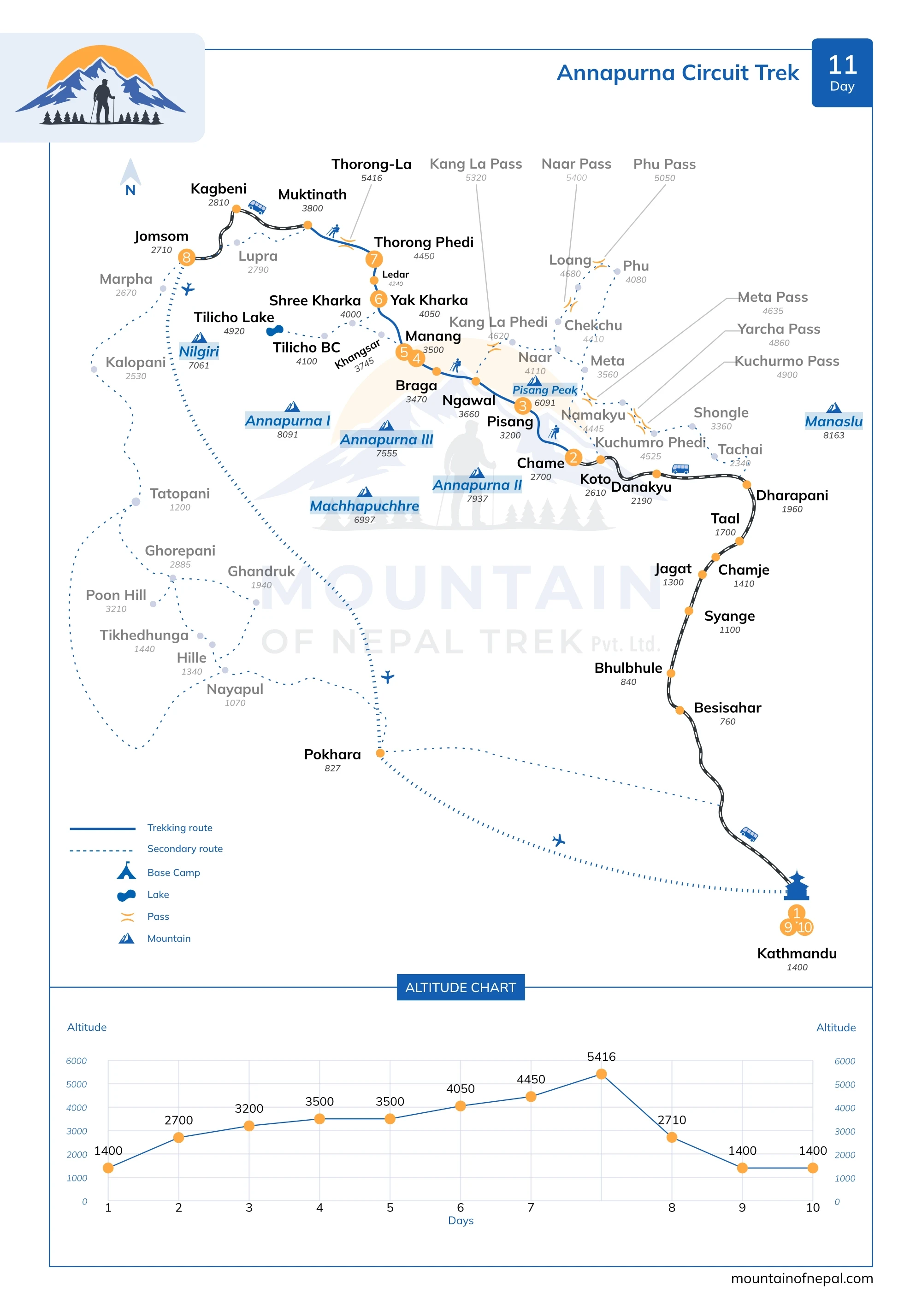
Upon arrival in Kathmandu, the capital city of Nepal, you will be warmly welcomed by a representative from Mountain of Nepal and transferred to your hotel. This day is reserved for rest after your international flight and for a briefing about the upcoming journey on the Annapurna Circuit Trek. In the evening, a short trek orientation session will be conducted, where your guide will explain safety procedures, altitude awareness, and packing checks. You may also explore the vibrant streets of Thamel, filled with trekking shops and cultural ambiance. This first day helps you adjust to the environment and prepare mentally for the adventure ahead in the Himalayas.
After an early breakfast in Kathmandu, you begin a long but scenic drive toward Chame, the district headquarters of Manang. The journey passes through winding mountain roads, river valleys, terraced hillsides, and traditional villages, offering your first real glimpse of rural Nepal. As arranged by Mountain of Nepal, comfortable transportation and experienced drivers ensure a safe journey despite the long duration. Along the way, you will witness the transition from subtropical landscapes to alpine terrain, which marks the gradual entry into the Annapurna region. Upon arrival in Chame, you will check into a teahouse, enjoy a warm meal, and rest while preparing for the trekking days ahead.
Today marks your first official trekking day on the Annapurna Circuit Trek. After breakfast in Chame, you begin a gradual ascent toward Pisang. The trail passes through dense pine forests, suspension bridges, and dramatic cliffside paths with views of snow-capped peaks. As you gain altitude, the air becomes cooler and more refreshing. The trekking team from Mountain of Nepal ensures a steady pace to support proper acclimatization. Upon reaching Pisang, you are rewarded with panoramic Himalayan views, including Annapurna II. The evening is spent relaxing in a cozy teahouse while enjoying the peaceful mountain atmosphere.
The trek continues from Pisang toward Manang, one of the most important acclimatization hubs of the Annapurna Circuit Trek. The trail offers two route options, but both eventually lead to the beautiful Manang Valley. You will pass traditional Tibetan-style villages, mani walls, and ancient monasteries that reflect the strong Buddhist culture of the region. As guided by Mountain of Nepal, the trekking pace remains moderate to reduce altitude strain. Upon arrival in Manang, you will notice a significant change in landscape—dry, alpine terrain surrounded by towering peaks. The evening is spent resting and exploring the village.
This day is dedicated to acclimatization in Manang to help your body adjust to higher altitudes before crossing Thorong La Pass. Guided by Mountain of Nepal, you may take short hikes to higher viewpoints such as Gangapurna Lake or the nearby ridge for panoramic Himalayan views. These short ascents followed by rest are essential for preventing altitude sickness. You can also explore the local monastery, learn about Himalayan culture, or interact with locals. The rest of the day is kept relaxed with proper hydration, nutritious meals, and preparation for the higher elevation days ahead.
Leaving Manang, the trail gradually ascends toward Yak Kharka, a small settlement surrounded by rugged alpine terrain. The landscape becomes more barren and dramatic as trees disappear and only shrubs and rocky cliffs remain. The trekking route on the Annapurna Circuit Trek becomes quieter and more remote at this stage. Managed by Mountain of Nepal, the itinerary ensures a slow and safe ascent. You may spot yaks grazing in the high pastures and occasionally Himalayan blue sheep on distant slopes. Upon arrival in Yak Kharka, you rest in a teahouse and prepare for the challenging ascent to higher camps.
Today’s trek leads from Yak Kharka toward either Thorong Phedi or High Camp, depending on weather and group condition. The trail becomes steeper and more demanding, with loose rocks and thin air as you approach higher altitudes on the Annapurna Circuit Trek. The support team from Mountain of Nepal closely monitors your health and pace. Despite the difficulty, the surrounding views of glaciers and rugged peaks are breathtaking. Reaching Thorong Phedi or High Camp marks a major milestone, as it prepares you for the early morning crossing of Thorong La Pass the next day.
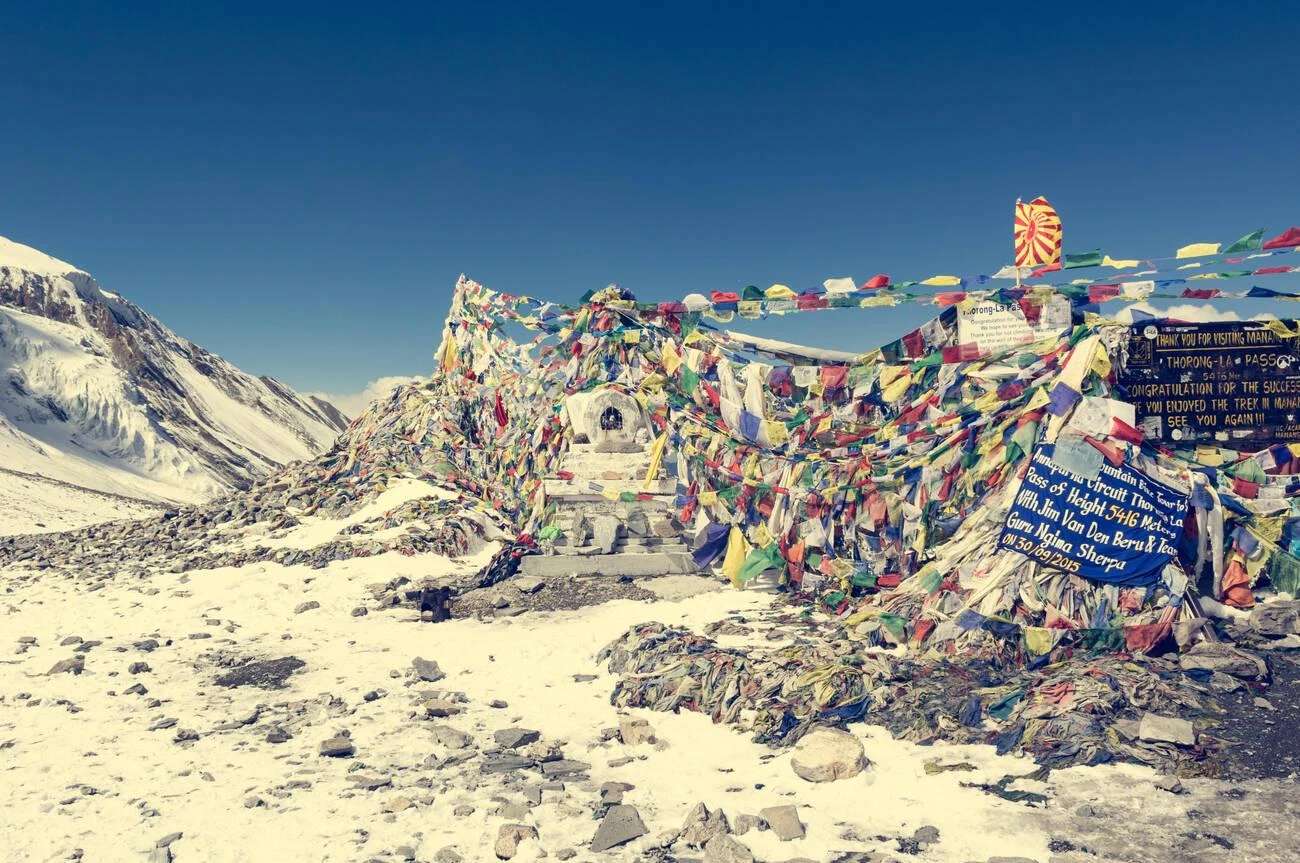
This is the most challenging and rewarding day of the trek. You begin before dawn to cross Thorong La Pass, the highest point of the Annapurna Circuit Trek. The ascent is steep, cold, and physically demanding, but reaching the pass is an unforgettable achievement with panoramic Himalayan views. After celebrating briefly, you descend to the sacred pilgrimage site of Muktinath, an important spiritual destination for both Hindus and Buddhists. From there, a drive arranged by Mountain of Nepal takes you to Jomsom, where you rest after a long and exhausting but rewarding day.
After breakfast in Jomsom, you take a scenic mountain flight to Pokhara, followed by a connection back to Kathmandu. The aerial views of the Annapurna and Dhaulagiri ranges provide a final breathtaking perspective of the region you have just trekked through. The team from Mountain of Nepal ensures smooth coordination of flights and transfers. Upon arrival in Kathmandu, you return to your hotel for rest, celebration, or optional sightseeing depending on your energy level.
This day is kept free for relaxation, shopping, or cultural exploration in Kathmandu after completing the demanding Annapurna Circuit Trek. You may explore UNESCO heritage sites such as temples, stupas, or local markets. Alternatively, you can simply rest at your hotel and enjoy leisure time. Mountain of Nepal remains available for any assistance, including souvenir shopping guidance or optional city tours. This day helps you recover fully while reflecting on your Himalayan journey.
On the final day, you are transferred from your hotel in Kathmandu to the international airport for your onward journey. The team from Mountain of Nepal will assist you with departure arrangements, ensuring a smooth and timely transfer. As you leave Nepal, you carry unforgettable memories of the Annapurna Circuit Trek—from high mountain passes to ancient villages and spiritual landmarks. This marks the end of a life-changing Himalayan adventure, with hopes of welcoming you again for future treks in Nepal.
Your Start Date is the day you land in Nepal, and your End Date is when you fly home.
If the set Annapurna Circuit Trek group dates don’t suit your schedule, we can offer alternative dates upon request.
Proper layering is important to stay warm and comfortable in changing mountain weather.
Good footwear makes trekking easier and safer.
The right gear keeps you safe, comfortable, and prepared.
Lightweight but important items keep you clean, healthy, and comfortable.
Keep important items safe and easy to reach.
The Annapurna Circuit Trek is considered one of the most diverse and scenic trekking routes in the world. It takes trekkers through tropical forests, deep river valleys, alpine meadows, and high-altitude deserts, all within a single journey. The highlight is crossing Thorong La Pass at 5,416 meters, which offers breathtaking Himalayan views. Organized by Mountain of Nepal, the trek also includes rich cultural experiences, passing through Hindu villages and Tibetan Buddhist settlements. This combination of natural beauty, cultural diversity, and challenging terrain makes it a once-in-a-lifetime trekking experience.
The Annapurna Circuit Trek is considered moderate to challenging depending on your fitness level and acclimatization. While no technical climbing skills are required, trekkers must be prepared for long walking hours, steep ascents, and high-altitude conditions. The most demanding section is the crossing of Thorong La Pass, where altitude and cold weather can be intense. Mountain of Nepal ensures gradual acclimatization days, proper pacing, and experienced guides to minimize risks. With good preparation, physical fitness, and mental determination, most trekkers can successfully complete the journey.
Prior trekking experience is helpful but not mandatory for the Annapurna Circuit Trek. Beginners with good physical fitness and strong mental preparation can also complete the route successfully. The key requirement is the ability to walk 5–8 hours daily over varied terrain and adjust to high altitude gradually. Mountain of Nepal provides professional guides who assist trekkers throughout the journey, ensuring safety, proper acclimatization, and support. With training such as hiking, cardio exercises, and stamina building before the trek, even first-time trekkers can enjoy this adventure.
Altitude sickness is a common concern on the Annapurna Circuit Trek, especially above 3,000 meters. Symptoms may include headache, dizziness, nausea, and fatigue. Proper acclimatization is the most effective prevention method. The itinerary designed by Mountain of Nepal includes rest days such as in Manang to help the body adjust gradually. Trekkers are advised to stay hydrated, walk at a steady pace, and avoid alcohol. Guides are trained in first aid and monitor trekkers closely, ensuring safety throughout high-altitude sections like Thorong La Pass.
Mobile network and internet access are available in many villages along the Annapurna Circuit Trek, but connectivity becomes weaker and less reliable at higher altitudes. Some teahouses offer Wi-Fi services for a small fee, though speeds may be limited. In remote areas like Thorong Phedi and near Thorong La Pass, connectivity is minimal or unavailable. Mountain of Nepal advises trekkers to inform family in advance about possible communication gaps and enjoy the digital detox experience that comes with remote Himalayan trekking.
The classic Annapurna Circuit Trek usually takes between 10 to 21 days depending on the route, pace, and side trips. Shorter itineraries may use road access in some sections, while longer versions include full traditional routes. The 11-day itinerary provided by Mountain of Nepal is a well-balanced option that includes proper acclimatization, key highlights, and efficient travel arrangements. The duration can be customized based on fitness level, available time, and personal preferences.
The best seasons for the Annapurna Circuit Trek are spring (March to May) and autumn (September to November). During these months, the weather is generally stable, skies are clear, and mountain views are at their best. Spring offers blooming rhododendrons and warmer temperatures, while autumn provides crisp air and excellent visibility. Winter trekking is possible but extremely cold at higher elevations, and monsoon season brings heavy rain and landslides in lower regions. Mountain of Nepal recommends planning your trek during these optimal seasons for safety and enjoyment.
Accommodation on the Annapurna Circuit Trek mainly consists of teahouses and lodges run by local families. These provide basic but comfortable rooms with twin beds, blankets, and shared bathrooms. In lower elevations, facilities are more developed, while higher regions have simpler accommodations due to remote conditions. Meals are freshly prepared and include local and international dishes such as dal bhat, noodles, and soups. Mountain of Nepal carefully selects reliable teahouses to ensure cleanliness, safety, and good hospitality throughout the journey.
To complete the Annapurna Circuit Trek, trekkers need two main permits: the Annapurna Conservation Area Permit (ACAP) and the TIMS (Trekkers’ Information Management System) card. These permits help regulate trekking activities and support conservation efforts in the region. Mountain of Nepal handles all necessary permit arrangements for trekkers, making the process smooth and hassle-free. These permits are checked at various entry points along the trail, so it is important to carry them at all times during the journey.
Packing correctly is essential for a successful trek. Essential items include warm clothing, layered outfits, a down jacket, trekking boots, gloves, sunglasses, and a sleeping bag suitable for cold temperatures. Other important items include sunscreen, water purification tablets, and personal medication. Since weather changes quickly in the mountains, layering is key. Mountain of Nepal provides a detailed packing checklist before departure to ensure trekkers are fully prepared for both warm lower regions and freezing high-altitude areas.


 (2)
(2)  100% recommend (0)
 (0)
(0)