Need help with booking? Send us a message.
The Gokyo Lake Trek is one of the most scenic and rewarding trekking adventures in the Everest region of Nepal. Operated by Mountain of Nepal, this 12-day journey takes you through lush forests, Sherpa villages, high alpine valleys, and the breathtaking turquoise Gokyo Lakes. Unlike the busier Everest Base Camp route, the Gokyo Valley trek offers a quieter and more peaceful Himalayan experience while still delivering spectacular views of Mount Everest, Cho Oyu, Lhotse, and Makalu.
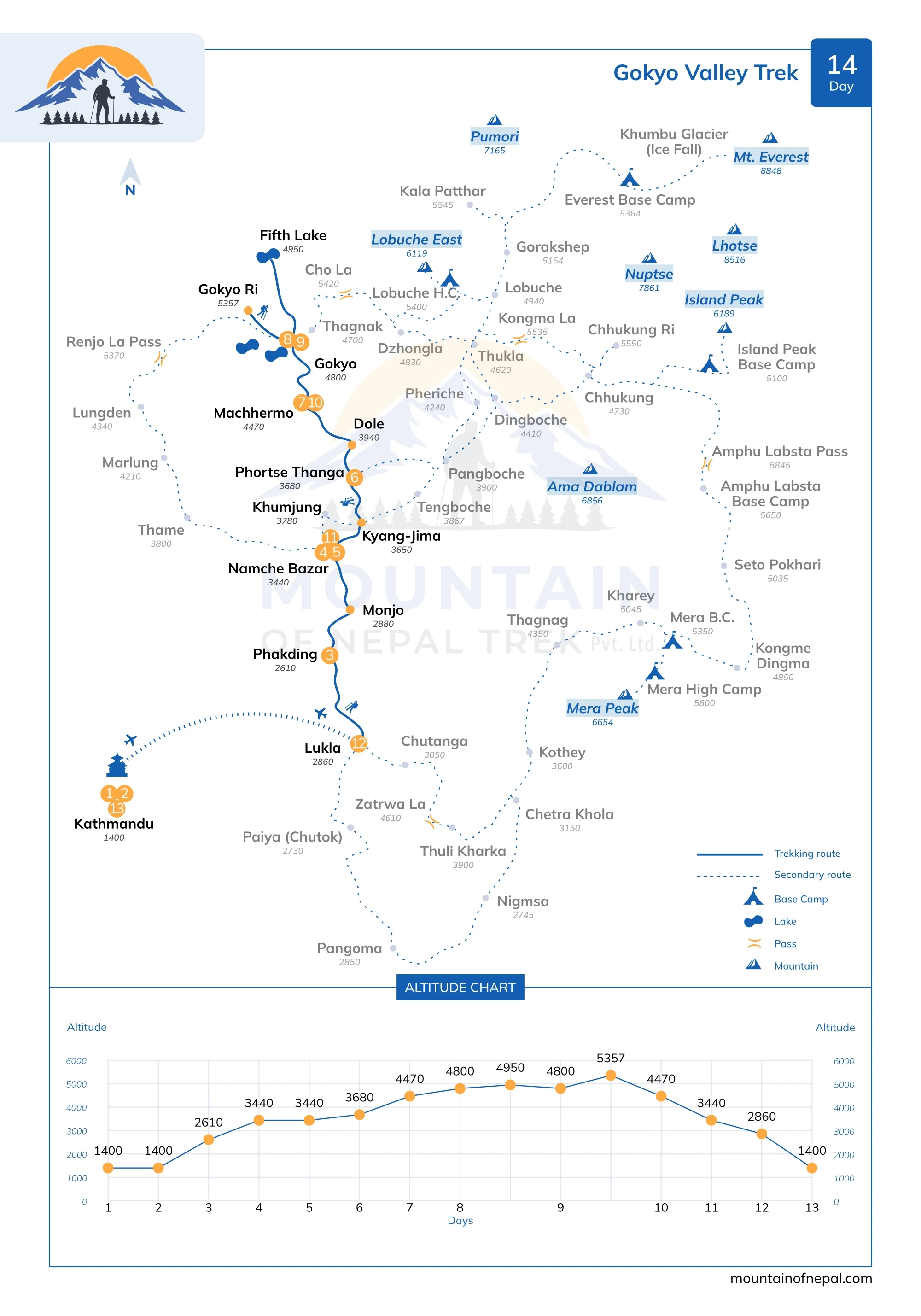
The trek begins with a short flight to Lukla and gradually ascends through Phakding, Namche Bazaar, Dole, Machhermo, and finally Gokyo (4,800 m). One of the major highlights is the climb to Gokyo Ri (5,357 m), which offers one of the best panoramic viewpoints in the entire Himalayas. The return journey follows the same scenic route, allowing trekkers to re-experience the beauty of the Khumbu region from a different perspective.
The best time to undertake the Gokyo Lake Trek with Mountain of Nepal is during the pre-monsoon (spring) and post-monsoon (autumn) seasons. These periods provide stable weather, clear mountain views, and comfortable trekking conditions. Spring (March to May) is especially beautiful as rhododendrons bloom across the lower hills, adding vibrant colors to the landscape. Autumn (September to November) is considered the peak trekking season due to crystal-clear skies and excellent visibility of Himalayan peaks.
Winter trekking (December to February) is possible but challenging due to heavy snowfall and extreme cold at higher altitudes like Gokyo and Machhermo. Similarly, the monsoon season (June to August) is not recommended due to rain, slippery trails, and poor visibility, although the region becomes lush and green.
Choosing the right season significantly enhances safety and enjoyment, and Mountain of Nepal ensures proper planning based on weather conditions.
Best season summary:
The Gokyo Lake Trek is considered a moderate to moderately challenging trek, suitable for trekkers with good physical fitness. While no technical climbing is required, the high altitude above 4,500 meters makes acclimatization very important. The route includes long trekking days, steep ascents, and thin air, especially when climbing Gokyo Ri (5,357 m). However, with proper pacing and guidance from Mountain of Nepal, most fit beginners can complete the trek.
Transportation begins with a thrilling domestic flight from Kathmandu to Lukla, one of the world’s most famous mountain airports. From Lukla, all travel is on foot along well-marked Himalayan trails. Porters and guides provided by Mountain of Nepal assist in carrying luggage and navigating the route safely. Emergency helicopter evacuation is also available if required.
Difficulty and transport points:
Accommodation during the Gokyo Lake Trek is mainly in traditional teahouses run by local Sherpa families. These lodges provide basic but comfortable rooms, usually with twin beds and shared bathrooms. In lower regions like Namche Bazaar, facilities are more developed, while higher areas like Gokyo and Machhermo offer more basic but cozy accommodations. Mountain of Nepal carefully selects reliable teahouses to ensure safety, cleanliness, and good hospitality.
Food is freshly prepared in teahouses and includes a mix of Nepali, Tibetan, and simple international dishes. The most common meal is Dal Bhat (rice, lentils, vegetables), which is highly nutritious and provides energy for trekking. Other options include noodles, pasta, soups, pancakes, and eggs. As altitude increases, food options become limited and slightly more expensive due to transportation costs.
Food & accommodation summary:
To complete the Gokyo Lake Trek, trekkers must obtain certain official permits required by the Nepal government. These permits help regulate tourism, support conservation, and maintain trekking trails. Mountain of Nepal manages all necessary paperwork and ensures trekkers receive the correct documentation before starting the journey.
The main permits required are the Sagarmatha National Park Entry Permit and the Khumbu Pasang Lhamu Rural Municipality Permit. These are checked at various entry points along the trekking route. Trekkers must carry a valid identification (passport copy) and passport-sized photos for processing. Without these permits, entry into the Everest region is not allowed.
Permit details:
The Gokyo Lake Trek stands out as one of the most beautiful and peaceful trekking routes in the Everest region. Unlike the crowded Everest Base Camp trail, Gokyo offers a quieter journey with equally stunning Himalayan views. With Mountain of Nepal, trekkers receive professional guidance, experienced local guides, and well-organized logistics that ensure a safe and memorable adventure.
One of the biggest reasons to choose this trek is the unique combination of turquoise glacial lakes, dramatic mountain scenery, and authentic Sherpa culture. The climb to Gokyo Ri offers arguably the best panoramic view of Everest, Cho Oyu, and the surrounding peaks. Additionally, the route passes through traditional villages where trekkers can experience local hospitality and Buddhist culture.
Why choose this trek:
Upon arrival at Tribhuvan International Airport in Kathmandu, Nepal, you will be warmly welcomed by a representative from Mountain of Nepal Trek and transferred to your hotel in Kathmandu. After check-in, you can relax and recover from your international flight. If time permits, you may explore Thamel, Kathmandu’s main tourist district, known for its vibrant atmosphere, trekking shops, cafés, restaurants, and local handicrafts. In the evening, enjoy a welcome dinner at a traditional Nepali restaurant, where you can taste authentic local cuisine, experience Nepali culture, and meet your guide and fellow trekkers before the start of your Everest Base Camp trek. Accommodation: Hotel, Meals: Welcome Dinner
Upon arrival at Tribhuvan International Airport, you will be warmly welcomed by a representative from Mountain of Nepal Trek and transferred to your hotel in Kathmandu. After check-in, you can relax and recover from your international journey. If time permits, you may explore the lively streets of Thamel, Kathmandu’s popular tourist district, known for its cafés, restaurants, trekking shops, and local handicrafts. In the evening, attend a pre-trek briefing where your guide will explain the Everest Base Camp itinerary, safety guidelines, and trek preparation. This is also a great opportunity to ask any final questions before your adventure begins. Later, enjoy a welcome dinner at a traditional Nepali restaurant, offering a taste of local cuisine and culture.
Today’s morning section of the trek follows the rushing Dudh Koshi (Milky River) along the classic Everest Base Camp route, crossing and re-crossing it several times via high suspension bridges. The trail winds through beautiful forests of blue pine and rhododendron, especially vibrant in spring when the hillsides burst into bloom. Along the way, you pass through charming Sherpa villages such as Benkar, Monjo, and Jorsale, while enjoying views of the snow peaks Kusum Kangaru and Thamserku. Beyond Monjo, you enter Sagarmatha National Park, where permits are checked before continuing along a pleasant riverside trail toward the confluence of the Dudh Koshi and Bhote Koshi rivers. High above the rushing river, you cross the iconic Hillary Suspension Bridge, adorned with vibrant prayer flags that flutter in the wind. Locals believe these prayer flags carry prayers of peace and blessings across the world on the wind. Beyond the bridge, the trail begins a steep ascent toward Namche Bazaar. This section is one of the most demanding parts of the trek, so a slow and steady pace is both wise and necessary. About halfway up the climb, weather permitting, you are rewarded with your first glimpse of Mount Everest, rising behind the dramatic ridge of Nuptse and Lhotse, along with views of Ama Dablam and Thamserku. After a steady ascent, you reach Namche Bazaar. This lively mountain town is a popular resting and acclimatization point for trekkers at high altitude. It offers comfortable lodges, cafés, bakeries, and trekking shops, making it a welcoming and essential stop in the Himalayas before continuing deeper into the region.
Today is a crucial rest and acclimatization day, allowing your body to adjust to the high altitude before continuing higher into the Gokyo Valley. While Namche Bazaar itself is a comfortable place to relax, we encourage you to take a gentle acclimatization hike to help your body adapt more effectively. A popular option is a walk to the Everest View Hotel, perched on a nearby ridge. From here, you can enjoy breathtaking panoramic views of Mount Everest, Lhotse, Nuptse, and Ama Dablam—an ideal spot for sunrise photography and your first close-up Himalayan vistas. Nearby traditional Sherpa villages, Khumjung and Khunde, are also worth exploring. In Khumjung, you can experience authentic Sherpa culture, while in Khunde, you can visit the Hillary School, founded by Sir Edmund Hillary to provide education for local children. The school has played a vital role in improving literacy and expanding opportunities for Sherpa communities in this remote Himalayan region. Khunde also hosts the Khunde Hospital, a vital healthcare center established with the support of Sir Edmund Hillary, providing essential medical services to both residents and trekkers in this high-altitude region. Gentle walks along the surrounding ridges follow the “climb high, sleep low” principle, helping your body acclimatize while offering stunning Himalayan scenery. Taking it slow, staying well hydrated, and enjoying the experience will prepare you both physically and mentally for the higher trails ahead. Overnight: Lodge in Namche Bazaar
Today’s trek takes you from the bustling Sherpa hub of Namche Bazaar into a quieter and more natural section of the Khumbu region, ending at the riverside settlement of Phortse Tenga (3,680 m). The walk takes approximately 6–7 hours and offers a balanced mix of mountain views, forest trails, and gradual altitude change. After breakfast in Namche Bazaar, you begin the trek with a steady climb out of the village, gaining elevation as you leave the amphitheater-shaped settlement behind. Although demanding at the start, this section rewards you with expanding views of the surrounding valleys and Himalayan peaks. From the ridge above Namche Bazaar, the trail follows the well-established Everest Base Camp trekking route, contouring along the mountainside high above the rushing Dudh Koshi River. The path gently traverses the hillside with a few short ascents and descents, offering panoramic views of Mount Everest (8,848 m), Lhotse (8,516 m), Thamserku (6,608 m), and the striking Ama Dablam (6,812 m) on clear days. Continuing along the hillside, you pass through small Sherpa settlements such as Kyangjuma before reaching Sansa, where the trail separates—one route leads toward the Gokyo Valley, while the other follows the classic Everest route. From Sansa, you take the route Gokyo valley- toward Mong La (3,975 m), ascending gradually through forested sections. This part of the trail can offer chances to spot wildlife such as musk deer, Himalayan thar, and colorful pheasants. Mong La is also culturally significant, located below the sacred peak Khumbila, which is respected by the local Sherpa community. You stop at Mong La for lunch while enjoying panoramic mountain views. Afterward, the trail descends steeply through dense rhododendron and pine forests toward the river valley. This section can be demanding on the knees, so walking at a steady pace is important. The final stretch follows a more gradual riverside path through the forest, leading you to Phortse Tenga. This small and peaceful settlement sits beside the river, surrounded by forest and mountains, offering a quiet place to rest before continuing further into the Gokyo Valley.
Today, you continue your journey deeper into the Gokyo Valley, trekking from Phortse Tenga (3,680 m) to Machhermo (4,470 m). The walk takes approximately 5–6 hours and follows a steady ascent through open alpine landscapes and wide valley terrain. You begin the day by crossing the river near Phortse Tenga and gradually climbing higher into the valley. As you gain altitude, the scenery becomes more expansive, with wide mountain views and a sense of increasing remoteness. After a few hours of walking, you reach Dole, and then continue onward to Luza (around 4,300 m), where you can stop for lunch and rest before the final climb. The trail then continues through open high-altitude terrain with yak pastures and sweeping valley views before reaching Machhermo. The air becomes thinner, so a slow and steady pace is important. Machhermo is also known for a famous local legend. In 1974, villagers reported a Yeti (Abominable Snowman) encounter, where livestock were said to have been attacked, creating one of the most well-known stories in the region. Your guide may share this story as you arrive and settle into the village. You spend the evening in Machhermo, where you can rest, acclimatize, and learn more about local life in this high-altitude Himalayan settlement.
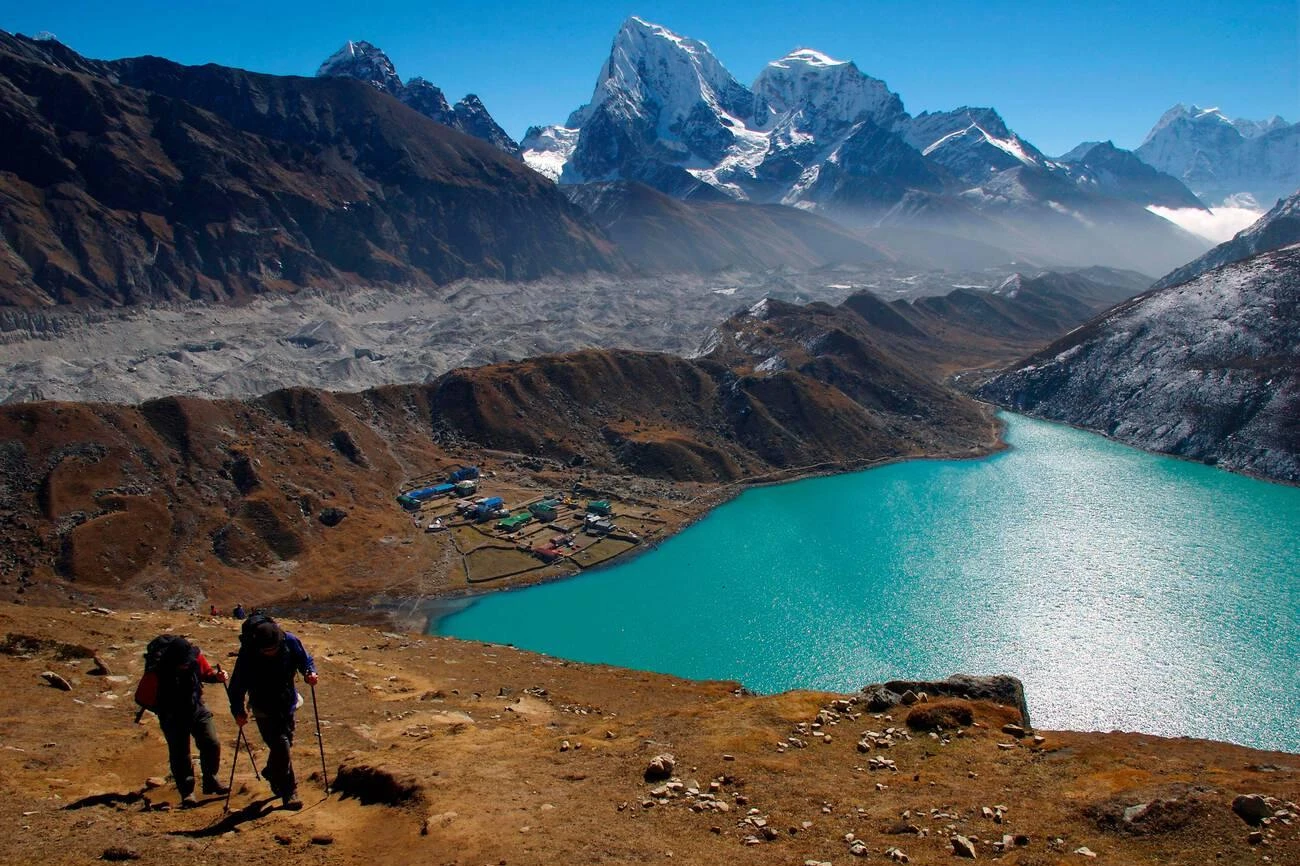
Today, you continue your journey from Machhermo to Gokyo Lakes. The walk takes approximately 4–5 hours and follows a gradual ascent through a wide alpine valley surrounded by dramatic Himalayan scenery. You begin the trek by leaving Machhermo and following a steady uphill trail along the valley. As you gain altitude, the landscape becomes more open and rugged, with sweeping views of surrounding peaks and glacial terrain. Along the way, you pass the area where the local rescue post is located, an important stop for trekkers in case of altitude-related issues. The trail then continues steadily upward toward the upper valley. You gradually approach the first of the Gokyo Lakes, where turquoise glacial waters begin to appear beside the trail. The scenery becomes more striking as you enter the high-altitude lake basin, surrounded by snow peaks and the massive glacier system. The Gokyo Lakes are considered sacred by both Hindu and Buddhist pilgrims, and during the full moon in August, visitors come to the area for ritual bathing. Your lodge for the night is located beside the third lake, known as Dudh Pokhari, in the Gokyo Valley. This peaceful setting allows you to relax and fully experience the calm beauty of the high Himalaya.
Today, you explore the stunning Gokyo Lakes and hike to the remote Fifth Lake, known as Ngozumpa Tsho. This is one of the most scenic high-altitude days in the Gokyo Valley and is ideal for acclimatization, photography, and slow exploration. You begin the day in Gokyo Village with a gradual walk north along the valley. The trail passes a series of turquoise glacial lakes set beneath towering Himalayan peaks. The calm water often reflects the surrounding mountains, creating a dramatic alpine landscape. As you continue further into the valley, the route becomes more remote and leads toward the Fifth Lake (Ngozumpa Tsho). This section lies close to the massive Ngozumpa Glacier, which is approximately 36 km long and considered the longest glacier in Nepal. The terrain gradually changes from open valley paths to rocky moraine and glacial landscapes. Ngozumpa Tsho does not give one big mountain view. Instead, you see wide glacier land, ice shapes, and open high mountain scenery. As you walk further from the main Gokyo trail, the area becomes quieter, more open, and less crowded. The hike from Gokyo to Fifth Lake typically takes around 4–6 hours for a round trip, depending on pace and conditions. The trail is less defined compared to popular routes like Gokyo Ri, and fewer trekkers continue beyond the main lakes, making the experience more isolated and peaceful. After spending time at the Fifth Lake, you return to Gokyo Village for rest, retracing the same scenic valley route surrounded by lakes and mountain views.
The day begins early with a pre-dawn hike to Gokyo Ri (5,357 m), usually starting around 5:00–5:30 AM. An early start is important for clear mountain views, calm weather, and the best chance to experience sunrise over the Himalaya before clouds develop later in the day. From the summit, trekkers can enjoy panoramic views of major peaks including Mount Everest, Cho Oyu, and Makalu. The round-trip hike to Gokyo Ri (ascent and descent) takes approximately 2.5–3.5 hours. After returning to Gokyo Village, you continue with breakfast and a short rest before starting the descent toward Machhermo. Although the route is the same as the ascent, the downhill section feels easier and more relaxed as altitude decreases, allowing you to enjoy the wide valleys and glacial landscapes of the Everest region. The trek from Gokyo to Machhermo takes about 3–4 hours. Overall, this day involves approximately 6–7 hours of walking, combining a sunrise summit experience with a steady descent to a lower altitude, making it one of the most rewarding and well-balanced trekking days in the Everest region.
The trek from Machhermo to Namche Bazaar is a long descent day, but it is manageable as you are well-acclimatized and already used to walking at high altitude for several days. You begin the trail with a steady descent from Machhermo toward Namche Bazaar, passing through alpine landscapes and small Sherpa settlements. This section follows the same route you used during your ascent to Gokyo Lakes, so you are retracing your earlier route in reverse. You continue downhill toward Dole and further into the valley, where the scenery opens up with wide mountain views and gradually changing vegetation as altitude decreases. From there, the trail descends further to Phortse Tenga, where dense forests of rhododendron and pine begin, creating a shaded and more enclosed trekking environment. After Phortse Tenga, you climb briefly up to Mong La. This short uphill section can feel demanding after a long descent from your lodge. After Mong La, the trail becomes easier and continues on a gentle path toward Kyangjuma. From Kyangjuma, you join the main Everest Base Camp trail and continue the trek toward Namche Bazaar. The final approach to Namche Bazaar is mostly a steady descent, bringing your long trekking day to a rewarding finish.
Early in the morning, Mountain of Nepal assists you in boarding a scenic flight back to Kathmandu. Weather conditions in Lukla can change quickly, so flights are typically scheduled early for safety. As you fly over the Himalayan ranges, you get one last aerial view of the mountains you have just trekked through. Upon arrival in Kathmandu, you will be transferred to your hotel for rest and refreshment. The rest of the day is free for shopping, sightseeing, or relaxing in the city. It is a perfect opportunity to reflect on your trekking achievement.
On your final day, Mountain of Nepal will assist you with airport transfer according to your flight schedule. Depending on your departure time, you may have a short window for last-minute shopping or relaxation in Kathmandu. The trek concludes with unforgettable memories of the Gokyo Lake region, high Himalayan passes, and Sherpa culture. The company ensures a smooth and comfortable departure process, thanking you for choosing their service. As you leave Nepal, you carry not just photographs but a deep connection to the mountains and landscapes experienced during this remarkable journey.
Your Start Date is the day you land in Nepal, and your End Date is when you fly home.
If the set Gokyo Valley Trek group dates don’t suit your schedule, we can offer alternative dates upon request.
Proper layering is important to stay warm and comfortable in changing mountain weather.
Good footwear makes trekking easier and safer.
The right gear keeps you safe, comfortable, and prepared.
Lightweight but important items keep you clean, healthy, and comfortable.
Keep important items safe and easy to reach.
The Gokyo Lake Trek, organized by Mountain of Nepal, is a breathtaking journey in the Everest region that takes you to the pristine turquoise lakes of Gokyo and the stunning viewpoint of Gokyo Ri. It is famous for its less crowded trails compared to the Everest Base Camp route, offering a more peaceful Himalayan experience. Trekkers are rewarded with panoramic views of Everest, Lhotse, Makalu, and Cho Oyu. The combination of glacial lakes, high passes, Sherpa culture, and dramatic landscapes makes this trek one of the most beautiful trekking experiences in Nepal.
According to Mountain of Nepal, the Gokyo Lake Trek is considered moderate to moderately challenging. It does not require technical climbing skills, but it does involve long walking hours, steep ascents, and high-altitude trekking above 4,000 meters. The most demanding section is the climb to Gokyo Ri due to altitude and steep terrain. Proper physical preparation, stamina, and mental readiness are important. However, with gradual acclimatization, experienced guides, and well-planned itineraries provided by Mountain of Nepal, most fit trekkers can complete the journey.
Mountain of Nepal confirms that prior trekking experience is helpful but not mandatory for the Gokyo Lake Trek. Many first-time trekkers complete this route successfully with proper preparation and guidance. Basic fitness, regular walking or cardio training, and mental endurance are important. The trek involves gradual altitude gain, which helps beginners adjust better. With experienced guides, proper pacing, and acclimatization days included in the itinerary, even novice trekkers can safely enjoy the journey while exploring the stunning landscapes of the Everest region.
Altitude sickness is a key concern on high Himalayan treks, and Mountain of Nepal takes it very seriously. The itinerary includes proper acclimatization days in places like Namche Bazaar and gradual ascent to reduce risk. Guides are trained to monitor symptoms such as headache, nausea, or dizziness. Trekkers are encouraged to stay hydrated, walk at a steady pace, and avoid overexertion. In case of severe symptoms, immediate descent is arranged. Safety protocols, oxygen monitoring, and emergency support ensure that trekkers are well protected throughout the journey.
Yes, Mountain of Nepal strongly recommends comprehensive travel insurance for the Gokyo Lake Trek. The policy should include coverage for high-altitude trekking, medical emergencies, and helicopter evacuation if needed. Due to the remote nature of the Everest region, emergency evacuation can be expensive without insurance. Weather changes and altitude-related issues make insurance essential for safety and peace of mind. Having proper coverage ensures trekkers are protected in case of unexpected situations, allowing them to enjoy the adventure with confidence and security throughout the journey.
The Gokyo Lake Trek, organized by Mountain of Nepal, offers a quieter and more scenic alternative to the Everest Base Camp route. While both treks are in the Everest region, Gokyo focuses on pristine turquoise lakes, fewer crowds, and the spectacular view from Gokyo Ri, which includes a wider Himalayan panorama than Everest Base Camp itself. The trail also feels more peaceful and less commercialized. Trekkers experience authentic Sherpa villages, glacial landscapes, and a unique blend of nature and culture that makes Gokyo a special and rewarding Himalayan adventure.
Mountain of Nepal recommends spring (March to May) and autumn (September to November) as the best seasons for the Gokyo Lake Trek. During these months, the weather is stable, the skies are clear, and the mountain views are at their best. Spring offers blooming rhododendron forests, while autumn provides crisp air and excellent visibility after the monsoon. Winter trekking is possible but extremely cold, and the monsoon season brings heavy rain and flight delays. Choosing the right season greatly enhances safety, comfort, and overall trekking experience.
During the Gokyo Lake Trek, Mountain of Nepal arranges accommodation in traditional teahouses and lodges along the route. These are simple but comfortable family-run establishments offering basic facilities such as beds, blankets, and local meals. In lower regions like Namche Bazaar, lodges may include better amenities like hot showers and Wi-Fi, while higher elevations have more basic conditions due to remoteness. Despite simplicity, the hospitality of Sherpa hosts creates a warm and cultural experience, allowing trekkers to feel welcomed in the heart of the Himalayas.
According to Mountain of Nepal, trekkers will find a variety of freshly prepared meals in teahouses along the route. The most common and energy-rich meal is Dal Bhat (rice, lentils, and vegetables), which is ideal for long trekking days. Other options include noodles, soups, pasta, pancakes, eggs, and Tibetan bread. As altitude increases, menu variety becomes limited, but food remains nutritious and sufficient. Hygiene is carefully maintained in selected lodges. It is recommended to eat freshly cooked meals and stay hydrated for better stamina and health during the trek.
To complete the Gokyo Lake Trek, Mountain of Nepal arranges all necessary permits for trekkers, including the Sagarmatha National Park Entry Permit and the Khumbu Pasang Lhamu Rural Municipality Permit. These permits are mandatory for entering and trekking within the Everest region. They help support conservation efforts and local community development. Trekkers must carry valid identification, such as a passport, for permit processing. The company ensures a hassle-free process so that trekkers can focus entirely on enjoying the journey without worrying about administrative requirements.


 (2)
(2)  100% recommend (0)
 (0)
(0)