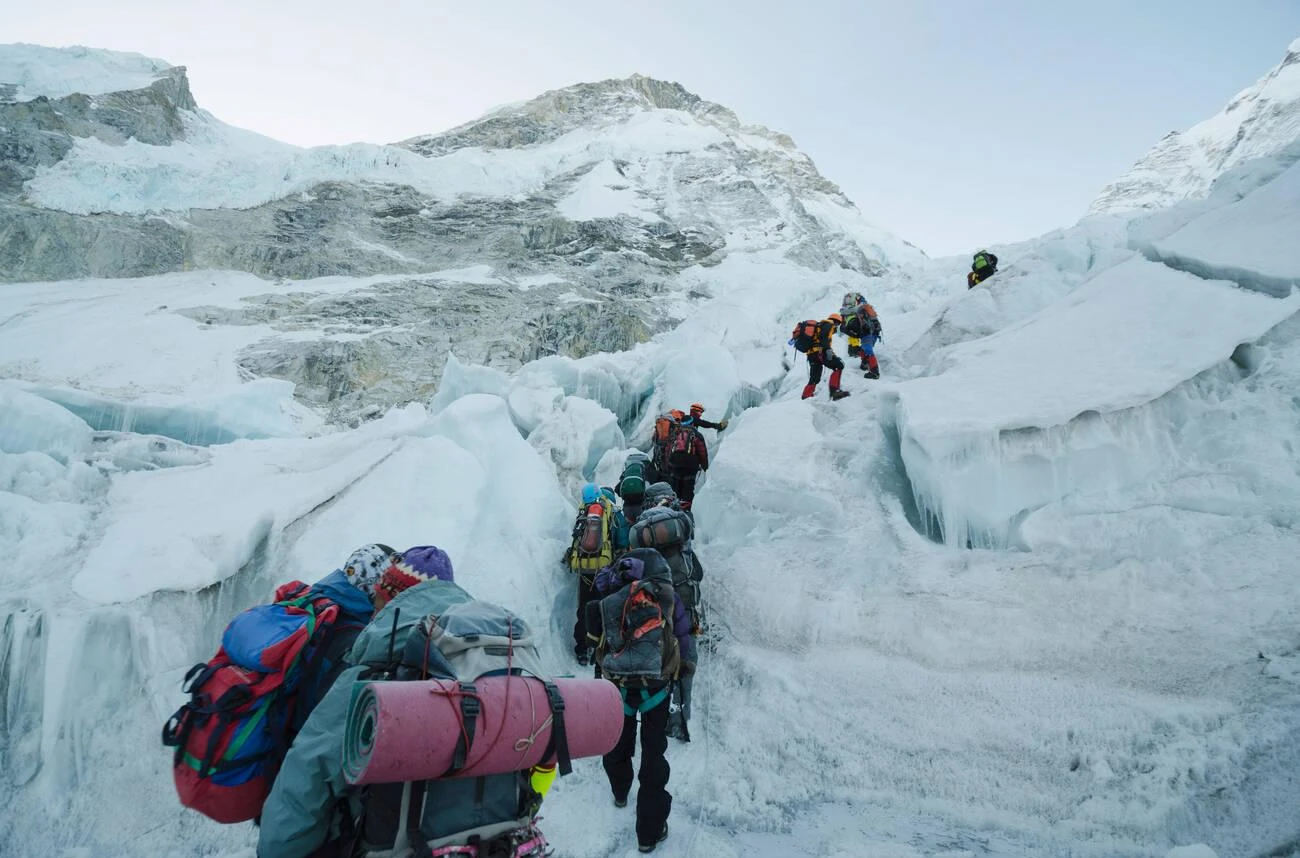
The Everest Expedition organized by Mountain of Nepal is a comprehensive, high-altitude mountaineering journey designed for experienced climbers aiming to reach the summit of the world’s highest peak, Mount Everest (8,848.86m). The expedition begins with cultural immersion in Kathmandu, followed by a scenic flight to Lukla and a gradual trekking route through iconic Sherpa villages such as Namche Bazaar, Tengboche, and Dingboche. This itinerary includes carefully planned acclimatization days, ensuring climbers adapt safely to increasing altitude before entering the Khumbu Icefall and higher camps.
Unlike standard treks to Everest Base Camp, this expedition continues beyond Base Camp into the technical climbing phase, including Camp I, Camp II, Camp III, and Camp IV before the final summit push. The journey demands physical endurance, mental strength, and proper preparation, all of which are supported by Mountain of Nepal’s professional climbing guides and Sherpa team. Their expertise ensures safety, logistics coordination, and high-altitude support throughout the expedition.
The expedition is not just a climb but a life-changing adventure that combines endurance, teamwork, and achievement at the highest level of mountaineering.
Choosing the right season is critical for a successful Everest Expedition. Mountain of Nepal strongly recommends two main climbing windows: pre-monsoon (spring) and post-monsoon (autumn). The most popular and stable season is spring (April to May), when weather conditions are relatively predictable, temperatures are manageable, and the jet stream shifts above the summit, allowing safer ascent opportunities.
During this season, climbers benefit from longer daylight hours, clearer skies, and better ice conditions for establishing higher camps. Autumn (September to October) is another viable option, offering stable weather after the monsoon season, although summit attempts are less common compared to spring.
Winter and monsoon seasons are generally avoided due to extreme cold, heavy snowfall, avalanches, and unstable weather conditions. Mountain of Nepal carefully plans summit windows based on weather forecasts, wind speeds, and route safety assessments provided by expedition meteorologists.
Best Season Highlights:
Timing the expedition correctly significantly increases the chances of a successful summit while minimizing risks associated with extreme altitude and unpredictable Himalayan weather.
The Everest Expedition is considered one of the most challenging mountaineering adventures in the world. It requires advanced climbing skills, prior high-altitude experience, and strong physical conditioning. Climbers face extreme conditions, including low oxygen levels, freezing temperatures, technical ice climbing, and long exposure in the “death zone” above 8,000 meters. Even with preparation, fatigue and altitude sickness remain major challenges.
The route includes trekking sections up to Everest Base Camp followed by technical ascents using fixed ropes, ladders across crevasses, and carefully timed summit pushes. Mountains of Nepalese climbers are supported by experienced Sherpa guides who manage route fixing, load carrying, and safety monitoring throughout the climb.
Transportation begins with international arrival in Kathmandu, followed by a short but adventurous flight to Lukla—one of the world’s most thrilling airports. From Lukla, the journey continues on foot through the Khumbu region until Base Camp is reached. Helicopter evacuation is available in emergencies, ensuring safety at all stages.
Difficulty & Transport Highlights:
This expedition is not recommended for beginners and demands commitment, preparation, and resilience.
Food and accommodation during the Everest Expedition are carefully managed to ensure climbers maintain energy and health at high altitude. Along the trekking route, Mountain of Nepal arranges accommodation in local teahouses, which offer basic but comfortable lodging. Rooms are usually twin-sharing with warm blankets, while higher elevations have more limited facilities due to harsh environmental conditions.
At Everest Base Camp and higher camps, expedition-style tented accommodation is provided. These include insulated sleeping tents, dining tents, and kitchen setups managed by experienced support staff. Hygiene and warmth become top priorities as altitude increases.
Meals are designed to provide high energy and easy digestion. Common foods include rice, lentils (dal bhat), pasta, noodles, soups, potatoes, and seasonal vegetables. At higher camps, food is specially prepared to meet climbers’ calorie requirements while being easy to cook in low-oxygen environments.
Food & Accommodation Highlights:
Proper nutrition and rest play a vital role in acclimatization and overall summit success.
Climbing Mount Everest requires multiple official permits issued by the Government of Nepal. Mountain of Nepal manages all necessary documentation and ensures full compliance with national mountaineering regulations. Without these permits, participation in the expedition is not legally possible.
The key permits include the Everest Climbing Permit issued by the Department of Tourism, Sagarmatha National Park entry permit, and local area permits, where applicable. Additional requirements may include liaison officer fees and waste management deposits to ensure environmental protection in the Everest region.
These permits help regulate climbing traffic, maintain safety standards, and preserve the fragile Himalayan ecosystem. Fees contribute to conservation efforts and support local communities in the Khumbu region.
Permit Highlights:
Mountain of Nepal handles all paperwork and logistics, allowing climbers to focus entirely on preparation and the climb itself without administrative stress.
Choosing Mountain of Nepal for your Everest Expedition ensures a professionally managed, safety-focused, and well-supported climbing experience. The company is known for its experienced Sherpa guides, structured acclimatization plans, and strong logistical coordination from arrival in Kathmandu to summit and descent.
Safety is the top priority, with emergency oxygen systems, satellite communication, weather monitoring, and rescue support integrated into the expedition plan. The company also emphasizes ethical mountaineering practices, including proper waste management and fair treatment of local support staff.
Climbers benefit from personalized guidance, high-quality equipment support, and expert route management. Whether it is organizing flights, arranging permits, or coordinating high-altitude camps, Mountain of Nepal ensures a seamless expedition experience.
Why Choose Us Highlights:
With Mountain of Nepal, the Everest Expedition becomes not just a climb but a professionally guided journey toward achieving one of the world’s greatest mountaineering goals.
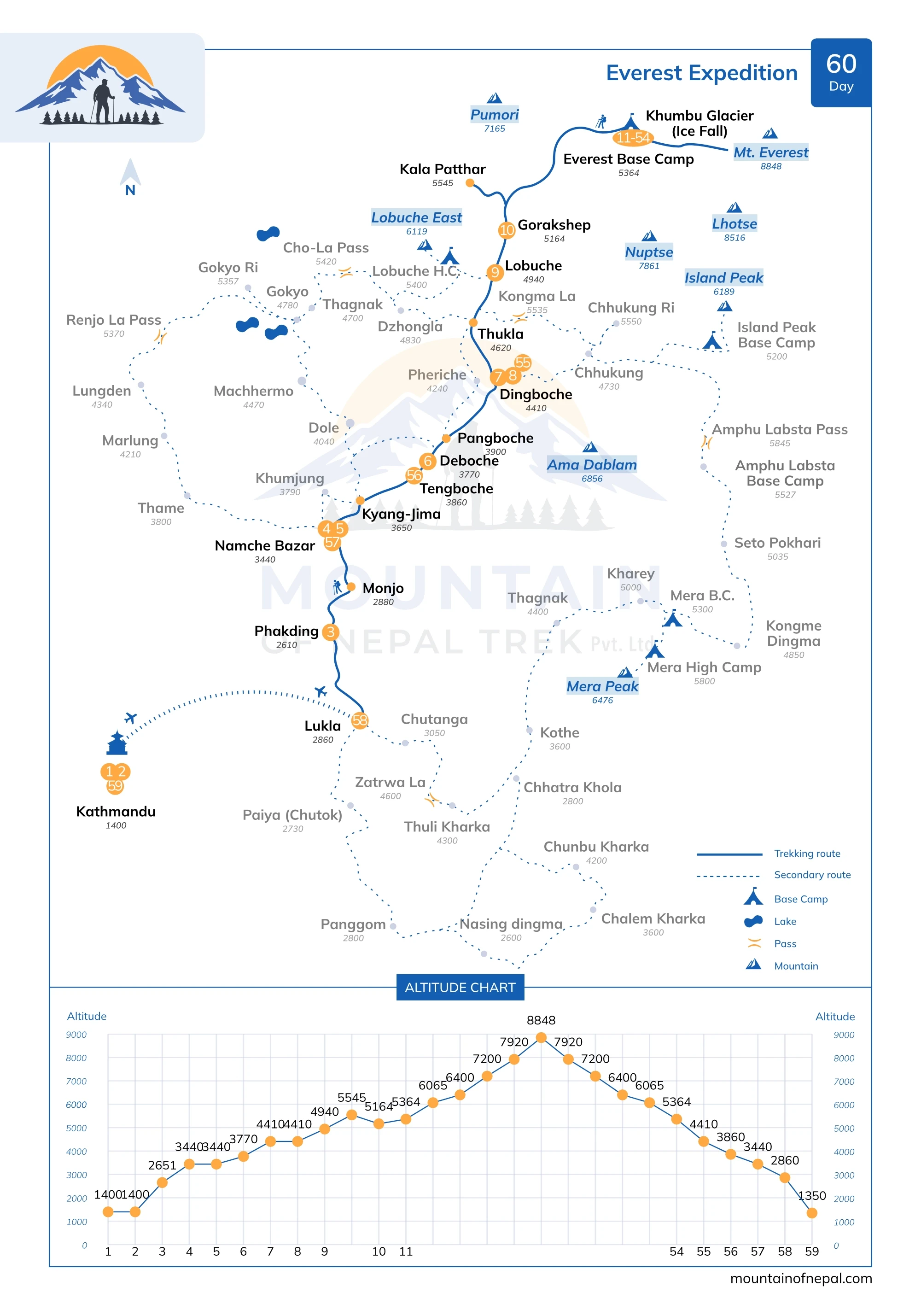
Upon arrival at Tribhuvan International Airport in Kathmandu, you will be warmly welcomed by a representative from Mountain of Nepal and transferred to your hotel in the city. After check-in, you can rest and recover from your international flight. A brief orientation session will be conducted in the evening, introducing the expedition plan, safety protocols, and team members. You will also receive important documents and gear checklist verification. The rest of the day is free to relax or explore the nearby streets of Thamel, preparing mentally for the journey ahead to the Himalayas.
Today is dedicated to cultural exploration and expedition preparation organized by Mountain of Nepal. After breakfast, you will visit UNESCO World Heritage Sites such as Swayambhunath (Monkey Temple), Boudhanath Stupa, and Pashupatinath Temple. These spiritual landmarks offer insight into Nepal’s rich heritage. In the afternoon, final gear checks, equipment fittings, and briefing sessions with guides and Sherpas will take place. You will also meet your climbing team and review safety procedures. This day ensures both cultural immersion and technical readiness before heading into the Everest region.
Early morning flight from Kathmandu to Lukla offers breathtaking views of the Himalayas. Upon landing at the famous Tenzing-Hillary Airport, the trek officially begins under the guidance of Mountain of Nepal. The trail descends gently through lush forests, suspension bridges, and small Sherpa villages. You will follow the Dudh Koshi River valley to reach Phakding. The trek is relatively short, allowing gradual acclimatization. Upon arrival, you will settle into a teahouse, enjoy a warm meal, and rest for the next day’s ascent toward Namche Bazaar.
Today’s trek involves a steady climb along the Dudh Koshi River, crossing several suspension bridges, including the famous Hillary Bridge. After entering Sagarmatha National Park, permits are checked before continuing uphill. The final section is a challenging ascent toward Namche Bazaar, the bustling Sherpa capital. Mountain of Nepal guides ensure a steady pace for acclimatization. As you arrive, panoramic views of Everest and neighboring peaks may appear if weather permits. Namche offers shops, bakeries, and lodges, providing a comfortable resting point for higher altitude preparation.
This rest day is crucial for proper acclimatization under Mountain of Nepal’s expedition strategy. You will undertake a short hike to Everest View Hotel or Khumjung village to help your body adjust to thinner air. These hikes provide stunning panoramic views of Everest, Lhotse, and Ama Dablam. After returning to Namche, you can explore local markets, visit the Sherpa Museum, or rest. Hydration and nutrition are emphasized throughout the day. This acclimatization process is vital for reducing altitude sickness risk and ensuring safe progression toward higher camps.
Leaving Namche Bazaar, the trail follows a scenic ridge with spectacular views of Himalayan peaks. The route passes through Tengboche, home to the famous monastery, before descending into lush rhododendron forests. Mountain of Nepal guides lead a steady pace to balance altitude gain. After a monastery visit or short break at Tengboche, the trail continues downhill to Deboche. The peaceful environment, surrounded by forest and mountains, offers a serene overnight stop. This day combines cultural exploration and significant altitude progression.
The journey continues through alpine terrain, crossing suspension bridges and ascending gradually toward Pangboche village. Mountain of Nepal ensures proper pacing to manage altitude adaptation. The landscape becomes more rugged and open as trees disappear, replaced by dramatic mountain scenery. After lunch, the trail climbs steadily to Dingboche, a beautiful village surrounded by stone-walled fields. This location is important for acclimatization before heading into higher elevations. You will rest in a comfortable lodge while preparing for the next acclimatization phase.
This acclimatization day is essential for safe ascent progression. Mountain of Nepal organizes a hike to Nangkartshang Peak, offering panoramic views of Makalu, Lhotse, and Island Peak. The climb helps your body adapt to reduced oxygen levels. After returning, the rest of the day is spent resting, hydrating, and eating high-energy meals. Dingboche’s calm environment allows for mental and physical recovery. The guides will review health conditions and prepare the team for the upcoming trek toward Lobuche.
Today’s trek follows a gradual but noticeable altitude gain through alpine valleys. The route passes memorial sites dedicated to climbers who lost their lives on Everest, providing a reflective moment. Mountain of Nepal ensures slow, steady pacing to avoid fatigue. The landscape becomes increasingly barren and dramatic as you approach Lobuche. Upon arrival, you will notice colder temperatures and thinner air. Lodging is basic but comfortable, designed for high-altitude conditions. Rest is prioritized to prepare for the next major milestone: Everest Base Camp.
The trek begins toward Gorak Shep, the final settlement before Everest Base Camp. After lunch, a challenging hike to Kala Patthar offers one of the best close-up views of Mount Everest. Mountain of Nepal guides ensure safe pacing during the steep climb. From the summit of Kala Patthar, panoramic views of Everest, Nuptse, and surrounding peaks are breathtaking. After descent, you return to Gorak Shep for overnight rest. This day is physically demanding but visually rewarding.
Today marks a major milestone as you trek to Everest Base Camp with Mountain of Nepal. The trail crosses rocky moraine terrain along the Khumbu Glacier. Upon arrival, you will stand at the foot of the world’s highest mountain. Climbers’ tents and expedition activity fill the base camp during the season. After celebration and photography, you return to Gorak Shep for overnight stay. This emotional and symbolic achievement prepares you mentally for the climbing phase ahead.
This day is used for final expedition preparations. Mountain of Nepal guides conduct safety briefings, gear checks, and climbing strategy discussions. You will rest, hydrate, and acclimatize further at Base Camp. Medical checks ensure readiness for higher altitude climbs. Sherpas organize load distribution and route planning for fixed rope installation. The environment is busy with other expeditions preparing for summit attempts. This rest period is crucial before entering the rotation phase of climbing higher camps.
This marks the beginning of the serious climbing phase managed by Mountain of Nepal. Climbers begin rotations between higher camps—Camp I, Camp II, Camp III, and Camp IV—to acclimatize further. Teams move up and down multiple times depending on weather and condition. Oxygen systems are tested, ropes fixed, and summit strategies finalized. Weather windows are closely monitored. After each rotation, climbers return to Base Camp for rest. The summit attempt is not fixed yet and depends entirely on safety conditions and team readiness.
During this extended phase, Mountain of Nepal coordinates multiple rotations between Everest’s higher camps. Climbers progressively ascend to Camp I, Camp II, and Camp III, sometimes reaching Camp IV (South Col) for short stays. Each rotation improves oxygen efficiency and endurance. Weather conditions are continuously analyzed by expedition leaders. Periods of waiting are common due to high winds or snowfall. When a stable weather window opens, summit teams are deployed. Sherpas fix ropes, carry oxygen, and support climbers. After summit attempts, all climbers descend carefully back to Base Camp for recovery and monitoring.
After successful summit attempts and recovery at Base Camp, descent begins under Mountain of Nepal supervision. You trek down to Dingboche, enjoying thicker air and warmer conditions. The return journey feels faster and more comfortable compared to ascent. Along the way, you pass familiar trails and villages. This marks emotional relief after the extreme altitude phase. Overnight stay in Dingboche allows rest and celebration of achievement.
The descent continues through alpine landscapes and forested areas. Mountain of Nepal guides ensure safe pacing as energy returns gradually. You pass Pangboche village and descend toward Tengboche Monastery. The environment becomes greener and oxygen levels improve noticeably. Upon arrival, you can visit the monastery again and reflect on the expedition journey. Comfortable lodges provide warm meals and rest.
Today’s trek leads back to Namche Bazaar, retracing familiar trails. The descent includes forest paths, suspension bridges, and river valleys. Mountain of Nepal ensures a steady rhythm to avoid strain on recovering muscles. Arrival in Namche feels like returning to civilization with bakeries, shops, and comfortable lodges. This is a celebratory stop marking successful completion of high-altitude climbing.
The final trekking day in the Khumbu region takes you back to Lukla. The trail involves long descents and river crossings. Mountain of Nepal guides maintain a relaxed pace as you reflect on the journey. Upon reaching Lukla, the expedition team gathers for farewell celebrations with Sherpa staff. This emotional day marks the end of trekking portion of Everest expedition.
Early morning flight from Lukla returns you to Kathmandu, weather permitting. Mountain of Nepal arranges airport transfer and hotel check-in. After days in the mountains, returning to the capital feels like a transition back to modern life. The rest of the day is free for relaxation, shopping, or celebration dinner with the expedition team. A certificate of achievement may be provided.
On the final day of the expedition, Mountain of Nepal assists with airport transfer for your international departure. Depending on flight timing, you may have a few hours for last-minute shopping or relaxation. This marks the official end of the Everest Expedition. You leave Nepal with lifelong memories of high-altitude adventure, teamwork, and personal achievement, having successfully completed one of the world’s most challenging journeys.
Your Start Date is the day you land in Nepal, and your End Date is when you fly home.
If the set Everest Expedition group dates don’t suit your schedule, we can offer alternative dates upon request.
The Everest Expedition organized by Mountain of Nepal is considered one of the most challenging high-altitude climbs in the world. It requires strong physical fitness, previous trekking or climbing experience, and excellent mental endurance. Climbers must be prepared for extreme cold, low oxygen levels, and long duration at high altitude. Technical sections, especially above Camp II, demand basic mountaineering skills such as using ropes, crampons, and oxygen systems. Although supported by experienced Sherpa guides, the expedition remains highly demanding and suitable only for serious mountaineers.
Yes, Mountain of Nepal strongly recommends prior high-altitude trekking or mountaineering experience before attempting Everest. Ideally, climbers should have successfully completed peaks above 6,000 meters, such as Island Peak or Lobuche Peak. Basic technical skills like rope handling, ice axe usage, and crampon walking are essential. While Sherpa guides provide support, Everest is not suitable for beginners. Proper experience ensures better acclimatization, decision-making ability, and safety during the expedition, especially in the death zone above 8,000 meters.
The full Everest Expedition with Mountain of Nepal typically takes around 55 to 60 days, depending on weather conditions and acclimatization needs. This duration includes trekking to Everest Base Camp, acclimatization rotations, climbing higher camps, and waiting for a suitable summit window. The summit phase alone can take several weeks due to unpredictable Himalayan weather. Additional time is also required for recovery and descent. Flexibility is essential, as safety always comes before fixed schedules in high-altitude expeditions.
Yes, supplemental oxygen is an essential part of the Everest Expedition organized by Mountain of Nepal, especially above Camp III and in the “death zone” above 8,000 meters. Climbers are provided with oxygen cylinders, masks, and regulators for the summit push. Sherpa guides also use oxygen support during critical phases. Oxygen significantly increases safety and summit success rate by reducing altitude-related risks. However, it does not eliminate danger completely, and climbers must still be well-acclimatized and physically prepared for extreme conditions.
Climbers joining Mountain of Nepal’s Everest Expedition must have excellent physical fitness. Strong cardiovascular endurance, stamina, and muscular strength are essential. Training should include long hikes, stair climbing, running, and strength conditioning for at least 6–12 months before the expedition. High-altitude tolerance is also important, and prior experience at elevations above 5,000–6,000 meters is highly recommended. Mental strength is equally important, as climbers face long exposure to cold, isolation, and physical exhaustion during the expedition.
Mountain of Nepal clearly explains that reaching the Everest summit is not guaranteed due to unpredictable weather, health conditions, and safety factors. If a climber cannot continue, they may return from any point with the support of Sherpa guides. Safety is always prioritized over summit success. Climbers may still consider the expedition a major achievement, even without reaching the top, as climbing to Base Camp or higher camps is extremely demanding. The team provides full support during safe descent and recovery.
Mountain of Nepal provides full logistical and technical support throughout the Everest Expedition. This includes experienced Sherpa guides, route fixing, weather monitoring, meal planning, and high-altitude medical support. The company ensures proper acclimatization schedules and safe rotation between camps. Communication systems are maintained between Base Camp and higher camps for coordination. Emergency response plans, including evacuation procedures, are also in place. The goal is to maximize safety, comfort, and summit success while maintaining professional expedition standards in the Himalayas.
According to Mountain of Nepal, the best climbing seasons for Everest are pre-monsoon (April to May) and post-monsoon (September to October). The spring season is the most popular due to relatively stable weather conditions and favorable summit windows. During this time, wind speeds are lower, and temperatures are more manageable at high altitude. The expedition schedule is carefully planned around these weather patterns to maximize safety and summit success. Climbers must still remain flexible, as Everest weather can change rapidly even during the best seasons.
During the Everest Expedition, Mountain of Nepal provides hotel accommodation in Kathmandu before and after the climb, usually in comfortable tourist-standard hotels. During the trekking phase, accommodation is in teahouses with basic but clean facilities. At Everest Base Camp, climbers stay in well-equipped expedition tents with dining, kitchen, and communication setups. Higher camps provide more basic survival-style tents due to extreme conditions. While comfort reduces at higher altitude, all arrangements are made to ensure safety, warmth, and proper nutrition throughout the journey.
Mountain of Nepal prioritizes safety throughout the Everest Expedition. Experienced licensed guides and Sherpa climbers accompany all teams. Weather forecasts are closely monitored to avoid dangerous conditions. Fixed ropes are installed on the climbing route for secure ascent and descent. Regular health checks are conducted at Base Camp and higher camps. Emergency oxygen, first aid kits, and evacuation plans are always in place. In case of severe illness or altitude sickness, helicopter rescue options are arranged. Safety decisions always override summit ambitions.
Climbing Mount Everest requires several official permits, all arranged by Mountain of Nepal. These include the Everest climbing permit issued by the Nepal government, Sagarmatha National Park entry permit, and Khumbu rural municipality fees. These permits are mandatory for all climbers and are included in the expedition package. Without proper authorization, climbing is strictly prohibited. The company ensures all legal documentation is handled smoothly so climbers can focus entirely on training, acclimatization, and the expedition itself without administrative concerns.


 (2)
(2)  100% recommend (0)
 (0)
(0)