The Annapurna to Mustang Traverse via Teri La Pass is one of Nepal’s most remote and challenging high-altitude trekking expeditions, linking the secluded valleys of the Nar Phu Valley with the restricted Himalayan kingdom of Upper Mustang. Operated by Mountain of Nepal, this 23-day journey is designed for experienced trekkers seeking adventure beyond traditional routes in the greater Annapurna region. The trek passes through isolated Tibetan-influenced settlements, high mountain passes, ancient monasteries, and stark trans-Himalayan landscapes, culminating in the legendary walled city of Lo Manthang.
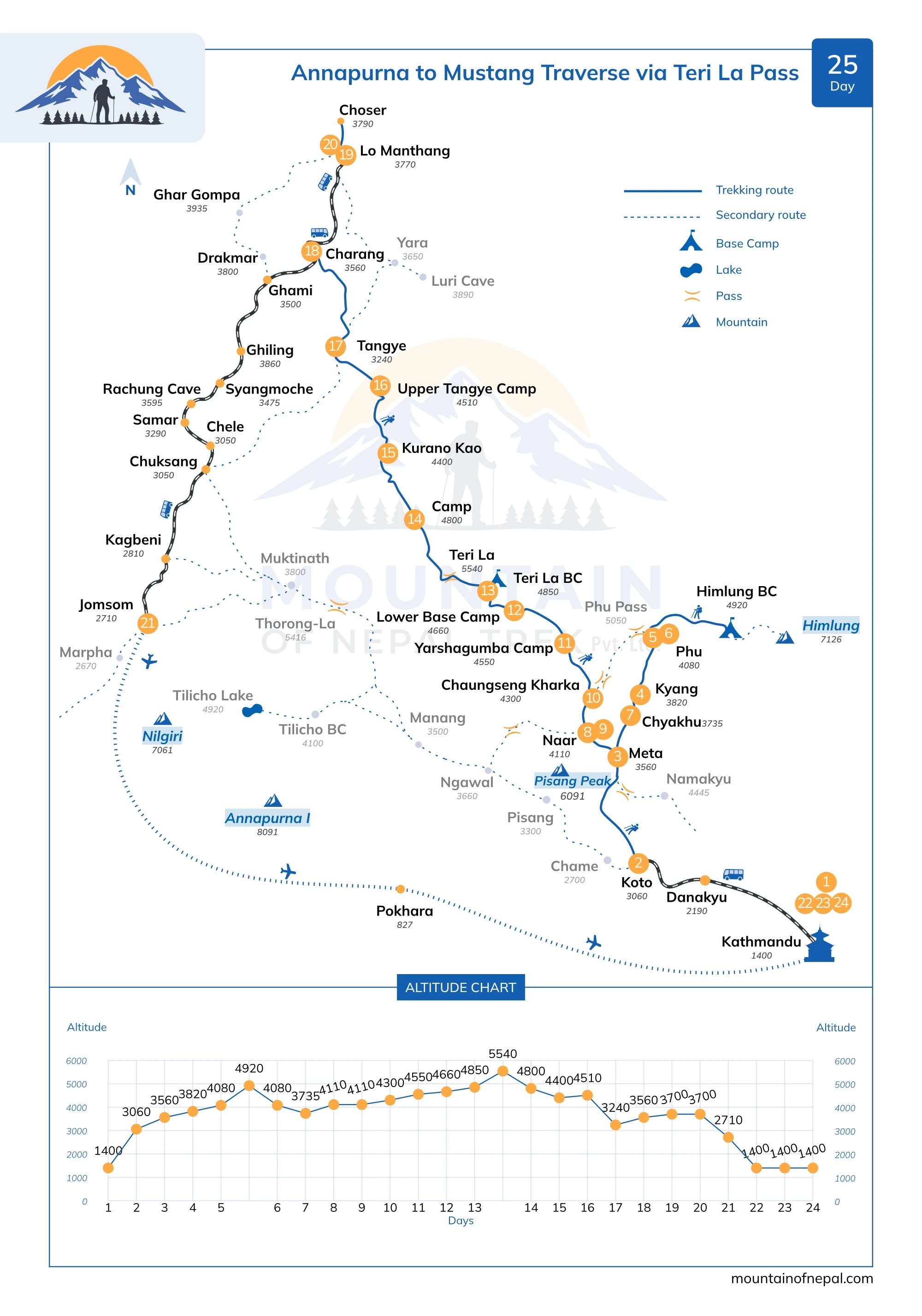
The itinerary begins in Kathmandu and progresses through the Annapurna Circuit trailhead at Koto before entering Nar Phu Valley. From there, the route climbs steadily through Kyang, Phu Gaun, Nar, and onward to high alpine camps before crossing the demanding Teri La Pass (5,540 m). After the pass, the trail descends into Mustang, eventually reaching Upper Mustang and concluding at Jomsom, followed by flight connections back to Pokhara and Kathmandu.
This expedition is both a cultural immersion and a physical challenge, combining wilderness trekking with high-altitude endurance. Mountain of Nepal ensures full logistical support, including experienced guides, permits, and safety management for this remote Himalayan traverse.
The best seasons for the Annapurna to Mustang Traverse via Teri La Pass are spring (April–May) and autumn (September–November). During these periods, weather conditions are relatively stable, skies are clearer, and mountain views are at their best. Because the route crosses extremely high terrain, including Teri La Pass and remote sections of the Annapurna and Mustang regions, weather plays a critical role in safety and success.
In spring, rhododendron forests bloom in the lower Annapurna regions, while higher valleys like Nar Phu Valley remain crisp and dry. Autumn offers the clearest visibility and most stable trekking conditions, especially in the rain-shadow areas of Upper Mustang. Winter is not recommended due to heavy snowfall blocking Teri La Pass, while summer/monsoon brings landslides in the lower sections near Annapurna approaches.
Mountain of Nepal carefully selects departure dates to align with optimal weather windows and ensures contingency days in locations like Nar Gaon for acclimatization and weather delays.
Seasonal summary:
This trek is classified as very strenuous to expedition-level difficulty due to long trekking days, high altitude exposure, and technical navigation across remote terrain. The highlight, Teri La Pass (5,540 m), requires strong physical endurance and prior trekking experience above 4,000 meters. Daily walking ranges between 3 and 9 hours, often on rugged, unmarked trails with significant elevation gain and loss.
Transportation begins with arrival in Kathmandu, followed by a long road drive to Koto. The trek then continues on foot through isolated valleys, with no road access until lower Mustang. After reaching Jomsom, travelers take a short mountain flight to Pokhara, followed by a drive or flight back to Kathmandu. Mountain of Nepal arranges all ground logistics, domestic flights, permits, and emergency evacuation support if required.
The route requires acclimatization days in Phu and Nar to reduce altitude sickness risks. Terrain includes glacier-fed rivers, rocky ascents, snow passes, and high desert plateaus.
Difficulty highlights:
Transport summary:
Accommodation on this route is a combination of basic teahouses, homestays, and high-altitude camping. In lower sections, such as Annapurna approach villages, simple lodges provide meals and bedding. However, once entering Nar Phu Valley and approaching Teri La Pass, camping becomes essential due to the lack of permanent settlements. Mountain of Nepal provides full camping equipment, including tents, kitchen support, and trained cooks for higher camps.
Meals are typically Nepalese and Tibetan-influenced, including dal bhat, noodles, soups, tsampa, and seasonal vegetables. As altitude increases, food becomes simpler but energy-rich. In remote sections like Upper Mustang, local lodges offer basic but warm meals. Hydration and calorie intake are strictly managed by guides to maintain stamina at altitude.
Hygiene conditions vary depending on remoteness. In teahouses, shared bathrooms are common, while camping sections rely on portable toilet systems managed by the crew.
Food & accommodation highlights:
Mountain of Nepal ensures safe food handling, hygienic cooking, and proper altitude nutrition planning throughout the expedition.
This trek passes through restricted and protected areas, requiring multiple official permits issued by the Government of Nepal. Since it includes both the Annapurna Conservation Area and the restricted Upper Mustang region, proper documentation is mandatory and strictly checked at various checkpoints.
The key permits include the Annapurna Conservation Area Permit (ACAP), Restricted Area Permit (RAP) for Nar Phu Valley, and the Upper Mustang Restricted Area Permit. Additionally, special trekking arrangements are required for crossing Teri La Pass, as it lies in a remote high-altitude corridor between two restricted zones.
Mountain of Nepal handles all permit processing on behalf of trekkers, ensuring compliance with Nepal Tourism Board regulations. Solo trekking is not permitted in restricted areas; therefore, a licensed guide and minimum group requirement apply.
Permit summary:
Permits ensure environmental protection, cultural preservation, and controlled tourism in fragile Himalayan regions like Upper Mustang and Nar Phu Valley.
The Annapurna to Mustang Traverse via Teri La Pass is not a typical trekking route—it is a rare expedition that combines wilderness adventure, cultural exploration, and extreme altitude trekking in one journey. It is ideal for experienced trekkers who want to go beyond commercial trails and experience the untouched Himalayas of Nepal.
With Mountain of Nepal, this trek is professionally managed with safety-focused logistics, experienced high-altitude guides, and full expedition support. The route connects the hidden valleys of Nar Phu Valley with the ancient kingdom of Lo Manthang in Upper Mustang, offering one of the most diverse trekking experiences in the Himalayas.
The journey includes everything from glacier valleys and alpine passes to desert plateaus and centuries-old Tibetan culture. The crossing of Teri La Pass makes it especially unique, as very few trekkers attempt this remote high pass each year.
Why choose this trek:
Upon arrival in Kathmandu, you will be warmly welcomed by a representative from Mountain of Nepal and transferred to your hotel in the vibrant Thamel area. After check-in, you can rest or explore the bustling streets filled with trekking shops, cafes, and cultural landmarks. In the evening, there will be a detailed briefing about the entire Annapurna to Mustang Traverse via Teri La Pass, covering route conditions, safety protocols, and gear checks. This day is also important for final preparation and paperwork. The journey officially begins in Nepal’s historic capital, blending culture, tradition, and anticipation for the adventure ahead.
Today begins an overland journey from Kathmandu toward the high Himalayas. The drive follows the Prithvi Highway and then branches into rougher mountain roads passing through rivers, terraced hills, and small settlements. You will travel along the Marsyangdi River valley, entering the gateway of the Annapurna region. The long drive gradually introduces changing landscapes, from subtropical greenery to alpine terrain. By evening, you reach Koto, a small settlement near the entrance of the Nar Phu Valley. The mountain of Nepal ensures comfortable transport and safe passage, allowing you to rest before entering remote trekking territory tomorrow.
After permits are checked at the checkpoint near Koto, the trek officially begins into the restricted and mystical Nar Phu Valley. The trail passes through dense pine forests, narrow gorges, and suspension bridges over the Phu River. The isolation of this region becomes immediately noticeable, with minimal settlements and strong Tibetan cultural influence. The climb is steady and physically demanding, but rewarding with dramatic canyon views. By late afternoon, you arrive at Meta, a windswept settlement with stone houses and prayer flags. The Mountain of Nepal team ensures a safe acclimatization pace as you enter this remote Himalayan world.
The trail from Meta to Kyang gradually ascends through open landscapes and high-altitude deserts. You will pass ancient caves, yak pastures, and Buddhist chortens that reflect the deep spiritual heritage of the region. The air becomes noticeably thinner as you gain elevation. Snow-capped peaks begin to dominate the horizon, creating a dramatic backdrop. The trek today is shorter but important for acclimatization. Kyang is a quiet seasonal settlement where trekkers rest in basic lodges or camps. The Mountain of Nepal guides focus on slow pacing and hydration to prepare your body for higher altitudes ahead.
Today’s journey leads deeper into one of the most culturally preserved villages in Nepal, Phu Gaun. The trail climbs through rocky terrain, with spectacular views of Himlung Himal and surrounding glaciers. As you approach the village, ancient stone walls and traditional Tibetan-style houses appear, creating a timeless atmosphere. Phu Gaun is rich in Buddhist monasteries and centuries-old traditions. Upon arrival, you are welcomed by locals who still practice yak herding and mountain farming. The mountain of Nepal ensures cultural respect and immersion while maintaining comfort and safety during your stay.
This important acclimatization day involves a challenging hike toward Himlung Base Camp, offering panoramic views of glacial valleys and towering peaks. The climb is gradual but high in altitude, helping your body adapt to thinning oxygen levels. You will return to Phu Gaun after several hours of exploration and photography. The region around Himlung Himal is remote and pristine, with no permanent settlements beyond yak pastures. The Mountain of Nepal guides closely monitor health conditions, ensuring safe ascent and descent. This day strengthens endurance and prepares trekkers for the upcoming high passes.
Leaving Phu Gaun, the trail descends slightly before contouring through rugged cliffs and dry alpine terrain. The route offers dramatic views of the Nar Phu landscape, with deep valleys and snow peaks surrounding you. The shorter trekking duration today allows recovery after the previous high-altitude hike. Chyakhu is a small, isolated camping area used by trekkers crossing between the Phu and Nar regions. The environment is peaceful and raw, with limited human presence. Mountain of Nepal ensures proper campsite setup, warm meals, and safety monitoring in this remote wilderness zone.
Today’s trail reconnects with the ancient village of Nar Gaon. The ascent is steady, crossing dry ridges and riverbeds carved by glacial melt. The scenery becomes increasingly arid, resembling the Tibetan plateau. Nar Gaon is culturally rich, with traditional stone houses, monasteries, and prayer wheels lining the village paths. Upon arrival, trekkers can observe local life deeply rooted in Tibetan Buddhism. The Mountain of Nepal team ensures proper acclimatization support and encourages exploration of the village’s spiritual and cultural heritage.
This rest day in Nar Gaon is essential for acclimatization before moving toward higher camps and the Teri La region. You may explore nearby viewpoints, visit monasteries, or take short hikes around the village. The landscape offers panoramic views of the surrounding peaks and valleys. This buffer day also allows flexibility in case of weather delays or fatigue. The Mountain of Nepal guides conduct health checks and route briefings for the upcoming challenging stages. Proper hydration and rest are emphasized to prepare for crossing high-altitude camps and the Teri La Pass ahead.
The trail gradually ascends through barren alpine terrain and glacial moraine landscapes. Vegetation becomes sparse, replaced by rocky slopes and windswept ridges. Chaungseng Kharka is a remote grazing area used seasonally by herders. The isolation intensifies as you move further away from permanent settlements. The environment is rugged yet stunning, offering wide-angle views of the surrounding Himalayan giants. The Mountain of Nepal support team establishes a secure campsite and ensures proper acclimatization routines are followed to minimize altitude-related risks.
Today’s trek leads into high alpine pastures historically used for collecting medicinal caterpillar fungus (Yarshagumba). The terrain becomes more demanding, with steep ascents and exposed ridgelines. Snow patches may appear depending on the season. The silence of the region is broken only by wind and distant avalanches. The camp area is extremely remote, with no permanent structures. Mountain of Nepal ensures experienced guides lead the way while monitoring weather and altitude conditions closely for safety and proper acclimatization.
The trail continues upward into increasingly harsh terrain as you approach the Teri La region. The landscape is dominated by glaciers, rocky slopes, and high-altitude winds. Today’s trek is physically demanding, requiring steady pacing and strong endurance. Lower Base Camp is a crucial staging point before reaching higher camps near the pass. The Mountain of Nepal crew sets up tents and provides warm meals to support recovery. The environment is extremely remote, emphasizing the expedition-style nature of this traverse.
A relatively short but important trek leads to Teri La Base Camp. The gradual ascent allows the body to adjust before the major pass crossing. The surrounding landscape is stark, with dramatic views of snow-covered peaks and glaciers. Weather conditions can change rapidly, so preparation is key. The camp is fully supported by the Mountain of Nepal team, who conduct final briefings for the pass crossing. Equipment checks, weather analysis, and health monitoring are prioritized.
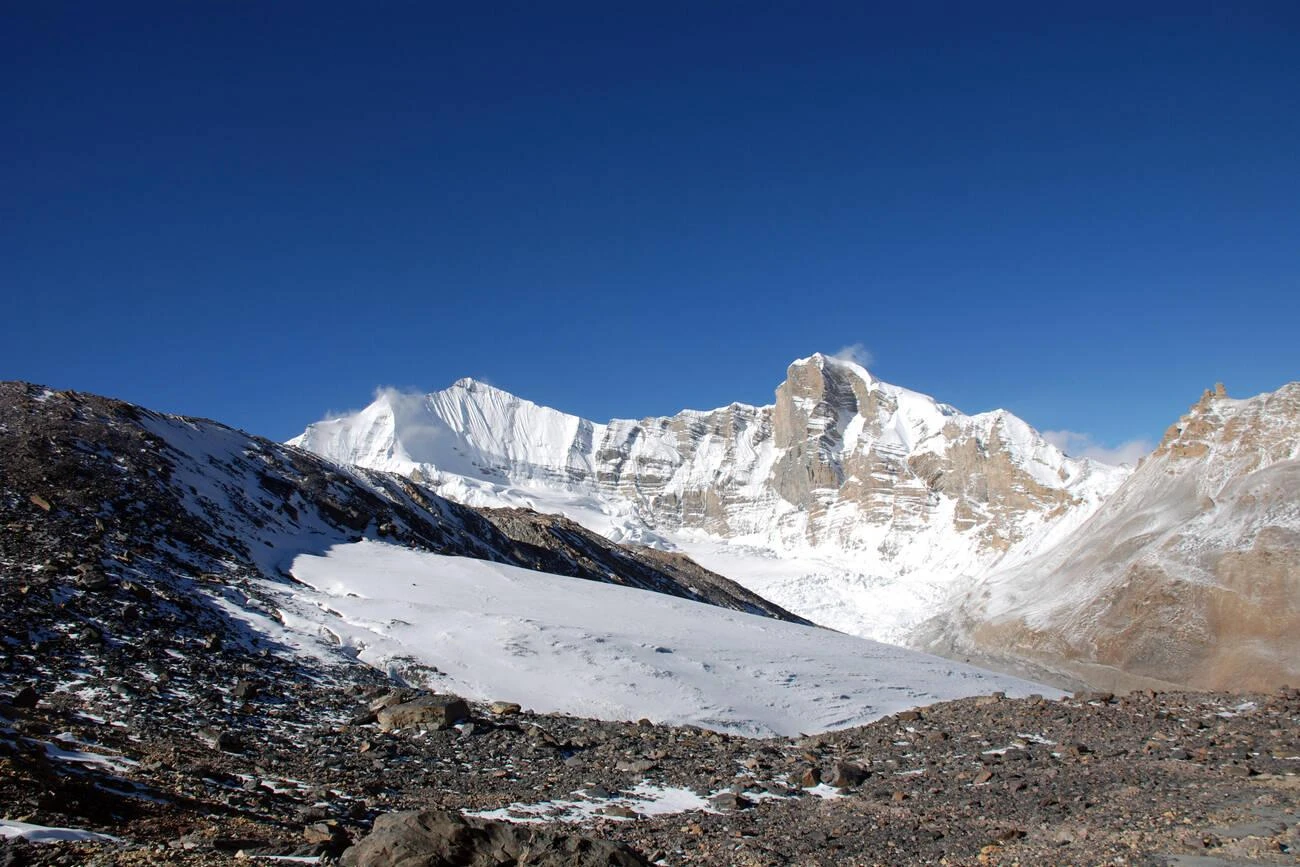
This is the most challenging and rewarding day as you cross Teri La Pass at 5,540 meters. The climb begins early in darkness, navigating icy slopes and potentially snowy terrain. Reaching the summit offers breathtaking panoramic views of both the Annapurna and Mustang regions. After celebration and photography, a long descent leads to the next campsite. This demanding day requires strong physical and mental endurance. The Mountain of Nepal expedition team provides full logistical and safety support throughout the crossing.
After the pass crossing, the trail descends gradually into the Mustang region. The landscape transitions into drier, desert-like terrain typical of the trans-Himalayan zone. Kurano Kao is a remote camping site surrounded by rugged hills and wind-carved cliffs. The descent provides relief after the strenuous pass day. The Mountain of Nepal team ensures proper recovery, hydration, and comfortable camping arrangements.
Today’s trek involves gentle ascents and traverses across arid valleys. The terrain is open and scenic, with expansive views of the Mustang region. Upper Tangge Camp is a peaceful area used by trekkers and herders. The short trekking duration allows rest and exploration of the surroundings. The Mountain of Nepal crew prepares fresh meals and ensures safe campsite management in this remote environment.
The trail descends significantly toward Tangge, a traditional village in Upper Mustang. As altitude decreases, breathing becomes easier, and landscapes become more livable. Tangge features stone houses, prayer flags, and agricultural terraces. The cultural shift from high alpine wilderness to human settlement is clearly visible. The Mountain of Nepal guides facilitate cultural interaction and village exploration.
The journey continues toward Tsarang, combining trekking and driving depending on terrain conditions. Tsarang is one of the historical villages of Mustang, featuring monasteries, fortress ruins, and traditional Tibetan architecture. The landscape is dry and dramatic, shaped by wind erosion. The Mountain of Nepal team ensures smooth logistics for combined travel modes.
A short drive brings you to the ancient walled city of Lo Manthang, the cultural heart of Upper Mustang. The city is famous for its monasteries, royal palace, and Tibetan-influenced heritage. Upon arrival, you will explore narrow alleys and historical structures. The Mountain of Nepal guides provide cultural orientation and historical insights.
A full day is dedicated to exploring Lo Manthang. You may visit monasteries, local villages, and surrounding viewpoints. The cultural richness of Upper Mustang becomes evident through its preserved traditions and festivals. This day offers relaxation after the strenuous trekking journey. The Mountain of Nepal team organizes guided tours and cultural interpretation.
The drive descends through dramatic landscapes toward Jomsom. The journey passes through deep valleys and windy terrain. Jomsom is a major hub in the Annapurna region with better facilities and transport connections. The Mountain of Nepal ensures safe transportation and comfortable lodging.
A scenic flight takes you from Jomsom to Pokhara, followed by another flight or drive back to Kathmandu. This marks the transition from trekking wilderness to urban comfort. The aerial views of the Himalayas are unforgettable. The Mountain of Nepal team assists with all logistics and transfers.
A leisure day in Kathmandu allows rest, shopping, or cultural sightseeing. You may visit UNESCO heritage sites or relax in cafes. This buffer day is important after the long expedition. The Mountain of Nepal team remains available for assistance and feedback sessions.
On your final day, you will be transferred to Tribhuvan International Airport for departure. The Mountain of Nepal team bids farewell after an unforgettable Annapurna to Mustang Traverse via Teri La Pass adventure. This journey concludes with lifelong memories of remote valleys, high passes, and the unique cultures of the Himalayas.
Your Start Date is the day you land in Nepal, and your End Date is when you fly home.
If the set Annapurna to Mustang Traverse via Teri La Pass group dates don’t suit your schedule, we can offer alternative dates upon request.
Proper layering is important to stay warm and comfortable in changing mountain weather.
Good footwear makes trekking easier and safer.
The right gear keeps you safe, comfortable, and prepared.
Lightweight but important items keep you clean, healthy, and comfortable.
Keep important items safe and easy to reach.
The Annapurna to Mustang Traverse via Teri La Pass is a challenging high-altitude expedition that connects the lush Annapurna region with the arid landscapes of Upper Mustang through the remote Nar Phu Valley and the high Teri La Pass. Organized by Mountain of Nepal, this trek is considered one of the most adventurous routes in Nepal due to its isolation, high passes, and cultural diversity. It combines classic Himalayan trekking with expedition-style camping. Trekkers experience dramatic changes in landscapes, from green valleys and glaciers to Tibetan-influenced deserts, making it a rare and rewarding Himalayan traverse.
This traverse is graded as extremely challenging, suitable only for experienced trekkers with strong physical fitness and prior high-altitude trekking experience. The route includes long trekking days, remote wilderness, and crossing the high Teri La Pass at 5,540 meters. Because of the altitude and isolation, mental endurance is equally important. Mountain of Nepal recommends that participants have previous experience above 4,000 meters and are comfortable with camping conditions. Beginners are generally not advised. Proper preparation, acclimatization, and guided support are essential for safety throughout the journey.
Altitude sickness is a major concern on this route due to prolonged exposure above 4,000 meters and the crossing of Teri La Pass at extreme altitude. Mountain of Nepal incorporates a carefully designed acclimatization schedule, including rest days in places like Nar Gaon. Trekkers are closely monitored for symptoms such as headaches, nausea, or dizziness. Guides are trained in first aid and emergency response. Gradual ascent, hydration, and proper pacing are strictly enforced. In severe cases, descent is prioritized immediately to ensure safety.
Connectivity is extremely limited throughout the Annapurna to Mustang Traverse. While mobile networks may work occasionally in lower villages such as Koto or Jomsom, most of the route, especially in the Nar Phu Valley and high pass regions, has no reliable signal. Internet access is almost nonexistent in camping zones. Mountain of Nepal advises trekkers to inform family in advance about communication gaps. Satellite communication is sometimes used by guides for emergency purposes. This disconnect from technology is part of the raw wilderness experience of the trek.
Mountain of Nepal is a professional trekking and expedition company specializing in remote Himalayan routes like the Annapurna to Mustang Traverse via Teri La Pass. The company provides experienced guides, high-quality camping equipment, safety-focused itineraries, and full logistical support from Kathmandu to Mustang. Their team is trained in high-altitude rescue, cultural interpretation, and wilderness navigation. With strong local knowledge of regions such as Lo Manthang and Nar Phu, they ensure both safety and cultural immersion. Choosing Mountain of Nepal guarantees a well-organized, safe, and memorable Himalayan adventure.
Yes, several special permits are required for this expedition because the route passes through restricted and conservation areas. Trekkers must obtain permits for the Annapurna Conservation Area and restricted regions like the Nar Phu Valley and Upper Mustang region. These permits are strictly regulated by the Nepal government. Mountain of Nepal arranges all necessary documentation, including restricted area permits and TIMS (Trekkers’ Information Management System) registration. It is not possible to complete this trek independently without proper authorization and a licensed guide.
The best time for the Annapurna to Mustang Traverse via Teri La Pass is during spring (April–May) and autumn (September–October). These seasons offer stable weather, clear mountain views, and safer crossing conditions at high altitude passes. Winter brings heavy snow, making the Teri La Pass extremely dangerous, while monsoon season results in slippery trails and poor visibility. Mountain of Nepal carefully plans departures during optimal weather windows to maximize safety and visibility. Seasonal timing is crucial due to the technical nature of the terrain and unpredictable Himalayan weather patterns.
Accommodation during this trek is mainly in tented camps and basic teahouses in lower villages. Remote sections, especially beyond the Nar Phu Valley and approaching Teri La, require fully supported camping with kitchen staff and sleeping tents. Facilities are very basic due to the isolated nature of the route. Mountain of Nepal provides high-quality expedition tents, sleeping mats, and meals prepared by experienced cooks. In villages like Lo Manthang, trekkers may find simple guesthouses. Comfort is secondary to the adventure experience in this remote Himalayan environment.
Food during the expedition is prepared by the support crew of Mountain of Nepal, focusing on high-energy meals suitable for high-altitude trekking. In lower regions like Phu Gaun and villages in Upper Mustang, trekkers may enjoy traditional Nepali and Tibetan-style meals. During camping sections, meals include rice, pasta, soups, lentils, vegetables, and occasional meat when available. Snacks, tea, and energy foods are also provided daily. Hygiene and nutrition are carefully managed to maintain strength and stamina throughout the physically demanding journey.
Crossing the Teri La Pass is one of the most technical and remote trekking experiences in Nepal, requiring careful planning and expert guidance. Safety depends on weather conditions, physical fitness, and acclimatization. The mountain of Nepal ensures that only suitable weather windows are used for the crossing, with experienced guides leading the team. Ropes, GPS navigation, and emergency protocols are prepared for challenging sections. Although difficult, the crossing is safe when properly guided, and the support team maintains constant monitoring of weather and health conditions.


 (2)
(2)  100% recommend (0)
 (0)
(0)