Need help with booking? Send us a message.
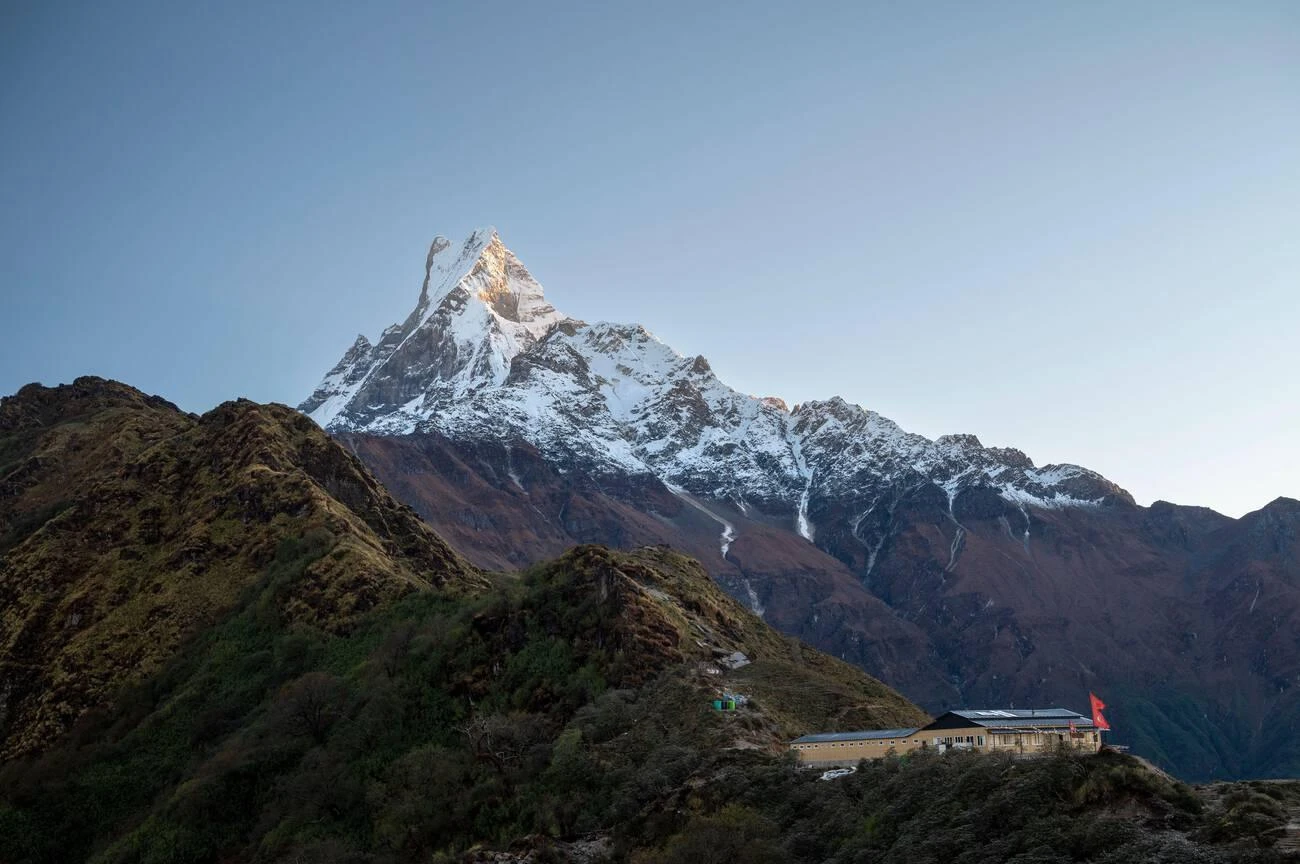
The Mardi Himal Trek is a stunning short Himalayan adventure located in the Annapurna region of Nepal. This trek is known for its peaceful trails, close-up views of iconic peaks like Machhapuchhre (Fishtail), Annapurna South, and Hiunchuli, and its relatively less crowded route compared to other popular treks. The journey gradually ascends from lush forests and traditional villages to high alpine landscapes, finally reaching the dramatic viewpoint at Mardi Himal Base Camp (4,500 m).
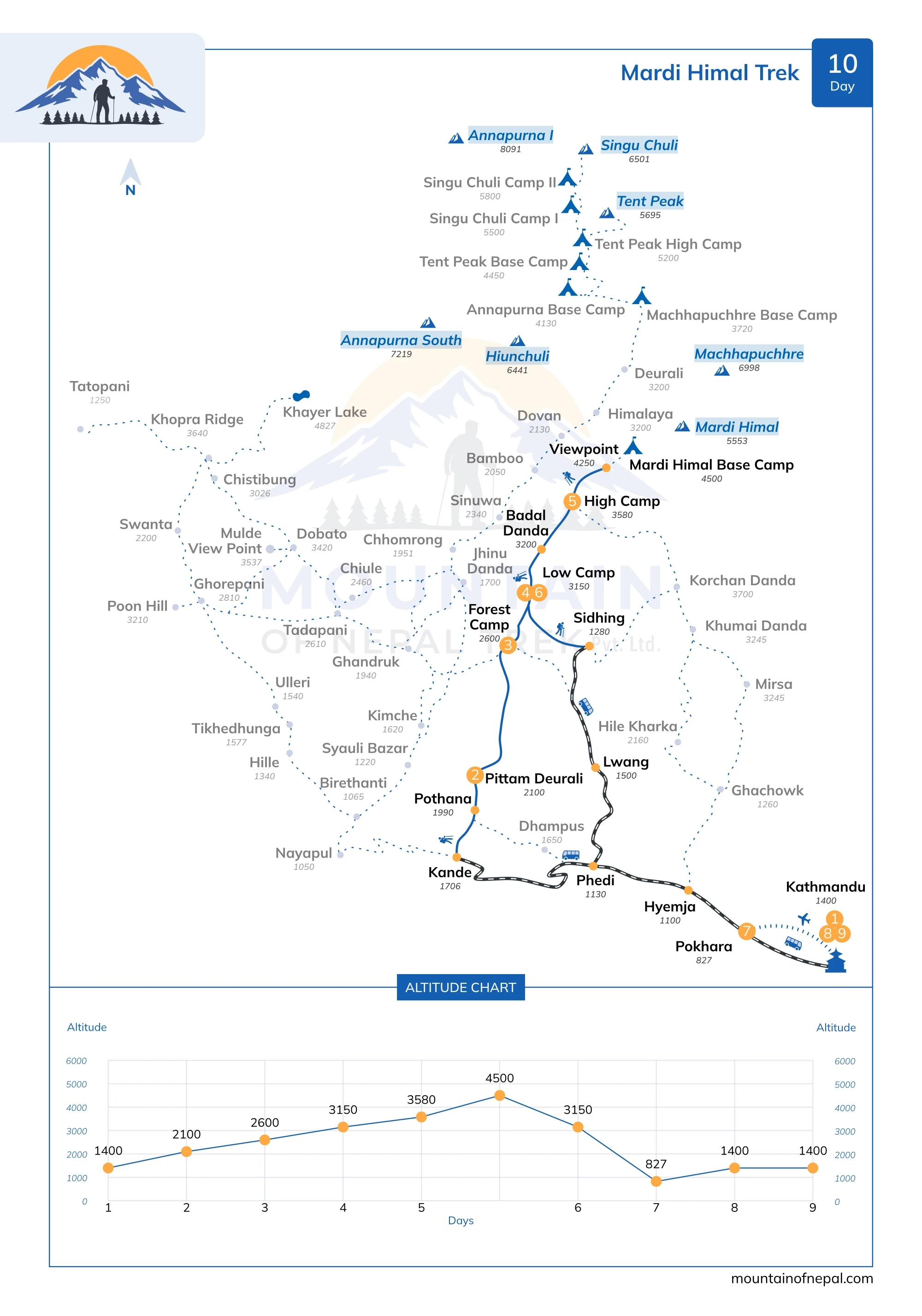
This 10-day itinerary, designed by Mountain of Nepal, offers a balanced experience of culture, nature, and adventure. Starting from Kathmandu, the journey moves to Pokhara and then into the Annapurna foothills. Each day presents a gradual increase in altitude, allowing proper acclimatization and safe trekking conditions. The route passes through Australian Camp, Forest Camp, Low Camp, High Camp, and finally Base Camp before descending back through Siding Village.
The trek is ideal for trekkers who want a moderate Himalayan experience without long expedition-style commitments. It combines rhododendron forests, alpine ridges, and breathtaking sunrise views over snow-capped peaks.
The best time to undertake the Mardi Himal Trek is during spring (March–May) and autumn (September–November). These seasons offer the most stable weather conditions, clear mountain views, and comfortable trekking temperatures. Spring is especially beautiful because the forests are filled with blooming rhododendrons, adding vibrant colors to the trail.
Autumn, on the other hand, provides crystal-clear skies after the monsoon, making it the best season for panoramic Himalayan photography. Winter trekking is also possible, but requires proper preparation due to cold temperatures at High Camp and Base Camp. The monsoon season (June–August) is generally avoided because of heavy rainfall, slippery trails, and reduced visibility.
Mountain of Nepal recommends planning your trek in peak seasons to fully enjoy the scenic beauty and safe trail conditions.
Best seasonal breakdown:
The Mardi Himal Trek is considered a moderate-level trek, suitable for beginners with basic fitness as well as experienced trekkers. The daily walking hours range between 4 and 8 hours, with gradual altitude gain. The highest point, Mardi Himal Base Camp (4,500 m), requires good stamina but does not involve technical climbing.
The trek involves steep ascents, forest trails, and narrow ridge walks, which can be physically demanding but rewarding. Proper pacing and acclimatization are essential, especially from Low Camp to High Camp.
Transportation is well-managed in this itinerary by Mountain of Nepal. The journey begins with a flight from Kathmandu to Pokhara, followed by a drive to Kande, the trek starting point. After completing the trek, travelers descend to Siding Village and drive back to Pokhara, then return to Kathmandu by road or flight, depending on preference.
Difficulty & transport summary:
During the Mardi Himal Trek, accommodation is provided in local teahouses and lodges along the route. These are simple but comfortable mountain stays run by local families. Rooms are usually twin-sharing with basic bedding, and bathrooms are shared in most locations. As altitude increases, facilities become more basic, especially at High Camp.
Food is freshly prepared in teahouses and includes a mix of Nepali and international dishes. The most common and recommended meal is Dal Bhat (rice, lentils, vegetables), which provides energy for long trekking days. Other options include noodles, pasta, soups, eggs, pancakes, and tea/coffee.
The mountain of Nepal ensures trekkers are guided to clean and reliable lodges throughout the journey, maintaining safety and comfort standards.
Accommodation & food highlights:
To complete the Mardi Himal Trek, two main permits are required. These are mandatory and are checked at various entry points in the Annapurna region. Mountain of Nepal arranges all necessary permits for trekkers to ensure a smooth and hassle-free experience.
The required permits include the Annapurna Conservation Area Permit (ACAP) and the Trekkers’ Information Management System (TIMS) Card. The ACAP helps conserve the natural environment and supports local communities, while TIMS ensures trekker safety and record management.
Both permits are easily obtainable in Kathmandu or Pokhara, but it is highly recommended to arrange them through a registered trekking agency like Mountain of Nepal to avoid delays or confusion.
Permit details:
The Mardi Himal Trek is one of Nepal’s best short trekking experiences, offering incredible Himalayan views without the crowds of more commercial routes. It is perfect for travelers seeking a peaceful, scenic, and moderately challenging adventure within a limited timeframe.
Unlike longer treks, Mardi Himal provides a direct and immersive mountain experience. You walk through dense forests, open ridges, and high alpine zones while constantly viewing Machhapuchhre’s iconic peak. The itinerary is flexible, well-paced, and suitable for both solo travelers and groups.
With Mountain of Nepal, trekkers benefit from professional guidance, safe logistics, experienced local guides, and personalized support throughout the journey.
Reasons to choose this trek:
Upon your arrival at Tribhuvan International Airport in Kathmandu, a representative from Mountain of Nepal will warmly welcome you and transfer you to your hotel in the city. After check-in, you will have time to rest after your journey and recover from travel fatigue. Depending on your arrival time, you may explore nearby streets, local markets, or enjoy a relaxed evening in Thamel, the tourist hub. In the evening, your trekking guide will conduct a brief briefing session on trek preparation, safety guidelines, and the itinerary overview. This day is important for acclimatization, final gear checks, and ensuring you are fully ready for the adventure ahead.
After breakfast, you will take a scenic flight from Kathmandu to Pokhara, enjoying breathtaking Himalayan views including glimpses of the Annapurna range. Upon arrival, a short drive takes you to Kande, the starting point of the trek. From here, you begin your hike through lush forests and terraced hillsides, gradually ascending toward Australian Camp, a famous viewpoint offering stunning mountain panoramas. The trail continues gently to Pritam Deurali, where you will stay overnight in a peaceful teahouse surrounded by forest. This first trekking day introduces you to the natural beauty of the Annapurna region and helps your body adjust to altitude gain.
Today’s journey takes you deeper into the serene rhododendron and oak forests of the Mardi Himal trail. Leaving Pritam Deurali, the path becomes quieter and more secluded, with fewer settlements and increasing natural wilderness. You will steadily climb through dense greenery, occasionally opening to small clearings with views of distant snow peaks. The sound of birds and rustling leaves dominates the atmosphere, making the trek peaceful and immersive. Upon reaching Forest Camp, you will settle into a simple teahouse surrounded by thick forest. This location offers a calm environment perfect for rest and acclimatization as you continue ascending toward higher altitudes.
After breakfast, you continue your ascent from Forest Camp toward Low Camp, gradually leaving dense forest behind. As the trail climbs higher, the vegetation becomes thinner, and the first clear views of the Annapurna South and Machhapuchhre (Fishtail) begin to appear. The walk is moderately challenging but rewarding, with dramatic landscapes unfolding at every step. Upon reaching Mardi Himal Low Camp, you are greeted with panoramic mountain views and open ridgelines. This stop offers one of the most spectacular sunset views of the trek. You will spend the night in a cozy teahouse, enjoying the crisp mountain air and peaceful alpine surroundings.
Today’s trek is shorter in distance but steeper in sections as you move above the tree line. The trail follows narrow ridges with sweeping views of snow-covered peaks and deep valleys below. As you approach High Camp, the landscape becomes increasingly rugged and alpine, offering breathtaking 360-degree mountain panoramas. Upon arrival at Mardi Himal High Camp, you will witness one of the closest and most dramatic views of Machhapuchhre. The environment is cold and exposed, but the scenery is unforgettable. You will rest early in preparation for the early morning hike to Base Camp the next day.
This is the most challenging and rewarding day of the trek. Early in the morning, you hike from High Camp toward Mardi Himal Base Camp at 4,500 meters. The trail is steep and rocky, but the sunrise views over the Himalayas are breathtaking, with golden light illuminating peaks like Machhapuchhre and Annapurna South. After spending time at Base Camp and capturing unforgettable scenery, you descend carefully back to High Camp and continue down to Low Camp for an overnight stay. The long descent allows your body to recover while still enjoying spectacular landscapes along the way.
Today, you descend from Low Camp toward Siding Village, walking through lush forests, terraced farmlands, and traditional Gurung settlements. The trail becomes warmer and more populated as you reach lower elevations, offering insight into rural Himalayan lifestyles. Upon reaching Siding Village, your trekking route concludes, and a vehicle arranged by Mountain of Nepal will drive you back to Pokhara. The drive is scenic, passing through countryside landscapes, rivers, and hills. Once in Pokhara, you can relax by Phewa Lake, enjoy a warm shower, and celebrate the successful completion of the trekking section.
After breakfast, you will begin your return journey from Pokhara to Kathmandu by tourist bus or private vehicle arranged by Mountain of Nepal. The drive follows winding roads along rivers, hills, and small towns, offering a final glimpse of Nepal’s diverse landscapes. On arrival in Kathmandu, you will be transferred to your hotel. The evening is free for relaxation or last-minute shopping in Thamel. This day marks your transition from trekking adventure back to cultural exploration in the capital city.
This day is reserved for leisure and personal exploration in Kathmandu. You may choose to visit UNESCO World Heritage Sites such as Swayambhunath (Monkey Temple), Boudhanath Stupa, or Pashupatinath Temple. Alternatively, you can enjoy shopping for souvenirs, handicrafts, or trekking gear in Thamel. If you prefer relaxation, your hotel provides a comfortable environment to rest after the trek. Mountain of Nepal can also arrange optional sightseeing tours or cultural experiences upon request. This flexible day allows you to reflect on your trekking journey and enjoy the rich cultural heritage of Nepal.
On your final day, a representative from Mountain of Nepal will transfer you from your hotel to Tribhuvan International Airport in Kathmandu for your onward flight. Depending on your flight schedule, you may have some free time for a final stroll or breakfast in the city. This marks the end of your Mardi Himal Trek adventure, filled with unforgettable Himalayan scenery, cultural encounters, and personal achievement. The Mountain of Nepal team thanks you for choosing their service and hopes to welcome you again for future trekking adventures in the Himalayas.
Your Start Date is the day you land in Nepal, and your End Date is when you fly home.
If the set Mardi Himal Trek group dates don’t suit your schedule, we can offer alternative dates upon request.
Proper layering is important to stay warm and comfortable in changing mountain weather.
Good footwear makes trekking easier and safer.
The right gear keeps you safe, comfortable, and prepared.
Lightweight but important items keep you clean, healthy, and comfortable.
Keep important items safe and easy to reach.
The Mardi Himal Trek is considered a moderate-level trek suitable for beginners with good physical fitness as well as experienced trekkers. The trails include gradual ascents, forest walks, and some steep sections as you approach High Camp and Base Camp. With proper pacing and acclimatization, most trekkers can complete it comfortably. The highest point reaches around 4,500 meters, so altitude awareness is important. Mountain of Nepal ensures a well-planned itinerary with enough rest, experienced guides, and safety support to make the trek achievable for a wide range of travelers.
No prior trekking experience is required for the Mardi Himal Trek, making it ideal for first-time trekkers. However, a reasonable level of fitness is necessary as you will walk 4–7 hours daily on varied terrain. Regular walking, light jogging, or hiking practice before the trip is helpful. The guides from Mountain of Nepal provide full support, guidance, and pacing advice throughout the journey. Even beginners can complete this trek if they follow instructions, stay hydrated, and maintain a steady walking rhythm.
On the Mardi Himal Trek, daily walking hours generally range from 4 to 7 hours, depending on the section of the trail. Shorter days occur when moving between higher camps, while longer days include ascents or descents such as the hike to Base Camp or descent to Siding Village. The pace is steady and flexible, allowing time for rest, photography, and acclimatization. Mountain of Nepal designs the itinerary carefully to avoid overexertion while ensuring a smooth and enjoyable trekking experience for all participants.
Yes, altitude sickness can be a concern since the trek reaches up to 4,500 meters at Mardi Himal Base Camp. Symptoms may include headache, dizziness, or shortness of breath if ascent is too rapid. However, the risk is manageable with proper acclimatization, hydration, and a slow walking pace. Mountain of Nepal guides are trained to monitor trekkers’ health and respond to symptoms if they appear. The itinerary is designed with gradual elevation gain to minimize risks and ensure a safe trekking experience.
Choosing Mountain of Nepal ensures a safe, well-organized, and memorable trekking experience in the Himalayas. The company provides experienced local guides, carefully planned itineraries, quality accommodations, and full logistical support from arrival to departure. Their focus on safety, customer care, and authentic cultural experience makes the journey smooth and enjoyable. Whether you are a beginner or experienced trekker, Mountain of Nepal tailors the service to your needs, ensuring you experience the beauty of Mardi Himal with confidence and comfort.
The best seasons for the Mardi Himal Trek are spring (March to May) and autumn (September to November). During these months, the weather is generally stable, the skies are clear, and the mountain views are spectacular. Spring offers blooming rhododendron forests, while autumn provides crisp air and excellent visibility of the Annapurna and Machhapuchhre ranges. Winter trekking is also possible, but colder, and the monsoon season brings heavy rain and slippery trails. Mountain of Nepal recommends planning your trek during peak seasons for the best experience and safest trail conditions.
Accommodation during the Mardi Himal Trek consists mainly of teahouses and mountain lodges run by local families. Rooms are simple, usually with twin beds and shared bathrooms in lower facilities. As altitude increases, facilities become more basic but still comfortable enough for rest. Meals are freshly prepared and include local Nepali dishes along with basic international options. Mountain of Nepal carefully selects clean and safe teahouses to ensure trekkers have a comfortable stay while also experiencing authentic Himalayan hospitality and culture.
During the Mardi Himal Trek, trekkers are served freshly cooked meals at teahouses along the route. The most common dish is dal bhat (rice, lentils, and vegetables), which provides high energy for trekking. Other options include noodles, pasta, soups, eggs, pancakes, and Tibetan bread. While menu variety decreases at higher altitudes, food remains nutritious and filling. Mountain of Nepal ensures hygienic and quality meals throughout the trek, helping trekkers maintain energy levels and stay healthy during long walking days in the mountains.
The Mardi Himal Trek is generally safe when guided properly and done with awareness of altitude and weather conditions. The trail is well-established but includes steep and narrow sections near High Camp and Base Camp. Altitude sickness can be a concern above 3,000 meters, so gradual ascent and hydration are important. Mountain of Nepal prioritizes safety by providing experienced licensed guides, emergency support, and proper acclimatization schedules. In case of emergencies, evacuation options are also available, ensuring trekkers feel secure throughout the journey.
To complete the Mardi Himal Trek, trekkers need two main permits: the Annapurna Conservation Area Permit (ACAP) and the TIMS (Trekkers’ Information Management System) card. These permits help regulate trekking activities and support conservation efforts in the region. They are checked at various entry points along the trail. Mountain of Nepal handles all permit arrangements on behalf of trekkers, ensuring a hassle-free experience so you can focus entirely on enjoying the journey without worrying about administrative procedures.
Packing properly is essential for comfort and safety on the Mardi Himal Trek. Key items include warm clothing, waterproof jacket, trekking boots, gloves, hat, sunglasses, sleeping bag, and a backpack. Personal items like sunscreen, water bottles, snacks, and basic medicines are also important. Weather can change quickly in the mountains, so layering is recommended. Mountain of Nepal provides a detailed packing list before departure and helps trekkers prepare efficiently so they are well-equipped for all weather and trail conditions.


 (2)
(2)  100% recommend (0)
 (0)
(0)