The Makalu Expedition (8,463m) is one of the most remote, demanding, and least-traveled 8,000-meter peak expeditions in the Himalayas. Organized by Mountain of Nepal, this journey takes climbers deep into the eastern Himalayas, through the Makalu-Barun National Park, and into a region known for its raw wilderness, dramatic landscapes, and extreme altitude challenges. Unlike more commercial peaks, Makalu offers a true expedition experience with long trekking approaches, technical climbing sections, and limited human settlement along the route.
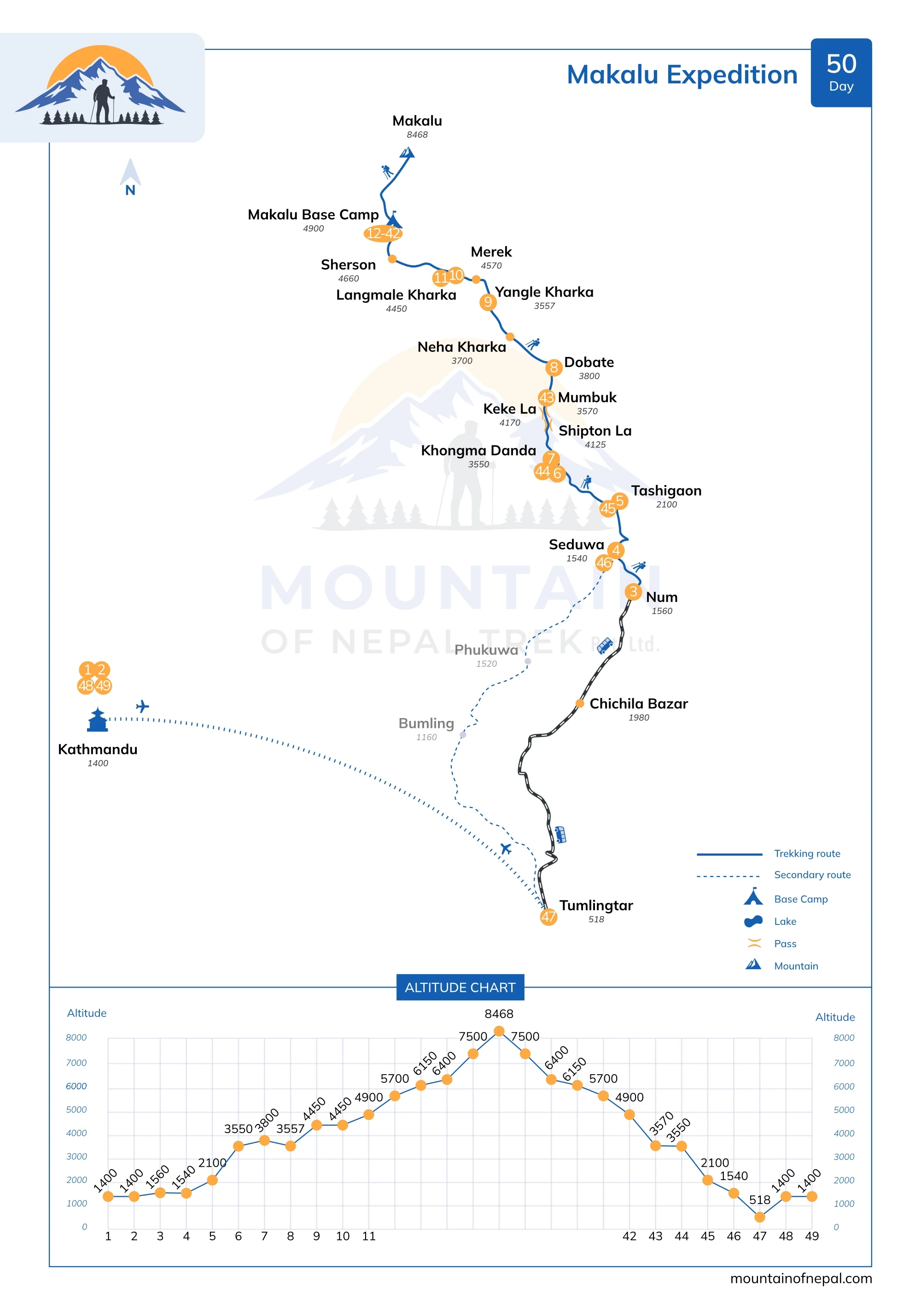
The expedition typically begins in Kathmandu with preparation and briefing, followed by a flight to Tumlingtar and a long trek through Num, Seduwa, Tashigaon, and high alpine valleys before reaching Makalu Base Camp at nearly 4,900 meters. From there, climbers establish multiple camps and undertake rotational climbs before attempting the summit. The journey is physically and mentally demanding, requiring strong endurance, mountaineering skills, and proper acclimatization.
The best seasons for the Makalu Expedition are spring (April–May) and autumn (September–October). These periods provide the most stable weather conditions, clearer skies, and safer climbing windows for high-altitude ascents. Mountain of Nepal carefully schedules expeditions during these seasons to maximize summit success rates and ensure safer glacier and ridge conditions.
Spring is especially popular because temperatures are slightly warmer, snow conditions are stable, and the weather window for summit attempts is more predictable. Rhododendron forests bloom along the lower trekking route, adding beauty to the long approach. Autumn, on the other hand, offers crystal-clear mountain views after the monsoon season, with dry trails and excellent visibility of Makalu and the surrounding peaks.
Winter and monsoon seasons are generally avoided due to extreme cold, heavy snowfall, avalanches, and slippery trails that make both trekking and climbing unsafe.
Key highlights:
The Makalu Expedition is considered extremely difficult, suitable only for experienced climbers with prior high-altitude mountaineering experience. The challenge comes from its remote approach, long trekking duration, unpredictable weather, and technical climbing sections involving steep ice, snow slopes, and crevassed glaciers. Altitude above 8,000 meters adds severe risks such as altitude sickness, extreme cold, and exhaustion.
Unlike more accessible peaks, transportation itself is a challenge. The journey begins with a domestic flight from Kathmandu to Tumlingtar, followed by a long jeep drive and multi-day trekking through remote valleys. There are no road connections beyond Num, so all logistics depend on porters, yaks, and human carriers arranged by Mountain of Nepal.
The climbing phase requires moving between multiple camps using fixed ropes, ladders, and technical gear. Weather changes rapidly, and climbers must adapt to harsh alpine conditions.
Key highlights:
Food and accommodation during the Makalu Expedition vary significantly depending on altitude. In Kathmandu and lower trekking regions like Seduwa and Tashigaon, trekkers stay in local lodges or tea houses offering basic but comfortable accommodation. Rooms are simple, usually twin-sharing, with local Nepali meals available.
As altitude increases beyond Khongma Danda and into alpine zones, accommodation shifts to tented camps organized by Mountain of Nepal. At higher camps and Makalu Base Camp, expedition-style camping is used with insulated tents, dining tents, and kitchen support teams. Meals are carefully designed to provide high energy, including carbohydrates, soups, rice, lentils, pasta, and dehydrated expedition food.
Nutrition is a critical part of the expedition, as high altitude demands increased calorie intake. Hydration is also strictly managed to prevent altitude-related illness. The support team ensures hygienic preparation and safe drinking water throughout the journey.
Key highlights:
The Makalu Expedition requires several official permits issued by the Government of Nepal. These permits ensure legal access to restricted Himalayan regions and the regulated climbing of Makalu (8,463m). Mountain of Nepal handles all permit arrangements for climbers, ensuring smooth expedition logistics.
The main permits include the Makalu Climbing Permit, Makalu-Barun National Park Entry Permit, and Trekkers’ Information Management System (TIMS) card. Additional local area permits may be required depending on route adjustments or regulatory updates. These permits are mandatory and strictly checked at multiple checkpoints along the route.
Climbers must also provide valid passport copies, visa details, and insurance covering high-altitude rescue and medical evacuation. Permit costs vary depending on season and group size, with the spring season generally being more expensive due to peak climbing demand.
Key highlights:
Choosing the Makalu Expedition with Mountain of Nepal ensures a professionally guided, well-supported, and safety-focused Himalayan adventure. Makalu is one of the least commercialized 8,000-meter peaks, making expert guidance essential for success. The company provides experienced Sherpa guides, high-altitude logistics support, and structured acclimatization schedules designed for safe summit attempts.
Unlike crowded peaks, Makalu offers solitude, raw nature, and a true mountaineering experience. Mountain of Nepal ensures climbers are fully supported from arrival in Kathmandu to summit and return, including permits, transport, food, accommodation, and emergency planning. Their team focuses heavily on safety protocols, weather monitoring, and personalized expedition support.
This expedition is ideal for climbers seeking a serious challenge beyond Everest-style commercial routes. The combination of technical climbing, long approach, and remote environment makes Makalu one of the most rewarding achievements in mountaineering.
Key highlights:
Upon arrival at Tribhuvan International Airport in Kathmandu, a representative from Mountain of Nepal will warmly welcome you and transfer you to your hotel in the heart of the city. The first day is designed for rest after international travel and to help you adjust to Nepal’s vibrant atmosphere. In the evening, there will be a short briefing introducing the expedition structure, team members, and general safety guidelines. You can explore nearby streets, prepare gear if needed, and enjoy authentic Nepali cuisine. This day sets the foundation for the demanding journey ahead to Makalu Base Camp.
Today is dedicated entirely to expedition preparation with Mountain of Nepal guides and climbing leaders. You will attend a detailed technical briefing covering high-altitude climbing strategies, emergency protocols, and weather expectations on Makalu. Equipment checks are conducted to ensure all gear meets expedition standards. If necessary, the final rental or purchase of missing items can be arranged in Kathmandu’s trekking shops. Administrative work, such as permits and documentation, is also finalized. The rest of the day allows you to rest, explore the city, or mentally prepare for the long journey into the Makalu region.
An early morning flight takes you from Kathmandu to Tumlingtar, offering stunning aerial views of the Himalayan foothills. Upon landing, the expedition immediately transitions into a scenic but rugged jeep drive toward Num. The journey passes through terraced hills, river valleys, and traditional villages, introducing the remote eastern Nepal landscape. By late afternoon, you arrive in Num, a hillside settlement overlooking deep valleys. Here, you will settle into a local lodge and receive a short trekking briefing. The change in environment marks the true beginning of the Makalu Expedition adventure.
The trek officially begins as you descend steeply from Num toward the Arun River valley. After crossing suspension bridges and lush forests, the trail climbs gradually toward Seduwa. This section introduces humid conditions, dense vegetation, and traditional Rai and Sherpa settlements. Along the way, you will pass through Makalu-Barun National Park entry checkpoints. The trail is physically demanding due to constant elevation changes, but the scenery is rewarding. By late afternoon, you reach Seduwa, a peaceful village where you will rest and prepare for deeper entry into the Makalu region.
Today’s trek is shorter but steadily uphill, passing through cardamom fields, forested ridges, and scattered rural settlements. The air becomes noticeably cooler as altitude increases. Tashigaon, the last permanent settlement on the route, is a culturally rich Sherpa village. Upon arrival, you will notice traditional stone houses and prayer flags fluttering in the mountain breeze. This village is important for final preparations before entering higher alpine terrain. The afternoon is spent resting, hydrating, and preparing mentally for the more challenging climbs ahead toward Khongma Danda.
This is one of the most demanding trekking days so far, involving a steep ascent through dense rhododendron forests and rugged alpine terrain. The trail climbs continuously, testing endurance and pacing. As altitude increases rapidly, oxygen levels drop, making steady movement essential. Views of surrounding valleys become increasingly dramatic. Khongma Danda is a high ridge camp offering panoramic Himalayan scenery. Upon arrival, your guide from Mountain of Nepal will closely monitor your acclimatization status. The evening is cold, and rest is crucial for the upcoming high passes.
This acclimatization day is vital for adjusting to higher altitude conditions. You will take short hikes around the surrounding ridges to help your body adapt to reduced oxygen levels. The terrain is steep but rewarding, offering breathtaking views of snow-capped peaks. The expedition team will review health conditions, hydration levels, and trekking rhythm. This rest period is essential before crossing Shipton La. You will also receive guidance on breathing techniques and energy conservation. The rest of the day is spent relaxing, eating nutritious meals, and preparing equipment for the high mountain pass crossing.
Today is a challenging high-altitude pass crossing over Shipton La, one of the key technical sections of the Makalu route. The ascent is steep, and snow may be present depending on the season. After reaching the summit of the pass, you are rewarded with panoramic Himalayan views. The descent toward Dobate is equally demanding, requiring careful footing. Dobate is a remote alpine campsite surrounded by rocky ridges and glaciers in the distance. The day requires endurance, patience, and careful pacing under the supervision of Mountain of Nepal guides.
The trail today descends gradually through alpine landscapes, crossing glacial streams and moraine fields. Vegetation becomes sparse, replaced by rocky terrain and open valleys. Wildlife sightings such as Himalayan tahrs may occur. Yangla Kharka is a broad grazing pasture surrounded by towering peaks, offering a peaceful environment for rest. The route is remote, and facilities are basic, emphasizing the wilderness nature of the Makalu region. The team ensures proper hydration and nutrition as the altitude remains significant. The evening is calm, with cold winds sweeping through the valley.
Today’s trek involves a steady ascent into higher alpine territory. The landscape becomes increasingly dramatic, with glaciers visible in the distance. The air is noticeably thinner, requiring slow and steady movement. Langmale Kharka is a wide valley surrounded by snow-covered peaks and moraine walls. This is one of the most scenic camps on the Makalu route. Upon arrival, the team sets up camp and monitors acclimatization closely. The short trekking duration allows rest and preparation for the next phase, leading to Makalu Base Camp.
This rest day focuses on acclimatization and preparation for higher altitude exposure. Short hikes around nearby ridges help stimulate oxygen adaptation. The environment is cold and windy, but the views are extraordinary, with Makalu and surrounding peaks dominating the horizon. The expedition team from Mountain of Nepal conducts health checks and ensures climbers are adapting well. This is also a strategic planning day for the final push toward Makalu Base Camp. Rest, hydration, and energy conservation are emphasized heavily.
This is a highly anticipated day as you approach Makalu Base Camp. The trail passes through rocky moraines, glacial valleys, and dramatic ice formations. The air is thin, and movement becomes slow and deliberate. As you arrive at Base Camp, the massive south face of Mount Makalu (8,463m) dominates the skyline. The campsite is well-organized by Mountain of Nepal, providing expedition tents, dining facilities, and communication support. This marks the official starting point for the climbing phase of the expedition.
This extended phase is dedicated to climbing rotations between higher camps, acclimatization, and summit preparation on Makalu (8,463m). Under the supervision of Mountain of Nepal Sherpa guides, climbers progressively move between Base Camp, Camp I, Camp II, Camp III, and higher camps depending on weather conditions and acclimatization progress. The period involves carrying loads, fixing ropes, and carefully timing summit pushes during favorable weather windows. Climbers may spend several nights at extreme altitude, testing endurance, mental strength, and technical climbing ability. Weather conditions, avalanche risk, and oxygen levels dictate movement, making flexibility essential. Successful summit attempts are followed by careful descent back to Base Camp for recovery.
After completing the climbing phase, you begin descending from Makalu Base Camp toward lower elevations. The trek to Mumbuk involves retracing sections of the trail through glacial valleys and alpine terrain. Oxygen levels improve gradually, making movement easier. Mumbuk is a forested area offering lodge accommodation, a significant comfort after weeks of high-altitude camping. The environment becomes greener and warmer, signaling recovery from the summit phase. The evening is spent resting, sharing expedition experiences, and celebrating the achievement with the Mountain of Nepal team.
Today’s trek continues descending through rhododendron forests and scenic ridgelines. The trail is easier compared to previous high-altitude sections, allowing a more relaxed pace. You pass through quiet forested areas rich in biodiversity and birdlife. Kauma is a peaceful village where you will stay in a local lodge. The change in environment provides physical recovery and emotional relaxation after the demanding climbing period. The team reflects on the expedition progress and prepares for the final descent toward lower settlements.
The descent continues toward Tashigaon, revisiting familiar landscapes from earlier in the expedition. Oxygen levels feel noticeably higher, and trekking becomes easier. Villages appear more frequently, and cultural interactions increase. Upon arrival in Tashigaon, you return to the last major Sherpa settlement on the route. The evening is comfortable, with time to rest and celebrate the nearing completion of the journey. The Mountain of Nepal team ensures everything is well-coordinated for the final return stages.
This day involves a steady descent through lush forests, rivers, and agricultural land. The warmer climate becomes more noticeable as you lose altitude. Seduwa welcomes you back with its peaceful rural atmosphere. The trek feels lighter, both physically and mentally, as the expedition nears completion. Local villagers and porters often share greetings and smiles along the way. The evening is spent resting comfortably in a lodge, enjoying improved oxygen levels and reflecting on the Makalu journey.
A scenic jeep drive takes you from Seduwa back to Tumlingtar. The journey follows winding mountain roads, passing rivers, terraced fields, and small settlements. The dramatic change from high mountains to lowland terrain is striking. Upon reaching Tumlingtar, you settle into a comfortable lodge or hotel. This marks the transition from trekking to urban travel. The Mountain of Nepal team assists with logistics, flight confirmation, and final arrangements for departure from the region.
A short and scenic flight returns you to Kathmandu, offering aerial views of the Himalayas you just explored. Upon arrival, you are transferred to your hotel. The rest of the day is free for relaxation, shopping, or personal activities. You may also meet with the expedition team for a final debriefing and feedback session organized by Mountain of Nepal. This is a time to rest and recover after the physically demanding expedition.
This day is kept flexible in case of flight delays, weather disruptions, or personal recovery needs. If unused, it serves as a leisure day in Kathmandu. You may explore cultural heritage sites, visit local markets, or simply relax. Optional sightseeing tours can be arranged by Mountain of Nepal, including UNESCO World Heritage sites. This buffer day ensures smooth completion of the expedition schedule.
On your final day in Nepal, you will be transferred to Tribhuvan International Airport for your departure flight. The Mountain of Nepal team will assist with check-out and transportation arrangements. This marks the end of your Makalu Expedition journey, carrying unforgettable memories of one of the world’s most remote and challenging mountains. Farewell greetings are exchanged, and you depart with a sense of achievement, having completed a demanding high-altitude expedition in the Himalayas.
Your Start Date is the day you land in Nepal, and your End Date is when you fly home.
If the set Makalu Expedition group dates don’t suit your schedule, we can offer alternative dates upon request.
The Makalu Expedition, organized by Mountain of Nepal, is considered one of the most challenging climbs in the Himalayas. Mount Makalu (8,463m) is the fifth highest mountain in the world and requires advanced technical climbing skills, excellent physical fitness, and prior high-altitude experience. Climbers must be comfortable using fixed ropes, ice axes, and crampons in extreme conditions. The route involves long trekking approaches, multiple high camps, and unpredictable weather. It is recommended only for experienced mountaineers who have successfully climbed peaks above 6,000m or 7,000m before attempting Makalu.
Yes, prior high-altitude climbing experience is essential for joining the Makalu Expedition with Mountain of Nepal. Climbers are expected to have successfully summited peaks above 6,000 meters or preferably 7,000 meters. Experience with technical climbing, glacier travel, and fixed rope systems is highly recommended. Makalu is not suitable for beginners due to its steep sections, long expedition duration, and extreme altitude. The company evaluates each climber’s background before approval to ensure safety and success. Proper preparation significantly increases the chances of a successful summit on this demanding Himalayan peak.
The complete Makalu Expedition organized by Mountain of Nepal typically takes around 45 to 50 days. This includes arrival in Kathmandu, preparation days, trekking to Base Camp, acclimatization, climbing rotations, and summit attempts. The longest phase is the climbing period, which depends heavily on weather conditions and individual acclimatization. Additional buffer days are also included for safety and flexibility. The return journey from Base Camp back to Kathmandu is part of the schedule. The duration ensures proper acclimatization, increasing safety and improving summit success rates for climbers.
Yes, altitude sickness is a significant risk during the Makalu Expedition due to extreme elevations reaching over 8,000 meters. Mountain of Nepal takes this seriously by implementing a gradual acclimatization schedule, rest days, and regular health monitoring. Symptoms such as headache, nausea, and fatigue are common at high altitude. In severe cases, descent is the only effective treatment. The expedition includes experienced guides trained to recognize early symptoms and take immediate action. Proper hydration, slow ascent, and oxygen use at higher camps greatly reduce risks, but climbers must remain cautious throughout.
According to Mountain of Nepal, the best seasons for the Makalu Expedition are spring (April to May) and autumn (September to October). During these periods, weather conditions are generally more stable, with clearer skies and reduced snowfall, making climbing safer and more predictable. Spring offers slightly warmer temperatures and good snow conditions for climbing, while autumn provides excellent visibility and stable post-monsoon weather. Winter is extremely cold and risky, while the summer monsoon season brings heavy rainfall, landslides, and poor visibility, making climbing conditions unsuitable for the expedition.
During the Makalu Expedition, Mountain of Nepal provides a combination of hotel, teahouse, and tented accommodation depending on the location. In Kathmandu, climbers stay in comfortable hotels with basic amenities. During the trekking section, local teahouses or lodges are used where available. From Makalu Base Camp onwards, fully serviced expedition tents are provided, including sleeping tents, dining tents, and kitchen facilities. At higher camps, basic alpine tents are used due to extreme altitude conditions. All camping arrangements are managed by the support team to ensure safety and comfort throughout the expedition.
Mountain of Nepal provides full-board meals during the trekking and climbing phases of the Makalu Expedition. Meals are prepared by experienced kitchen staff at Base Camp and include high-energy, nutritious food suitable for high-altitude conditions. Typical meals include rice, pasta, lentils, vegetables, soups, and sometimes meat when available. Breakfast, lunch, and dinner are provided daily, along with tea and coffee. At higher camps, lightweight but energy-rich meals are served. Special dietary requirements can be arranged in advance. Proper nutrition is carefully managed to support climbers’ strength and acclimatization.
To climb Mount Makalu, several official permits are required, all of which are arranged by Mountain of Nepal. These include the Makalu Barun National Park entry permit, Makalu climbing permit issued by the Government of Nepal, and trekking permits for the restricted region. Climbers also require a TIMS card in some cases, depending on the route. All documentation is handled by the company to ensure a smooth and legal expedition process. Permit costs are included in the package unless otherwise stated. Proper documentation is essential for accessing this protected Himalayan region.
Climbers joining Mountain of Nepal must bring personal high-altitude climbing gear such as insulated boots, crampons, harness, down suits, gloves, and goggles. Technical equipment like ropes, ice screws, and tents are provided for the team. A detailed equipment list is shared before the expedition to ensure full preparation. Proper gear is critical for safety in extreme cold and technical terrain. The company also offers rental options in Kathmandu for missing equipment. Having the right clothing and climbing gear significantly increases comfort and safety during the challenging ascent of Makalu.
Yes, emergency rescue support is available throughout the Makalu Expedition organized by Mountain of Nepal. The team maintains communication systems including satellite phones and radios for Base Camp and higher camps. In case of serious illness or injury, helicopter evacuation can be arranged depending on weather conditions and location. All climbers are strongly advised to have comprehensive travel insurance that covers high-altitude rescue and medical evacuation. The guide team is trained in first aid and emergency response procedures to handle critical situations quickly and efficiently in the remote Himalayan environment.
Safety is a top priority for Mountain of Nepal during the Makalu Expedition. The company follows strict safety protocols, including proper acclimatization schedules, experienced Sherpa guidance, and continuous weather monitoring. Fixed ropes are installed in technical sections, and regular health checks are conducted at Base Camp and higher camps. Despite these measures, Makalu remains a high-risk expedition due to extreme altitude, avalanches, and unpredictable weather. Climbers must understand and accept these risks. Proper preparation, discipline, and following guide instructions significantly improve overall safety during the climb.


 (2)
(2)  100% recommend (0)
 (0)
(0)