Need help with booking? Send us a message.
Lobuche Peak Climbing is one of the most popular trekking peaks in the Everest region, offering a perfect blend of trekking adventure and alpine mountaineering experience. Located near the Khumbu Glacier, Lobuche Peak (6,119 m) provides breathtaking panoramic views of Everest, Lhotse, Nuptse, Ama Dablam, and surrounding Himalayan giants. The climb is often combined with the Everest Base Camp (EBC) trek, making it a complete Himalayan expedition for adventure lovers seeking both trekking and technical climbing exposure.
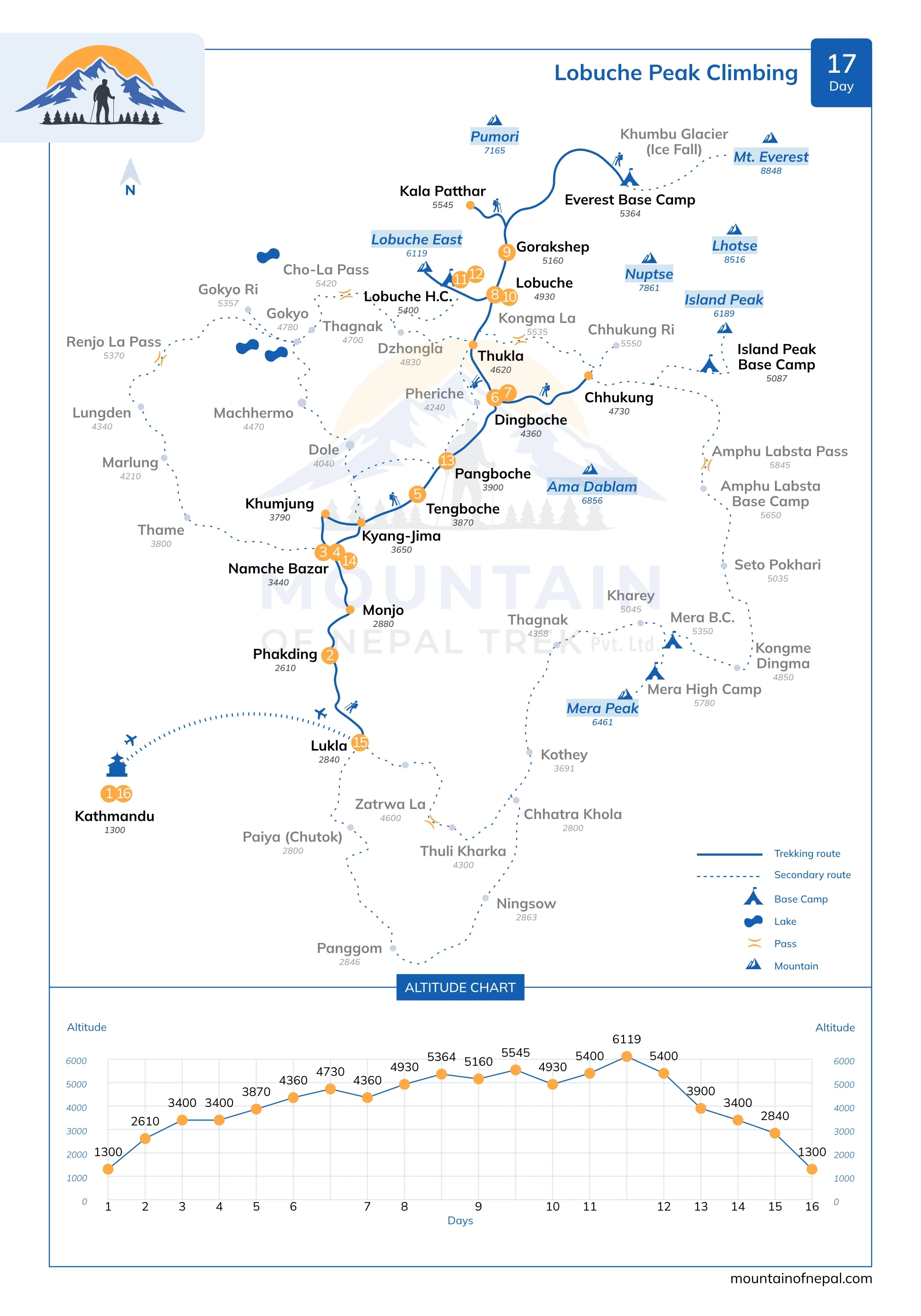
This itinerary from Mountain of Nepal is carefully designed to ensure gradual altitude gain, proper acclimatization, and maximum safety. Starting from Lukla, the route passes through iconic Sherpa villages such as Namche Bazaar, Tengboche, and Dingboche before reaching Lobuche High Camp. The final summit push involves glacier travel and the use of basic mountaineering equipment like crampons, ropes, and ice axes.
Lobuche Peak is classified as a trekking peak, but it still requires strong physical fitness and basic climbing skills. The experience is not only about reaching the summit but also about exploring the heart of the Khumbu region and experiencing Sherpa culture, Buddhist monasteries, and high-altitude landscapes.
The best time for Lobuche Peak Climbing is during the pre-monsoon (spring) and post-monsoon (autumn) seasons. These periods provide the most stable weather conditions, clear skies, and safe climbing windows, which are crucial for both trekking and summit success.
Spring (March to May) is considered the most favorable season. During this time, the weather is relatively warm, rhododendrons bloom along the trails, and visibility is excellent. Climbers can enjoy vibrant landscapes along with stable climbing conditions on the ice and snow slopes of Lobuche Peak.
Autumn (September to November) is another ideal season. After the monsoon, the air becomes crystal clear, offering outstanding mountain views. The temperatures are cooler, but the weather is generally stable, making it perfect for high-altitude climbing and trekking. Winter and monsoon seasons are generally avoided due to heavy snowfall, extreme cold, and unstable weather conditions.
Key Highlights:
Lobuche Peak Climbing is classified as a moderately difficult trekking peak, but it becomes challenging due to altitude, glacier walking, and steep summit sections. The climb requires good physical fitness, prior trekking experience, and basic knowledge of using climbing equipment. The final summit push involves a steep, icy ridge where fixed ropes are used for safety.
The trek begins with a scenic flight from Kathmandu to Lukla, one of the world’s most thrilling airports. From Lukla, the journey continues on foot through the Everest trail. Transportation is mainly by trekking, as there are no road networks in this region. The return flight from Lukla back to Kathmandu completes the journey.
Although the technical difficulty is not extreme, altitude sickness is a major concern. Proper acclimatization days in Namche Bazaar and Dingboche are included in the itinerary by Mountain of Nepal to reduce risks and ensure safety.
Key Highlights:
Food and accommodation during the Lobuche Peak Climbing are provided in local teahouses and lodges along the Everest Base Camp trail. These accommodations are simple but comfortable, offering warm hospitality from the Sherpa community. Rooms are usually twin-sharing with basic bedding facilities.
Meals are freshly prepared and include a variety of options such as Nepali dal bhat (rice and lentils), noodles, pasta, soups, potatoes, eggs, and tea/coffee. As altitude increases, food variety becomes limited due to transportation difficulties, but calories and nutrition remain sufficient for trekkers and climbers.
At higher elevations like Lobuche High Camp, camping may be required, depending on the itinerary arranged by Mountain of Nepal. In such cases, professional guides and support staff manage tents, cooking, and logistics.
Key Highlights:
Climbing Lobuche Peak requires several official permits issued by the Nepal government and local authorities. These permits ensure environmental protection, safety regulation, and proper management of trekking peaks in the Everest region.
The main permits include the Sagarmatha National Park Permit, Khumbu Pasang Lhamu Rural Municipality Permit, and the Lobuche Peak Climbing Permit issued by the Nepal Mountaineering Association (NMA). Each permit has specific fees depending on the season and nationality of climbers.
Mountain of Nepal handles all permit arrangements for climbers, ensuring a smooth and hassle-free experience. Travelers do not need to worry about documentation as everything is managed before or upon arrival in Kathmandu.
Key Highlights:
Lobuche Peak Climbing is an ideal choice for trekkers who want to transition into mountaineering while experiencing the legendary Everest region. It offers a perfect combination of trekking adventure, cultural immersion, and real climbing experience without requiring advanced technical skills.
Choosing Mountain of Nepal ensures a safe, professional, and well-organized expedition. The company provides experienced climbing guides, proper acclimatization planning, quality logistics, and personalized support throughout the journey. Safety is always prioritized, especially during high-altitude sections and summit attempts.
This climb is also an excellent preparation for higher expeditions in Nepal. Many climbers use Lobuche Peak as a stepping stone for Everest or other 7,000–8,000 m peaks.
Key Highlights:
Upon your arrival in the vibrant capital city of Kathmandu, a representative from Mountain of Nepal will warmly welcome you at the airport and transfer you to your hotel. After check-in, you can rest or take a short walk around the bustling streets of Thamel, known for trekking shops and cultural energy. In the evening, a pre-trip briefing will be conducted where your guide explains the itinerary, safety protocols, and equipment checks for Lobuche Peak Climbing. This day is important for recovery from travel fatigue and mental preparation for the adventure ahead. An overnight stay in Kathmandu ensures you are well-rested for the early mountain flight the next day.
Early in the morning, you take a scenic and thrilling mountain flight from Kathmandu to Lukla Airport, one of the world’s most adventurous airstrips. Upon landing, you meet your trekking crew and begin your journey through the lower Everest region. The trail gently descends toward the Dudh Koshi River valley, passing small Sherpa villages, prayer wheels, and suspension bridges. After a steady walk of 4–5 hours, you reach Phakding, a peaceful riverside settlement. Here, you settle into a teahouse, enjoy warm meals, and rest while acclimatizing to the Himalayan environment.
Today’s trek follows the Dudh Koshi River, crossing multiple suspension bridges, including the famous Hillary Bridge. You enter the Sagarmatha National Park checkpoint, where permits are verified. The trail becomes steeper as you ascend through pine forests and small Sherpa settlements. After a challenging uphill climb, you arrive at Namche Bazaar, the bustling Sherpa capital of the Everest region. This vibrant town offers bakeries, gear shops, and stunning views of the surrounding peaks. You will stay overnight in Namche, where your body begins adapting to higher altitude conditions.
This important rest day in Namche Bazaar helps your body adjust to altitude. However, you will not remain idle. A short hike to the Everest View Hotel or Khumjung village is usually organized by Mountain of Nepal to enhance acclimatization. From these viewpoints, you may witness panoramic sights of Mount Everest and other Himalayan giants. You can also explore the Sherpa Culture Museum or interact with locals. The rest of the day is used for hydration, relaxation, and preparation for higher elevation trekking.
The trail descends through forests of rhododendron and crosses the Imja River before gradually climbing toward Tengboche. This village is famous for its spiritual atmosphere and the iconic Tengboche Monastery. As you approach, you are rewarded with breathtaking views of Ama Dablam, Everest, and Lhotse. The monastery visit adds cultural depth to your journey, offering blessings for a safe expedition. The peaceful environment of Tengboche provides a perfect setting for reflection and rest after a full day of trekking in the Himalayan wilderness.
Today, the trail descends through forests before crossing the Imja Khola and gradually ascending toward Dingboche. The landscape becomes more alpine with fewer trees and more open valleys. You will notice thinner air as altitude increases, making steady pacing essential. The village of Dingboche offers dramatic views of Ama Dablam and the surrounding peaks. Upon arrival, you rest in a cozy teahouse and hydrate well. The guides from Mountain of Nepal monitor your condition closely to ensure safe acclimatization for the higher sections ahead.
This acclimatization day is spent exploring higher terrain toward Chhukung Valley. The hike helps your body adapt to reduced oxygen levels. The trail offers incredible glacier views and dramatic Himalayan scenery. After reaching higher elevation points, you return to Dingboche for rest. This “climb high, sleep low” strategy is essential for safety and performance during peak climbing. The evening is spent reviewing climbing techniques and preparing gear for higher camps.
Today’s journey takes you through rugged alpine terrain and memorial sites dedicated to climbers who lost their lives in the Himalayas. The path gradually ascends toward Lobuche, a small settlement near the Khumbu Glacier. The air becomes noticeably thinner, and the environment more barren and rocky. You will trek slowly, maintaining steady hydration. Upon arrival, you settle into a teahouse with spectacular views of the surrounding peaks. The night is cold, so warm clothing and proper rest are essential for the next stage of the expedition.
The trail continues over rocky moraine toward Gorak Shep, the last settlement before Everest Base Camp. After a short rest, you hike to Everest Base Camp, a historic and iconic destination. Standing at the base of the world’s highest peak is a truly emotional experience. After spending time at Base Camp, you return to Gorak Shep for an overnight stay. This long and demanding day is carefully managed by Mountain of Nepal guides to ensure safety and proper acclimatization.
Early morning ascent to Kala Patthar offers the best panoramic sunrise view of Mount Everest. The golden light over the Himalayas creates unforgettable scenery. After descending to Gorak Shep for breakfast, you trek back toward Lobuche. The descent provides relief after the high-altitude effort. This day strengthens endurance and prepares you mentally and physically for the upcoming peak climbing phase. Overnight rest in Lobuche is essential for recovery.
Today, you move toward Lobuche High Camp, leaving behind the main trekking route. The terrain becomes more rugged and icy, requiring careful steps. The guides from Mountain of Nepal set up the high camp and conduct a technical briefing on rope handling, crampons, and climbing techniques. As you gain altitude, the environment becomes more challenging but also more exciting. The night at high camp is cold and requires mental focus and preparation for the summit push.
This is the most challenging and rewarding day of the expedition. You begin early, climbing steep, icy slopes using ropes and technical gear toward Lobuche Peak. After several hours of effort, you reach the summit and enjoy breathtaking views of Everest, Lhotse, and the surrounding giants. After celebration and photography, you carefully descend back to High Camp. This achievement marks a major milestone in your Himalayan climbing journey with Mountain of Nepal.
After the summit success, you descend through familiar trails toward Pangboche. The air becomes thicker and breathing easier as you lose altitude. The village offers beautiful monastery views and a peaceful environment. This recovery day allows your body to relax after intense climbing. You enjoy warm meals and reflect on the successful summit of Lobuche Peak.
The descent continues through forests and suspension bridges back to Namche Bazaar. The return feels easier and more enjoyable as oxygen levels improve. You can celebrate your achievement with fellow trekkers and enjoy bakery treats and warm hospitality. This is a relaxed trekking day after the strenuous climb.
You retrace your steps back to Lukla Airport, passing through familiar villages and landscapes. The descent marks the final trekking day of the expedition. In Lukla, you celebrate the completion of your successful Lobuche Peak Climbing journey organized by Mountain of Nepal with your guide and crew.
A scenic morning flight takes you back to Kathmandu. Upon arrival, you are transferred to your hotel, where you can rest or explore the city. This day is free for shopping, sightseeing, or relaxation after completing the Himalayan adventure.
Depending on your flight schedule, Mountain of Nepal will transfer you to the airport for your onward journey. You leave Nepal with unforgettable memories of the Lobuche Peak expedition, stunning Himalayan landscapes, and cultural experiences. This marks the end of a successful and rewarding climbing adventure.
Your Start Date is the day you land in Nepal, and your End Date is when you fly home.
If the set Lobuche Peak Climbing group dates don’t suit your schedule, we can offer alternative dates upon request.
Lobuche Peak Climbing is a popular Himalayan expedition that combines high-altitude trekking with technical mountaineering in the Everest region of Nepal. Organized by Mountain of Nepal, this climb reaches an elevation of 6,119 meters and is considered moderately to highly challenging. While previous climbing experience is helpful, beginners with good physical fitness and determination can also attempt it under expert guidance. The climb involves glacier travel, steep ice sections, and rope-assisted ascents, making it more technical than trekking peaks. Proper acclimatization and professional support significantly increase success and safety rates.
Prior climbing experience is not strictly mandatory for Lobuche Peak Climbing, but it is highly recommended. With the Mountain of Nepal, even beginners can join as long as they are physically fit and mentally prepared for high-altitude conditions. During the expedition, professional guides provide training on using crampons, ice axes, harnesses, and ropes. Participants are gradually introduced to technical skills during the journey. However, having experience in trekking peaks or basic mountaineering can make the ascent easier and more comfortable, especially on summit day, where endurance and confidence are essential.
Climbers should have a strong level of physical fitness to complete Lobuche Peak Climbing. The expedition involves long trekking days, high-altitude hiking, and technical climbing in thin air. Mountain of Nepal recommends participants engage in regular cardiovascular training, hiking practice, stair climbing, and strength-building exercises at least 2–3 months before departure. Mental endurance is equally important, as altitude can be physically and psychologically demanding. While you do not need to be an elite athlete, good stamina, determination, and adaptability are essential for a safe and enjoyable experience.
Yes, altitude sickness is a significant concern during Lobuche Peak Climbing due to elevations exceeding 6,000 meters. Symptoms may include headache, nausea, dizziness, and fatigue. However, Mountain of Nepal carefully designs the itinerary with proper acclimatization days in places like Namche Bazaar and Dingboche to reduce risks. Guides regularly monitor climbers’ health and provide immediate assistance if symptoms appear. Staying hydrated, ascending gradually, and following the guide instructions are essential for prevention. In severe cases, descent is the only safe solution, and safety is always the top priority.
The Lobuche Peak Climbing expedition typically takes around 17 days, depending on the chosen itinerary and acclimatization schedule. The journey includes trekking from Lukla to the Everest Base Camp region, acclimatization days, and summit preparation at high camps. According to Mountain of Nepal, the duration is carefully designed to balance safety, acclimatization, and climbing success. Shorter itineraries may increase risk, while longer programs provide better adaptation to altitude. The total duration ensures climbers experience both trekking highlights and a safe summit attempt in the Everest region.
Choosing Mountain of Nepal for Lobuche Peak Climbing ensures a professionally organized, safe, and enriching Himalayan experience. The company provides experienced climbing guides, well-planned itineraries, proper acclimatization schedules, and full logistical support from arrival to departure. Their team focuses on safety, success, and personalized care for every climber. In addition to climbing expertise, they also offer cultural insight into the Everest region, making the journey more meaningful. With strong local knowledge and high success rates, Mountain of Nepal is a trusted operator for peak climbing adventures in Nepal.
The best seasons for Lobuche Peak Climbing are spring (March to May) and autumn (September to November). These periods offer stable weather conditions, clear skies, and excellent mountain visibility in the Everest region. According to Mountain of Nepal, spring is ideal for climbers who want warmer temperatures and blooming rhododendrons, while autumn provides crisp air and outstanding panoramic views. Winter climbing is possible but extremely cold, and the monsoon season is generally avoided due to heavy rain and poor visibility. Choosing the right season greatly increases safety and summit success chances.
Accommodation during the Lobuche Peak Climbing varies depending on altitude. In lower regions such as Lukla, Namche Bazaar, and Dingboche, trekkers stay in comfortable teahouses run by local Sherpa families. As altitude increases, facilities become more basic due to remoteness. At Lobuche High Camp, Mountain of Nepal provides tented accommodation with essential camping gear, sleeping mats, and hot meals prepared by support staff. While luxury is limited at higher elevations, safety, warmth, and nourishment are prioritized. The combination of teahouse trekking and camping creates a balanced Himalayan experience.
Food during Lobuche Peak Climbing is a mix of local Nepali dishes and basic international meals available in teahouses along the trail. Common meals include dal bhat (rice and lentils), noodles, soups, pasta, bread, and eggs. At higher altitudes, food options become simpler but energy-rich to support trekking and climbing demands. Mountain of Nepal ensures hygienic, nutritious meals throughout the journey, and at high camps, meals are specially prepared by support staff to maintain energy levels. Clean drinking water is also provided with purification methods to ensure safety.
Lobuche Peak Climbing requires several permits issued by the Government of Nepal. These include the Sagarmatha National Park entry permit, the Khumbu Pasang Lhamu Rural Municipality permit, and a special climbing permit for Lobuche Peak. Mountain of Nepal handles all permit arrangements on behalf of climbers to ensure a hassle-free experience. These permits help regulate tourism, protect the environment, and support local communities. The cost of permits is generally included in the package, and trekkers do not need to worry about administrative procedures during the expedition.
Lobuche Peak Climbing is considered safe when undertaken with proper planning and experienced guides. Mountain of Nepal prioritizes safety through professional climbing leaders, emergency oxygen systems, first aid kits, and carefully planned acclimatization schedules. All guides are trained in high-altitude rescue and technical climbing support. Weather conditions are closely monitored, and summit attempts are only made under safe conditions. Communication systems are also maintained for emergencies. While the Himalayas are naturally challenging, expert guidance and preparation make the expedition highly secure and well-managed.
Climbers require specialised trekking and mountaineering equipment for Lobuche Peak Climbing. Essential items include insulated boots, crampons, ice axe, harness, helmet, down jacket, thermal layers, gloves, and sunglasses. Mountain of Nepal provides technical climbing gear, such as ropes and safety equipment, where needed, especially for summit day. Proper gear ensures warmth, safety, and efficiency in extreme conditions. A detailed equipment checklist is provided before departure so participants can prepare accordingly. Having the right gear significantly improves comfort and success during the expedition.


 (2)
(2)  100% recommend (0)
 (0)
(0)