Helambu Trek is a moderate, culturally immersive journey easily accessible from Kathmandu, ideal for beginners, families, and cultural enthusiasts. The trek winds through the Helambu Valley, home to the Yolmo people, whose lifestyle and traditions are closely influenced by Tibetan culture.
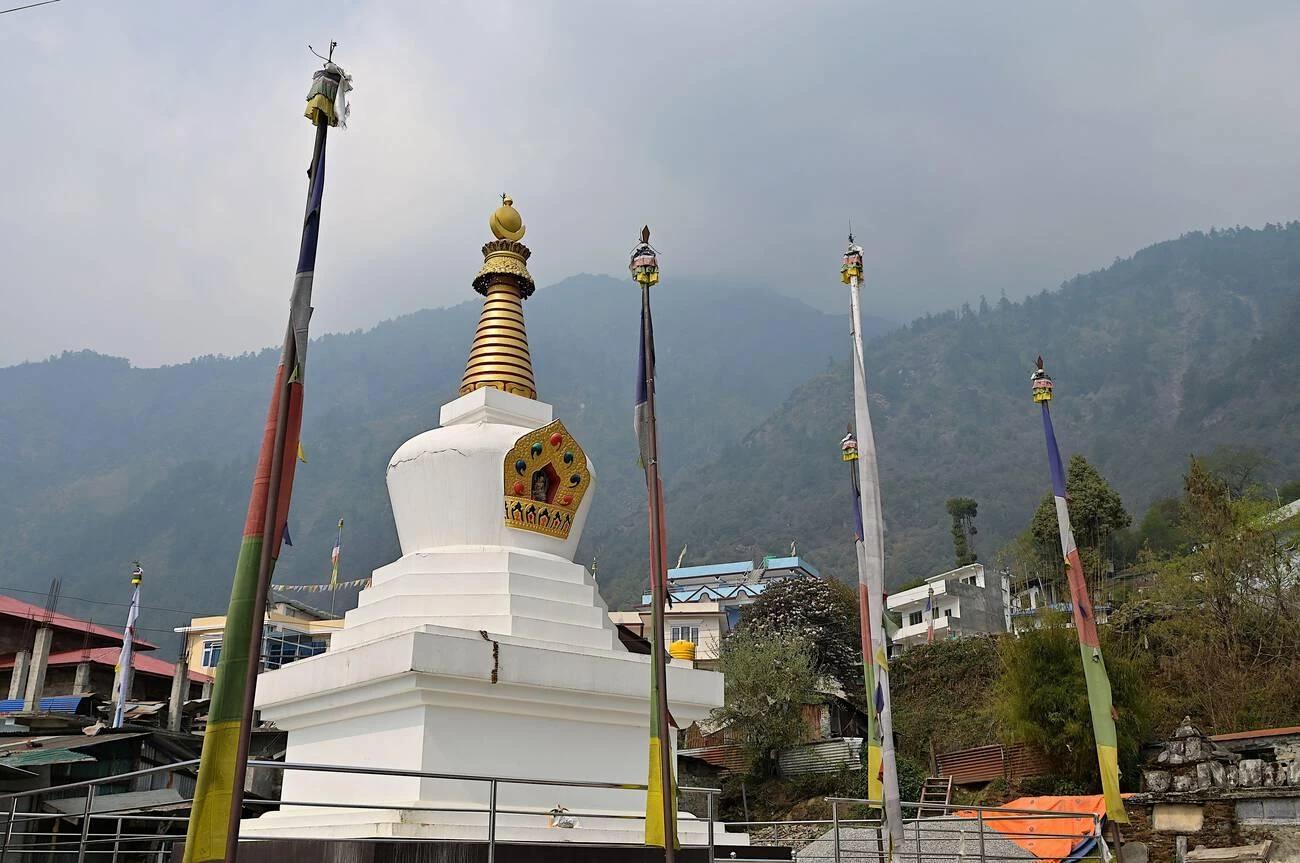
Trek through rolling hills, terraced farmland, pine and rhododendron forests, and meadows, while observing traditional village life, farming practices, and local festivals. Visit Milarape Cave, a sacred meditation site linked to Guru Rimpoche (Padmasambhava), and explore monasteries, chortens, and mani walls along the way. Comfortable lodges provide authentic local meals and a warm, hospitable environment.
This trek offers a blend of Himalayan scenery, spiritual heritage, and cultural immersion, perfect for travelers seeking serenity, adventure, and insight into Himalayan life. It is also suitable for anthropologists, students, and researchers interested in studying rituals and village culture.
The Helambu Valley Trek, organized by Mountain of Nepal, is a scenic and culturally rich Himalayan journey located close to Kathmandu. This moderate trek is perfect for beginners, families, and cultural explorers who want a short yet rewarding Himalayan experience without going to extreme altitude. The route passes through beautiful villages, lush forests, terraced hillsides, and Buddhist heritage sites, offering a deep insight into the traditional lifestyle of the Yolmo people, who are culturally influenced by Tibetan Buddhism.
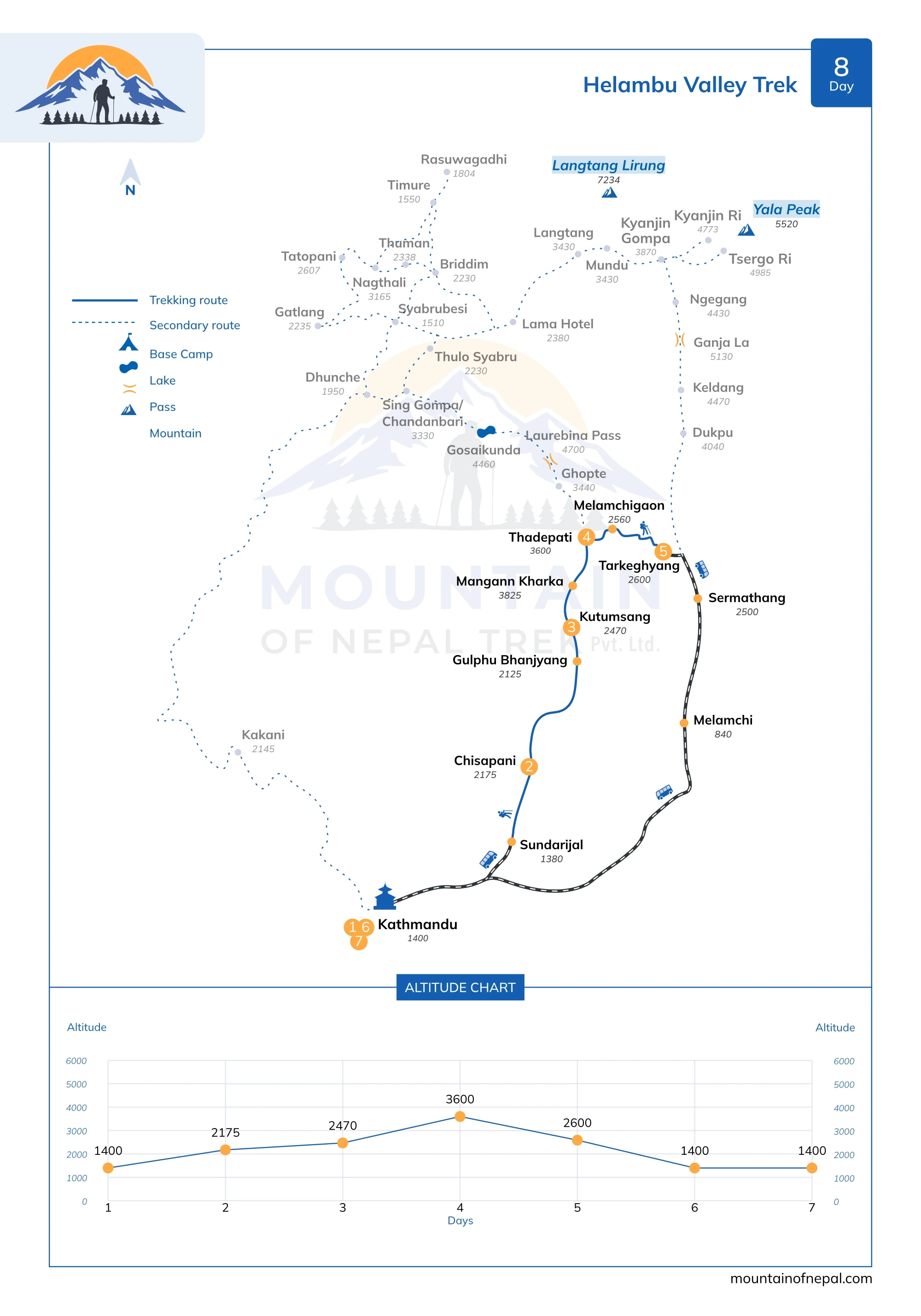
Starting from Sundarijal, the trail gradually ascends through Shivapuri National Park and connects peaceful settlements like Chisapani, Kutumsang, Tharepati, and Tarke Ghyang. Each village offers a unique blend of mountain scenery, hospitality, monasteries, and prayer walls that reflect centuries-old Himalayan traditions.
The trek also includes sacred sites such as meditation caves linked with Guru Rinpoche (Padmasambhava), ancient monasteries, and fluttering prayer flags along ridges. Trekkers enjoy panoramic views of Langtang and Jugal Himalayan ranges while walking through rhododendron and pine forests. Comfortable teahouses along the route ensure warm meals and simple lodging.
Overall, this trek blends nature, spirituality, and cultural immersion into a peaceful Himalayan adventure.
The best time for the Helambu Valley Trek, arranged by Mountain of Nepal, is during spring (March–May) and autumn (September–November). These seasons offer the most stable weather, clear mountain views, and comfortable trekking temperatures. During spring, the trails around Sundarijal and higher villages like Tharepati are decorated with blooming rhododendrons, making the forests especially colorful and vibrant. The skies are generally clear, allowing excellent views of the Langtang and Jugal Himalayan ranges.
Autumn is equally popular because of its crisp air, stable climate, and post-monsoon freshness. This season provides the clearest visibility of mountain peaks and is ideal for photography, cultural interaction, and long trekking days between villages such as Kutumsang and Tarke Ghyang. The trails are dry, and the temperature is comfortable for walking long hours.
Winter (December–February) is possible but colder, especially at higher elevations like Tharepati. Snowfall may occasionally block trails, but it offers peaceful, less crowded trekking conditions. Monsoon season (June–August) is generally not recommended due to heavy rainfall, slippery trails, and limited visibility.
Seasonal highlights:
With proper planning from Mountain of Nepal, trekkers can choose the best season according to their preference for scenery, weather, and crowd levels.
The Helambu Valley Trek is considered moderate, making it suitable for beginners with a reasonable level of fitness. Organized by Mountain of Nepal, the trek involves daily walking of 5–7 hours through uphill and downhill terrain. While the altitude reaches around 3,600 meters at Tharepati, it is not extremely high compared to other Himalayan treks, which reduces the risk of severe altitude sickness.
The trail includes forest paths, stone staircases, ridge walks, and village routes connecting places like Chisapani, Kutumsang, and Tarke Ghyang. Some sections are steep, especially the climb toward Tharepati, but the pace is manageable with proper rest and hydration.
Transportation is convenient since the trek begins close to Kathmandu. A short drive takes trekkers to Sundarijal, the starting point of the trek. From there, the journey continues on foot. At the end of the trek, a drive from Tarke Ghyang or nearby road heads returns trekkers back to Kathmandu in approximately 5–6 hours.
Difficulty & transport summary:
With guidance from Mountain of Nepal, trekkers receive route support, pacing advice, and safety monitoring, making the journey smooth and enjoyable.
Food and accommodation along the Helambu Valley Trek, managed by Mountain of Nepal, are based on traditional teahouse and lodge systems operated by local families. These lodges are available in villages such as Chisapani, Kutumsang, Tharepati, and Tarke Ghyang, offering simple yet comfortable rooms with twin-sharing beds, warm blankets, and shared bathrooms.
Meals are freshly prepared using locally sourced ingredients. The common menu includes Nepali dal bhat (rice, lentils, vegetables), noodles, fried rice, pasta, soups, eggs, potatoes, and seasonal vegetables. In higher villages like Tharepati, food choices may be slightly limited due to remote location, but meals are nutritious and energy-rich for trekking.
Tea, coffee, and local herbal drinks are widely available throughout the trail. Hygiene standards are generally good, though trekkers are advised to carry water purification tablets or filters for safe drinking water.
Accommodation & food highlights:
At the end of the trek, returning to Kathmandu provides access to hotels and restaurants for more comfort and variety. The Mountain of Nepal ensures that trekkers receive pre-booked accommodation during peak seasons, reducing stress and improving the overall trekking experience.
For the Helambu Valley Trek organized by Mountain of Nepal, trekkers need a few essential permits because the route passes through protected forest areas and culturally significant regions near Kathmandu. The main permit required is the Langtang National Park Entry Permit, as much of the trail from Sundarijal to higher regions like Tharepati lies within or near the park boundary.
In addition to the national park permit, trekkers may also require a TIMS (Trekkers’ Information Management System) card, which helps ensure safety and tracking of visitors in Himalayan trekking regions. These permits are typically arranged in advance by Mountain of Nepal, so trekkers do not need to worry about administrative procedures.
Permit checkpoints are located along the route, especially near entry points and major trail junctions. Trekkers are advised to carry photocopies of passports and passport-sized photos, as these may be required during registration.
Permit summary:
Having proper permits ensures legal compliance, supports conservation efforts, and contributes to local community development in regions such as Kutumsang and Tarke Ghyang. With Mountain of Nepal, the permit process is hassle-free and included in the trekking package.
Choosing the Helambu Valley Trek with Mountain of Nepal ensures a well-organized, safe, and culturally immersive Himalayan experience close to Kathmandu. This trek is ideal for travelers who want to experience mountain landscapes and authentic Himalayan village life without undertaking extremely high-altitude expeditions.
The company provides experienced local guides who are knowledgeable about the culture, history, and natural environment of regions like Chisapani, Kutumsang, Tharepati, and Tarke Ghyang. Their guidance enhances safety, cultural understanding, and trekking enjoyment. The itinerary is carefully planned to balance walking hours, altitude gain, and rest periods.
Mountain of Nepal also prioritizes sustainable tourism by supporting local teahouses, hiring local staff, and respecting environmental conservation practices. This ensures that your trek directly benefits the communities you visit.
Reasons to choose this trek:
Overall, the Helambu Valley Trek offers a perfect combination of nature, spirituality, and cultural discovery. With Mountain of Nepal, travelers receive a personalized, safe, and memorable journey into the heart of the Himalayas.
Your adventure begins upon arrival in Kathmandu, the lively capital of Nepal, where you are warmly welcomed by a representative from Mountain of Nepal and transferred to your hotel. After check-in, you can rest from your journey or take a gentle walk around the vibrant Thamel area, famous for trekking shops, cafés, and cultural energy. This day is kept relaxed to help you recover and adjust to the new environment. In the evening, a detailed briefing session is conducted covering the Helambu Valley Trek itinerary, safety guidelines, and preparation tips. You will also have time to confirm permits and gear, ensuring everything is ready for the journey ahead.
The journey begins with an early morning drive from Kathmandu to Sundarijal, the starting point of the trek. From there, you enter the lush Shivapuri National Park, where the trail ascends through dense forests, passing small villages such as Mulkharka and scenic waterfalls. The trek gradually climbs to Chisopani, a hilltop settlement renowned for its stunning sunrise and sunset views of the Langtang and Ganesh Himal ranges. The cool breeze and peaceful surroundings make Chisopani an ideal place to spend the night. This first day of trekking offers a combination of forest walks, local village experiences, and your first views of the Himalayas.
After enjoying your first mountain breakfast at Chisopani, you begin the trek with a gentle descent to Pati Bhanjyang, before gradually ascending through rhododendron and pine forests. Along the way, you pass several small villages, including Gul Bhanjyang, where you can interact with locals and observe daily life, such as terrace farming, livestock care, and traditional handicrafts. Grazing cattle and mountain birds add to the region’s natural charm.You finally reach Kutumsang, a charming Tamang settlement known for its warm hospitality. The village provides an authentic introduction to Yolmo and Tamang culture, with stone houses, prayer flags, and mani walls. Panoramic views of the surrounding ridges and distant Himalayan peaks make it an ideal place to rest, enjoy local meals, and experience traditional mountain life. Today’s trek passes through a mix of lowland Brahmin and Chhetri (Hindu) villages, as well as Tamang and Yolmo (Buddhist) settlements, offering a rich cultural journey alongside the scenic beauty of the Helambu region.
Today’s trek involves a steady uphill climb with increasingly magnificent views of the Langtang and Jugal Himal ranges. The trail passes through Magen Goth, where the landscape begins opening up to more open pastures and alpine terrain. The final ascent to Tharepati is rewarding, as this small settlement sits on a ridge with spectacular panoramic mountain views and vistas of the Helambu Valley. An optional side hike to nearby peaks offers an even better vantage point for those with extra energy.
After enjoying the sunrise over the mountains and breakfast at Tharepati, we begin the final walking day of this trek. At Tharepati, the trail divides into two routes: one heads along the traditional high-altitude trekking path to Gosaikunda and Langtang, while the other descends toward the Helambu Valley — the route you will follow on this trek.You begin your descent toward the traditional Sherpa/Hyolmo village of Melamchi Ghyang, passing through rhododendron and pine forests with breathtaking views of the valley below. The downhill sections can be tough on your knees, as the trail steeply descends to the river, where you cross a suspension bridge to reach the charming village. In Melamchi Ghyang, you can visit the Guru Rimpoche Cave, explore monasteries and chhortens, and observe local life while enjoying lunch.The trail then continues down to the Melamchi Khola (river). After crossing the river, the path involves a steady uphill climb through forests and small settlements toward Tarke Ghyang, one of the largest and most culturally significant villages in the Helambu region. Tarke Ghyang is known for its ancient and large Buddhist monastery, traditional stone houses, and the vibrant Tibetan-Buddhist culture of the Hyolmo/Sherpa community. Overnight in a cozy tea house in Tarke Ghyang
After your final breakfast in the mountain lodge, you will drive from Tarke Ghyang to Kathmandu in a 4WD vehicle. The drive takes you through rural mountain roads that gradually join the main highway network. The early section from Tarke Ghyang to Timbu is unpaved and can be bumpy, with narrow stretches along hillsides and occasional rough patches. From Timbu onward, the road is better paved and better maintained, though traffic can increase and the journey may take longer.Under normal conditions, the drive takes approximately 4–6 hours, depending on road conditions, weather, and traffic. The route offers scenic views of rivers, terraced fields, and traditional villages. Overnight in Katmandu.
This day is reserved for leisure, sightseeing, or personal exploration in Kathmandu. You may choose to visit UNESCO World Heritage Sites such as Swayambhunath Stupa, Pashupatinath Temple, or Kathmandu Durbar Square, each offering deep cultural and spiritual experiences. Alternatively, you can relax at your hotel or explore the lively streets of Thamel for shopping and local food. This flexible day also acts as a buffer in case of weather or itinerary adjustments. The Mountain of Nepal team remains available for assistance, ensuring your stay is comfortable and enjoyable.
Your unforgettable journey with the Helambu Valley Trek comes to an end today. After breakfast, a representative from Mountain of Nepal will transfer you to Tribhuvan International Airport in Kathmandu for your onward flight. Depending on your schedule, you may have some free time for last-minute souvenir shopping or a final stroll around the city. As you depart, you carry memories of stunning Himalayan landscapes, warm local hospitality, and meaningful cultural encounters. The Mountain of Nepal team thanks you for traveling with us and hopes to welcome you again for another Himalayan adventure.
Your Start Date is the day you land in Nepal, and your End Date is when you fly home.
If the set Helambu Valley Trek group dates don’t suit your schedule, we can offer alternative dates upon request.
Proper layering is important to stay warm and comfortable in changing mountain weather.
Good footwear makes trekking easier and safer.
The right gear keeps you safe, comfortable, and prepared.
Lightweight but important items keep you clean, healthy, and comfortable.
Keep important items safe and easy to reach.
The Helambu Valley Trek is a beautiful short-to-moderate trekking route near Kathmandu, famous for its close proximity to the capital, rich Sherpa and Tamang culture, and stunning Himalayan scenery. Organized by Mountain of Nepal, this trek is popular because it offers a perfect mix of nature and culture without requiring extreme altitude experience. Trekkers pass through lush forests, traditional villages, and peaceful ridgelines with views of Langtang and surrounding ranges. It is ideal for beginners and those with limited time who still want an authentic Himalayan trekking experience.
The Helambu Valley Trek is considered easy to moderate in difficulty, making it suitable for beginners as well as experienced trekkers looking for a relaxed Himalayan journey. The trails include both uphill and downhill sections, especially on days like the ascent toward Tharepati, which is the highest point of the trek. However, no technical climbing is required. Mountains of Nepal ensure a well-paced itinerary with proper acclimatization, allowing trekkers to enjoy the journey comfortably. A reasonable level of fitness and daily walking preparation is recommended.
The standard Helambu Valley Trek organized by Mountain of Nepal typically takes around 7 to 8 days, depending on the itinerary and pace. It begins with a drive from Sundarijal and continues through key villages such as Chisapani, Kutumsang, Tharepati, and Tarke Ghyang before returning to Kathmandu. The trek duration is designed to balance walking hours, altitude gain, and cultural exploration, making it comfortable even for first-time trekkers.
No prior trekking experience is required for the Helambu Valley Trek. It is designed as a beginner-friendly Himalayan trek that still offers rewarding landscapes and cultural immersion. Mountain of Nepal carefully plans the route to ensure manageable walking hours, typically 5–7 hours per day. Even though some sections, such as the climb toward Tharepati, are more demanding, they are achievable with basic fitness. First-time trekkers are encouraged to do light walking or hiking practice before the trip for better comfort.
Altitude sickness is generally not a major concern on the Helambu Valley Trek because the maximum elevation is moderate, around Tharepati at approximately 3,600 meters. However, some trekkers may still experience mild symptoms such as headache or fatigue. Mountain of Nepal designs the itinerary with gradual altitude gain to reduce risks. Staying hydrated, walking at a steady pace, and avoiding alcohol help prevent altitude-related discomfort. Serious cases are rare on this route.
Choosing the Mountain of Nepal for the Helambu Valley Trek ensures a safe, well-organized, and culturally rich experience. The company provides experienced local guides, carefully planned itineraries, and full support from arrival in Kathmandu to departure. Their deep knowledge of routes like Chisapani and Tarke Ghyang ensures smooth logistics and meaningful cultural encounters. With a focus on safety, sustainability, and authentic travel experiences, Mountain of Nepal delivers a trekking journey that is both enjoyable and memorable.
The best time for the Helambu Valley Trek is during spring (March to May) and autumn (September to November). During these seasons, the weather is stable, the skies are clear, and the mountain views are at their best. Spring brings blooming rhododendrons in the forests around Kutumsang, while autumn offers crisp air and excellent visibility of Himalayan peaks. Winter is also possible but can be cold at higher elevations, especially in areas like Tharepati. The monsoon season is less recommended due to slippery trails and limited visibility.
Accommodation during the Helambu Valley Trek mainly consists of local teahouses and mountain lodges run by village families. These provide basic but comfortable facilities, including twin-sharing rooms and warm meals. In places like Tarke Ghyang, trekkers can experience traditional hospitality and cultural stays. The mountain of Nepal ensures clean and safe lodging arrangements along the route. While luxury is limited in remote areas, the warmth of local hosts and scenic surroundings make the experience highly memorable.
Food on the Helambu Valley Trek is simple, nutritious, and freshly prepared at teahouses along the route. Common meals include dal bhat (rice, lentils, vegetables), noodles, soups, eggs, and basic Western dishes like pasta or pancakes. As you trek through villages such as Kutumsang and Chisapani, food options remain consistent but may vary slightly depending on location. Mountain of Nepal recommends balanced eating to maintain energy levels during daily hikes.
Packing for the Helambu Valley Trek should focus on comfort, layering, and weather protection. Essential items include trekking boots, warm clothing, a waterproof jacket, gloves, a hat, sunscreen, and a reusable water bottle. Since temperatures vary from lower villages like Sundarijal to higher regions like Tharepati, layered clothing is important. Mountain of Nepal also recommends carrying basic personal medicines, a power bank, and lightweight trekking gear.


 (2)
(2)  100% recommend (0)
 (0)
(0)